
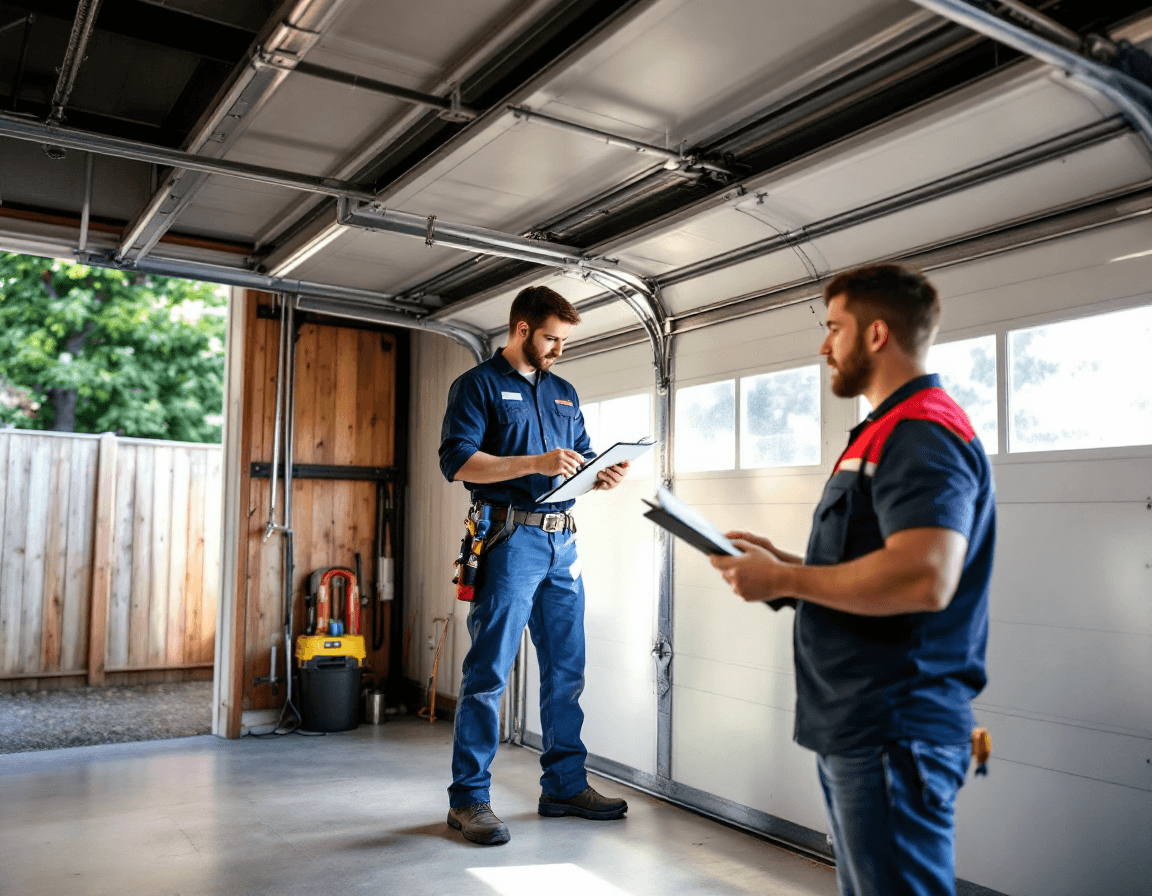
Garage Door Maintenance & Tune-Ups in SeaTac, WA is one of the smartest low-cost steps a homeowner can take to avoid a stuck car and an unexpected repair bill. Our technicians serve SeaTac and nearby neighborhoods across ZIP codes 98188 and 98198, and a full multi-point tune-up here typically runs $89 to $149, depending on the door type, the number of components, and the condition we find. The visit covers a safety inspection, lubrication, balance testing, and a check of your opener's safety features, so the door is working the way it was designed to work.
Most garage doors fail gradually. A roller starts to squeal, a cable frays a little more each season, a spring loses some of its tension, and the opener begins to labor before it finally quits on a cold morning. A tune-up is designed to catch those early signs while the fix is still a simple adjustment rather than an emergency call. If your door has not been serviced in more than a year, if it has gotten noticeably louder, or if you have just purchased a home and want a clear picture of what you inherited, this page explains what we check and why it matters in our part of King County.
Below you will find a walkthrough of the tune-up itself, the local factors that shape how garage doors wear around SeaTac, and the specific warning signs that deserve attention. We also explain where routine maintenance ends and licensed spring and cable work begins, because that boundary matters for your safety. Read through at your own pace, and call (888) 799-3819 whenever you want a technician to look at your door in person.
What a Multi-Point Tune-Up Actually Covers
A multi-point tune-up is a structured inspection rather than a quick look from the driveway. The technician checks the door panels, tracks, rollers, hinges, end brackets, bottom seal, weatherstripping, and mounting hardware, then moves on to the spring system and the opener. Each point gets a simple pass-or-adjust decision, so you know exactly where the door stands before any work begins. The goal is to find small problems while they are cheap to fix.
Because the work is methodical, it also gives you a record of the door's condition. We walk you through what we found, what we adjusted on the spot, and what we recommend watching over the next season. If something needs parts or a separate visit, we tell you before we order anything. The appointment does not end with an upsell, and you are free to decide how much of the recommended follow-up fits your budget.
- Panel, track, and hinge inspection with alignment checks
- Roller condition review, including bearings and stem wear
- Spring and cable visual inspection (performed as a safety check only)
- Lubrication of moving parts with the correct product for each component
- Balance testing to see whether the door lifts evenly and stays put when released
- Opener force, travel limit, and safety reversal testing
- Weatherstripping, bottom seal, and photo-eye sensor alignment review
Why SeaTac Garages Wear Differently
SeaTac sits in the shadow of the airport and between the Green River valley and the hills to the east, which means it gets the full benefit of Western Washington weather without the harshest coastal exposure. Winters bring long stretches of rain and damp air, and that moisture settles into hinges, tracks, and the bottom edge of the door. Summers are usually mild, but a few warm, dry weeks can dry out lubricants that had been protecting moving parts through the wet season. The result is a door that gets pushed through a constant cycle of wet and dry, and that cycle is hard on metal and rubber alike.
Many homes in the area were built during decades when steel sectional doors and early wood doors were common, and a good number have been updated at least once. Older tracks can have slight bends from past bumps, and older openers may have been installed before modern safety standards. Newer townhomes and infill construction bring their own variations, including narrower driveways and taller door heights. We see all of these combinations, and each one changes how a tune-up should be approached, which is why we measure rather than assume.
Dust and road grime also play a role, especially on homes close to busier corridors and the airport area. Fine grit gets tracked in on shoes and tires, then settles on the lower tracks and gets pressed into the rollers every time the door moves. Over time this acts like sandpaper on the roller stems and the track surface. A tune-up includes cleaning the track channels so the lubricant can do its job instead of mixing into a gritty paste.
Reading the Noise: What Grinding and Popping Mean
Garage doors are never silent, but a door that gets louder month by month is giving you information. A high-pitched squeal usually points to dry metal on metal, often at the rollers or hinges. A low grinding or rumbling sound tends to indicate worn roller bearings or a track that has shifted slightly out of alignment. A sharp pop or clack, particularly at the top of travel, can mean a loose bracket, a worn bearing, or a section that is no longer seating squarely in the track.
Noise is not always a sign of imminent failure, but it is a sign that friction is increasing somewhere in the system. Friction makes the opener work harder, and extra strain shortens the life of every component it touches. A technician who listens to the door during a tune-up can often trace a sound to a specific roller, hinge, or bracket within a few minutes. Pinpointing the source matters because lubricating the wrong part wastes time and can leave the real problem untouched.
If your door has become noticeably louder since last winter, we recommend scheduling a tune-up before the sound turns into a stuck door. Note when the noise happens, whether it is worse in the morning, after rain, or only at certain heights. Those details help the technician focus the inspection and often reveal whether the cause is wear, moisture, or alignment.
Balance Testing Without the Guesswork
A properly balanced garage door should feel almost weightless when you lift it by hand with the opener disconnected. It should rise smoothly, hold its position partway up without drifting down or up, and close without a jerky start. When a door feels heavy, leans to one side, or slams down when released, the balance is off, and the opener is probably carrying weight it was never meant to handle. That extra load shows up as strain, slow travel, and premature wear.
Balance testing is a standard part of our tune-up. The technician disconnects the opener, lifts the door to about halfway, and releases it to see whether it stays put. We repeat the check at several heights and watch for a tendency to rise or drop. The results tell us whether the spring tension needs professional adjustment, whether a track has shifted, or whether an uneven load is coming from a worn cable or a binding roller.
Please understand that adjusting spring tension is not a homeowner task. Torsion springs and extension springs store a large amount of energy, and mishandling them can cause serious injury. Our role during a tune-up is to measure and report the balance condition, then recommend the licensed repair if spring work is needed. We will never ask you to loosen a spring bolt or wind a spring yourself.
Opener Strain, Travel Limits, and Force Settings
The opener is where many homeowners first notice a problem. A unit that used to open the door quickly may start to hesitate, buzz, or reverse unexpectedly. Sometimes the cause is a simple mechanical issue like a stiff track, but it can also come from incorrect travel limits, a force setting that is too sensitive, or a motor that is working harder to overcome imbalance. Left alone, these issues can cause the door to stop partway through its cycle, which is exactly the kind of surprise a tune-up is meant to prevent.
During opener testing, we confirm the up and down travel limits so the door stops at the right point each time. We check the force settings and run the reversal test to make sure the door stops and reverses when it meets resistance. The photo-eye sensors near the floor get a look as well, since misaligned or dirty sensors can prevent the door from closing or cause it to reverse for no visible reason. Each safety feature is tested rather than assumed to be working.
Opener safety is not optional. Modern openers are designed with reversal systems that protect people and objects in the door's path, and those systems need to function correctly. If a reversal test fails, we explain what is happening and recommend corrective steps. Some repairs are straightforward, while others require replacing a part or sensor, and we will always tell you which situation applies before proceeding.
Lubrication: Matching the Product to the Part
Lubrication sounds simple, but using the wrong product can make a door worse. Heavy grease attracts grit and turns into a sticky film that slows everything down. Thin oils can wash out quickly during a wet Western Washington winter. A good tune-up uses a lubricant suited to each component, applied in the right amount, and wiped clean where it does not belong. This is one reason homeowners who spray a can of general-purpose lubricant on the tracks often see the noise return within a few weeks.
Rollers, hinges, and the spring coils are typically treated differently, and the track surfaces usually need a dry or light film that does not collect debris. Lubricating the track channels is a common mistake when a door is already dirty, so we clean first and lubricate second. The technician also checks for signs of rust or flaking finish, because metal that is starting to corrode will not hold lubricant well and may need separate attention.
- Roller stems and bearings: a light lithium-based or silicone-type product that resists moisture
- Hinges and pivot points: a thin film applied sparingly, with excess wiped away
- Track surfaces: cleaned first, then treated with a dry lubricant to avoid attracting grit
- Opener chain or belt: a product approved for that drive type, applied only when the manufacturer recommends it
- Spring coils: inspected and treated only as a safety-related check, with any spring service handled by a licensed professional
Hardware Checks That Prevent a Stranded Morning
Hardware problems rarely announce themselves until they become urgent. A loose bolt on an end bracket can let a track drift out of position. A worn hinge can allow a panel to bow, which then rubs against the weatherstripping and makes the door harder to lift. Fasteners that have backed out a few turns may seem minor, but they change how load moves through the door, and that shift accelerates wear on everything else.
We check every visible fastener during a tune-up and tighten those that have loosened, using the correct torque for the material. We also look for stripped holes, cracked brackets, and bent track sections. If the wall anchors or header bracket are loose, we flag them immediately, because a door mounted to weak framing can move unpredictably under load. These checks are quick, but they catch the kind of slow problems that otherwise appear as a sudden failure on the way to work.
Weatherstripping and the bottom seal deserve attention too. In our wet climate, a cracked or compressed seal lets water and cold air into the garage and can allow moisture to reach the lower tracks and springs. Replacing a seal is usually an inexpensive fix, and it protects the door from the inside out. We note the condition of each seal and let you know whether it is still performing or nearing the end of its useful life.
If You Just Bought a Home Near Angle Lake or Bow Lake
Buying a home is full of inspections, but garage doors often get only a passing glance. Many buyers assume the door works because it opens and closes during the showing. A tune-up is an efficient way to learn what you actually bought before the first winter rains arrive. The inspection establishes a baseline for the door, the opener, and the safety systems, which is useful both for planning maintenance and for knowing when something has changed.
Homes near Angle Lake and Bow Lake often have attached garages with varied driveway slopes and door sizes, so it is worth confirming the door matches the way you use the space. We check whether the opener is the right size for the door's weight and whether any previous owner installed a mismatched part. If the door has been repaired several times, the inspection shows how those repairs are holding up and whether a more complete overhaul makes sense.
Because you may not know the service history, we treat a new-owner visit as a fact-finding mission. We document the condition of each component, note any items that need attention soon, and separate them from anything that can wait. That way you can plan your budget and avoid being surprised by a repair in the first month of ownership.
Neighborhood Notes: McMicken Heights, Angle Lake, and Bow Lake
Each part of SeaTac has its own housing mix, and that shapes what we see on service calls. In McMicken Heights, you will find a range of home ages and garage layouts, with many single-car doors that have been in place for years. Older doors in this kind of setting often have tired springs and rollers that were never upgraded, so the tune-up focus tends to be on noise reduction, balance, and opener reliability. Homeowners here frequently appreciate a clear explanation of which repairs are urgent and which are simply good to plan for.
Around Angle Lake, the mix leans toward a combination of single-family homes and newer construction. Taller doors and wider openings are common, and they put more weight on the springs and opener. A tune-up in this area often includes careful balance testing and a close look at the track alignment, since a larger door has less margin for minor drift. We also pay attention to how the door behaves in the damp months, because larger panels can show more visible warping or seal wear after a long wet season.
The Bow Lake area includes a mix of established neighborhoods and homes that have been updated over time. Here, the most common issues we address are a mismatch between an upgraded opener and an older door, worn safety sensors, and hardware that has loosened after years of use. Whatever the neighborhood, the approach stays the same: measure first, adjust what is safe to adjust, and recommend licensed work where it is required.
Where Spring and Cable Work Belongs
Routine maintenance and spring or cable repair are different categories, and it is important to keep them separate. Lubrication, hardware tightening, sensor alignment, and seal replacement are reasonable steps for a capable homeowner, though many people prefer to leave them to a technician. Torsion springs, extension springs, and lift cables are another matter. These parts carry high tension and can cause serious injury or property damage if they fail or are handled incorrectly. Even a spring that looks fine can be under enough stored energy to cause harm during removal.
For that reason, we always recommend a licensed professional for any spring or cable work. If the tune-up reveals a broken spring, a frayed cable, or a balance problem that points to spring tension, we explain the finding clearly and recommend a licensed repair. We will not attempt to adjust tension as a quick fix during a maintenance visit, and we advise you not to attempt it yourself. Our technicians are licensed, bonded, and insured, which is the standard we expect for work of this kind.
Knowing this boundary protects you. If you notice a cable hanging loose, a spring with visible gaps between coils, or a door that drops suddenly, keep people and vehicles clear of the door and call for service. A tune-up can identify these conditions early, but the repair itself belongs in trained hands.
How Often to Schedule and What to Ask When You Book
Most homeowners do well with an annual tune-up, though the right interval depends on how heavily the door is used, how many times a day it cycles, and what condition it is in now. A household that uses the garage as the main entrance may wear components faster than one that uses it only for storage. Doors that are already noisy, that have been repaired recently, or that are on an older opener may benefit from a visit sooner. Scheduling before the wet season is a common approach, since it gives lubricants time to work before the rains set in.
When you book, it helps to have a few details ready. Tell us your door type and approximate size if you know it, when the noise or strain started, whether you have had any previous repairs, and whether you are a recent home buyer. Mention any safety concerns such as the door reversing unexpectedly, sticking partway open, or dropping quickly. The more we know, the more efficiently the technician can prepare for your visit.
Ask questions during the appointment, too. You should understand what was tested, what was adjusted, what was recommended, and what can wait. A good tune-up leaves you with a clear picture of the door's condition and a practical plan. If you are in SeaTac, 98188, or 98198, call (888) 799-3819 to schedule your multi-point tune-up and get your garage door checked before the next surprise shows up.