
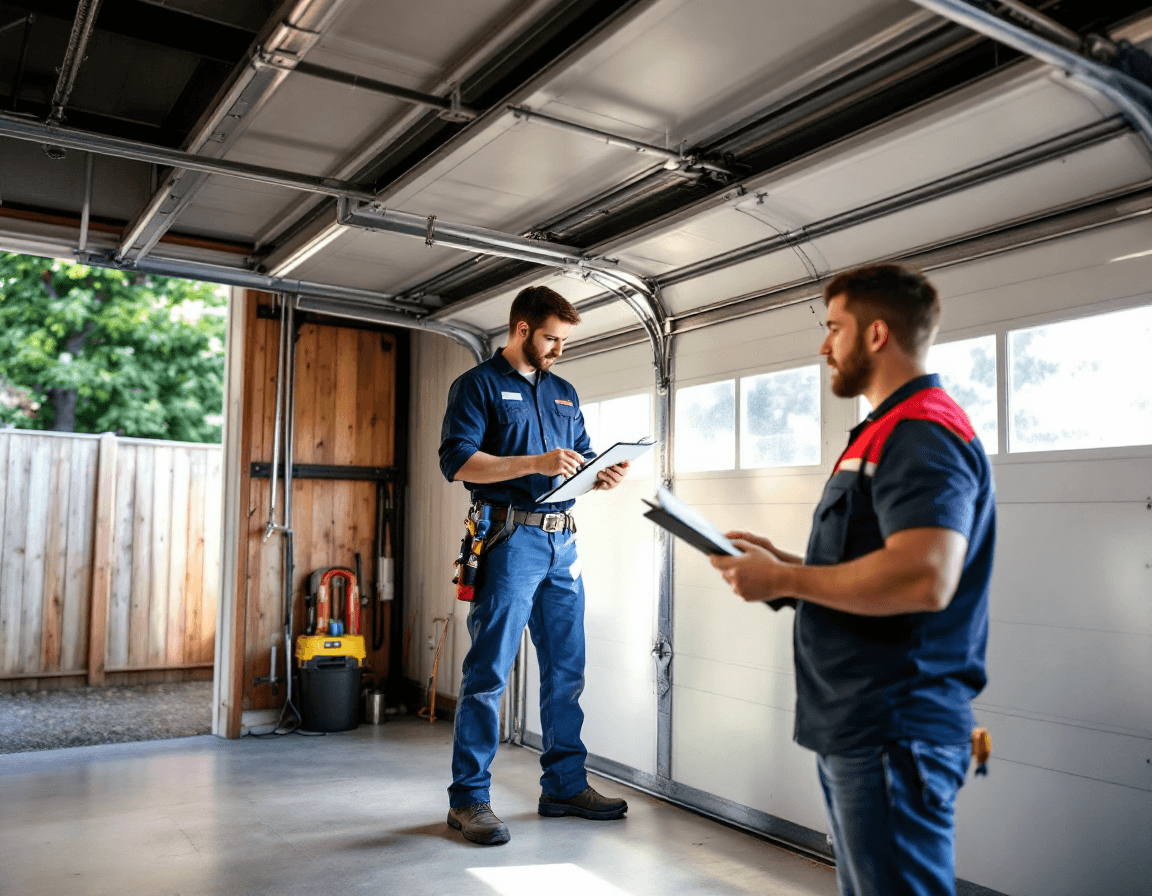
Garage Door Maintenance & Tune-Ups in Mercer Island, WA is one of the most cost-effective ways to keep a home running smoothly on the island. Our technicians work across the island's neighborhoods every week, from the older single-story ranches near the Town Center to larger homes on the hillsides that overlook Lake Washington. Each of those properties puts its garage door through different stresses, and a tune-up gives us a chance to catch small problems before they become expensive ones. A full multi-point service typically runs $89 to $149, depending on the door type and the number of components that need attention.
Mercer Island sits in the middle of Lake Washington, and that location shapes almost everything about how a garage door ages here. Damp air drifts off the water for much of the year, and winter brings long stretches of gray, wet weather that rarely dries out fully between storms. The door is exposed to that moisture every day, even when the house itself feels comfortable. A regular inspection is the simplest way to stay ahead of the wear that this climate produces.
Many island homeowners call us because something has changed, even if they cannot quite describe it. The door might rumble a little louder than it did last year, or the opener might seem to labor before the door reaches the top of its travel. Sometimes the first sign is simply a door that feels heavier to lift by hand. Whatever prompted your call, this page walks through what a maintenance visit covers, why local conditions matter, and how to tell when it is time to schedule one.
What a Multi-Point Tune-Up Covers on an Island Driveway
A multi-point tune-up is a structured inspection rather than a quick glance at the door. Our technician works through the door panels, hinges, rollers, tracks, springs, cables, pulleys, end brackets, weatherstripping, and the opener in a set sequence so nothing is skipped. Each component is checked for looseness, wear, corrosion, and alignment, and anything that needs adjustment is handled during the same visit. The goal is to leave the door operating the way it was designed to, with fewer surprises waiting in the next few months.
Many Mercer Island driveways are not flat, and that matters more than homeowners expect. A garage that sits on a grade can place uneven loads on the track and cause the door to travel slightly off square over time. We check the level of the tracks, the plumb of the vertical sections, and whether the door closes evenly against the floor seal. When the door meets the threshold unevenly, dirt, leaves, and rainwater find their way inside more easily, so correcting that alignment protects both the door and the room behind it.
Lubrication is part of the visit, but it is not a simple spray-and-go job. We select lubricants appropriate for the rollers, hinges, and bearings, and we avoid over-applying products that attract grit in a damp garage. Excess grease on a track collects dust and debris, which then turns into a grinding paste. Our approach is measured: clean first, then lubricate the moving points that actually need it, and wipe away anything that would cause buildup.
Why Lake Washington Humidity Works Against Steel Hardware
The moisture that rolls in from Lake Washington is gentle compared with ocean spray, but it is persistent. Steel hinges, tension springs, and track brackets absorb that moisture day after day, and light surface rust can start on exposed edges well before anyone notices it. Galvanized parts resist this longer, but scratches and worn coatings still allow corrosion to take hold. Once rust begins at a pivot point, it grinds against the metal around it and gradually loosens the connection.
Homes near the water and in lower-lying pockets often show this pattern first. Hinges may look fine from the driveway yet feel stiff when the door is operated by hand. Roller stems can develop a faint orange film that transfers to the track and creates friction. Our technicians look for these signs during every tune-up, and we treat them early by cleaning the affected surfaces, applying a suitable protective lubricant, and replacing components when corrosion has gone too far to reverse.
Humidity also affects the wood trim and framing around many island garages, particularly on older homes with weathered jambs and headers. When the wood swells and contracts, the track mounting points can shift slightly out of position. We check the fasteners that hold the track to the framing and tighten or relocate them when necessary. Keeping the structure stable is just as important as keeping the door moving freely.
Reading the Noise: What Grinding and Popping Tell Your Technician
Most homeowners describe a noisy door in one of a few ways: a grinding sound during travel, a sharp pop at the start of motion, a squeal near the top of the track, or a rattling that changes with the weather. Each sound points toward a different cause, and learning to distinguish them helps us work faster during your visit. Grinding often means dry or contaminated rollers, while popping usually indicates a loose bracket, a hinge that has shifted, or a roller stem that has begun to wear.
Noise that gets worse over months is usually a sign of progressive wear, not a sudden failure. The door may still operate normally, which is exactly why homeowners put off a service call. Our technicians listen carefully during the tune-up, run the door through its full cycle, and note where the sound originates. We then tighten what needs tightening, clean and lubricate what needs lubricating, and replace parts that are already failing.
It is worth mentioning what we will not do during a maintenance visit. We do not adjust tension on a spring that carries a high load without proper training and equipment, and we do not work on cable-and-drum systems in a way that puts anyone at risk. When a noise traces back to a spring, cable, or drum, we explain the finding clearly and recommend the right repair. Those components store significant energy, so they should be handled only by a licensed professional.
Balance Testing a Door That Feels Heavy or Slightly Off
A properly balanced garage door should feel almost weightless when you lift it by hand from the middle of the panel, and it should stay put when you release it partway up. When the door drifts down, jerks upward, or demands a hard tug to get started, the balance has shifted. Balance problems usually develop gradually as springs fatigue, hardware loosens, or the door accumulates extra weight from added insulation, storage shelves, or new panels.
During a balance test, our technician disconnects the opener, lifts the door manually, and observes how it behaves at several heights. We look for drift, sag, or sudden movement, and we measure the door's response against the manufacturer's specifications for that model. If the door is out of balance, the fix may involve adjusting the tension, replacing a worn spring, or correcting a hardware problem that is putting uneven stress on one side. Spring work is serious business, so the adjustment is performed only by a licensed technician with the right tools.
A door that feels heavy is also a safety question, not just a comfort issue. An unbalanced door places strain on the opener, the cables, and the rollers, and it can cause the opener to run longer than it was designed to. Over time that extra strain can burn out the motor or crack a mounting bracket. Catching a balance problem during a scheduled tune-up is far less costly than responding to an opener that has failed in the middle of a commute.
Opener Safety and Force Testing Without Guesswork
Modern garage door openers include safety reversing features that stop and reverse the door when it meets resistance, and they also include photo-eye sensors that detect obstructions in the doorway. Both systems need regular testing because they can drift out of calibration over time. A sensor that has been bumped, a reversing setting that has crept upward, or a wiring connection that has loosened can each leave the opener less protective than it should be.
Our tune-up includes a full opener safety check. We test the auto-reverse by placing a standard test object in the door's path and confirming that the door reverses as required. We verify that the photo eyes are aligned, clean, and wired correctly, and we check that the opener stops and reverses when the beam is broken. We also review the force settings to confirm the door is neither too weak to close fully nor too strong to safely reverse on contact.
Opener strain is one of the most common reasons island homeowners request a visit. A slow or straining opener may be dealing with a heavy door, worn gears, a loose track, or a motor nearing the end of its service life. We measure how the opener performs under load, check the belt or chain tension, and inspect the trolley and rail connection. Where the opener itself is near the end of its life, we will tell you plainly and provide options rather than pushing an unnecessary replacement.
Buying a Mercer Island Home? Start With a Baseline
Purchasing a home is a busy time, and the garage door often gets overlooked during inspections focused on roofs, foundations, and plumbing. Yet a garage door can be one of the more expensive surprises in a new home if it is worn, out of balance, or missing safety features. Many buyers request a tune-up shortly after closing so they know exactly what condition they inherited and can plan any necessary repairs with confidence.
A baseline service gives you a clear record of the door's current state. We document the condition of the springs, cables, rollers, hinges, tracks, and opener, and we explain what we see in plain language. If the previous owner did not keep up with maintenance, the report helps you decide whether to schedule repairs now or budget for them over the coming year. You also learn whether the opener's safety features are functioning, which matters a great deal if children or pets use the garage as a route into the house.
Buyers sometimes assume a door that operates without obvious problems must be fine. In reality, a door can open and close perfectly while hidden wear builds in the springs, brackets, and fasteners. A baseline visit uncovers those issues while they are still manageable, and it sets up a simple schedule for future service so the door never quietly drifts into trouble.
Older Island Homes and Mid-Century Track Layouts
Mercer Island has a wide range of housing stock, and many of the homes built during the mid-century decades still have their original or early replacement garage doors. Those installations often used different track geometries, lighter-gauge hardware, and older spring systems than doors installed today. Over several decades, those components accumulate wear that a modern tune-up has to account for carefully.
When we service an older door, we pay close attention to track alignment and to the condition of any hardware that has been patched or replaced piecemeal. Mismatched rollers, bent track sections, and brackets fastened into rotting framing are all common on older properties. We recommend replacing worn parts with components rated for the door's weight and dimensions, because compatibility matters more than most homeowners realize. Where a door is near the end of its useful life, we will explain the options candidly.
Older homes also tend to have garages with less insulation and more drafts, which means the door sees bigger temperature swings. Seals harden and crack, and weatherstripping pulls away from the edges. A tune-up includes inspecting the bottom seal, the side seals, and the top seal, and we recommend replacing any that no longer keep out wind, water, or pests. Small improvements in sealing can make a real difference in how the garage feels and how the door wears.
Sloped Driveways, Ridge Lots, and Door Alignment
Many island properties sit on slopes, and a sloped driveway changes how a garage door interacts with the ground. A garage set into a hillside may have a threshold that does not match the floor elevation on the inside, and a door that closes against an uneven surface can wear one side faster than the other. Our technicians check the door's contact with the floor at multiple points, looking for gaps, rubbing, or uneven pressure that would otherwise shorten the life of the seal and the bottom panel.
Alignment on a ridge lot deserves special attention because wind can push against the door more forcefully than it does in sheltered neighborhoods. Strong gusts coming off the lake or across open ground can cause a door to flex in its frame and place extra stress on the tracks. We check that the track brackets are secure and that the header and jamb support the door without movement. Reinforcing those connections during a tune-up reduces the chance of a sudden shift during a windy night.
Driveway drainage matters too. Water that flows toward the garage can pool at the threshold, soak the bottom panel, and rust the lower hinges. We look at how the threshold is holding water, and we note whether a drainage correction outside the garage would help. Our role is to keep the door working well, and we will tell you when a grading or drainage issue outside the door is the real cause of recurring trouble.
How Often a Mercer Island Door Should Get Attention
Most garage doors benefit from a professional tune-up at least once a year, and that schedule suits the damp, mild climate of the island well. Doors that see heavy daily use, such as those in households with multiple vehicles or frequent early-morning departures, may need attention more often. Homes with children, pets, or a garage that doubles as a workshop also tend to benefit from closer checks, because the door cycles more and gets more knocks.
It helps to think of the schedule in terms of seasons. Autumn is a good time for a tune-up because rain and cooler temperatures arrive soon after, and it is better to have the door checked before the wettest months settle in. Spring is another practical window because the winter's moisture has had time to work into the hardware, and a visit can clear out any buildup before summer use increases. Scheduling around those windows helps you avoid the rush that often follows the first hard freeze or a sudden cold snap.
Here are some signs that suggest your door is due for attention sooner rather than later:
- The door makes new grinding, popping, or squealing sounds that were not present a few months ago.
- The opener runs longer than usual or pauses partway through its travel.
- The door drifts down when left halfway open or feels much heavier to lift by hand.
- Light is visible around the bottom seal, or water collects at the threshold after rain.
- The auto-reverse or photo eyes seem inconsistent or fail to respond during testing.
If you notice any of these, a tune-up is a sensible next step. Waiting often turns a simple adjustment into a larger repair.
What Happens During the Visit, Step by Step
A maintenance visit follows a predictable path so that nothing is overlooked. Our technician begins by checking the exterior of the door, the framing, and the surrounding area, then moves to the interior components while the door is still in place. We review the springs, cables, drums, rollers, hinges, and end brackets, and we note anything that needs cleaning, tightening, or replacing. The opener is tested next, including its force settings, safety reversal, and photo eyes.
Once the inspection is complete, we explain what we found in plain terms before doing any work that goes beyond the standard service. You will know which items were addressed during the visit, which ones are worth monitoring, and which ones need a separate repair. If a part must be ordered, we discuss the timing and the options so you can decide how to proceed. Nothing is hidden in fine print, and you are never pressured into work you did not expect.
Finally, we clean the tracks, apply appropriate lubrication, and run the door through several complete cycles to confirm smooth operation. We leave the garage tidy and walk you through any habits that help the door last longer, such as keeping the track clear of debris and avoiding heavy loads hung from the door. A tune-up should leave you with a door that sounds better, moves more easily, and gives you confidence in its safety.
When Spring and Cable Work Belongs to a Licensed Professional
Garage door springs and cables are among the most hazardous components in any home. Torsion and extension springs store large amounts of energy, and a broken spring can release that energy with enough force to cause serious injury. Cables under tension can snap and whip with little warning. For that reason, we always recommend that spring replacement, spring tension adjustment, cable repair, and drum work be performed by a licensed, bonded, and insured professional who has the training and tools to do the job safely.
As part of a tune-up, we inspect these parts and explain their condition, but we do not recommend that homeowners attempt repairs on them. Try to avoid winding springs, loosening set screws on tensioned components, or removing cables from drums on your own. If you notice a broken spring, a frayed cable, or a door that has dropped suddenly, keep everyone away from the door and call a qualified technician right away. Safety always comes before convenience.
If you want your Mercer Island garage door checked before the next wet season or after a few months of unusual noise, schedule a multi-point tune-up with Seattle Garage Door Fix. Call (888) 799-3819 to book a visit, ask about pricing for your door type, and get a clear picture of what your door needs now and what to watch for later.