
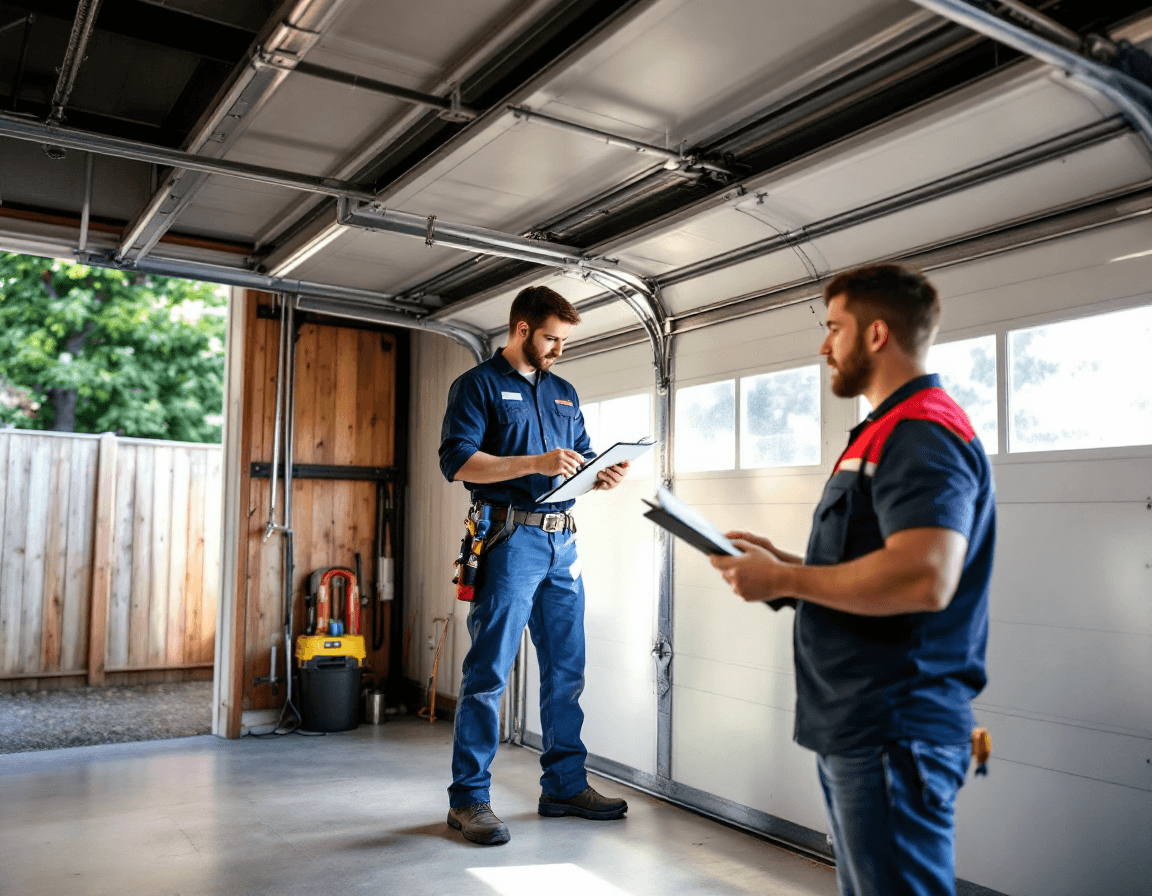
Garage door maintenance and tune-ups in Kirkland, WA are less about catching dramatic failures and more about catching the small wear that builds quietly through a Pacific Northwest year. Our technicians work on doors across Downtown Kirkland, Juanita, Totem Lake, and Rose Hill, and the same pattern shows up again and again: a door that has gone a year or two without attention starts to squeal, hesitate, or drag, and then one morning it stops altogether. A scheduled multi-point tune-up is the most affordable way to find those problems while they are still inexpensive to fix. For most single-door homes, a full inspection runs $89 to $149 depending on the door size, the opener type, and what we find.
Kirkland's location on the eastern shore of Lake Washington means your garage sees more moisture and temperature swings than many homes a few miles inland. Morning fog rolling off the lake, long stretches of drizzle from October through April, and the damp that settles into cul-de-sacs near Juanita Bay all find their way into garage seams and hardware. That moisture works against every moving part of your door, from the steel track to the rollers and the opener's drive system. A tune-up gives a trained eye the chance to look at all of those parts together, before a small problem becomes an expensive call.
This page explains what a maintenance visit covers, what the warning signs look like, why balance and opener safety matter, and what to expect if you have just purchased a home in one of our Kirkland service areas. It is written for homeowners who want to understand their door before they schedule anything. If you are dealing with broken springs, frayed cables, or a door that has come off its track, please call a licensed technician right away rather than attempting the repair yourself.
Why Kirkland's Damp Shoreline Air Quietly Wears Down Your Door
Kirkland's climate is mild by national standards, which is part of why many homeowners assume their garage door can be left alone for years. The reality is that our mild, wet winters and cool, humid summers are exactly the conditions that encourage slow corrosion and lubricant breakdown. Lake-effect humidity keeps surfaces damp for longer than people expect, especially on the north-facing sides of homes in the hillside neighborhoods around Rose Hill and parts of Totem Lake. Water that gets into a track seam does not evaporate quickly, and it carries road grit and dust with it.
Steel garage door hardware is typically galvanized or coated, but those finishes are not permanent. Over several wet seasons, the zinc coating thins on hinges, roller stems, and track brackets, and bare metal begins to show surface rust. Once rust forms on a roller stem or a bearing surface, it roughens the movement and makes the door work harder with every cycle. Wood and composite doors have their own problems, since moisture can swell panels, soften trim, and cause sections to bind in their tracks.
Grease and lubricant also behave differently in our climate. A lubricant that works well in a dry climate can wash out during a long, rainy February, leaving rollers and hinge pivots running on almost nothing. Dust and pollen then turn that thin film into a gritty paste. A technician who sees dozens of doors in a single season learns to recognize which parts of a Kirkland garage are usually the first to dry out, and a tune-up is designed to catch those spots before they wear grooves into the hardware.
- Moisture from lake fog and winter drizzle often collects in track seams and along the bottom weather seal.
- Galvanized finishes on hinges and roller stems can thin over several wet seasons, leading to early surface rust.
- Lubricant can wash out in heavy rain, leaving rollers and bearings to run dry until they start to grind.
- Wood and composite panels can swell or warp, which changes how the door sits in its tracks.
What a Multi-Point Tune-Up Actually Covers
A multi-point tune-up is a structured inspection rather than a quick look. A technician starts by observing the door in motion, listening for unusual sounds, and checking how smoothly it rises and lowers. The visit then moves through the individual components, working from the top of the door down to the floor. Our standard visit covers the springs, cables, rollers, hinges, tracks, bottom seal, and opener, with each area checked for wear, alignment, and safe operation. The price of $89 to $149 reflects this full sequence, and the final number depends on how many doors and openers are involved and what the inspection reveals.
On the mechanical side, the technician inspects the tension system and cable routing, looking for fraying, kinks, or signs that a cable has slipped off its drum. This is the one area where a homeowner should never attempt adjustments. Torsion springs and extension springs store enormous energy, and even a small slip can cause serious injury. The technician records the condition of the springs and cables, but any spring replacement or cable repair is handled by a licensed professional with the proper equipment.
The rest of the visit focuses on lubrication and alignment. Rollers are checked for flat spots, cracks, and worn bearings, and the technician cleans and lubricates hinge pivots, roller stems, and track surfaces with products suited to garage doors. Tracks are inspected for dents, loose bolts, and gaps, since even a slight bend can cause the door to bind. The bottom weather seal and side seals are examined as well, because a damaged seal lets in water, cold air, and pests that can affect the entire door.
- Visual and audible check of the door in full open and close cycles
- Inspection of torsion or extension springs and cable condition (assessed only, not adjusted by homeowners)
- Roller, hinge, and bearing cleaning and lubrication with garage-door-appropriate products
- Track alignment, bolt tightening, and checks for dents or gaps
- Bottom seal, side seal, and weatherstripping inspection
- Balance testing and opener safety testing, covered in later sections
Reading the Warning Noises: Squeals, Grinds, and Hitches
Most garage doors do not fail without warning, though the warnings are easy to dismiss as normal household noise. The first sign many Kirkland homeowners notice is a squeal when the door starts to rise, which often indicates a dry roller or hinge. A grinding or rumbling sound during travel usually points to worn bearings or grit trapped in the track. A sharp pop or clunk can mean a loose bracket or a roller that has begun to separate from its stem. Each sound tells a slightly different story, and a tune-up helps sort them out.
Noise that changes gradually over months is especially worth paying attention to. Many homeowners say the door "sounds fine" until they hear a recording of it from a year earlier, but the gradual increase in friction is measurable on the door's motion. If you notice that the door is louder in the morning, after heavy rain, or during cold snaps, moisture and temperature are likely playing a role. Those are good reasons to schedule service before the sound becomes a constant complaint.
Hitches are another common symptom. A door that stops briefly partway up, jerks at a particular height, or seems to pause before finishing its cycle often has a track obstruction, a damaged roller, or uneven tension. Sometimes the cause is as simple as a pebble or a bit of leaf debris in the track, which a technician can clear in minutes. Other times it reflects a worn component that needs replacement, and identifying it early keeps the repair scope small.
The Year-Without-Service Problem and Why Small Gaps Become Big Bills
If your garage door has not been serviced in more than a year, you are not alone, and you are also in the zone where most avoidable repairs begin. Garage doors are heavy, and they carry a lot of load through hinges, rollers, springs, and cables every time they cycle. Without periodic lubrication and inspection, friction builds, parts wear unevenly, and small misalignments grow into larger ones. A door that is only slightly out of true can put extra stress on its opener and on the springs, shortening the lifespan of components that were otherwise in good condition.
The problem is that a year-long gap rarely shows up as a single failure. Instead, a homeowner notices that the door is a little slower, a little noisier, or a little harder to manage by hand. Because the change is gradual, it is easy to adjust to it. Then a roller fails during a busy week, or a cable frays at the drum, and the repair becomes urgent and more expensive. Scheduling a tune-up at regular intervals keeps those changes visible and manageable, and it gives you a record of how your door is aging.
For homes in Juanita and Totem Lake, where many doors are installed in attached garages with heavier use from vehicles, lawn equipment, and bikes, the wear can be faster than expected. For homes in Rose Hill and Downtown Kirkland, where garages may be older or tighter, the track alignment and seal condition often deserve a closer look. Whatever your situation, a visit after a long gap is the best way to find out what the door actually needs rather than guessing.
Balance Testing: Why a Door That Feels Heavy Is Telling You Something
A properly balanced garage door should feel relatively light when lifted by hand, and it should stay in place when you release it partway open. If the door feels heavy, drifts downward, or rises unevenly, it is likely out of balance. Balance is determined by the tension in the springs relative to the weight of the door, and even a modest imbalance can strain the opener, wear rollers unevenly, and create a safety risk if the door drops unexpectedly.
Balance testing is one of the most important parts of a multi-point tune-up. The technician disconnects the opener, lifts the door by hand to a few different heights, and observes whether it holds position. The door is then tested under power to see how the opener handles the load. Because spring tension is a high-stakes adjustment, the balance itself is assessed by the technician, and any changes to the springs are made only by a licensed professional with the correct tools and training. Homeowners should never attempt to adjust spring tension on their own.
A door that feels off-balance can have several causes in our climate. Springs lose tension gradually over years of use, and worn hinges or bent track sections can change the way weight is distributed. Wood and composite doors that have absorbed moisture may also weigh more than they did when they were installed, which shifts the balance over time. A tune-up catches these changes early, and a licensed technician can recommend whether a simple adjustment or a spring replacement is the right fix.
Opener Straining or Running Slow? Checking the Motor and Safety Systems
When a garage door opener sounds strained, runs slower than usual, or seems to labor on the way up, the cause is often somewhere else in the door system. A door with dry rollers, out-of-balance springs, or a bent track forces the motor to work harder, and the opener may begin to overheat or wear prematurely. The opener is designed to lift a door within a specific load range, and anything that pushes it beyond that range shortens its life. A tune-up checks the door first, then tests the opener as a complete system.
Opener safety testing is a critical part of every visit. Modern openers are designed with automatic reversal, which causes the door to stop and reverse when it contacts an obstruction. Our technicians test this feature using the appropriate method for the opener model, and they check the photo-eye sensors near the floor to confirm they are aligned and clean. A sensor that has shifted, become coated with dust, or been damaged by a bumped car can disable the safety reversal, which is a serious hazard for children, pets, and anyone standing in the doorway.
The opener's travel limits and force settings also need attention. Over time, limit settings can drift, causing the door to stop too early or too late, and force settings can become too sensitive or too loose. Our technicians adjust these settings to match the door's current behavior and the opener's safety requirements. If the opener itself is aging, the visit will also note any signs of worn gears, a noisy drive, or a belt or chain that needs attention.
- Test automatic reversal with an obstruction method appropriate to your opener model
- Clean and align photo-eye sensors near the floor
- Confirm travel limits so the door stops fully open and fully closed
- Check force settings to match the door's current balance and weight
- Inspect the drive mechanism for wear, looseness, or unusual noise
Buying a Home in Kirkland? Start With a Door Inspection Before You Move In
Buying a home is one of the best reasons to schedule a garage door tune-up, and many of our Kirkland customers make a visit part of their move-in checklist. You may not know when the door was last serviced, what condition the springs are in, or whether the opener has been tested for safety. Previous owners may have made informal repairs or skipped maintenance entirely, and the door may look fine from the street while hiding worn rollers, frayed cables, or a sensor that does not reverse the door reliably.
A tune-up shortly after closing gives you a baseline. The technician records the condition of each major component, notes any safety concerns, and provides a clear picture of what the door needs now and what may need attention in the next year or two. That information is useful for budgeting, and it can also help if you are negotiating repairs with the seller, though that conversation is between you and your agent. Knowing the true condition of the door early means fewer surprises after you have settled in.
For newer homes near Totem Lake and Downtown Kirkland, the door may be relatively young, but the opener and sensors still deserve testing, since they are often installed quickly during construction. Older homes in Juanita and Rose Hill may have original doors with heavier wood panels or older opener models that have not been upgraded. In either case, a licensed technician can tell you which parts are in good shape and which deserve closer monitoring.
Neighborhood Notes: What We See in Downtown Kirkland, Juanita, Totem Lake, and Rose Hill
Each part of Kirkland has its own housing mix, and that mix shapes the garage door issues we see most often. Downtown Kirkland includes older homes and a number of converted or infill properties, where garages can be narrow, shallow, or shared with lot-line constraints. Doors in these settings often have tight headroom and sidewall clearance, which makes track alignment and bracket stability especially important. Moisture from the lake and the waterfront area can also settle into lower garage doors, so seal condition deserves attention.
Juanita is known for its tree-lined streets and proximity to Juanita Bay, and many homes there have attached garages that get heavy daily use. Households with multiple vehicles, bikes, and yard equipment put more cycles on the door each week than a typical single-car home. Doors in Juanita often show roller and hinge wear sooner than expected, and the opener may be working harder than its rating suggests. Regular tune-ups help keep these busy doors running smoothly.
Totem Lake has a mix of newer construction and older commercial-adjacent properties, and many homes there were built with two-car garages and larger doors. Wider doors carry more weight and place greater demands on springs and tracks, so balance checks are especially valuable. Rose Hill, with its established neighborhoods and hillside lots, often sees older garages with sloped driveways where moisture pools near the door threshold. Seal and drainage checks are a sensible part of maintenance in those areas.
Simple Things You Can Do Between Visits (And What to Leave to a Professional)
Homeowners can do quite a bit to keep their garage door in good shape between professional visits, as long as they stick to safe, non-mechanical tasks. Wiping down tracks with a dry cloth to remove grit, keeping the area around the door clear of boxes and debris, and watching for changes in sound or movement all help. Checking that the photo-eye sensors are free of cobwebs and dust is another easy habit that supports safe operation. Many people also find it useful to note how the door sounds in the morning and after rain, which gives the technician helpful information at the next visit.
Lubrication is a grey area, and it is worth being careful. A light, garage-door-specific lubricant can be applied to hinges and roller stems, but spray lubricants that attract dust or silicone-heavy products that do not suit your door's materials can cause problems. Avoid lubricating the springs, cables, or drums, since these components need specific care and inspection. If you are unsure what product to use, ask your technician during the next visit.
There are also tasks that belong strictly to licensed professionals. Spring replacement, cable repair, drum adjustment, and any work involving the tension system should never be attempted by a homeowner, no matter how handy they are. The energy stored in these components can cause severe injury, and mistakes can lead to a door that falls unexpectedly. If you see frayed cable, a broken spring, or a door that has come off its track, step back, keep others clear, and call a licensed technician right away.
- Wipe tracks gently with a dry cloth to remove grit and debris
- Keep the floor area near the photo-eye sensors clear and clean
- Note any new sounds, hitches, or uneven movement for your technician
- Apply garage-door-appropriate lubricant to hinges and roller stems only if you are confident in the product
- Never touch springs, cables, or drums; call a licensed professional instead
What the $89–$149 Tune-Up Covers and How Scheduling Works
The price of a full multi-point tune-up in Kirkland generally falls between $89 and $149, and the exact figure depends on the number of doors, the opener type, and the condition of the system. A single standard door with a typical residential opener will usually land toward the lower end of that range, while multiple doors, heavier wood panels, or additional opener testing may move the price higher. Any repairs discovered during the visit are quoted separately, and our technicians explain the options before any work begins, so you can decide how to proceed.
Scheduling is straightforward. Most homeowners reach out by phone, describe the door and the symptoms they have noticed, and then arrange a visit at a time that works for them. If you have just bought a home, mention that when you call, because the technician can focus on a complete baseline inspection. If your door is making unusual noises or hesitating, let us know, so the visit can prioritize those concerns.
Regular maintenance is the most reliable way to keep your garage door safe and quiet through Kirkland's wet winters and humid summers. A tune-up now can save you from an emergency call later, and it gives you a clear record of your door's condition over time. Whether your door is brand new, decades old, or somewhere in between, a licensed technician can tell you what it needs.
Ready to get your Kirkland garage door checked before the next wet season? Call Seattle Garage Door Fix at (888) 799-3819 to schedule a multi-point tune-up, ask about balance and opener safety testing, or request a baseline inspection after your home purchase. Our licensed technicians will walk through your door, explain what they find, and give you clear options so you can keep your garage running smoothly for years to come.