
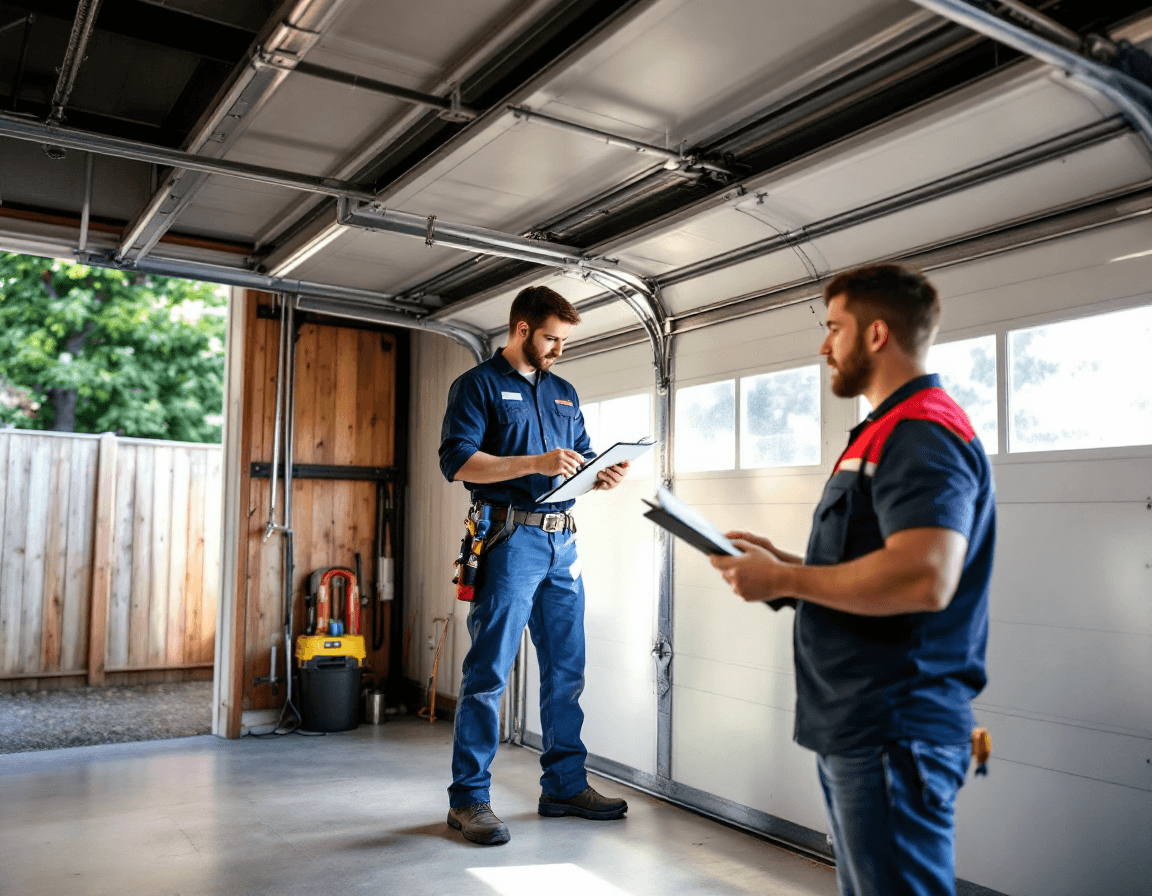
Garage Door Maintenance & Tune-Ups in Mill Creek, WA is the kind of routine service that most homeowners put off until a small annoyance becomes an expensive repair. A garage door is one of the heaviest moving objects in a house, and it runs on springs, cables, rollers, and an opener that all wear at their own pace. In Mill Creek, where wet winters and humid spring months are normal, that wear can speed up faster than many owners expect. A scheduled tune-up gives you a clear picture of what is happening inside the door before it fails.
Homes across the 98012 ZIP code range from older single-family houses to newer builds in neighborhoods like Silver Firs, and the doors on them vary just as much. Some have a single-car door that sees daily use, while others have a wide double door that handles bikes, recycling bins, and a second car. Whatever your setup, the same basic components need attention, and the same basic checks reveal problems early. This page explains what a professional multi-point tune-up involves, what signs point to a need for service, and how to think about the cost and timing.
If you are reading this because your door has started to sound different, or because you recently closed on a home and have no idea when the door was last serviced, you are in the right place. The sections below walk through the inspection in plain language so you know what the technician is checking and why each step matters. Our goal is for you to make an informed decision, whether you schedule service now or plan it for the next few months.
How Mill Creek's Wet Seasons Affect Your Garage Door
Western Washington winters bring long stretches of rain, and that moisture finds its way into every part of a garage door system. Steel tracks can develop surface rust at the seams where water sits after a storm, and wooden doors can swell along the bottom panel or near the hinges. Cold mornings followed by damp afternoons also cause the metal components to expand and contract, which can shift the alignment of the track just enough to create friction. Over a few seasons, those small changes add up to a door that rubs, stalls, or sits crooked in its opening.
Spring and early summer bring their own issues. Pollen, moss, and fine grit from driveways settle into roller bearings and hinge knuckles, turning a smooth ride into a grinding one. Many Mill Creek homes sit under mature trees, so needles and leaves collect in the track channels and along the weather seal. A tune-up clears that debris, checks the weather seal for brittle or cracked sections, and confirms that the track still sits square to the floor. Doing that work before the dry months arrive is a far better plan than discovering a jammed door on a busy weekday morning.
Humidity also affects your opener. Electrical connections, the logic board, and the wall control can all be sensitive to moisture over time, especially on openers mounted in garages that do not stay consistently warm. A technician will check the wiring at the opener head, look for signs of corrosion on the terminals, and confirm that the safety sensors remain clean and aligned. Those checks take only a short time during a tune-up, but they catch problems that would otherwise appear as intermittent failures that are hard to diagnose after the fact.
What a Multi-Point Tune-Up Actually Covers
A multi-point tune-up is a structured inspection rather than a quick once-over. The technician works through the door system in a set order, starting with the outside of the door and moving inward to the mechanical components, the opener, and the safety devices. Every item on the checklist gets a visual look, a physical check, or a functional test. The result is a clear record of what is in good shape, what is wearing, and what needs attention before it becomes urgent.
Here is a general outline of what a typical visit includes:
- Inspection of door panels, hinges, end caps, and bottom weather seal for cracks, dents, or loose fasteners
- Track alignment check, including roller seating, track bolts, and clearance at the top corners
- Lubrication of rollers, hinges, bearings, and the spring system using a garage-door-specific lubricant
- Balance testing of the door by disconnecting the opener and checking how the door holds at several heights
- Opener safety testing, including auto-reverse force and the photo-eye sensors near the floor
- Inspection of the springs and cables for visible wear, with a recommendation for licensed service when needed
- Review of the emergency release cord, its condition, and whether it operates freely
- Check of the opener's belt, chain, or screw drive for tension and wear
Each item matters for a different reason. A worn hinge can lead to a panel that bends, and a loose track bolt can allow the door to wobble during travel. The emergency release is the one most homeowners forget about until they need it during a power outage, so confirming it still works is a simple safeguard. The full checklist is what separates a true tune-up from a basic lubrication visit.
Reading the Early Warning Signs in Your Door
Garage doors rarely fail without warning. Most of the time the first sign is a change in sound, speed, or feel that you notice every time you use the door. A door that used to rise quietly and now squeals or clatters is telling you something about its rollers, hinges, or track alignment. A door that once moved smoothly and now seems to hesitate at a certain height is often showing early wear on the spring system or a bearing that needs attention.
The list below covers the most common symptoms we hear about from Mill Creek homeowners, and each one is a good reason to schedule a tune-up:
- The door is getting noisier over time, especially on the first lift of the morning
- The door feels heavy or slightly off-balance when you lift it by hand with the opener disengaged
- The opener sounds strained, runs slowly, or takes longer than usual to complete a cycle
- The door has not been serviced in more than a year
- The door stops or reverses for no obvious reason
- You see visible gaps in the weather seal or dents in the lower panels
It is worth paying attention to the pattern rather than a single noise. A door that squeaks on a damp morning but runs fine by afternoon may simply need lubrication, while a door that grinds every time it passes the same point in the track may have a roller issue or a track that has shifted. A technician can usually tell the difference within a few minutes of observation, and that diagnosis is part of what a tune-up provides.
Opener Safety Testing and Why It Matters
Modern garage door openers are designed with safety reversal systems that stop and reverse the door if it meets resistance. Those systems are important because a door that does not reverse properly can injure a child, a pet, or an adult who steps under it. Safety testing during a tune-up verifies that the door reverses when it contacts an object on the floor and that the auto-reverse force setting still matches the door's weight and balance. A door that has drifted out of balance can trigger reversals at the wrong time, while a door with an improperly set force can fail to reverse when it should.
The photo-eye sensors are the other half of the safety system. These two small units sit near the floor on either side of the opening, and they must be aligned so their beams connect. In Mill Creek garages that see dust, road spray during winter storms, or occasional bumps from bikes and strollers, the sensor lenses can become dirty or knocked out of alignment. A technician will clean the lenses, check the mounting brackets, and confirm that the lights show the correct status before the door is returned to service. Testing the sensors is quick, but it is one of the most important checks on the entire visit.
The opener itself also gets a functional review. The technician will run the door through a full open and close cycle, listen for unusual sounds from the drive mechanism, and check the limit settings that tell the door where to stop. Limits that are set too tight can cause the door to stop short, while limits that are set too loose can strain the mechanism. If the opener shows signs of significant wear, such as a worn drive belt, a failing motor, or a logic board with error codes, the technician will explain your options clearly so you can decide what makes sense for your home.
Balance Testing: The Check Most Owners Never Think About
Balance is one of the most useful checks in any garage door tune-up, and it is also one of the least understood. A properly balanced door stays put when you stop it partway up, and it rises and falls with only modest effort when you lift it by hand with the opener disconnected. A door that is out of balance will drift up or down on its own, strain the opener, and wear the springs and cables faster than they should. Over time, imbalance can also cause the bottom of the door to hit the floor unevenly or the top section to bind in the track.
To test balance, the technician disengages the opener and lifts the door to about waist height, then lets go. A balanced door will hold its position, while an unbalanced one will sag or rise. The same test is repeated at several heights, usually near the bottom, middle, and top of the travel. Results are recorded, and any drift is noted so the technician can recommend an adjustment or a spring replacement if the spring tension has fallen off. Balance is one of the best indicators of how much stress the spring system is carrying, which makes it a valuable early warning tool.
It is important to be clear about what a homeowner should and should not do here. Testing balance by hand is a reasonable way to get a rough sense of how your door behaves, as long as the opener is disconnected and the door is fully closed when you start. Adjusting spring tension, however, is dangerous work that involves stored mechanical energy. Springs and cables must be handled only by a licensed, trained technician who has the right tools and experience. If a balance test shows the door is not holding its position, call a professional rather than trying to correct the problem yourself.
Lubrication That Holds Up in the Pacific Northwest
Lubrication sounds simple, but the details matter. Applying the wrong product, or applying too much, can attract grit and make the door noisier over time. The best approach uses a lubricant made for garage door components, applied sparingly to the parts that actually move. Rollers, hinges, bearings, and the spring coils each need a light, targeted application, and the excess should be wiped away so it does not drip onto the floor or collect dust.
In Mill Creek's damp climate, lubrication also protects against corrosion. A thin film on steel components helps block moisture from reaching bare metal, which slows rust formation in hardware that sees constant exposure to humid air. Technicians typically check the condition of the lubricant during a tune-up and may recommend a different product or a different schedule if the existing coating has washed away. Some tracks also benefit from cleaning before lubrication, since adding fresh product over old grit can create a grinding paste that wears parts faster.
Lubrication should never be applied to the photo-eye sensors, the opener's electrical components, or the weather seal unless the product is specifically labeled for that material. Silicone-based products are commonly used on rubber seals to keep them flexible and prevent cracking, which is especially useful for doors that see temperature swings and rain. A professional will use the right product for each surface and explain what was done, so you know what to expect from the door in the weeks that follow.
Buying a Home in Mill Creek and Inheriting an Unknown Door
Many of the calls we receive from new homeowners start with the same question: when was the garage door last serviced? Real estate transactions rarely include a detailed record of garage door maintenance, and sellers may not know whether the springs were replaced or the opener was updated. A tune-up shortly after closing is a practical way to get a clear baseline for the door, the opener, and the safety systems. It also gives you a record you can refer to if a problem develops later.
A new-home tune-up is especially useful in neighborhoods where the original builder installed a standard configuration of springs, tracks, and opener. Some newer homes use lighter doors with different spring setups, while older homes may have heavier wood or steel doors that were balanced for a different weight. Knowing exactly what you have helps with future repairs, since parts must match the door's size, weight, and track system. The technician can document the door type, track configuration, and opener model in one visit.
Buying a home also means you may be responsible for an opener that is older than you realize. Openers have a limited service life, and a unit that is more than a decade old may run quietly now but struggle under heavier use. During the tune-up, the technician will assess the opener's condition and explain whether it is a good candidate for continued service or whether replacement is worth considering. That kind of honest assessment is valuable when you are still settling into the house and deciding where to spend your budget.
Scheduling Maintenance Around Your Household
Garage doors get more use than most homeowners realize. A household with two commuters, children heading to school, and regular trips for groceries and errands may cycle the door several times a day. That frequency adds up quickly, and the components that move the door experience wear accordingly. A simple way to plan maintenance is to base the schedule on how often the door is used rather than on a fixed calendar date.
For many Mill Creek homes, a yearly tune-up is a sensible baseline, with a shorter interval for doors that see heavy daily use or that are exposed to salt spray, road grime, or heavy tree debris. Homes near busy roads or in neighborhoods with frequent yard work may benefit from checking the track and lubrication more often. Scheduling the visit in early spring or late fall works well for many households, since the door is ready for the wet season or the drier months that follow. A technician can recommend the right interval after the first inspection.
It also helps to keep a simple log. Note the date of each tune-up, any repairs performed, and any unusual sounds or behaviors you notice between visits. If you call for service later, that record helps the technician understand the door's history. A log also makes it easier to spot patterns, such as a noise that returns every few months or a balance issue that appears after a long stretch of wet weather.
Understanding the $89–$149 Tune-Up Range
Our full multi-point tune-up is priced between $89 and $149. The final price depends on the size and type of door, the number of components that need attention, and whether the opener requires additional testing. A single-car door with a standard opener generally falls toward the lower end of the range, while a larger double door, a heavier insulated panel, or a system with multiple openers may fall higher. The technician will confirm the price before beginning the visit so there are no surprises.
The quoted range covers the inspection, lubrication, balance testing, and opener safety testing described on this page. It does not automatically include parts or major repairs. If the inspection reveals a worn roller set, a damaged cable, or a failed sensor, the technician will explain the issue and provide a separate estimate for the repair. You are never obligated to approve additional work, and a good technician will walk you through the options so you can decide what fits your budget and timeline.
Some homeowners ask whether a tune-up is worth the cost when the door seems to work fine. In most cases, the answer is yes. A tune-up is far less expensive than an emergency spring replacement or an opener failure during a rainy night, and it gives you confidence that the door and safety systems are working as they should. The modest investment also helps extend the life of the components, which can reduce the frequency of larger repairs over the long term.
When Cable and Spring Work Needs a Licensed Professional
Springs and cables are the heart of a garage door's lifting system, and they are also the most dangerous part of the door to handle. Torsion springs and extension springs store a large amount of energy, and a spring that is adjusted or replaced incorrectly can cause serious injury. Cables can snap under tension and whip across the garage, and drums can slip if the wrong tension is applied. These are not tasks for a weekend project, no matter how handy you are with tools.
During a tune-up, the technician will visually inspect the springs and cables for signs of wear, such as gaps between coils, rust on the spring surface, fraying on the cable strands, or a cable that has come off its drum. If the components show signs of fatigue, the technician will recommend service by a licensed professional. That recommendation is not a sales tactic. It reflects the reality that spring and cable work requires specialized training, proper winding tools, and a clear understanding of how the door's weight and balance interact.
If you notice a broken spring, a door that will not lift at all, or a cable that is hanging loose, keep the door closed, avoid trying to lift it manually, and call for help. Disconnect the opener only if it is safe to do so and you can keep your hands and body clear of the door. Keep children and pets away from the area. A licensed technician can assess the situation and make the repair safely, which is always the right approach for this type of work.
Ready to Schedule Your Mill Creek Garage Door Tune-Up?
If your door is getting noisier, feels heavy, has not been serviced in more than a year, or you simply want a clear picture of its condition after a recent home purchase, a multi-point tune-up is a smart next step. Our licensed, bonded, and insured technicians serve Mill Creek and the surrounding Snohomish County communities, and we can usually work with your schedule. Call (888) 799-3819 to book a visit, ask questions about your specific door, or get help choosing the right service interval for your household.