
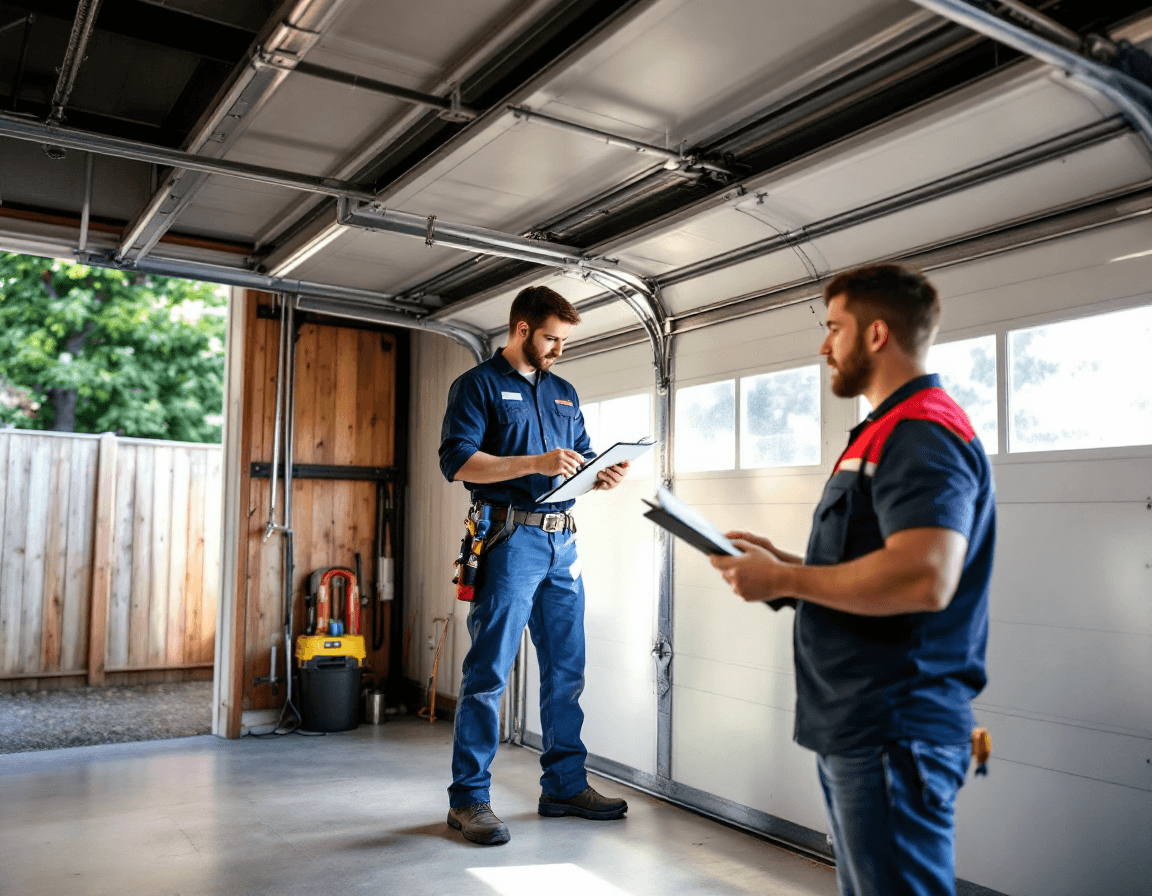
Garage door maintenance in Snohomish is less about dramatic failures and more about slow, steady wear that the Pacific Northwest weather speeds along. Homes in the historic core, the newer subdivisions around Clearview, and the rural-edge properties between them all share one reality: winter rain, humid springs, and damp shaded corners that keep metal and wood working harder than they would in a drier climate. A garage door tune-up gives a technician the chance to catch that wear while it is still a simple fix. Our multi-point tune-up, priced between $89 and $149 depending on the door and opener, covers the safety inspection, lubrication, balance testing, and opener safety checks that keep a door running quietly for the long haul.
Many Snohomish homeowners do not think about their garage door until something goes wrong, usually on a cold morning when the door groans halfway up and refuses to go further. By then, a problem that began as a bit of dry rust on a roller track or a slightly out-of-balance door has often grown into a more expensive repair. This page walks through what a tune-up actually involves, which local conditions make it especially valuable, and the warning signs that suggest it is time to schedule one. If you are in 98290, 98296, or nearby neighborhoods, the guidance below applies directly to the homes you see around you every day.
Whether your door is brand new or has been quietly working since the previous owners moved out, a proactive check gives you a clear picture of its condition. You will know what has been done, what still needs attention, and what can safely wait. Call us at (888) 799-3819 if you would like to schedule a tune-up or ask a question before booking.
How Snohomish's Damp Springs Work on Garage Door Hardware
The Snohomish River valley is known for its soft, drizzly winters and springs that stay wet well into May. Moisture is not just a surface nuisance for a garage door; it finds its way into hinges, roller bearings, and the seams where panels meet. When humidity sits in the air for weeks at a time, unprotected steel begins to form surface corrosion that is easy to miss until you see an orange bloom on a track or a flaky patch on a bottom bracket. Wood doors, which remain common on older Snohomish homes, can swell and then shrink, changing how the panels sit in their tracks.
Moisture also affects the lubricants themselves. Grease that works well during a dry August can wash out or become sticky after repeated soakings, leaving metal-on-metal contact that squeaks and wears faster. A technician checking a door in February will often find a very different condition than one checking the same door in September, because the wet season has done its work in between. This is why a tune-up timed for the end of winter or early fall tends to reveal more useful information than one scheduled during a dry stretch.
During a visit, we pay close attention to the lowest part of the door, the bottom seal, and the points where water tends to pool or splash. We look for early rust, check whether weather stripping has hardened or torn, and make sure the door's drainage paths are clear. If the door sits in a spot that gets runoff from a driveway or a slope, we note that as well, because standing moisture at the threshold can contribute to rot in wood frames and corrosion on the door's bottom section.
Older Garages Near Historic Downtown Snohomish
Historic Downtown Snohomish is home to a remarkable collection of early twentieth-century houses, and many of them came with detached garages or carriage-style outbuildings that were later converted or updated for modern vehicles. Those older structures often have framing that is not perfectly square, slabs that have settled unevenly, and header heights that leave little margin for a standard sectional door. When a newer door is installed into an older opening, small mismatches can throw the entire system out of balance, especially if the track was mounted to a wall that has shifted over decades.
A tune-up on an older Snohomish garage involves more than greasing a few rollers. We check whether the track is level and plumb, confirm that the hinges and brackets are still tight in their original or replacement mounting holes, and look for signs that the garage wall is flexing when the door cycles. Loose fasteners in older framing are a common cause of rattling and uneven travel. Tightening and re-securing them early keeps the door from working itself into a more serious misalignment.
Many of these properties also have a single-car garage with limited headroom, which means the opener's rail and trolley sit close to the ceiling. We inspect the opener mounting and the spring or torsion setup with that clearance in mind. Older homes sometimes have DIY modifications, like an added weatherstrip or a re-hung panel, and those changes can shift the door's center of gravity. Documenting those details at the time of a tune-up helps us give you an accurate account of what the door is doing today.
Clearview Homes, Larger Lots, and Heavier Doors
Clearview, to the east of Snohomish proper, has a different mix of housing. Many properties sit on larger lots, and garages there tend to be wider, deeper, and more likely to house a second vehicle, a workshop, or stored recreational gear. Those extra loads matter. A double-wide door carrying insulation, a heavier steel panel set, or a glass upgrade can put more demand on torsion springs and openers than a single-car door would. When a door feels heavy or slightly off-balance, the extra weight of a large door is often part of the story.
Clearview's rural-adjacent setting also brings a different set of wildlife and debris challenges. Leaves, pine needles, and fine dust collect in tracks more readily when a property backs onto wooded areas. Those particles mix with lubricant and form a gritty paste that increases friction and accelerates roller wear. We clean tracks thoroughly during a tune-up and remove that buildup before applying fresh lubricant, because lubricant laid over debris only traps the grit against moving parts.
For larger doors, balance testing becomes especially important. We disconnect the opener, lift the door by hand to a partial height, and observe whether it stays in place or drifts. A well-balanced door should hold near the midpoint without strong movement. If it drops or rises on its own, the spring tension is likely off, which puts strain on the opener and the cables. Adjusting that tension involves high-tension components, and it should always be handled by a licensed professional with the right tools.
What a Multi-Point Safety Inspection Covers
A multi-point inspection is a structured walk-through of every component that affects how your door moves and how safely it stops. We start at the top and work down, examining the door's panels, hinges, rollers, tracks, cables, springs, brackets, and seals. Each item gets a visual check for wear, corrosion, cracking, or looseness, and we note anything that needs closer attention. The goal is to give you a clear, honest picture of your door's condition rather than a vague "everything looks fine" that leaves you guessing.
- Panels and hinges: checked for cracks, dents, loose hinge screws, and sagging sections
- Rollers and bearings: inspected for flat spots, chipped nylon, and seized or grinding steel units
- Tracks: verified for level, plumb alignment, secure mounting, and absence of bends or gaps
- Springs, cables, and drums: examined for visible wear, fraying, and proper winding (adjustment work goes to a licensed technician)
- Weatherstripping and bottom seal: assessed for tears, hardening, and gaps that let water and drafts through
- Opener and safety sensors: tested for proper travel limits, reversal behavior, and photo-eye alignment
Because the inspection covers safety-critical parts, we also confirm that the door reverses when it meets resistance and that the photo-eye sensors are aligned and clean. Those sensors are often the first thing to get knocked out of position by a bumped trash can or a stray bicycle, and a misaligned sensor can leave a door that looks fine but will not stop safely. We will show you what we found and explain what it means in plain language before any work begins.
Lubrication That Holds Up Through Wet Western Washington Winters
Lubrication sounds simple, but the product and the method matter a great deal in our wet climate. A light oil that works in a dry desert garage can wash away within a few rainy weeks, while a heavy grease that is applied everywhere can collect dust and become gummy. For most residential doors, we use a silicone-based or lithium-based lubricant on the rollers, hinges, and tracks, applied sparingly so it stays where it is needed. We avoid spraying lubricant onto the springs and cables in ways that can drip onto the floor or attract debris.
The application sequence is important. We clean first, removing old lubricant and grit with a dry cloth and a degreaser where appropriate, then we apply a measured amount to the moving points. Overlubricating is a common mistake. Excess product slings onto the door's panels and the floor, collects dirt, and can cause rollers to slip rather than turn. A tune-up leaves each point lightly and evenly coated, which is what a durable system needs.
Homeowners can help keep that lubrication effective between visits. Wiping the tracks after a heavy rain, checking that the bottom seal is still making contact, and keeping the floor clear of standing water all extend the time between service calls. If you notice a squeak returning within a few weeks, that is worth reporting, because it often points to moisture getting into a bearing or a track that has moved slightly out of line.
Balance Testing: The Quiet Check That Predicts Trouble
Balance testing is one of the most useful parts of a tune-up, and it is also one of the easiest to overlook. A properly balanced garage door should stay put when you stop it partway up, which means the springs are carrying roughly the door's full weight. When the springs lose tension through age or cycling, the door starts to drift, and the opener has to work harder to lift it. That extra strain shortens the lifespan of the opener motor, the trolley, and the drive belt or chain.
To test balance, we disconnect the opener and raise the door by hand to about waist height, then let go. A door that rises or falls on its own is out of balance. We also check for uneven movement across the width of the door, which can indicate a spring that has weakened on one side or a cable that is not seated correctly on its drum. These observations help us decide whether a simple tension adjustment is enough or whether a spring or cable needs replacement.
Balance problems in Snohomish often show up after a cold snap, when metal contracts and springs lose some of their working tension. They also tend to worsen after a long dry summer and then a wet fall, as temperature and humidity swing back and forth. A tune-up gives you a snapshot of where the door stands today. If the test reveals a problem, we will explain the options and provide a clear recommendation, but we always leave high-tension spring and cable work to a licensed professional who understands the stored energy involved.
Opener Safety Testing and Reversal Checks
The opener is the part of your system most likely to be trusted without a second thought, which makes it important to verify that its safety features are working. Modern residential openers are designed to reverse a closing door when they detect an obstruction, and they rely on both force settings and photo-eye sensors to do so. During a tune-up, we test the reversal function using standard methods that replicate contact with an object, and we confirm that the photo-eye beams are aligned, clean, and wired correctly.
Force settings matter as much as sensors. If the force is set too high, the door may not reverse quickly enough when it meets a person or a pet, and if it is set too low, the door may reverse for no reason as the seasons change and the door's friction shifts. We adjust these settings with care, balancing safety and reliable operation. We also check the travel limits so the door stops fully open and fully closed without straining the motor or leaving a gap at the bottom.
Opener safety testing also covers the manual release cord, which should be accessible and intact. Homeowners sometimes disconnect the opener during a power outage and then forget to reconnect it properly, leaving the door in a state that is hard to operate. We show you how to use the release safely, explain when it is appropriate to use it, and remind you never to attach it to a door that is damaged or unbalanced. Those simple habits protect both the door and the people who use it daily.
Straining Openers and Slow Travel: Reading the Early Signs
An opener that is straining, slowing down, or running longer than usual is sending a message, and it is usually worth paying attention to early. Common signs include a motor that hums loudly before the door begins to move, a door that pauses mid-travel, a gear or belt that sounds rough, or a door that closes more slowly than it used to. Each of these can have a range of causes, from a dry roller to a spring losing tension to a worn trolley that has lost its smooth engagement with the rail.
Some of these issues are easy to correct during a tune-up, such as cleaning and lubricating the rail, tightening loose brackets, and resetting the travel limits. Others point to a mechanical component that needs replacement, such as a worn drive gear, a failing capacitor in the motor, or a weakened spring that is forcing the opener to do the work of a spring. A technician who checks the whole system can usually tell which category your problem falls into and recommend the right next step.
Ignoring a straining opener often leads to a breakdown at the least convenient time. Many Snohomish homeowners discover the problem when a cold morning or a rainy commute makes the door unusable, which is exactly when a quick tune-up would have prevented the stall. If your opener has become noticeably louder or slower over the past few months, scheduling a check now can save you from a hurried call later in the season.
Buying a Home in Snohomish? Use the Tune-Up as a Baseline
If you have recently purchased a home in Snohomish, a garage door tune-up is one of the best early investments you can make. Real estate transactions often focus on the house's structure, roof, and systems, and the garage door can be overlooked during inspection or treated as a minor detail. Yet the door is one of the largest moving objects in the home, and its condition affects both safety and daily convenience. Knowing its current state at the start of your ownership gives you a reliable baseline for future maintenance.
A tune-up for a newly purchased home includes a thorough inspection of the door, opener, safety sensors, and hardware, along with a balance test and lubrication. We document what we find, including the make and model of the opener if it is accessible, the approximate spring and cable condition, and any signs of prior repairs or modifications. That record can help you plan future service, understand the door's expected remaining life, and make informed decisions about upgrades.
It is also a good moment to confirm that the garage door's remote, keypad, and smartphone access work as expected. Former owners sometimes leave behind old remotes that are still programmed to the opener, which can be a security concern. We can help you reset the access codes and program your own devices, so you know exactly who can open the door. Starting with a clean, documented system gives you peace of mind from the first day in your new home.
Spring and Cable Work Belongs With a Licensed Professional
Springs and cables are the most powerful and most dangerous parts of a garage door system. Torsion springs and extension springs store enough energy to cause serious injury if they are handled incorrectly, and cables under tension can snap and whip with force. Because of this, we recommend that spring and cable work be left to a licensed, bonded, and insured professional who has the proper winding bars, safety equipment, and training. Attempting this work without the right knowledge can lead to injury, property damage, and a door that fails more quickly than before.
During a tune-up, we inspect springs and cables for visible wear and explain their condition to you. We will tell you whether a spring is showing signs of fatigue, whether a cable is fraying or has come off its drum, and whether a replacement is advisable soon. We do not recommend that homeowners adjust torsion springs or replace cables themselves, even if they have watched videos or read guides online. The risk is simply too high for untrained hands, and the stored tension in a torsion spring can be deadly.
If you are unsure whether a particular sound or movement points to a spring or cable problem, do not try to diagnose it yourself. Keep the door closed, avoid using the manual release on a door that seems heavy or unbalanced, and call for a professional inspection. Clear communication with your technician about what you have noticed helps us prepare the right tools and set accurate expectations before we arrive at your home in Snohomish or Clearview.
Pricing Your Tune-Up Between $89 and $149
Our full multi-point tune-up is priced between $89 and $149, and the final price depends on the door type, the opener configuration, and the number of points that need attention. A single-car door with a standard opener and no major issues will typically fall toward the lower end of that range, while a double-wide door, a heavier insulated panel set, or a system with multiple sensors and accessories may land higher. We will confirm the price with you before any work begins, so there are no surprises when the technician finishes.
It is important to understand what the tune-up includes and what it does not. The service covers inspection, cleaning, lubrication, balance testing, and opener safety checks, along with a clear explanation of findings. Replacement parts, spring and cable work, and major repairs are separate and will be quoted only after you have seen the diagnosis and approved the plan. This approach keeps the initial visit transparent and gives you control over the decisions that follow.
Many homeowners find that a tune-up pays for itself by catching small problems before they become costly ones. A worn roller that is replaced for a modest fee is far less expensive than a broken track or a failed opener that strands you in the driveway. When you consider the safety benefits and the convenience of a reliable door, the value of a regular tune-up becomes easy to see, especially in a climate where moisture and cold work against your hardware year after year.
Call (888) 799-3819 to schedule a multi-point garage door tune-up for your Snohomish home, whether you live near Historic Downtown Snohomish, out in Clearview, or anywhere in the 98290 and 98296 area. Our team will inspect your door, lubricate and balance it, test the opener's safety features, and explain every finding in plain language so you can decide what comes next with confidence.