
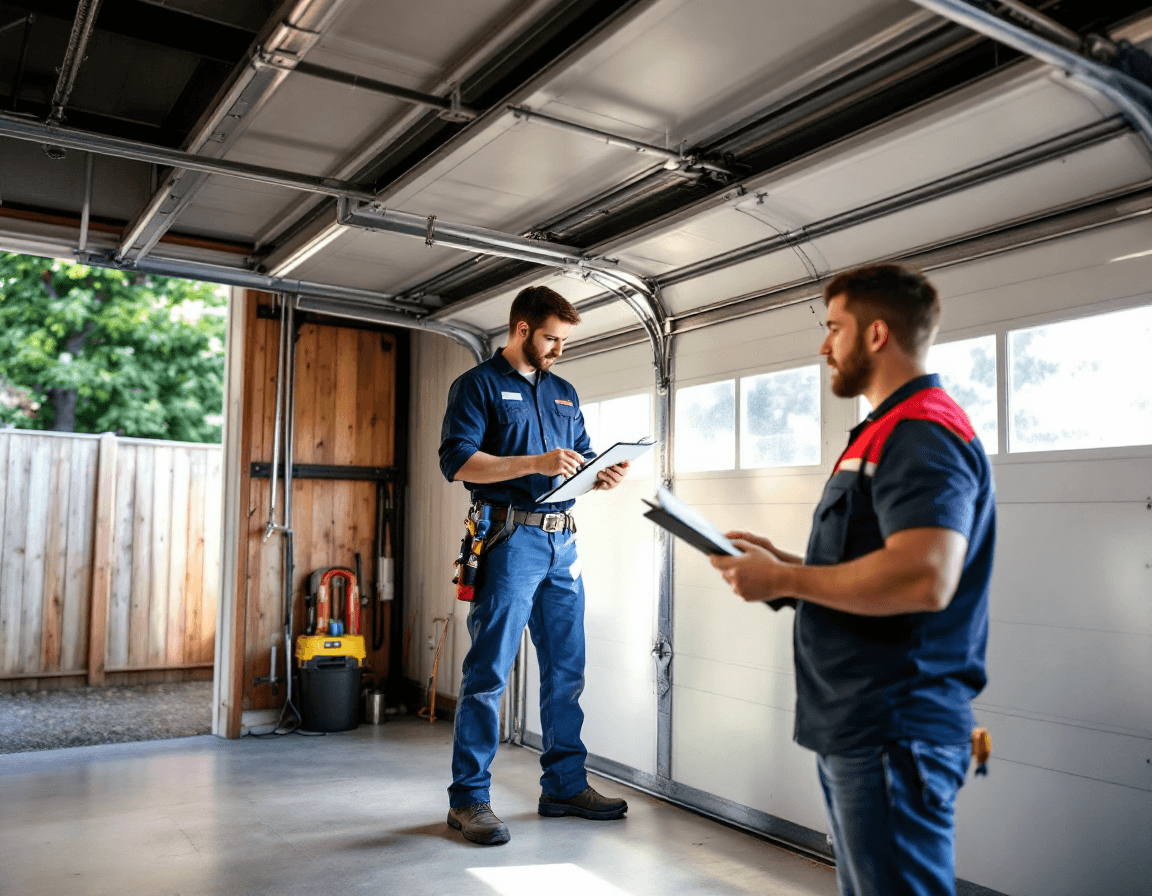
Garage Door Maintenance & Tune-Ups in Maple Valley, WA is one of the most useful things a homeowner can schedule before a problem shows up. Maple Valley sits in the foothills southeast of Lake Washington, where wet winters, cool damp springs, and occasional dry summer spells all put steady stress on the hardware that moves your garage door. Most of that wear happens slowly, so the door may seem fine right up until it isn't. A professional tune-up catches the early signs while they are still cheap to fix.
If you live near the Four Corners area or along the shore of Lake Wilderness, you have probably noticed how quickly the weather changes from one week to the next. Morning fog off the water can leave metal parts beaded with moisture, and a few dry afternoons can follow before the next front rolls in. Those swings cause tracks to shift slightly, rollers to stiffen, and lubricants to thin or wash away. Over several years, that cycle is hard on a door that never gets attention.
This page explains what a full multi-point tune-up involves, how to read the signals your door is already giving you, and why certain jobs belong in the hands of a licensed technician. It also covers what to expect during a visit and why many Maple Valley homeowners schedule one after buying a house. Our full multi-point tune-up is priced between $89 and $149, depending on the door configuration and the condition of the components we find.
Why Maple Valley Garages Work Harder Than You Think
Garage doors in this part of King County face a particular mix of conditions. Winter rain is frequent and often steady rather than dramatic, which means moisture gets into the bottom seal, the weatherstripping, and the lower tracks for months at a time. Pine needles, fir debris, and the occasional layer of moss collect in the channels along the sides of the door when the house sits under mature trees. None of this causes an immediate failure, but it gradually adds friction and corrosion to parts that were designed to slide smoothly.
Many homes in the Maple Valley area have attached two-car garages with doors that have been running for a decade or more. Older steel panels can develop small dents and loosened hinges that change how the door travels. Even in a newer build, the springs and rollers are working through thousands of open and close cycles a year, and the cumulative effect of those cycles is significant. A tune-up is the routine that keeps those cycles from becoming costly repairs.
Temperature matters too. Cold mornings in January and February can make springs and lubricants feel stiffer, while warmer summer afternoons soften some grease and make the door seem to drift. Homeowners often notice their door sounds different on a cold morning than it does in August, and that variation is normal. What a technician looks for is whether the door behaves consistently across seasons, or whether it is starting to struggle in ways that point to a developing issue.
What a Multi-Point Tune-Up Actually Covers
A multi-point tune-up is a structured inspection rather than a quick spray and a wave goodbye. The technician checks the door from the top of the track to the bottom seal, looking at each component that carries weight or contact. The goal is to find wear before it turns into a stuck door, a cracked roller, or a sudden drop. Because every door is different, the checklist adjusts to the door type, the opener, and what the homeowner has reported.
Here is the general scope of a typical visit:
- Inspection of the springs, cables, drums, and bearing plates for visible wear, rust, or fraying, with no adjustment made to tension-bearing parts without a licensed professional
- Track alignment checks, including vertical and horizontal measurements, bolt tightness, and any bent or loose sections
- Roller inspection for cracks, flat spots, and worn bearings, with noisy or seized rollers flagged for replacement
- Hinge, bracket, and end-plate tightening, since loose hardware is one of the most common causes of rattling and uneven travel
- Weatherstripping and bottom seal review, including the condition of the vinyl or rubber and how well it meets the threshold
- Lubrication of hinges, rollers, springs, and track surfaces using the appropriate product for each part
- Balance testing to see whether the door holds position when lifted partway, and whether it drifts up or down on its own
- Opener safety testing, including the auto-reverse function and photo-eye sensors
- A written summary of findings, with items grouped by urgency so you know what can wait and what should be addressed soon
Not every door needs every item to be replaced. Often the value of the visit is simply knowing the true condition of the system, so you can plan the next year with confidence.
Reading the Warning Signs Your Door Is Already Sending
Garage doors rarely fail without warning. Most of the time, they make small requests for attention long before anything breaks. Learning to recognize those requests can save a lot of hassle, especially if you rely on the garage as your main entry point or as a place to store vehicles that need to get out quickly in the morning.
Common early signals include a door that grows noisier over several months, a grinding or squealing sound when it starts moving, or a clicking pattern that repeats at certain points in the travel. Some homeowners notice that the door looks slightly crooked when it is halfway open, or that one side seems to lag behind the other. Others see a gap at the bottom that lets in leaves, water, and cold drafts after heavy rain. Each of these can be a sign that the system needs a closer look.
It is also worth noticing how the opener behaves. A motor that strains, runs longer than usual, or stops and reverses for no obvious reason is often compensating for a door that has become harder to move. If the door has not been serviced in more than a year, these symptoms tend to show up together, and that combination is usually the best reason to schedule a visit before a more serious problem develops.
Lubrication Done Right, and Why More Is Not Better
Lubrication is one of the most misunderstood parts of garage door care. Many homeowners reach for whatever spray is nearby, which often means a product that attracts dirt or dries into a sticky residue. In a damp climate like Maple Valley's, that residue can trap grit and make the problem worse. A proper lubrication step uses products designed for garage door hardware, applied in the right places and in the right amount.
A technician typically lubricates the hinges, the roller stems, and the track surfaces where the rollers ride, while leaving the track's inner edges clean and dry. Springs are coated with a lubricant meant for high-tension steel, which helps reduce friction and surface wear over time. Excess product is wiped away, because dripping oil onto the floor, the concrete, or the opener rail can create a mess and collect dust. The result should be quiet, even movement rather than a shiny, greasy look.
It also helps to know which parts should not be lubricated. Some tracks and rollers are designed to run dry or with a specific lubricant type, and using the wrong product can cause buildup. Keyed lock mechanisms and certain opener components also have their own requirements. A tune-up takes these details into account so you do not end up with a door that is slick on the surface but gummed up inside.
Balance Testing and the Heavy-Door Problem
A properly balanced garage door should feel almost weightless when you lift it by hand, at least when the opener is disconnected and the door is in the middle of its travel. It should stay where you leave it, neither sliding down nor drifting upward. When a door feels heavy, pulls hard to one side, or slams down once released, the balance is off, and that puts unnecessary load on the opener, the cables, and the spring system.
Balance testing is one of the most useful parts of a tune-up because it reveals problems that are easy to miss. A door can look straight and move without obvious noise while still forcing the opener to work much harder than it was designed to. Over time, that extra strain shortens the life of the motor and can lead to premature failure of the drive components. Catching the issue early often means a relatively simple adjustment or component replacement instead of an emergency repair.
Adjusting spring tension and cable setup is not a homeowner task. Springs store a large amount of energy, and mishandling them can cause serious injury. If the test shows a balance problem, our technicians will explain what is happening and recommend a licensed repair. That approach protects your household and makes sure the job is done correctly the first time.
Opener Safety Testing You Can Watch Yourself
The opener is often the most visible part of the system, and its safety features deserve a careful check. Modern openers are required to include an auto-reverse function, which should stop and reverse the door if it contacts an obstruction. Photo-eye sensors, mounted near the floor on each side of the door, should prevent closing when their beam is interrupted. Both features matter a great deal for households with children, pets, or anyone who moves quickly through the garage.
During a tune-up, the technician tests these functions and confirms they respond correctly. You can help by watching the process from a safe distance and asking questions about what each test is checking. A typical check involves placing a test object in the door's path and confirming the door reverses, and breaking the photo-eye beam to see whether the door stops and reopens. If either feature fails, the door should not be used until it is repaired.
Homeowners can also run a simple monthly check between professional visits. Place a flat object such as a short piece of lumber on the floor in the closing path, close the door, and confirm it reverses on contact. Clean the photo-eye lenses with a soft cloth, since dust, spider webs, and rain spatter can disrupt the signal. If the sensors have been knocked out of alignment, a technician can reset them quickly.
Springs and Cables: Why This Stays With a Licensed Pro
Springs and cables are the parts of a garage door system that demand the most respect. Torsion springs, which mount on a bar above the door, are wound under high tension, and extension springs run along the sides of the track. Cables carry the door's weight through the drums and must stay evenly tensioned to keep the door level. When any of these parts fail, they can release energy suddenly and cause injury or property damage.
For that reason, we always recommend that spring and cable work be performed by a licensed, bonded, and insured professional. Our technicians can inspect these components during a tune-up and tell you whether they show signs of fatigue, such as gaps between coils, rust near the cone, or fraying on the cable strands. Any adjustment or replacement of tension-bearing parts should be handled by trained staff with the proper tools. Attempting it yourself, even with online guides, is a risk we strongly advise against.
If your door has a broken spring, you may notice a loud bang, a door that will not lift, or a sagging section on one side. Do not try to force the door open or closed. Keep people and pets clear of the area, disconnect the opener if it is safe to do so, and call a professional. A tune-up is the best way to find out whether a spring is nearing the end of its life before it snaps unexpectedly.
Timing Your Tune-Up Around Maple Valley's Seasons
Choosing the right time for a tune-up can make the visit more useful. Many homeowners in the Maple Valley area prefer to schedule service in early fall, before the heaviest rain arrives, so the door is clean, lubricated, and sealed for the wet months ahead. Others choose late spring, after the cold has passed and before summer heat dries out seals and softens lubricants. Either window gives the technician a clear view of how the system is performing.
Scheduling in the fall also helps you avoid the rush that often follows the first hard freeze or a windy storm, when service calls spike. A tune-up done before winter can reveal weak seals that would otherwise let water and cold air into the garage. Spring visits are a good time to check for any damage caused by winter moisture, such as rust spots on hinges or swollen weatherstripping.
Regardless of the season, plan to schedule a tune-up at least once a year, and sooner if you notice new sounds, uneven movement, or an opener that seems to work harder than before. Homes with heavy tree cover or doors that face prevailing wind may benefit from more frequent checks. Your technician can recommend an interval based on what they observe during the visit.
Buying a Home Near Four Corners? Start With a Baseline
Many of the calls we receive from Maple Valley come from people who have just closed on a house. A garage door is easy to overlook during a home purchase, yet it is one of the largest moving mechanical systems in the property. You may not know when the door was last serviced, whether the springs are original, or whether the opener has been maintained. A baseline tune-up gives you a clear starting point before you settle into the home.
A new-to-you door inspection is especially helpful if the home has changed hands several times or if the previous owner made informal repairs. Mismatched hardware, extra cable wraps, or springs that do not match the rest of the system can point to past problems. Documenting the condition of the door at move-in also gives you a record to refer to if issues appear later, and it helps you plan for upcoming replacement costs.
Homes around the Four Corners area and the neighborhoods near Lake Wilderness vary widely in age and construction. Some have original doors that have been running for decades, while others were updated more recently. A tune-up tailored to your property lets you understand what you are working with and whether any items deserve priority attention in the first year of ownership.
What a Typical Visit Looks Like and What It Costs
A full multi-point tune-up usually takes about an hour, though the time varies with door size, the number of openers, and how much attention the system needs. The technician will start by asking about your experience with the door, including any sounds, symptoms, or past repairs. From there, the inspection moves methodically through the springs, cables, tracks, rollers, hinges, seals, and opener, with the findings recorded as you go.
Pricing for a full multi-point tune-up in Maple Valley ranges from $89 to $149. The final figure depends on the door type, the number of doors and openers included, and the condition of the system. We will explain the findings before any additional work is recommended, and you are never obligated to approve repairs during the visit. If a part needs replacement, you will receive a clear explanation and an estimate before the job proceeds.
At the end of the visit, you will get a summary that lists what was checked, what was adjusted, and what should be monitored. That document is useful for planning future maintenance and for keeping a service history if you ever sell the home. Many homeowners find that the tune-up pays for itself by catching small problems before they become emergency calls.
Your garage door works hard every day, and it rarely asks for much. A little attention from a qualified technician can keep it quiet, balanced, and safe for years to come. If your door has been getting noisier, feels heavy, or has gone more than a year without service, we would be glad to take a look. Call Seattle Garage Door Fix at (888) 799-3819 to schedule your Maple Valley garage door tune-up and get your system checked before the next wet season arrives.