
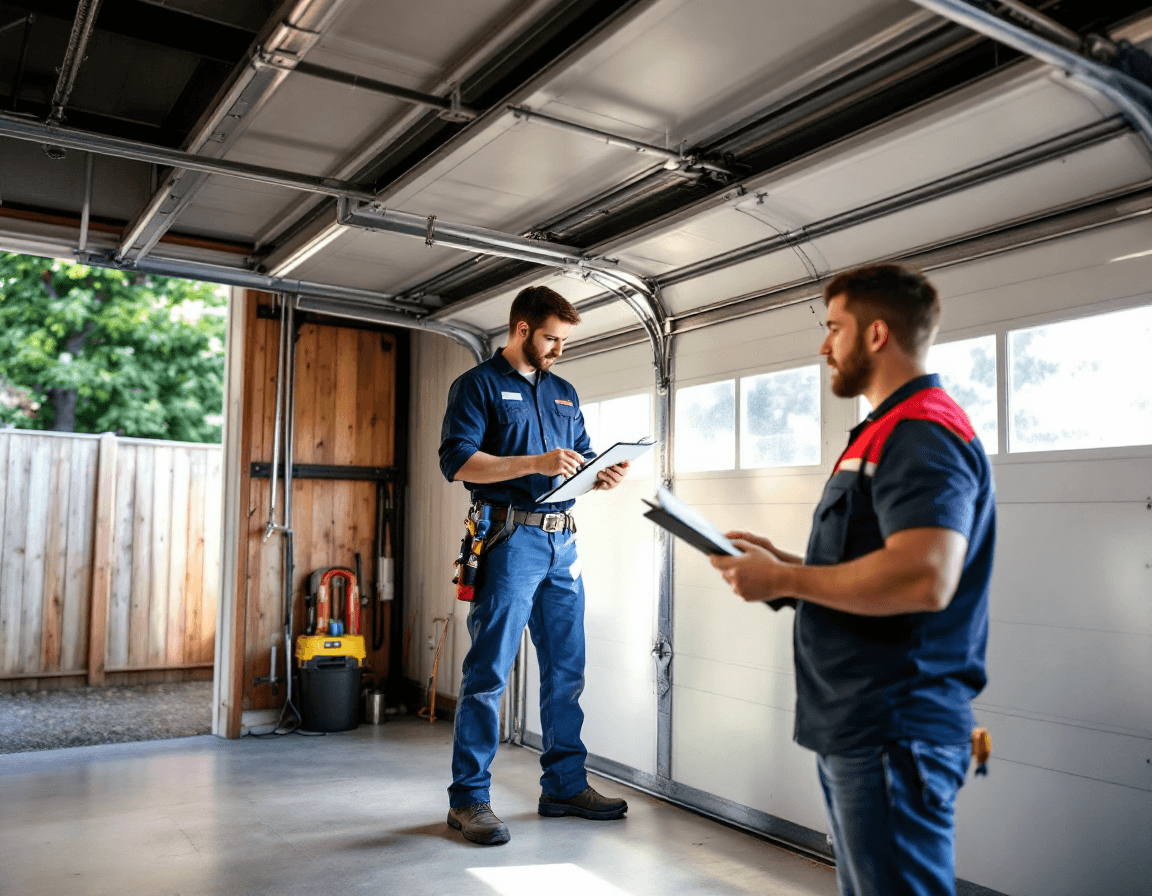
Garage Door Maintenance & Tune-Ups in Milton, WA are often the difference between a door that quietly does its job for years and one that stops working on the morning you need to leave for work. Milton sits in the Pierce County corner where the Puyallup River valley meets the busy I-5 corridor, and its homes range from older bungalows with single-car garages to newer builds with wide, insulated double doors. Each style wears its hardware differently, but they share the same enemy: a Pacific Northwest climate that alternates between long damp winters and dry summer stretches. Moisture, temperature swings, and road grime all work on steel springs, rollers, and tracks every single day.
A tune-up is a scheduled, hands-on look at the whole system rather than a reaction to a failure. Our technicians at Seattle Garage Door Fix check the door panels, hinges, rollers, tracks, cables, springs, and opener together, because a problem in one part usually shows up as strain somewhere else. The full multi-point service typically runs $89 to $149, depending on the size and configuration of your door and the condition of the equipment. If you are reading this because your door has started to sound different or move differently, you are in a good position to catch a small issue before it becomes an expensive repair.
This page explains what a Milton tune-up actually involves, what the warning signs look like, and how to decide whether your household is due for service now. We will also be clear about the tasks that belong only with a licensed professional, since spring and cable work carries real risk. Nothing here is meant to replace a technician's eyes on your specific door, but it should help you ask better questions and recognize when something has changed.
Why Milton Garages Take a Beating From Pacific Northwest Weather
Winter in the South Sound brings extended stretches of drizzle, fog off the river bottoms, and humidity that never really lets the garage dry out. Metal parts that sit in that damp air for months develop surface rust on track brackets, bottom brackets, and the hinge hardware that holds panels together. Once rust begins, it roughens the surfaces that rollers are supposed to glide across, and the door starts to demand more force from the opener than it did when it was new. Many homeowners do not notice this change until the door hesitates or the motor starts working audibly harder.
Summer is a different kind of stress. Garages in Milton can warm up quickly on dry afternoons, then cool off overnight, and that daily expansion and contraction loosens fasteners and changes how the lubricant behaves. Lubricant that was tacky and protective in April can turn thick or dry out by August. Metal tracks can also shift slightly out of alignment when mounting bolts loosen over time. A tune-up in late spring or early fall gives us a chance to correct these changes before the heavy rain and cold snaps arrive.
Many Milton properties also sit near traffic, shop lots, and older landscaping, so road dust and fine debris find their way into the track channels and roller bearings. Dirt mixed with leftover grease forms a grit that acts like sandpaper, which is one reason noise often grows gradually rather than appearing overnight. A regular service schedule keeps that buildup under control and gives the system a steadier life.
The Multi-Point Inspection: What We Check Every Visit
A full multi-point inspection follows a consistent sequence so nothing gets skipped. We start by observing the door in motion, both opening and closing, and listen for scraping, popping, or uneven travel. From there, we move through the mechanical components and the safety systems, documenting what we find so you have a clear picture of your door's condition. The goal is a complete assessment rather than a quick glance.
In a typical Milton tune-up, the inspection includes these core areas:
- Torsion or extension spring condition, including visible wear, gaps in coil spacing, and signs of stress (spring work itself is handled only by licensed technicians)
- Cables, drums, and pulleys, checked for fraying, slack, or uneven winding
- Roller type, wear, and alignment, including nylon versus steel rollers and any cracked or flat-spotted wheels
- Track straightness, mounting bolts, and the gap between the track and the door panels
- Hinges, end brackets, and center brackets for cracks, loose fasteners, or bent metal
- Opener mounting, drive belt or chain tension, and the condition of the rail
- Weatherstripping and bottom seal, which matter a great deal for keeping the garage dry through a Washington winter
Each item gets a quick judgment: fine for now, watch closely, or needs repair. We explain the difference in plain language so you can plan without surprises. If a component is nearing the end of its life, we will tell you that instead of pushing an unnecessary replacement.
Reading the Noise: What Your Door Is Trying to Tell You
Noise is usually the first symptom homeowners notice, and it is also the most useful. A door that squeaks on every cycle is often asking for lubrication or for worn rollers to be replaced. A grinding or rumbling sound from the opener can point to a worn gear or a belt that has started to stretch. A sharp bang at the top of the travel, or a clunk when the door reaches the closed position, often means a loose bracket or a roller that has worn unevenly and is bouncing in the track.
Pay attention to when the sound happens. Noise that appears only on cold mornings usually reflects stiff lubricant and contracted metal. Noise that appears after rain can suggest moisture working into the bearings or surface rust on the track. A noise that gets louder each month is a sign the problem is progressing and should be checked soon rather than later.
Keep a simple mental log of what changed and when. Telling a technician that the door started rattling after a windstorm, or that the squeak began after you repainted the garage, helps narrow down the cause quickly. Our technicians appreciate that context, and it often shortens the diagnostic time during a tune-up visit.
Balance and the Heavy, Lopsided Feeling
A properly balanced garage door should feel relatively easy to operate, whether by remote or by hand, and it should stay put when it is partly open. When a door feels heavy, drifts downward when you let go, or seems to rise unevenly, the balance has likely shifted. Balance depends on the springs, cables, and drum alignment working together, and small changes in any one of those can throw off the whole system.
Homeowners sometimes assume the opener is failing when the real issue is balance. The opener is designed to lift a door that is reasonably balanced, so if it has to fight a heavy or off-balance door, it works harder, runs hot, and wears out faster. That extra strain is one reason a balance check belongs in every tune-up. Catching an imbalance early protects your opener as well as the door.
We perform balance testing with the proper procedures for your specific system. Adjusting springs or cables is never a do-it-yourself task, because the tension stored in a spring can cause severe injury even when the door seems stationary. If we find imbalance, we will explain whether it can be corrected during the visit or whether a spring or cable replacement is the right call. Our licensed technicians handle every step of that process.
Opener Strain, Slow Travel, and Safety Reversal Testing
A garage door opener should move the door smoothly and stop without drama. If your opener seems slow, pauses partway through its travel, or makes the motor sound strained, it may be dealing with friction, imbalance, or an aging drive system. Some openers also begin to run longer than usual because the travel limits have drifted, which is another thing a tune-up can recalibrate.
Opener safety testing is a major part of every visit. Modern openers are required to reverse when they encounter resistance, and the photo-eye sensors near the floor must detect obstructions and stop the door from closing. We test the auto-reverse function, confirm the sensors are aligned and clean, and check that the door stops and reverses when it should. These tests protect children, pets, and anyone else who might be near the door when it moves.
It is worth testing the safety features yourself between professional visits, and our technicians are happy to walk you through a simple check. Place a flat object such as a piece of wood on the floor in the closing path and confirm the door reverses. If it does not, or if the sensors are not lining up, call us before using the door again. Safety features should never be treated as optional.
Lubrication That Works in Damp Local Conditions
Lubrication is one of the simplest and most effective parts of a tune-up, but it is also one of the most often done incorrectly. Using the wrong product can attract dust, gum up rollers, or wash away quickly in the damp climate. We use lubricants suited to garage door hardware and apply them to the points that actually need them, which usually include hinges, rollers, bearings, and the springs and cables where appropriate. Over-lubricating the track is a common mistake, since excess product collects grit and creates a sticky film.
In the Pacific Northwest, lubricant choice matters more than many people expect. A product that repels moisture and holds its film through cold mornings usually performs better than a heavy grease that thickens in the cold. We also wipe away old, contaminated lubricant before applying fresh product, because layering new grease over grime just traps the dirt against the moving parts.
Lubrication frequency depends on how often the door cycles and how exposed the garage is. Households with several daily openings or a garage that sees a lot of moisture may benefit from more frequent attention than a household that uses the door only occasionally. Ask us during your visit, and we will suggest a realistic interval for your situation.
Buying a Milton Home? Start With a Garage Door Baseline
When you purchase a home, the garage door is one of the systems that is easy to overlook during the excitement of closing. Sellers may have run the door without comment, and a buyer's inspection may note only general wear. A professional tune-up soon after you move in gives you a documented baseline of how the door, springs, rollers, and opener were performing on the day you took ownership. That record is helpful if issues surface later and it helps you plan maintenance with confidence.
A first-visit tune-up on a newly purchased home also reveals any safety problems that need immediate attention. Missing or damaged safety cables, misaligned photo eyes, and opener limit settings that were never adjusted for the current door are all common findings. Catching these early means your household can use the garage with peace of mind from the start.
If you are buying in Milton and your garage has an older door or an opener from a previous decade, we will discuss whether repair or replacement is the more sensible path. Our goal is to give you honest options and a clear picture of what the system needs over the next few years, rather than steering you toward work you do not require.
Building a Realistic Schedule and Budget
Most Milton homeowners do well with a tune-up at least once a year, and a spring or early fall visit tends to fit the local climate cycle well. Doors that cycle heavily, such as those used by multiple drivers in a busy household, or doors on a home that has not been serviced in over a year, may benefit from a visit sooner. The point is to match the schedule to how your door actually lives, not to follow a generic calendar.
The full multi-point tune-up is priced between $89 and $149, and the final figure depends on your door's size, the number of components needing attention, and the complexity of the opener. Here is what most households can expect to be included in that visit:
- A complete multi-point inspection of the door, track, rollers, hinges, and cables
- Lubrication of the appropriate moving parts using products suited to local conditions
- A balance check and a discussion of any adjustments needed
- Opener safety testing, including auto-reverse and photo-eye verification
- A written summary of findings with clear recommendations and any repair estimates
Repairs discovered during the tune-up are quoted separately, so you can decide how and when to proceed. We do not expect you to commit to additional work on the spot, and we will always explain why a recommended item matters before you approve it.
Where Safety Ends and Licensed Hands Begin
Garage door springs store enormous amounts of tension, and cables carry that force across the system. Working on either without training and the correct tools can cause serious injury, including broken bones, lacerations, and worse. For that reason, spring replacement, cable replacement, and any adjustment to torsion tension must be handled by licensed, trained technicians. Homeowners should not attempt these tasks, even when a video or a neighbor makes them look simple.
Homeowners can safely take several steps between visits. Keep the door's moving parts visually clear of debris, watch for obvious fraying or gaps in the spring coils, and listen for changes in sound. You can also observe whether the door reverses when it meets resistance and whether the sensors are free of dust and obstruction. If anything seems wrong, stop using the door manually and call a professional.
Our technicians are licensed, bonded, and insured, and we treat every spring and cable with the caution it demands. When work requires that level of care, we will tell you directly and explain what we are doing and why.
Preventing the Surprise Breakdown
Most garage door breakdowns do not happen without warning. They usually follow a stretch of small signs: a new noise, a slower opener, a door that seems heavier than it used to be, or a sensor that needed a second try. Recognizing those signs early is the simplest way to avoid being stranded with a door that will not open on a rainy weekday morning. A tune-up is designed to catch those signs before they turn into a failure.
Think of the tune-up as a conversation about the health of your door. Our technicians will tell you what is working well, what needs attention soon, and what can wait. That information lets you plan and budget rather than reacting under pressure. For many Milton households, the peace of mind is as valuable as the mechanical benefits.
If your door has been making new sounds, feels heavier than it should, or simply has not been serviced in a long time, schedule a Garage Door Maintenance & Tune-Ups in Milton, WA visit before the next wet season settles in. Call Seattle Garage Door Fix at (888) 799-3819 to book your multi-point inspection, ask questions about your specific door, and get your garage ready for the months ahead.