
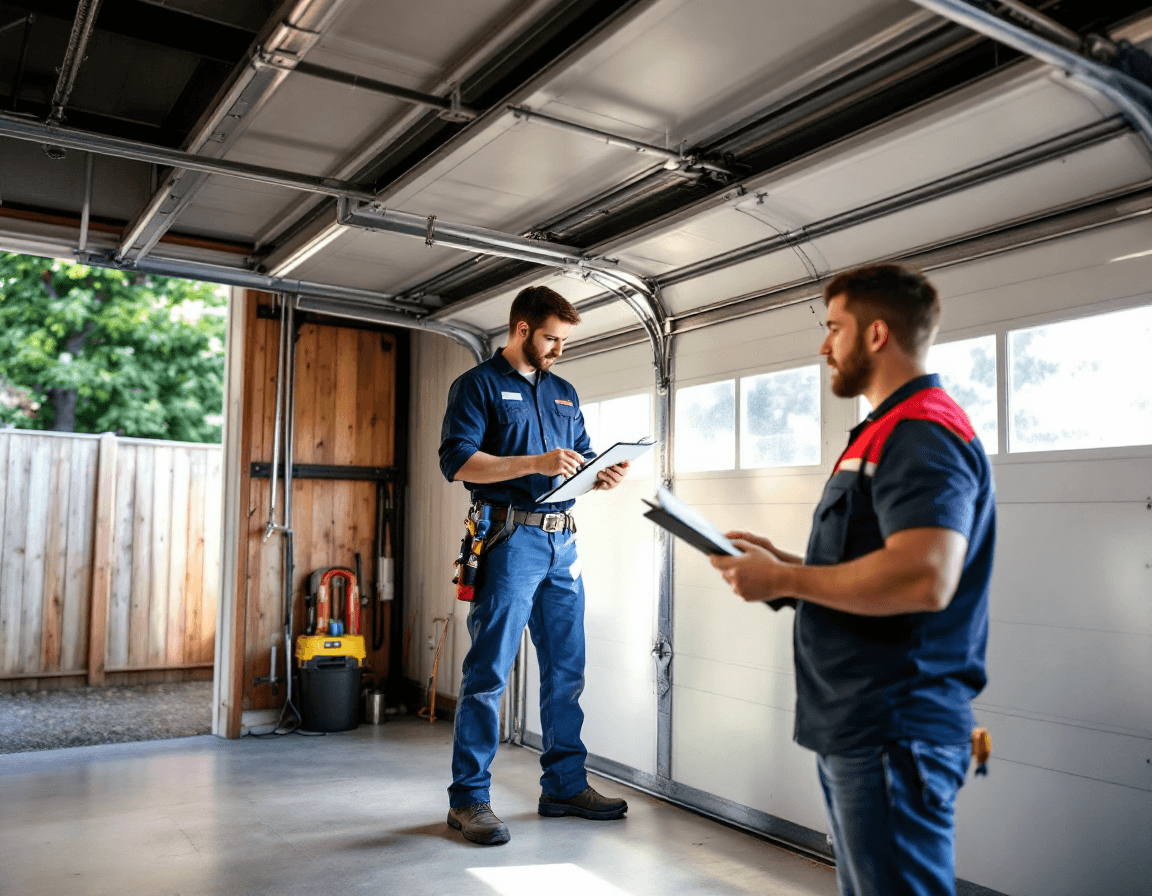
Garage door maintenance in Pacific, WA is less about a single failure and more about slow, steady wear. Homes across Pacific sit in a region where winter rain, damp mornings, and long stretches of gray weather keep the mechanical parts of a garage door working harder than most homeowners expect. A door that opened smoothly last spring can start to groan by fall, and the change is easy to miss when you use it twice a day. A professional tune-up catches that drift early, before a worn spring or a dry roller turns into a stuck door on a school morning.
A full multi-point tune-up from Seattle Garage Door Fix is a hands-on visit that checks the door, its track system, the springs and cables, and the opener together. Our technicians look at how the whole system behaves under load rather than checking one part at a time. The service typically runs $89 to $149 depending on the door type, its size, and how many components need attention during the visit. Think of it as a physical exam for a machine that carries hundreds of pounds up and down several times a day.
This page explains what that visit involves, why our local climate matters, how to recognize early warning signs, and what you can reasonably expect from a maintenance appointment. We have written it for homeowners in Pacific and nearby neighborhoods, including those who live within a short drive of Pacific City Park. If you are already noticing noise, strain, or an uneven door, the sections below will help you understand what is happening and what questions to ask.
What a Pacific Tune-Up Actually Covers in Your Garage
A tune-up is a structured inspection, not a quick glance at the door on the way out. The technician starts by operating the door manually and then with the opener, watching how it moves through the full travel from closed to open and back again. We look at the panels, the hinges, the rollers, the track alignment, the bottom seal, the weatherstripping, and the mounting brackets that hold everything to the wall and ceiling. Each of these parts can drift out of spec without any obvious sign until something fails.
The springs and cables are also part of the inspection, though the work of adjusting or replacing them belongs to licensed professionals. Torsion springs and lift cables store significant energy, and mishandling them can cause serious injury. During a tune-up, we inspect them for visible wear, corrosion, gaps in the coil, fraying, and proper tension, and we will tell you plainly if a spring or cable needs replacement. We never recommend that a homeowner attempt spring or cable work alone.
Finally, the visit includes lubrication, balance testing, and opener safety checks. Each of these has its own purpose, and the sections below walk through them in detail. Taken together, they give you a clear picture of whether your door is operating within safe limits and whether it is likely to hold up through the next season without trouble.
Why Our Damp Winters Work Against Your Door Hardware
Western Washington's wet season brings long periods of moisture, cool temperatures, and humidity that rarely lets surfaces dry completely. Steel garage doors are generally coated to resist this, but the hardware that keeps them moving is more exposed. Hinges, roller stems, and track joints can collect water and grit, and over time that combination causes surface rust and sticky buildup. Rust does not just look bad; it changes how parts slide and pivot, which makes the opener work harder.
Wood and composite doors respond to moisture differently. Wood can swell in damp weather and shrink when conditions dry, which affects panel fit, seal contact, and how the door sits in the opening. A door that rubs at the top corners in January may clear easily in July, and that seasonal movement can stress the rollers and track. Composite and insulated doors handle moisture better, but their edges and seals still need periodic checks.
Cold snaps add another layer. When temperatures drop, lubricants thicken, and a door that moved smoothly in September may feel stiff on a chilly November morning. Seals can also stiffen, creating extra drag. A tune-up done before the wet season gives the door a chance to run cleanly through the months when it is most likely to strain, and it is one of the most practical steps a Pacific homeowner can take.
Reading the Warning Signs Before the Door Quits
Most garage door problems announce themselves well before a complete failure. The most common early sign is noise. A door that clicks, rattles, squeals, or thumps as it travels is telling you that something is loose, dry, or out of alignment. Noise tends to increase gradually, which is why many homeowners stop noticing it until it becomes unusually loud.
Strain is the second signal. If the opener seems to labor, takes longer than usual to reach the top or bottom of the track, or makes a whining sound during travel, the door may be heavier than the system is designed to handle, or friction may be building in the rollers and hinges. A door that feels heavy by hand, or one that stays partly open when the opener is released, is also a sign that balance has shifted. None of these signs means an emergency on its own, but each one is worth a professional look.
Timing matters too. If your door has not been serviced in more than a year, it is overdue regardless of how it sounds. Many owners who recently bought a home also discover that the previous owners never kept up with maintenance, so a first inspection is a sensible step even if the door seems fine. Mark the date of the last service if you know it, and if you do not know it, a tune-up is a reasonable way to establish a baseline.
The Multi-Point Safety Inspection, Step by Step
A multi-point inspection follows a consistent order so nothing gets skipped. The technician begins with a visual review of the door, the tracks, and the surrounding wall and header hardware. Then the door is operated slowly by hand to check for binding, uneven movement, or spots where the panels catch. The opener is tested afterward, and the technician watches how the door responds to each command.
Here is what a typical inspection includes:
- Checking the track for level, plumb alignment, and secure mounting at every bracket
- Inspecting rollers for cracks, flat spots, or worn bearings, and noting which type of roller the door uses
- Examining hinges and end caps for loose fasteners, cracks, or corrosion
- Reviewing the bottom seal and perimeter weatherstripping for tears, compression, and gaps
- Looking over the springs and cables for visible wear, with any concern flagged for licensed repair
- Confirming that the door locks, handles, and any emergency release mechanism work as designed
Each item is either within acceptable range or noted for attention. We explain findings in plain language and show you what we see when that helps. You are never obligated to approve repairs beyond the tune-up itself, and we will tell you which items are safe to monitor and which need prompt action.
Lubrication: Which Parts Get Oil and Which Stay Dry
Lubrication is one of the most useful parts of a tune-up, but it is also one of the most often done incorrectly by homeowners. The right lubricant belongs on specific moving parts, and the wrong product can attract dirt or break down quickly in damp conditions. A technician applies lubricant with a specific plan for each component rather than spraying everything.
Parts that typically receive lubricant include:
- Rollers and their bearings, which should be lightly oiled so they turn freely without dripping onto the floor
- Hinge pivot points where metal rubs against metal
- Torsion spring coils, which need a light coat to reduce friction and corrosion, handled with care by a professional
- Lock mechanism and handle parts that see frequent contact
Some parts should be left dry or cleaned only. Tracks are generally wiped clean rather than greased, because lubricant on the track can collect grit and create a sticky path. Nylon rollers and certain sealing surfaces can be damaged by petroleum-based products, so we select lubricants appropriate to the materials in your door. Greasing the opener's chain or screw drive is handled separately according to the manufacturer's recommendation, and the technician will note whether that applies to your system.
Balance Testing and the Heavy Door Problem
Balance testing answers a simple question: does the door stay where you leave it? A properly balanced door should lift smoothly by hand when the opener is disconnected and should remain stationary when raised partway. If it drops quickly, rises on its own, or feels unusually heavy, the springs are not supplying the expected lift, and the opener is being asked to do work it was never designed to carry.
Balance problems can come from worn springs, shifted hardware, or changes in the door itself. Over time, a door can gain weight from added insulation or hardware upgrades, and springs that were once correct may no longer match the load. Balance also shifts as springs fatigue, which is one reason a door that felt fine five years ago may feel off today. We test balance with the door in several positions, which gives a clearer picture than a single test at the bottom of the track.
When a door is off balance, the fix is almost always a spring adjustment or replacement, and that work belongs to licensed technicians who have the proper tools and training. Spring tension can release with force, and an untrained attempt can cause serious injury. If a balance test reveals a problem, we will explain what we found, what it likely means for your opener, and what a licensed repair would involve. Driving the opener to compensate for a heavy door is not a sustainable solution.
Opener Safety Testing: Reversal, Force, and Limits
Modern garage door openers include safety features designed to prevent injury and damage. The most important of these is auto-reverse, which should cause the door to stop and reverse direction if it encounters an obstacle during closing. Opener safety testing confirms that this feature works, that the photo-eye sensors are aligned and clean, and that the force settings are appropriate for the door's weight and travel.
The technician tests the reversal function with a standard test object placed in the door's path, following the manufacturer's guidance. We also check the photo-eyes mounted near the floor, confirm that their indicator lights behave correctly, and verify that the wiring is secure and not damaged by movement or pests. Limit settings, which tell the opener where the door should stop fully open and fully closed, are reviewed to make sure the door is not overrunning the track or stopping short.
Safety testing matters most for families with children, pets, or anyone who uses the garage as a regular entry point. A door that fails to reverse can cause serious injury, so any failed test is treated as a priority. If the opener needs adjustment or the sensors need replacement, we walk you through the findings and recommend next steps. Our goal is a door that protects people as reliably as it opens.
Older Homes, New Owners, and Doors Nobody Has Touched in a Year
Many Pacific homes include garages that have seen several owners, and the maintenance history is often unclear. If you have just bought a home, a full tune-up is one of the most useful inspections you can schedule in the first few weeks. It gives you a documented starting point and identifies any safety issues before daily use reveals them. It also helps you understand the door's age, the type of springs and rollers installed, and whether the opener is due for service or replacement.
Older doors often present a mix of issues. Rollers may be the original nylon units, which can crack or flatten with age. Hinges may have been replaced piecemeal with mismatched parts. Weatherstripping may have hardened or pulled loose, letting moisture and cold air into the garage. Sometimes a previous owner added a heavier door panel or a new opener without adjusting the balance, which creates a mismatch that shows up as strain or noise.
Doors that have gone more than a year without service fall into a similar pattern. Lubrication has worn away, hardware may have loosened, and small problems have had time to grow. A tune-up does not replace the need for repairs, but it helps you see clearly what is happening and decide what to address first. We would rather you know the true condition of your door than guess.
Keeping Pace with Pacific's Seasons: A Simple Maintenance Calendar
Garage doors respond to the seasons, so a simple calendar helps you stay ahead of problems. Scheduling a tune-up before the wet season lets the technician address lubrication, seals, and hardware before moisture and cold arrive. A second check in late spring can catch any issues that developed during the rainy months. Between professional visits, a little attention at home goes a long way.
Between visits, consider a few routine habits:
- Run the door through a full cycle once a month and listen for new noises or hesitation
- Wipe the tracks and the bottom seal with a dry cloth to remove grit and debris
- Check that the photo-eyes are clean and that nothing blocks their line of sight
- Look for gaps around the door edges and note any daylight or drafts
- Test the auto-reverse by placing a light object in the door's path, following the opener's instructions
These steps are reasonable for homeowners to do themselves. Anything involving the springs, cables, or major hardware should be left to licensed professionals. If something seems off during your monthly check, schedule a tune-up rather than waiting for the next season.
What the $89–$149 Visit Includes and What It Doesn't
Our full multi-point tune-up is priced between $89 and $149. The final price depends on the door type, the size and weight of the panels, and the number of components that need closer attention during the visit. The tune-up covers the inspection, lubrication, balance testing, and opener safety testing described in this guide, along with a clear explanation of what we found.
The tune-up does not automatically include major repairs. If the inspection reveals a worn spring, a damaged cable, a failing opener, or a track that needs significant realignment, we will explain the issue and provide a separate estimate before any work begins. You decide what to address and when. Spring and cable replacement, for example, is specialized work that must be performed by licensed professionals, and we handle it with the same care we bring to the inspection.
Our technicians are licensed, bonded, and insured, which matters when the work involves heavy components and stored energy. We believe in plain explanations, realistic timelines, and no pressure. A good tune-up should leave you with a clear understanding of your door's condition and a practical plan for keeping it safe.
If your garage door is making new noises, straining the opener, feeling heavy, or simply has not been checked in more than a year, now is a good time to book a multi-point tune-up in Pacific. Call Seattle Garage Door Fix at (888) 799-3819 to schedule your visit and get a clear picture of how your door is performing before the next wet season arrives.