
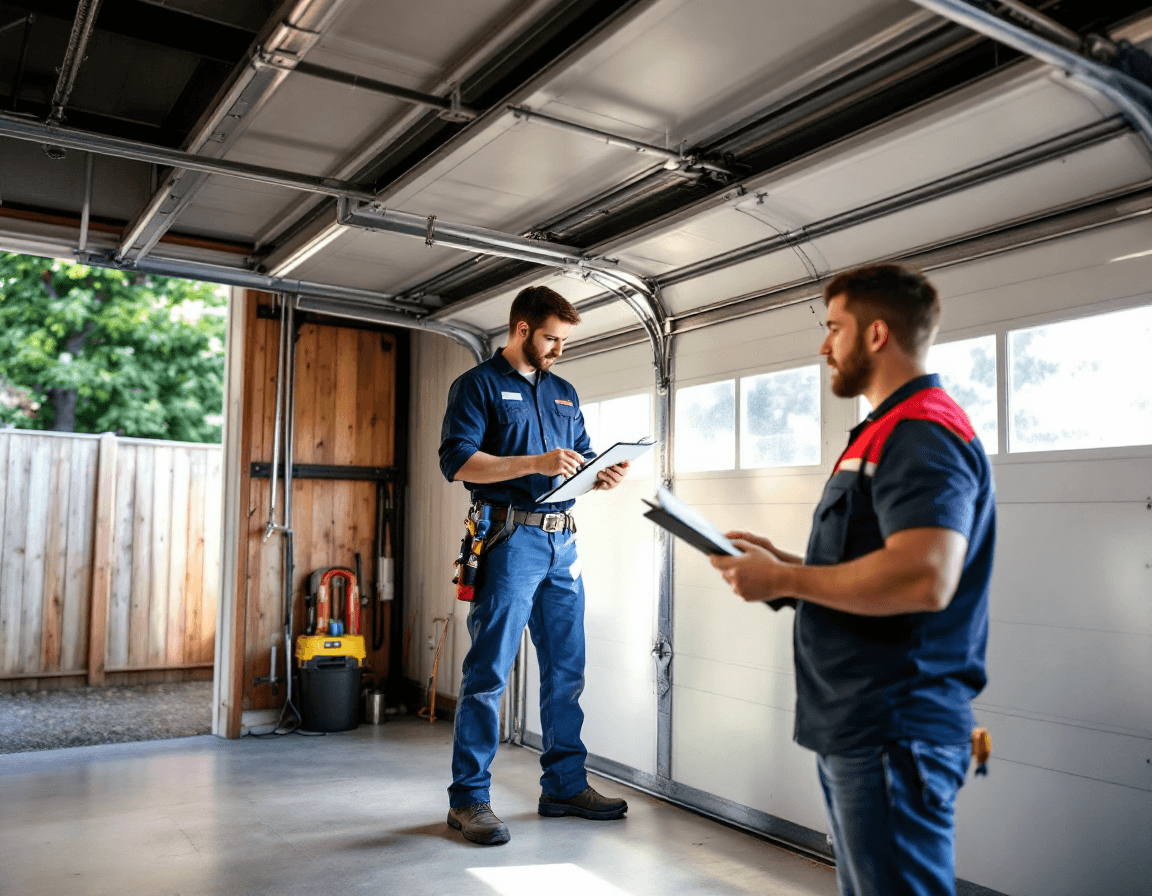
Garage door maintenance and tune-ups in Sumner, WA are a practical way to keep a heavy, high-tension door working safely and quietly for years. Homes in Downtown Sumner, where many houses have older wood framing and detached or shared-wall garages, face different wear patterns than newer builds in the Lakeland Hills area, but every door in town shares the same basic challenge. It carries hundreds of pounds of moving mass, it relies on springs and cables under serious tension, and it sits in air that stays damp for much of the year. A scheduled tune-up catches the small problems before they turn into a stuck door on a cold morning.
Most homeowners in Sumner don't think about their garage door until it makes a new sound or refuses to close. By then, the cause is often something that could have been handled with a bit of lubrication, a hardware adjustment, or a balance check during a routine visit. Our technicians work through a multi-point inspection that looks at the door, the tracks, the springs, the opener, and the safety systems together, because these parts influence each other. A slightly sluggish opener can be a symptom of an unbalanced door, and a noisy roller can be a sign that a track has shifted.
This page explains what a full tune-up involves, why our local climate matters, which warning signs deserve attention, and how to decide whether your door is due for service. Whether you have lived in your Sumner home for twenty years or closed on it last month, the goal is the same: a door you can trust. If you would like a technician to look at yours, call (888) 799-3819 and we will walk you through scheduling.
Why Sumner's Wet Winters Work Against Your Hardware
Western Washington winters are long, gray, and wet, and the Sumner area is no exception. Moisture from the Puyallup and White River valleys settles into garages that are often unheated, and humidity cycles through the seasons without much warning. Steel hinges, rollers, and torsion springs are all vulnerable to this environment, and rust begins quietly at the points where lubricant has worn thin. Over a few seasons, that corrosion makes the door drag, bind, or grind as it travels along its track.
Temperature swings add another layer of stress. A cold snap can make the lubricant in a spring or roller bearing thicken, while a warm afternoon thins it out, which affects how the door moves from one day to the next. Metal contracts in the cold and expands with heat, so tracks that were perfectly straight in August may show slight gaps or misalignment by January. These shifts are normal, but they accelerate wear when parts go without attention for long periods.
Because of this, a yearly tune-up is especially valuable for doors in our service area. A technician can clean and re-lubricate moving parts with products suited to damp conditions, check that the tracks are still level and secure, and confirm that the door isn't working harder than it should. Catching a stiff hinge in the fall is far easier than replacing a worn roller bracket after it has cracked in the middle of a rainy week.
What a Multi-Point Tune-Up Actually Covers
A full multi-point tune-up is a structured inspection rather than a quick glance. Our technicians move through the door systematically, checking each component in the order that makes sense for diagnosing problems. The process starts with the door panels and hardware, then moves to the springs, cables, tracks, rollers, and opener, and finishes with safety testing. Each stage is documented so you understand what was checked and what, if anything, needs attention.
Here is a general overview of what the visit typically includes:
- Inspection of door panels, hinges, end caps, and bottom weather seal for cracks, rust, or loose fasteners
- Track alignment checks, including vertical and horizontal sections, mounting brackets, and bolt tightness
- Roller inspection, with worn or noisy rollers identified for replacement, and lubrication applied to bearings and hinge pivots
- Spring and cable condition review, with visual checks for wear, fraying, or rust, performed only as far as safe from the ground
- Balance testing to see whether the door stays put when partially open, which helps reveal whether the springs are carrying the right load
- Opener safety testing, including auto-reverse response and photo-eye alignment and function
The price for a full multi-point tune-up in our Sumner service area is $89 to $149, depending on the size and configuration of your door and whether your opener and safety sensors need extra time. We will tell you the scope before work begins so there are no surprises on the invoice. If a part needs replacement, you will get a clear explanation and a recommendation rather than pressure to act on the spot.
Reading the Signs: When Your Door Is Telling You Something
Garage doors rarely fail without warning. They usually give clues over weeks or months, and recognizing those clues is one of the best reasons to schedule service. The most common early symptom is a gradual increase in noise. A door that once slid quietly may start to squeal, rattle, or thump, and the sound often changes with the weather or time of day.
Other signs deserve attention even if the door still works. A door that feels heavy when you lift it manually, or that seems to drift downward when half open, may be out of balance. An opener that strains, hesitates, or runs longer than usual is working harder than it should, and that extra load shortens its life. A door that has not been serviced in more than a year should be inspected regardless of how it seems to perform, because many problems stay hidden until they are severe.
Homeowners who have just purchased a house should treat a tune-up as a baseline check. You don't know how the previous owner maintained the door, and a professional review will document the condition of the springs, tracks, and safety systems. This gives you a clear starting point and helps you plan for any upcoming repairs rather than discovering them during a stressful breakdown.
Balance Testing and Why a Heavy Door Is a Warning
Balance is one of the most important, and most overlooked, aspects of garage door health. A properly balanced door should stay in place when you release it partway open, neither sinking nor rising on its own. When it is balanced, the springs are doing most of the lifting work, and the opener only has to move the door, not fight it. When the balance is off, the opener strains, the motor overheats over time, and the door can slam or lurch unexpectedly.
Balance testing is simple to perform but requires attention to detail. Our technician will disconnect the opener safely, lift the door by hand to a mid-height position, and observe whether it holds. If it drifts, the springs may have lost tension or may be mismatched, and the correction depends on the spring type and the door's weight. Adjusting springs is work for trained professionals only, because the tension stored in them is considerable and can cause serious injury if mishandled.
Please avoid attempting spring adjustments yourself, even if you have seen it done. Garage door springs, cables, and drums hold enough stored energy to cause severe harm, and mistakes are not easy to reverse. A balance test is a useful diagnostic step, but the repair belongs in the hands of a licensed technician who has the right tools and training.
Opener Safety Testing for Families and Pets
The opener is the part of the system most people interact with daily, and it carries important safety features that should be tested regularly. The most critical is the auto-reverse function, which is designed to stop and reverse the door if it contacts an object. Modern openers also rely on photo-eye sensors near the floor on each side of the door, which must be aligned and clean to detect a person, child, or pet in the doorway.
During a tune-up, we test these systems in a controlled way. We check that the photo eyes are aligned, that their indicator lights behave correctly, and that the door reverses when the beam is interrupted. We also verify the force settings and limit adjustments, since a door that is set too strongly can cause injury, while one set too weakly may not reverse reliably. These checks matter most in homes with young children, elderly family members, or pets that move quickly through the garage.
Safety testing also helps uncover problems that are easy to miss. A sensor bracket that has been knocked out of line by a bicycle or a ladder, or a wire that has frayed near a hinge, can silently disable protection. Regular testing ensures that your opener's safety features work the way they were designed to, and it gives you confidence that the door will respond correctly when it matters most.
Lakeland Hills and Downtown Sumner: Neighborhood Differences That Matter
Although Sumner is a single city, the homes around Downtown Sumner and the newer neighborhoods near Lakeland Hills present slightly different maintenance profiles. Older homes near the historic downtown core often have garages that were built decades ago, sometimes with uneven slabs, older track assemblies, or door sizes that have been modified over time. These conditions can affect alignment and balance, and technicians pay close attention to how the door sits in its opening.
Homes in the Lakeland Hills area are generally newer, and many have larger two-car doors or insulated models that are heavier than older single-panel designs. Heavier doors place more load on springs, openers, and hinges, so the balance and lubrication checks become even more important. Newer construction also tends to have more finished interiors in the garage, which can make storage shelves and wall-mounted items a factor when technicians evaluate clearances and track mounting points.
Wherever you live in the 98390 and 98391 ZIP codes, a technician who understands local conditions can tailor the visit. We look at how your door is exposed to weather, whether the garage has a drainage issue that allows water to pool near the bottom seal, and how the door is used day to day. This context helps us recommend the right maintenance schedule rather than applying a one-size-fits-all checklist.
Planning a Maintenance Schedule That Fits Your Household
Most garage doors benefit from a professional tune-up at least once a year, and many homeowners in our area choose to schedule visits in early fall, before the heaviest rain arrives. Fall timing gives the technician a chance to address corrosion and lubrication before the coldest and wettest months, which is when a stuck door becomes most disruptive. Spring is another good window, especially after a long winter that may have left hinges stiff and tracks slightly out of line.
Your ideal schedule depends on how often the door is used and how it is exposed. A door that opens several times a day, or one that is used by teenagers learning to drive, may need closer attention. A door that is rarely opened but sits in a damp corner of the garage may need inspection for moisture-related corrosion more often than the calendar suggests. Keeping a simple log of service dates and any noises or behaviors you notice makes these conversations with your technician more productive.
Between professional visits, homeowners can help by keeping the tracks clear of debris, wiping the door's weather seal, and watching for changes in how the door moves. These small habits do not replace a tune-up, but they make it easier to spot developing problems early. When you notice a change that worries you, do not wait for the next scheduled visit. Call for service and let a licensed technician evaluate it.
Frequently Overlooked Items in a Sumner Garage
Some parts of a garage door system are easy to ignore, yet they affect performance and safety. The bottom weather seal, for example, keeps out rain and cold air, and a cracked or flattened seal can allow water to creep under the door during storms. The threshold where the door meets the concrete should be inspected for debris, and the drainage path in front of the garage should not direct runoff toward the opening. Addressing these issues helps protect both the door and the stored contents of the garage.
Hardware such as end bearing plates, center bearing brackets, and mounting bolts also deserves attention. These components hold the shaft and springs in position, and a loose bracket can cause the entire system to shift under load. Vibration from daily use gradually works fasteners loose, which is why tightening checks are part of every multi-point visit. Ignoring a loose bracket can lead to uneven tension and premature wear on other parts.
Finally, the garage door's exterior finish and panels should be checked for dents, cracks, or separation at the seams. Panels that have been bent by a bump from a vehicle may still operate, but they can place stress on hinges and rollers. Catching these issues early preserves both the appearance of your home and the mechanical health of the door.
Choosing a Licensed Technician for Spring and Cable Work
Maintenance is one thing; repair involving springs and cables is another. Garage door springs, whether torsion or extension types, store enormous amounts of energy, and cables carry heavy loads that can snap under stress. Replacing or adjusting these components without the proper tools, training, and safety procedures can result in serious injury. For this reason, any spring or cable work should be performed by a licensed, bonded, and insured professional.
When you choose a technician, look for clear communication about what they will inspect and what they will do. A reputable company will explain the scope of the tune-up, provide a straightforward price range, and tell you plainly when a component is beyond maintenance and needs replacement. They should also welcome your questions and be willing to show you wear patterns on the parts they are discussing.
Our team serves homeowners throughout Sumner and the surrounding Western Washington communities, and we are licensed, bonded, and insured. We take the safety of your household seriously, and we will never ask you to perform spring or cable work yourself. If your inspection reveals a problem in that category, we will explain the risks and the recommended repair in plain language.
Scheduling a garage door maintenance visit in Sumner is simple, and a single call can get your door checked before the next rainy stretch sets in. Whether your door is getting noisier, your opener is straining, or you have just moved into a home in Downtown Sumner or Lakeland Hills, a full multi-point tune-up gives you a clear picture of its condition. Call (888) 799-3819 today to book your garage door maintenance and tune-up in Sumner, WA, and let our licensed technicians help keep your door safe, smooth, and dependable.