
Garage Door Maintenance & Tune-Ups in Puyallup, WA give your door a scheduled check before small wear turns into an expensive failure, and in a town where the rain can run steadily from October into April, that check matters more than most homeowners expect. Puyallup sits in the Puyallup River valley, and the combination of damp air, cool nights, and long stretches without much sun puts steady stress on everything that moves in a garage door. Springs, rollers, hinges, tracks, and the opener itself all work harder when moisture gets into the metal and the lubricant breaks down. A tune-up is a routine visit that catches these problems while they are still quiet.
Many households in the 98371 through 98375 ZIP codes only think about their garage door when it stops working. By then, the door may be stuck open, the opener may be overheating, or a cable may have frayed to the point where a repair is no longer optional. A maintenance visit shifts that pattern. A licensed technician looks at the whole system, adjusts what needs adjusting, lubricates what needs lubricating, and tests the safety features that protect people and vehicles. The result is a door that runs more smoothly and gives you warning before it fails.
This page explains what a multi-point tune-up covers, why Puyallup homes have particular needs, how to read the warning signs your door is giving you, and what to expect from a visit priced between $89 and $149. If you are staring at a door that has grown louder, heavier, or slower over the past year, the sections below should help you decide whether a tune-up is the right next step.
Why Wet Winters Work Against Puyallup Garage Doors
The Pacific Northwest climate is gentle on lawns and difficult on machinery. Puyallup's winters bring long periods of drizzle and fog, and moisture finds its way into places that never fully dry out. Steel hinges and bearing surfaces are especially vulnerable, because water sitting in joints washes away grease and invites surface rust. Once rust forms on a roller stem or a track edge, every opening and closing cycle grinds it a little further, and the noise you hear is often the first sign of that process.
Temperature swings add another layer of stress. A cold January morning can make lubricant thick and sluggish, while a warm afternoon thins it out and lets it drip off the parts it was supposed to protect. Metal contracts and expands with these changes, which can slightly shift the alignment of tracks and panels over time. A door that sat level in the fall may start rubbing or hesitating by the middle of winter, even though nothing was physically damaged.
Dust and debris behave differently here than in drier regions. Fine grit from the Puyallup area can mix with moisture and form a paste that clings to rollers and track channels. Leaf litter and the fir needles that drop onto many driveways get tracked into garages and gather in the bottom track corners. Over a few seasons, that buildup changes how the door glides and can place uneven loads on the springs and opener. A tune-up clears this material out and resets the system so it can work the way the manufacturer intended.
What a Multi-Point Safety Inspection Covers
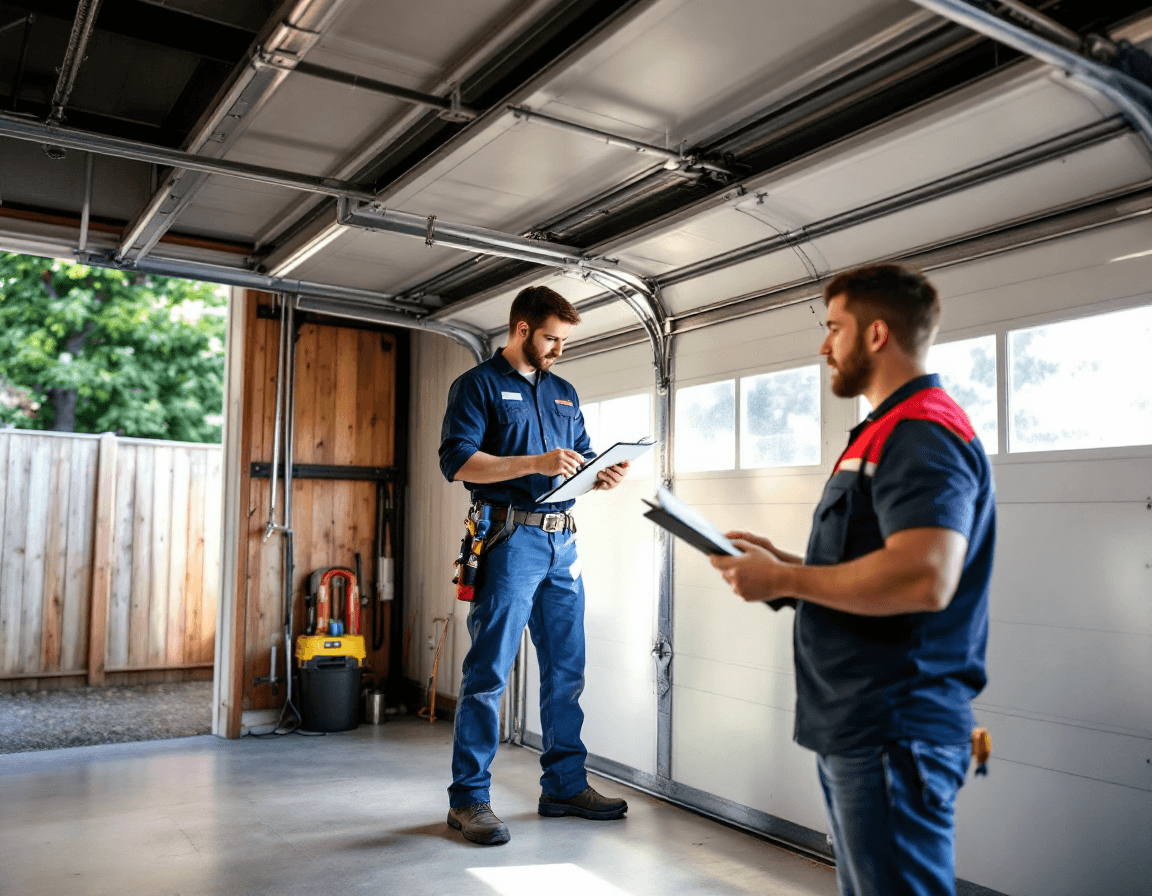
A multi-point safety inspection is a systematic walk through every component that affects how the door moves and how safely it stops. Technicians typically begin with the door panels themselves, checking for cracked or loose sections, bent hinges, and worn end caps that allow sections to pull out of alignment. Next they examine the tracks, looking for dents, gaps, loose mounting bolts, and any place where the track has shifted away from the wall or ceiling brackets. Rollers are inspected for flat spots, cracks, and wheel wobble, since a failing roller often causes the scraping sound homeowners describe as the door "getting louder."
The springs and cables receive a visual inspection as well. In most Puyallup homes, a garage door uses either torsion springs mounted on a shaft above the door or extension springs running along the sides of the track. Technicians look for gaps between spring coils, rust, stretched or frayed cables, and worn drum surfaces. This is an inspection only. Spring tension adjustments, cable replacement, and spring replacement involve stored mechanical energy that can cause serious injury, so these tasks belong to a licensed, trained professional and should never be attempted by a homeowner.
The inspection also covers the hardware that holds everything together. Technicians check set screws on the spring anchors and cable drums, tighten bolts that have worked loose, and confirm that the center bearing and end bearing plates are secure. Weather seals and bottom rubber are checked for splits that let rain and cold air into the garage. Finally, the opener's mounting, its rail, and its connection to the door arm are reviewed to make sure the entire system is working as a unit.
- Panel condition, hinge integrity, and end cap wear
- Track alignment, mounting bolts, and any gaps or dents
- Roller condition, including cracks, flat spots, and wobble
- Spring and cable visual inspection, with spring work left to licensed technicians
- Hardware tightness, bearing plates, and set screws
- Weather seal and bottom seal condition
- Opener mounting, rail condition, and door arm connection
Lubrication Done Right for Pacific Northwest Conditions
Lubrication sounds simple, but applying the wrong product or the right product in the wrong place can cause more trouble than skipping it entirely. Garage door components need different treatments depending on their function. Springs and bearings typically benefit from a lithium-based grease or a product designed for garage door hardware, applied in measured amounts. Rollers and hinges usually respond well to a light lubricant that penetrates the joint without leaving a heavy film that collects grit. Tracks should generally be left clean and dry rather than oiled, because lubricant on the track surface can attract dirt that jams the rollers.
In a damp climate, the choice of product matters even more. Oils that resist washing away by rain or condensation hold up better in Puyallup garages, particularly on doors that sit close to a driveway or a side yard where water tends to splash. Technicians wipe off old, contaminated grease before applying fresh product, since layering new lubricant over a gritty residue only traps the abrasive material against the metal. Excess lubricant is wiped away so it does not drip onto the floor or onto the weather seal, where it can soften the rubber over time.
Lubrication also protects the opener. The drive chain or belt, the trolley carriage, and the rail should be lubricated according to the opener manufacturer's guidelines. Chain-drive openers in particular benefit from periodic attention because the chain stretches and dries out. A belt-drive opener needs less lubrication but should be inspected for fraying and proper tension. Your technician will tell you which parts were treated and which ones were checked only, so you know exactly what was done during your visit.
Balance Testing and the Door That Feels Heavy
A balanced garage door should feel almost weightless when you lift it by hand, at least in the sense that the springs carry most of its weight and the opener only needs to guide it. When a door feels heavy, sticks partway up, or drops quickly when released, it is often out of balance. Imbalance usually comes from spring tension that has drifted over time, uneven cable wear, or a rolled or bent section that is changing how the weight distributes across the door.
Balance testing is a straightforward procedure. With the opener disconnected, the technician lifts the door manually to the halfway point and releases it. A balanced door stays where it is. If it slides up or down on its own, the springs are either too strong or too weak for the weight of the panels, and the system needs adjustment. Technicians repeat this test at several heights to confirm that the balance holds across the full range of motion, not just at one spot.
Because balance adjustments involve spring tension, this is one of the most important reasons to rely on licensed professionals. A spring under tension can release suddenly and cause severe injury. Puyallup homeowners who notice their door has become harder to lift should avoid winding spring anchors or adjusting cables themselves. A trained technician can measure, adjust, and retest the system safely, and will explain whether the springs are still within a usable range or whether replacement will be needed soon.
Opener Safety Testing: Reversal, Sensors, and Force Limits
The garage door opener is responsible for two critical safety functions: it must reverse the door when it encounters an obstruction, and it must stop the door reliably when the path is clear. Opener safety testing checks both of these functions. Technicians place a test object, such as a piece of lumber or a similar solid item, in the path of the closing door and confirm that the opener reverses within the required limits. This test should be repeated periodically because force settings can drift as the system wears.
Photo-eye sensors are another key safety element. These are the small units mounted near the bottom of the door tracks on either side of the opening, and they send an invisible beam across the doorway. If the beam is interrupted while the door is closing, the door should stop and reverse. Technicians check that both sensors are aligned, that the wiring is intact, and that the lenses are clean. In Puyallup, dust, spider webs, and moisture on sensor lenses can cause intermittent faults, so cleaning and alignment are often part of the visit.
Force limits and auto-reverse settings are also reviewed. Many openers have adjustable force controls that determine how much pressure the door can apply before it reverses. These settings should be tuned so the door responds properly to obstructions without reversing unnecessarily during normal operation. A door that reverses for no clear reason is often a sign of misalignment, a failing sensor, or a balance problem that is putting extra strain on the opener.
Noise That Changes Over Time: Reading What the Door Is Telling You
Garage doors rarely become loud overnight. The change usually builds across months, and homeowners often describe it as the door getting "noisier over time" or "more complaining each season." Each sound has a likely source, and learning to recognize them can help you describe the problem accurately when you call for service. A rhythmic squeak usually points to dry hinges or rollers that need lubrication. A grinding or scraping noise often indicates worn rollers, a bent track, or a bearing that is starting to fail. A sharp snap or bang may mean a loose hardware component or a roller that has come out of its track.
Timing matters too. If the noise happens only when the door is closing, the problem may be in the track or the bottom seal. If it happens only when the door is opening, the cause might be the spring system or the opener's drive. Noise that appears only on cold mornings often comes from lubricant that has thickened and needs to be replaced with a product that performs better at lower temperatures. Paying attention to these patterns gives your technician a head start, and it can reduce the time spent diagnosing the issue on site.
Homeowners should also be alert to changes in sound from the opener itself. A motor that hums louder than it used to, a chain that rattles or slaps, or a trolley that jerks at the start of each cycle can all signal wear. These sounds are not always urgent, but they are signs that the system is working harder than it should. Catching them early through a tune-up can prevent the kind of sudden failure that leaves a family stuck in the driveway.
South Hill and Older Downtown Puyallup Garages
Puyallup's South Hill area and the established blocks near Downtown Puyallup include a mix of homes built across several decades. Many of these properties have detached or attached garages that were not designed with today's door hardware in mind. Older doors may have heavier wooden or steel panels, wider track spacing, or spring systems that were installed long before current safety standards were in place. Maintenance on these doors often requires extra attention to alignment, bracket condition, and the age of the components.
South Hill homes sometimes sit on sloped lots where the driveway and garage floor are not perfectly level. This can affect how the door tracks and how weight distributes across the panels when it moves. A technician familiar with these conditions will check that the tracks are plumb and that the door closes evenly on both sides. On older Downtown Puyallup properties, the garage walls and headers may have settled or shifted slightly, which can change the clearance between the door and the framing. Small adjustments during a tune-up can keep the door running true.
Owners of older homes should also consider the condition of the electrical supply to the opener. Outlets, extension cords, and wiring that were installed decades ago may not be adequate for modern openers, and a tune-up visit is a good time to have the setup reviewed. A technician can note any concerns and recommend appropriate follow-up, whether that involves a licensed electrician or simply a safer outlet location for the opener.
Pre-Purchase Checks for New Owners
If you have just bought a home in Puyallup, a garage door tune-up is one of the most practical early steps you can take. Previous owners may not have kept records of maintenance, and a door that looks fine from the driveway can hide worn rollers, frayed cables, or a failing opener. A full inspection gives you a clear picture of the system's condition before you start relying on it every day. It also gives you a reference point for future maintenance and helps you plan any repairs without surprises.
New owners often ask whether the inspection will reveal problems that they then have to pay to fix. A tune-up is a diagnostic and maintenance visit, and it will tell you what needs attention, what is working well, and what can wait. Some items may be minor and easy to address during the same visit. Others may need replacement parts that you can schedule at your convenience. Knowing the condition of your door early lets you budget sensibly rather than discovering a problem during a cold snap.
This is also a good time to ask the technician about the opener's model, its age, and whether it supports features you want, such as battery backup or smartphone control. Documenting the make and model in your home records makes future service faster and helps you find compatible replacement parts. Many new owners find that a single visit gives them confidence in the system and a simple maintenance plan for the years ahead.
Planning Your Tune-Up Around the Puyallup Calendar
Puyallup's calendar has its own rhythms. The Washington State Fair draws large crowds to the Puyallup area each late summer and early fall, and traffic and local activity can be heavier during that stretch. Many families also plan home projects in the spring when the weather starts to improve, which means appointment availability can change with the seasons. If you want a tune-up completed before the wet season sets in, scheduling in late summer or early fall gives you time to address any issues before the first heavy rains arrive.
Wet weather itself is a good reason to schedule a visit. Rain and cold make it harder to notice gradual changes in the door, because the sounds and movements blend into the background of daily life. A tune-up before the rainy months lets your technician clear out debris, refresh lubrication, and check weather seals while conditions are dry enough to work comfortably. If your door has already started to complain, do not wait for the next dry spell. Moisture can accelerate rust and wear, and early attention generally costs less than emergency service.
Timing also affects how you prepare. Before the visit, clear the area around the door so the technician has room to work, move vehicles and stored items, and note any sounds or problems you have observed. Keep your opener's remote and wall control accessible, and let the technician know if the door has been sticking, reversing unexpectedly, or stopping partway. A little preparation helps the visit run efficiently and ensures nothing important gets overlooked.
What a $89–$149 Tune-Up Includes and What It Does Not
A full multi-point tune-up in the Puyallup area is typically priced between $89 and $149, and the exact cost depends on the size and type of door, the opener model, and the number of components that need attention during the visit. The base service generally includes the multi-point safety inspection, lubrication of appropriate components, balance testing, and opener safety testing. These steps address the most common causes of noise, wear, and unexpected failure.
It is equally important to understand what a tune-up does not include. Replacing torsion springs, extension springs, cables, or drums is a separate repair that requires licensed professional work and is quoted individually. Replacing rollers, hinges, or panels, repairing damaged tracks, or upgrading the opener is also outside the scope of a standard tune-up. If the technician finds one of these issues, they should explain what is needed, why it matters, and what the estimated cost would be before any work begins. You should never feel pressured into an unexpected repair during a maintenance visit.
Clear expectations protect both homeowners and technicians. Ask what the tune-up covers before the visit, and ask for a written summary of findings afterward. A good summary tells you which components were lubricated, which were adjusted, which passed inspection, and which need attention. This record becomes useful the next time you schedule service, because it shows exactly what has been done and what should be watched.
Serving Pierce County ZIP Codes 98371 Through 98375
Seattle Garage Door Fix provides maintenance and repair service across Western Washington, and our Puyallup coverage includes ZIP codes 98371, 98372, 98373, 98374, and 98375. Homes in these areas range from older neighborhoods with classic detached garages to newer developments with attached two- and three-car bays. Each property presents its own mix of door types, spring systems, and opener models, and each benefits from a tune-up matched to its specific setup.
Whether your home is near the heart of Downtown Puyallup, on the hillside streets of South Hill, or farther out in the surrounding residential areas, the fundamentals stay the same. A door that is quiet, balanced, and properly protected by its safety systems is less likely to fail unexpectedly and more likely to serve your household reliably through the damp Pacific Northwest seasons. Regular attention is the most dependable way to keep it that way.
Scheduling a tune-up is a simple way to protect your home, your vehicles, and the people who use your garage every day. A licensed technician can walk through the full system, explain what they find in plain language, and help you plan the next steps. If your door has grown louder, heavier, or slower, or if it has simply been more than a year since anyone looked at it, now is a good time to act.
Ready to get your Puyallup garage door checked before the next wet season settles in? Call Seattle Garage Door Fix at (888) 799-3819 to schedule a multi-point tune-up. Our licensed technicians will inspect, lubricate, balance, and safety-test your door, and they will tell you clearly what they find. Spring and cable work should always be left to licensed professionals, so let us help you keep your door running safely and smoothly.