
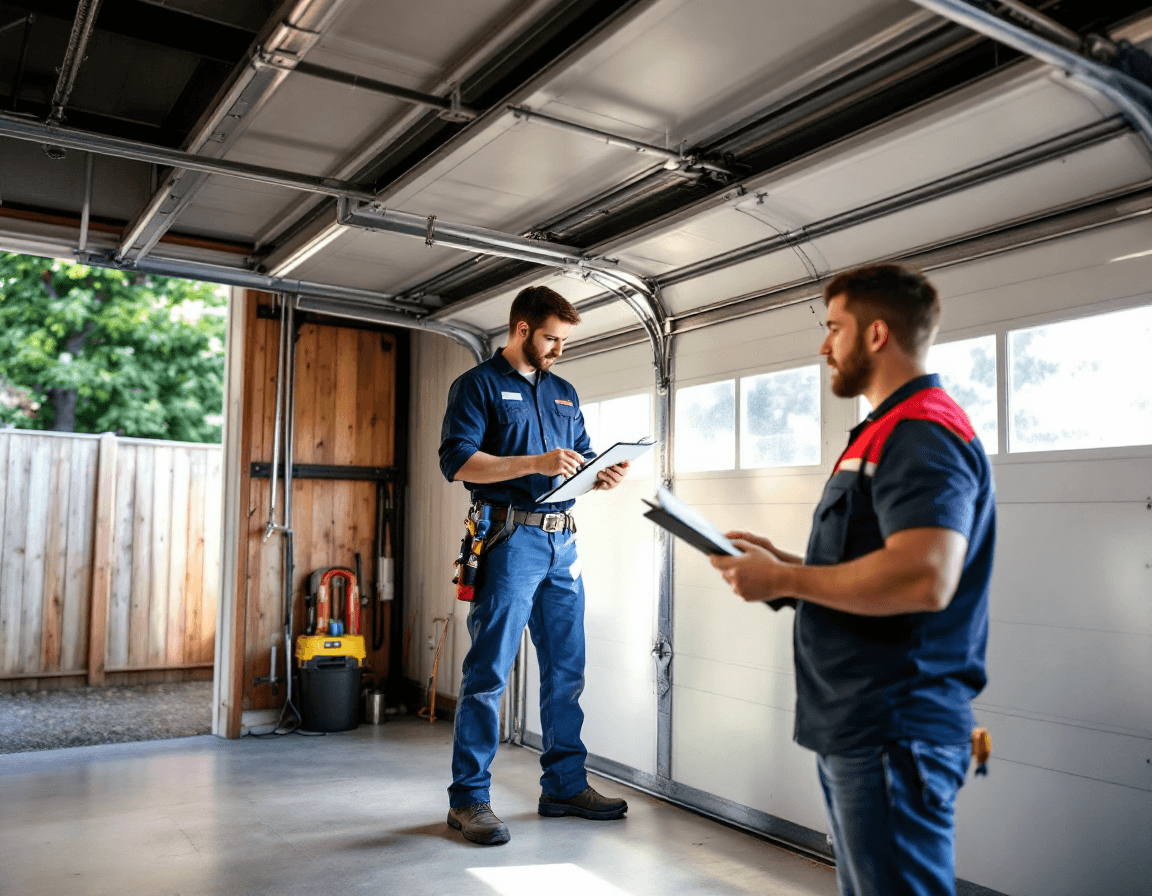
Garage Door Maintenance & Tune-Ups in Tacoma, WA is one of the most useful home services you can schedule, yet it's also one of the easiest to postpone. Your garage door works every day, often without anyone paying attention until a noise becomes a grinding sound or a morning commute ends with a door that won't open. A planned tune-up catches small problems while they're still small, and it gives you a clear picture of how the door, springs, and opener are actually performing.
Tacoma's conditions are not the same as those in drier parts of the country. Our damp, drizzly winters, salty marine air drifting in from Commencement Bay, and the long stretches of cloud cover that keep metal from ever fully drying out all take a toll on hardware. Over time, that moisture works into hinges, rollers, and the steel tracks that guide your door, and it quietly changes how everything moves. A tune-up is the most practical way to stay ahead of those changes.
At Seattle Garage Door Fix, we are a licensed, bonded, and insured garage door company serving Tacoma and much of Pierce County and Western Washington. This page explains what a maintenance visit covers, what the symptoms of an aging system look like, and why some tasks should always be left to a licensed professional. If you have a door that has been running for a year or more without service, or if you just bought a home and want to know its true condition, the sections below will walk you through what to expect.
How Tacoma's Weather Quietly Works Against Your Door
Most homeowners think of garage doors as mechanical objects that wear out from use alone. In practice, weather is often the bigger factor in Tacoma. Persistent moisture encourages surface rust on steel rails and hinge hardware, and it can cause wood and composite panels to swell or warp when they are not sealed properly. Even a steel door that looks perfectly fine on the surface can develop corrosion where the track bolts to the wall bracket or where the bottom roller shaft meets its bearing.
The coastal environment adds another layer. Salt-laden air settles on exposed metal, and when combined with frequent wet weather, it accelerates corrosion on springs, cable drums, and the track brackets that hold everything in place. Homes closer to the water or on exposed slopes often see this more quickly than those tucked deeper inland, though every Tacoma garage is affected to some degree. Left unchecked, that rust can seize moving parts and change how the door balances.
Temperature swings matter too. Our cool, damp winters can make lubricants thicken, while occasional warm, dry spells in summer can cause them to evaporate or break down. A good tune-up accounts for these cycles by cleaning off old, gummy lubricant and replacing it with a product suited to the job. This is one of the reasons a visit scheduled in late summer or early fall tends to pay off, since the door is then prepared for months of wet weather.
- Rust spotting along tracks, especially near the bottom bracket and the curve where the track meets the ceiling
- Hinges or rollers that look dull, pitted, or have a flaky orange coating
- Panels or trim that swell, cup, or no longer sit flush against the weatherstripping
- Gaps at the bottom seal that let in wind, water, or cold air during winter storms
Listening to Your Door: What Noise Really Means
A door that is getting louder over time is almost always communicating something specific. A high-pitched squeal usually points to dry or hardened lubrication on rollers or hinges, which creates metal-on-metal friction. A rhythmic clunk or rattle often means a roller is loose, a track bracket has worked free from its mounting, or a bolt has backed out from repeated vibration. A grinding noise, particularly one that changes as the door travels, can suggest worn roller bearings or debris lodged in the track.
Homeowners often try to silence these noises by spraying something on the door and hoping for the best. That approach can make things worse. Penetrating oils and general-purpose spray lubricants can attract dust and grit, and when they are applied to the track itself, they can create a sticky film that slows the rollers and forces the opener to work harder. A technician will clean the track first, then lubricate only the components that actually need it, which usually means rollers, hinge pivots, and bearing points.
Noise also tends to increase gradually, which makes it easy to ignore. Many people get used to a slightly louder door without realizing it has changed in the past year. If you notice that your door sounds different when it closes, when it reaches the top of its travel, or when the opener engages, that is a good reason to schedule a visit. Catching a worn roller before it cracks or a loose bracket before it bends is almost always less expensive than repairing the damage it causes.
What Happens During a Multi-Point Tune-Up
A full multi-point tune-up is a structured inspection that looks at the door as a system rather than a single part. Our typical visit covers the door panels, tracks, rollers, hinges, springs, cables, drums, bottom seal, weatherstripping, and the opener itself. The goal is to identify wear, correct minor misalignment, and document anything that needs attention so you can make an informed decision about repairs. Pricing for a full multi-point tune-up in the Tacoma area runs from $89 to $149, depending on the size and type of door, the opener model, and how many components need adjustment.
The process generally begins with a visual check of the door in both open and closed positions. A technician looks for gaps at the top and bottom, uneven panel alignment, and signs of impact or stress on the track. Next, the tracks are cleaned and checked for straightness, secure mounting, and smooth transitions at the curves. The rollers and hinges are then inspected for play, cracking, or excessive wear, and lubrication is applied where it is needed. Finally, the door is cycled several times to confirm that it moves evenly from start to finish.
Inspections also include a review of the springs and cables, though we want to be clear about the limits of a homeowner's role here. A technician can visually assess spring condition and cable fraying, and can report what they find, but any adjustment, replacement, or tensioning of torsion or extension springs is work for a licensed professional. Those components store a large amount of energy and can cause serious injury if mishandled. Our technicians treat them with the respect they demand.
- Visual inspection of panels, seals, hardware, and alignment
- Track cleaning, straightness check, and bracket tightening
- Roller and hinge inspection with lubrication where appropriate
- Spring and cable condition assessment, with recommendations documented
- Opener function check, including travel limits and safety reversal
- Balance evaluation and a written summary of findings
Testing the Balance: Why a Heavy-Feeling Door Matters
A properly balanced garage door should stay in place when partially raised, and it should lift with relatively little effort. When a door feels unusually heavy, jerks as it starts, or drifts downward when left halfway open, it is out of balance. That imbalance places extra load on the opener, wears the rollers faster, and can eventually lead to a sudden failure of a spring or cable. Balance problems often develop slowly as springs lose tension over time, which is why many homeowners do not notice them until the opener starts straining.
A simple balance check can be done safely with the door fully closed and the opener disconnected, though we recommend that homeowners leave the actual test to a technician. Even a basic check involves the emergency release cord, and handling it incorrectly can cause a door to drop rapidly. During a tune-up, our technician performs a controlled lift test at several points along the door's travel and notes whether the door holds, rises, or falls. If adjustments are needed, they are made by a licensed professional with the correct tools and training.
Balance is also linked to weather. Steel springs can lose a portion of their tension as they age, and cold, damp conditions can make stiff parts feel even more sluggish. That is one reason an older door may seem to behave differently in January than it did in July. Scheduling a balance evaluation before the wetter months gives you an accurate baseline and helps prevent surprises during the season when your door gets the most use.
When the Opener Strains, Slows, or Reverses Too Early
Garage door openers are designed to move a door smoothly and to stop or reverse when they meet resistance. When an opener begins to strain, travels more slowly than usual, or reverses for no apparent reason, the cause is often a combination of mechanical friction, imbalance, and wear on the opener's own components. A door that is hard to move will load the motor harder, which can shorten its life and make it sound labored during every cycle.
Safety testing is a critical part of any maintenance visit. Modern openers are required to reverse when the door contacts an object, and a technician will verify that this function works correctly. The usual approach is to place a solid obstruction, such as a piece of wood, on the floor in the door's path and confirm that the door stops and reverses when it touches it. Photo-eye sensors near the floor are also checked to make sure they are aligned, clean, and responding properly. If the sensors are misaligned or obstructed by dust, spider webs, or a pet's toy, the door may not close reliably.
Travel limits deserve attention as well. If the door stops short of fully opening or closing, or if it seems to hit the floor too hard, the limit settings may have drifted. Adjusting these settings is a routine task during a tune-up, but it should be done with the door balanced and the mechanical components in good condition. An opener that is forced to compensate for a neglected door is working against itself, which is why maintenance and opener testing belong together.
Lubrication Done Right: Choosing the Right Product for Each Part
Lubrication is one of the most important and most misunderstood parts of garage door care. Many homeowners reach for whatever spray is closest, often a general-purpose penetrating oil that works well for loosening stuck bolts but does not provide lasting lubrication. Over time, these products can gum up, attract grit, and leave a film on the track that slows the rollers. Choosing the right product for each component makes a noticeable difference in how smoothly the door runs.
In general, silicone-based lubricants are a good fit for rollers and hinges in the Tacoma climate because they resist moisture and do not attract as much dust. Lithium-based grease is often used on bearings and pivot points where a thicker film is helpful. The track itself is usually cleaned rather than heavily lubricated, since a greasy track collects debris and can cause the rollers to skid instead of rolling. Springs and cable drums need specialized handling, and their lubrication is typically part of the professional service that accompanies any spring work.
During a tune-up, the technician removes old residue from rollers and hinge points before applying fresh lubricant. This matters because adding new product on top of gummy, dirty buildup only traps grit and speeds up wear. We also check for roller shafts that have worn flat or bearings that spin unevenly, since lubrication cannot fix parts that are already damaged. A well-lubricated door should move quietly and evenly, and the difference is often immediately noticeable.
Buying a Home in Tacoma: Why a Garage Door Check Makes Sense
Anyone who has purchased a home in Tacoma knows that inspections cover a lot of ground, but garage doors often receive only a brief glance. Older homes in neighborhoods such as the North End, Proctor, the Stadium District, and Hilltop frequently have garage doors that have been modified, repaired with mismatched parts, or left unserviced for many years. A door that looks fine during a showing can hide worn rollers, a cracked bottom bracket, or springs that are near the end of their service life.
A tune-up shortly after closing gives you a clear, documented picture of the door's condition. It also helps you plan ahead, since you can budget for needed repairs and understand which components may require attention in the near future. If the previous owner did not keep records, a baseline inspection is especially valuable because it establishes what the door's current state actually is. You will know what you are working with instead of guessing.
Many Tacoma homes also have detached garages, workshop spaces, or older wood doors that need more attention than a standard steel door. Those structures can experience moisture problems that do not appear on a casual walkthrough. A technician will look at how the door sits in its frame, whether the header and jamb are sound, and whether the weatherstripping is doing its job. This type of check can prevent small issues from becoming expensive repairs after you move in.
Planning Maintenance Around Tacoma's Seasons
The timing of a tune-up can affect how well it holds up over the year. Late summer and early fall are often ideal in Tacoma because the weather is drier, which makes it easier to clean tracks and apply lubricant that sets properly. A tune-up at that point also prepares the door for the long, wet stretch that typically follows, when moisture and cold can expose weak spots quickly. Scheduling in the fall means fewer surprises when the rain settles in for the season.
Spring is a common time for homeowners to think about their garage door, often because they notice a change in how it moves after a winter of damp weather. That is a perfectly good time for an inspection, but it is also the season when we see many people attempt their own spring work, which we strongly discourage. If you are noticing wear in the springs or cables, a licensed technician should evaluate it before anyone attempts to adjust tension. Waiting for a professional visit is far safer than trying to fix a spring yourself.
Regular maintenance can also be spread across the year. Many homeowners schedule a tune-up annually and then perform simple, safe tasks between visits, such as keeping the tracks clear of debris, wiping down the door panels, checking that the photo-eye sensors are clean, and testing the auto-reverse feature periodically. These habits do not replace professional service, but they help catch changes early and extend the life of the door.
Service Across Tacoma and Pierce County
Seattle Garage Door Fix provides maintenance and tune-up service throughout Tacoma and the surrounding Pierce County communities. Our technicians regularly work in neighborhoods such as Downtown Tacoma, the North End, Proctor, the Stadium District, and Hilltop, as well as the broader region that makes up our service area. Because we know the housing stock in these areas, we are familiar with the common door styles, opener brands, and layout challenges that appear in different parts of town.
We currently serve the following Tacoma and Pierce County ZIP codes: 98402, 98404, 98405, 98406, 98407, 98408, 98409, 98418, 98421, 98422, 98444, 98445, 98465, 98466, and 98467. If your home falls within these areas, you can expect the same level of inspection and documentation regardless of which neighborhood you live in. Our goal is to make every visit thorough enough that you understand exactly what your door needs and why.
Service area coverage is also part of how we plan appointments. Knowing the local traffic patterns, typical access issues, and the age of homes in each neighborhood helps us arrive prepared with the right parts and tools. Whether your garage is a modern attached space or a converted older structure, the goal is the same: a clear assessment, honest recommendations, and a door that runs quietly and safely.
Why Springs and Cables Always Belong to a Licensed Professional
Garage door springs and cables are among the most dangerous components in any home. Torsion springs and extension springs hold a significant amount of tension, and when they are adjusted, replaced, or broken, they can release that energy suddenly. Even experienced homeowners can be seriously injured by a spring that slips, a cable that snaps, or a bracket that fails under load. For this reason, we recommend that all spring and cable work be handled by a licensed, trained professional.
During a tune-up, our technicians will inspect springs and cables for visible wear, rust, fraying, gaps in winding, and loose mounting hardware, then explain what they find in plain language. If a spring is near the end of its service life, we will say so and recommend a replacement schedule. If a cable is frayed or a drum is damaged, the repair will be completed using the right tools and procedures. Our role is to help you understand the condition of your system and to perform the work safely when it is needed.
We also encourage homeowners to keep children and pets clear of the door during any inspection and to avoid attempting spring or cable adjustments on their own. The safest approach is to call a licensed technician whenever you suspect a spring problem, notice a cable that looks worn, or see a door that seems to hang unevenly. A few minutes of inspection can prevent a serious injury and a much larger repair bill later on.
Garage Door Maintenance & Tune-Ups in Tacoma, WA is a practical investment in how your home works every day, and a well-maintained door is quieter, safer, and more reliable through every season. If your door has gone more than a year without service, if it has started making new noises, if the opener is straining, or if you have just bought a home and want to know its true condition, we are ready to help. Call Seattle Garage Door Fix at (888) 799-3819 to schedule a multi-point tune-up in Tacoma or anywhere across Pierce County, and let our licensed technicians give your garage door the careful inspection it deserves.