
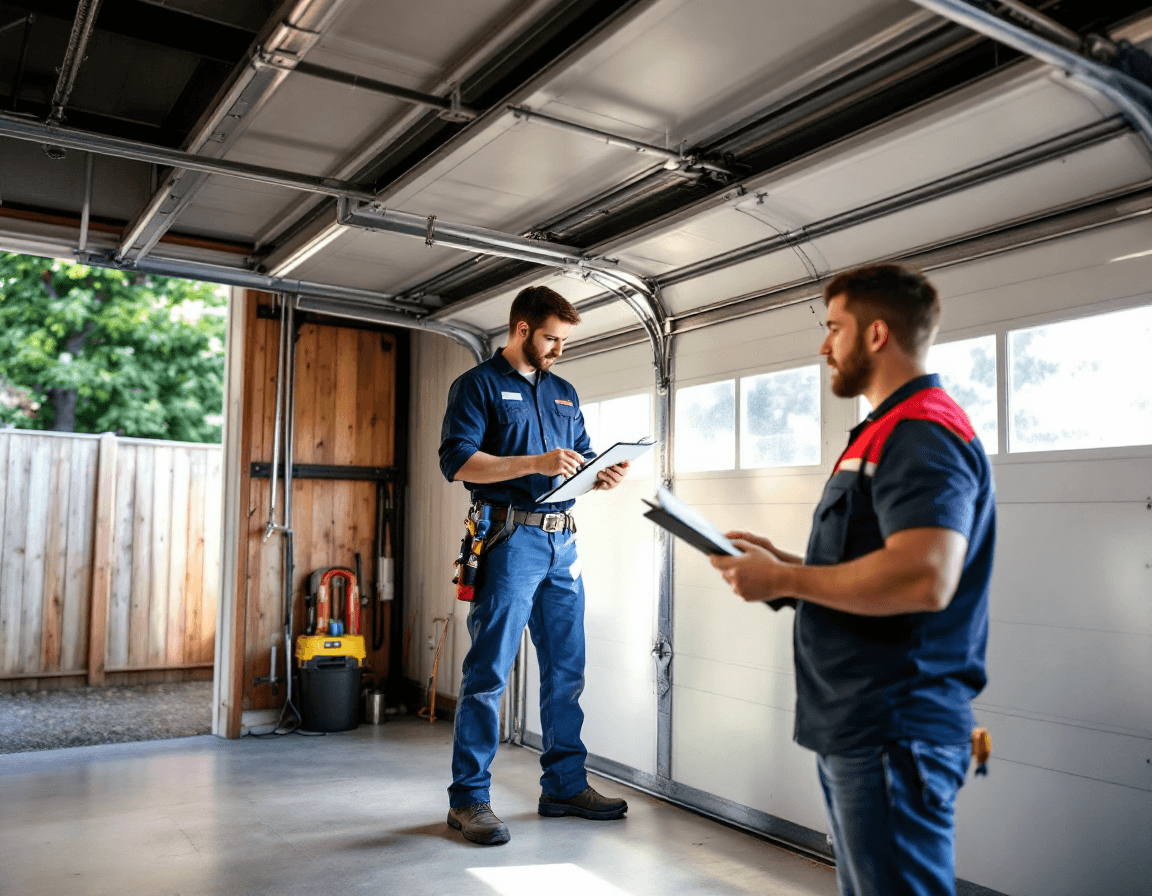
Garage doors in Ruston live a harder life than most people realize. Homes here sit within a short drive of Commencement Bay, so the air carries salt and moisture that works its way into hinges, rollers, and springs long before the door looks worn. A garage door that opens and closes without complaint can still be quietly losing ground, and a routine maintenance visit is the simplest way to catch that drift early. Garage Door Maintenance & Tune-Ups in Ruston, WA are designed for exactly that purpose: a thorough look at the door, the hardware, and the opener before a small problem turns into a stranded car on a rainy Tuesday morning.
Seattle Garage Door Fix provides multi-point tune-ups for homes in Ruston and across Pierce County. A full tune-up covers a safety inspection of the door system, lubrication of moving parts, balance testing, and a safety check of the opener, and it is priced between $89 and $149 depending on the door and the scope of work. We are licensed, bonded, and insured, and we treat every visit as a chance to explain what we see in plain language rather than leaving you to guess. If you have been wondering whether your door is due for attention, the sections below walk through what a tune-up covers, why our local conditions matter, and how to tell when a simple service has become something more involved.
Why Ruston Garages Age Differently Than Inland Ones
The neighborhoods around Point Ruston and the waterfront have a character that shapes how garage doors wear. Winters are long, gray, and damp rather than bitterly cold, and the rain often falls steadily for weeks rather than arriving in a single storm. That kind of persistent moisture keeps metal surfaces from drying out fully between weather systems, which means steel hinges, track brackets, and spring coils can spend months in a mild but constant state of dampness. Over time that dampness encourages surface rust and galvanizing breakdown, especially on the lower brackets and anywhere water pools against the bottom of the door.
Homes closer to the shoreline also deal with airborne salt. Even on a calm day, the breeze coming off the bay can carry fine salt particles that settle on exposed hardware, particularly on the sides and tops of a door that faces the water or sits in an open carport. Salt accelerates corrosion, and corrosion makes moving parts stiffer and less predictable. A door that was perfectly balanced five years ago can develop a slight lean or a grinding start simply because the hardware has been slowly changing underneath the paint.
Ruston's older housing stock adds another layer. Many homes here have detached or semi-detached garages with original tracks, aging wood framing, and openers installed during a previous owner's tenure. Those components were rarely designed to be checked as a system, so one part may be wearing faster than its neighbor without anyone noticing. A tune-up gives a technician the chance to look at the whole arrangement at once, rather than reacting to a single symptom after it has already become a problem.
What Happens During a Multi-Point Safety Inspection
A multi-point inspection starts with a visual walk-through of the door panels, hinges, rollers, and track. We look for bent or loose track sections, hinges that have pulled away from the panels, rollers with flat spots or cracked stems, and panels that have separated or cracked along their seams. The goal is to understand what the door looks like when it is at rest before we ask it to move through its full cycle. Small items like a missing shim or a bent track bracket are often caught at this stage, before they cause the door to bind.
Next we examine the mechanical hardware that carries the load. This includes the springs, the cables, the drums, and the center bearing or end bearing plates, depending on the door design. Spring and cable inspection is part of the safety picture, but it is also the area where homeowners should never attempt repairs on their own. Torsion springs store a tremendous amount of energy, and cable or drum failures can release that energy with real force. Our technicians will tell you what condition they see, note any wear or fraying, and recommend the appropriate next step, which for spring or cable replacement always means a licensed professional doing the work.
Finally we run the door through several complete cycles while watching for smooth travel, even tension, and any sign of rubbing or hesitation. We check that the door stays where you leave it when lifted partway, that the bottom seal is making contact with the threshold, and that the weatherstripping along the sides and top is intact. The inspection is not a sales pitch. It is a structured way of confirming that every major part of the door is doing its job, and it gives you a clear picture of what, if anything, deserves attention in the coming months.
- Track alignment, bracket tightness, and roller condition
- Hinge and panel integrity, including signs of separation
- Spring, cable, and drum visual condition (inspected only, repairs handled by licensed techs)
- Bottom seal, side seals, and top weatherstripping
- Full-cycle operation for smoothness, noise, and rubbing
Salt Air, Wet Winters, and the Metal Hardware Problem
Corrosion is the quiet enemy of garage door hardware in this part of Pierce County. Galvanized steel holds up reasonably well under normal conditions, but its protective zinc coating wears thin where hardware rubs, where it sits in standing water, and where salt residue lingers after a wet week. Once the coating is compromised, rust begins to form on the exposed steel underneath, and the process speeds up because the rust holds moisture against the metal. We often see the first signs at the lower track brackets, the bottom of the hinges, and the ends of the torsion tube where it passes through the bearing plates.
Rust does more than look unsightly. As it builds up, it adds friction to pivot points and can seize fasteners that were tightened to a specific torque at installation. A bolt that loosens when it is seized may slip rather than turn cleanly, which can subtly shift a track or stress a bracket. In a few cases we have seen rust contribute to a roller stem that snaps under load, which is precisely the kind of failure that a tune-up is meant to catch before it happens on its own schedule. We do not describe every case as urgent, but we do explain what we find so you can decide how to proceed.
Protection starts with keeping water and salt from sitting on the hardware. A periodic rinse of the lower panels and tracks with fresh water, followed by a dry wipe, helps remove salt that accumulates during salt-heavy weeks. Keeping the garage floor clear of standing water, checking that the threshold seal has not hardened or split, and making sure gutters direct runoff away from the door opening all reduce the amount of moisture the hardware sees. A technician can also recommend a metal-safe protective treatment for exposed fasteners as part of a tune-up, which is far more effective than waiting until visible rust appears.
Balance Testing: The Quiet Test Most Homeowners Never See
Balance is one of the most important and least understood parts of a garage door's performance. A properly balanced door should stay where it is when you lift it partway and release it, rather than slamming down or drifting upward. When the balance is off, the opener has to work harder in one direction than the other, which strains the motor, wears the drive components, and makes the door feel heavy or lopsided as it moves. Many homeowners notice this as a door that seems to want to fall when they let go, or one that requires an extra push to start moving.
Balance testing is performed with the door disconnected from the opener and with the springs in their normal working state. The technician lifts the door by hand to a height of about four feet and releases it, observing whether it holds, rises, or drops. The test is repeated at several heights to see whether the imbalance is consistent or only appears at certain points in the travel. Doors that fail the test are not corrected by simply adjusting the opener force, because that masks the underlying issue and leaves the springs working unevenly. The correct fix involves the springs and hardware, which is work for a licensed technician.
Balance is also affected by subtle changes that accumulate over years. A hinge that has slipped, a roller that has flattened, or a spring that has lost some of its tension can all shift the balance point. Ruston homes with older doors are particularly likely to show this, because the springs may have been installed when the door was new and have been carrying weight through many seasons of humid air and temperature swings. A balance check during a tune-up gives you early warning, so that a small correction can be made before the door begins to bind or the opener begins to strain.
Lubrication Done Right (and What Not to Spray)
Lubrication is often treated as a simple chore, but it is only effective when the right product goes on the right part. Garage door rollers, hinges, and bearings benefit from a lithium-based or silicone-based lubricant that stays in place without collecting dirt. Springs can be lightly coated to reduce friction and surface rust, while the track itself should be kept clean and free of heavy grease that will attract grit and debris. Using the wrong product, such as a heavy grease on the track or a penetrating oil that evaporates quickly, can leave the door feeling sticky or cause rollers to skip.
In a tune-up we clean the track before applying lubricant, removing old residue, dust, and any salt crust from the lower sections. We then apply lubricant to the roller bearings and hinge pivots, wiping away excess so it does not drip onto the floor or attract dirt. The torsion springs receive a light coat designed to prevent corrosion and reduce friction, and the bearing plates and drum shafts are checked for lubrication needs. The goal is a clean, quiet door that moves with less effort, not one that is coated in a thick layer of product.
For homeowners who want to maintain the door between visits, a simple routine helps. Wipe the track with a dry cloth once a month, check that rollers spin freely, and apply a thin film of the recommended lubricant to hinges and roller stems once or twice a year. Avoid spraying lubricant directly onto the opener's drive chain or belt unless the manufacturer specifically recommends it, and never lubricate the spring while it is under tension unless you are a trained technician. When in doubt, ask during your tune-up which products are appropriate for your specific door.
Reading Your Opener: Straining, Slowing, and Sudden Stops
The opener is the part of the system most homeowners interact with every day, which makes changes in its behavior easy to notice. A motor that sounds strained, a door that moves more slowly than it used to, or an opener that stops halfway and reverses can all indicate a problem, but the cause is not always the opener itself. Often the opener is working harder because the door has become heavier to move, whether from imbalance, worn rollers, or stiff hinges. Treating the opener as a symptom rather than the source is one of the most common mistakes we see.
During a tune-up we check the opener's travel limits, which determine where the door stops when fully open and fully closed. We also verify the force settings, which control how much effort the opener applies before it reverses on an obstruction. Force settings should be high enough to lift the door reliably but low enough to reverse safely if something gets in the way. We check the drive belt or chain for tension and wear, look at the trolley and rail for alignment, and listen for grinding or knocking that suggests a worn gear or loose mounting bracket. Each of these checks helps isolate whether the opener or the door is the bottleneck.
It is worth paying attention to the timing of changes. If the opener began straining after a cold snap, or after a wet season, the door may have stiffened from moisture and temperature change, which is typical for steel hardware in this region. If the door has been noisier for months and the opener is only recently showing strain, the imbalance or roller wear probably came first. Describing when the change began, and how the door sounds when it moves, helps a technician narrow the cause quickly during your appointment.
Photo Eyes, Auto-Reverse, and Other Safety Checks That Matter
Safety features are the part of a tune-up that protects people, pets, and vehicles. The photo eyes mounted near the bottom of the door opening send an invisible beam across the threshold, and if the beam is interrupted while the door is closing, the door should stop and reverse. We check that the eyes are aligned, that their lenses are clean, and that the wiring is intact and not damaged by rodents or weather. A misaligned or dirty photo eye is one of the most common reasons a door fails to close, and it is also one of the easiest to correct.
Auto-reverse is the second layer of protection. If the door encounters resistance while closing, the opener should detect the increased force and reverse direction. Testing this involves placing a standard object, such as a sturdy board, in the path of the closing door and confirming that the door reverses promptly. We also check the force settings on the opener and verify that the manual release works correctly, since you need to be able to disconnect the door from the opener during a power outage. A door that does not reverse reliably is a safety problem regardless of how well it otherwise performs.
These checks matter more in Ruston than people might expect, because many homes here have children, pets, or frequent deliveries going in and out of the garage. Cars and bicycles are often stored close to the door track, and kids may play near the opening. Keeping the safety features tested and functioning is one of the most valuable parts of a tune-up, and it is a good reason to schedule service even when the door seems to be working fine.
Buying a Home in Ruston? Get the Door Checked Early
Buying a home is a busy time, and the garage door often gets overlooked in the rush of inspections, appraisals, and paperwork. Yet the door is one of the largest moving objects on the property, and its condition can affect everything from daily convenience to home security and insurance. A door that was last serviced years ago, or that has been running on a worn opener, may need attention soon after you move in. Scheduling a tune-up within the first few weeks gives you a clear baseline and a list of items to address on your own timeline.
When you buy a home that has been on the market for a while, the garage door may have been operated less often than usual, which can allow lubrication to dry out and hardware to stiffen. Conversely, a door that has been used heavily by a previous owner may show more wear on rollers and springs. A tune-up gives you an objective look at which situation applies, so you are not relying on the seller's description or a quick glance during the walkthrough. It also helps document the condition of the door at the time you took possession, which can be useful if questions arise later.
We recommend asking the seller whether the door has been serviced recently and whether any repairs were made, and checking whether the opener has its original remote and manual. If the door has never been serviced or the records are unclear, a full multi-point tune-up is a sensible first step. From there you can decide whether to schedule any recommended repairs, such as roller replacement or opener adjustment, with a clear sense of cost and priority.
Walking the Waterfront Routine: Seasonal Maintenance Timing
Timing a tune-up around the Pacific Northwest calendar makes it more effective. Late winter and early spring are a good window, after the wettest months have passed and before the busy summer season when many families are out of the house and garages see more traffic. A fall visit, before the rains settle in for the season, is another strong option, because it lets us address any stiffness or corrosion before the damp months set in. Scheduling around these windows also means the lubricants and protective treatments have time to do their work before the next weather pattern arrives.
Between professional visits, a simple seasonal routine keeps the door in good shape. In spring, rinse the lower panels and tracks to remove winter salt and grime, check the weatherstripping for cracks, and confirm the photo eyes are clean. In late summer, when the air is drier, test the auto-reverse feature and listen for new noises in the rollers and opener. In autumn, clear debris from the threshold, make sure gutters direct runoff away from the door, and confirm that the garage floor is not holding standing water. These steps take little time and make it easier for a technician to see what has changed since the last visit.
Pay attention to changes that appear between seasons. A new squeak after a wet week, a slight lean when the door is partway open, or a sudden increase in opener noise are all useful details to mention at your next appointment. Ruston's climate is steady rather than dramatic, which means gradual changes are easy to overlook until they add up. Keeping a short note on your phone about what you notice and when it happens can make a tune-up more productive.
Price, Scope, and When a Tune-Up Turns Into a Repair
A full multi-point tune-up at Seattle Garage Door Fix is priced between $89 and $149. The final cost depends on the door type, its size, the number of components that need attention, and whether your opener requires additional adjustment during the visit. Our technicians explain what is included before any work begins, and they will tell you if the inspection reveals something that goes beyond routine service. We do not expect you to make decisions about repairs without understanding what they involve.
A tune-up is designed to maintain and check the system, not to perform major repairs during the same visit. If the inspection finds a worn spring, a frayed cable, a cracked drum, or a damaged track section, we will describe the condition, explain the safety considerations, and recommend the appropriate next step. Spring and cable replacement is always handled by a licensed professional because of the stored energy involved, and we will never encourage a homeowner to attempt that work alone. Many issues, such as roller replacement, opener adjustment, or weatherstripping, can be scheduled as separate visits once you have a clear picture of the options.
Understanding the difference between maintenance and repair helps you plan your budget. Regular tune-ups tend to reveal problems while they are still small, which often means simpler and less expensive fixes. Waiting until a door fails completely can turn a routine roller replacement into a more involved job, and it may leave you without a working garage at the worst possible time. Scheduling a tune-up is one of the most practical ways to keep your door reliable and predictable, especially in a place where weather and salt air quietly add wear every season.
Your garage door is one of the most heavily used moving parts in your home, and it deserves the same attention you give your furnace or water heater. Whether your door has grown noisier over time, your opener is straining, or you simply want to prevent a surprise breakdown, a multi-point tune-up is a straightforward way to protect your investment. Call Seattle Garage Door Fix at (888) 799-3819 to schedule your Ruston tune-up, and we will walk you through what we find, what it means, and what your options are for keeping your door safe and smooth through every Pacific Northwest season.