
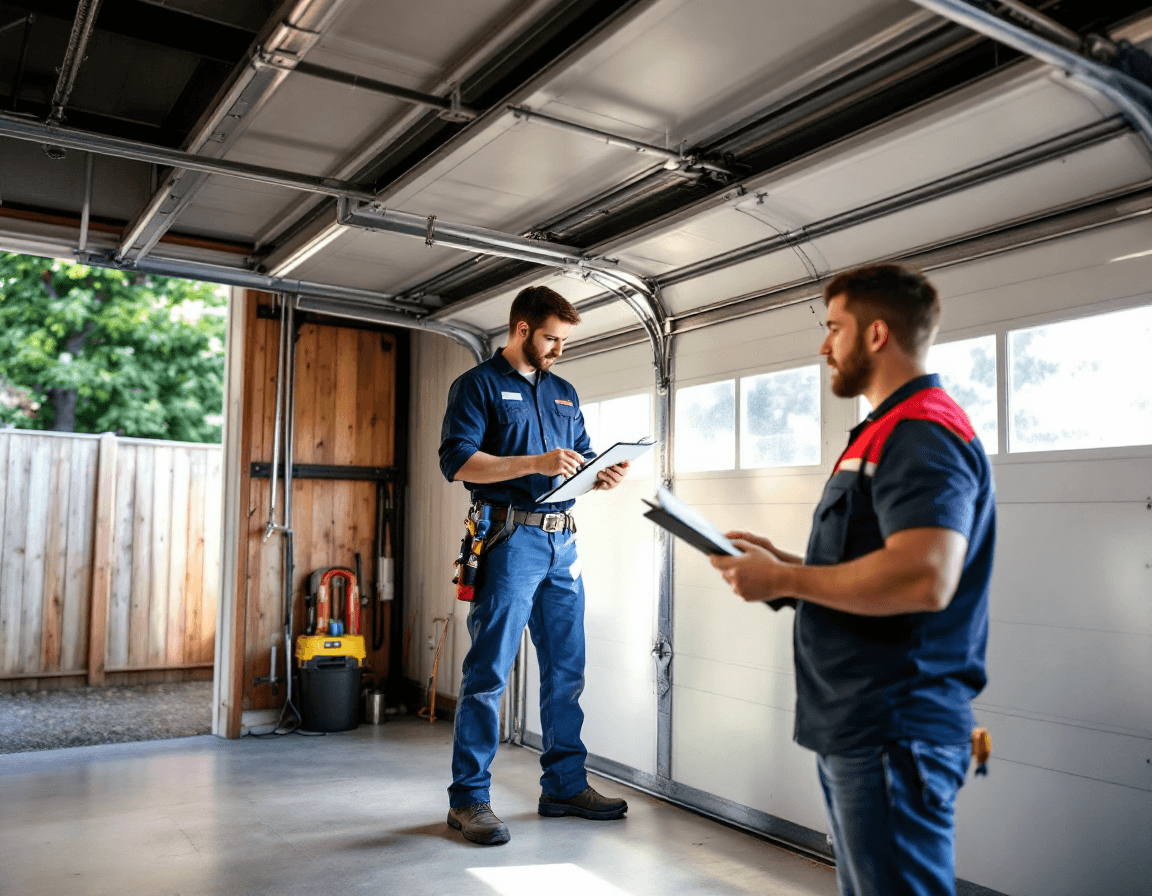
Garage Door Maintenance & Tune-Ups in Fircrest, WA are one of the most practical ways to keep a household running smoothly, especially in a town where the garage often serves as the main entrance, storage room, and workshop all at once. Homes across the 98466 ZIP code see a steady mix of damp winters, mild shoulder seasons, and occasional cold snaps, and each of those conditions puts a different kind of stress on springs, rollers, tracks, and openers. A door that rattled a little last year may be grinding today, and most homeowners only notice the problem when the door stops in the middle of its travel.
This page explains what a professional tune-up looks like, why it matters for homes in and around Fircrest, and how to tell when your door is asking for attention. We will walk through the inspection steps a licensed technician follows, what the balance and safety tests reveal, and how the service fits into a realistic maintenance schedule. Pricing for a full multi-point tune-up falls in the $89 to $149 range, and we will explain what that range typically covers so you know what to expect before the appointment.
If your door has not been serviced in more than a year, or if you have just purchased a home and have no idea what condition the hardware is in, a tune-up is an inexpensive way to gain clarity. Read through the sections below, compare the warning signs to what you are hearing and seeing at home, and call (888) 799-3819 when you are ready to schedule. The sooner a problem is caught, the simpler and less costly the repair usually turns out to be.
How Pacific Northwest Weather Works Against Your Garage Door
Western Washington is famous for its drizzle, and that moisture is the first thing a garage door has to contend with year after year. Humidity swells wood sections, promotes surface corrosion on steel hinges and brackets, and can cause nylon or plastic roller stems to drag as they absorb water and lose their smoothness. In Fircrest, where many neighborhoods sit under mature trees, damp leaves and moss also collect along the bottom seal and the track, which can trap grit against the rollers. Over a long wet season, these small changes add up to noticeable resistance.
Temperature swings matter just as much as moisture. Most winters here bring stretches of cold, damp weather that can stiffen old lubricant, and a brief hard freeze can make a door feel sluggish for a few mornings even when nothing is actually wrong. Summers are generally mild, but a warm dry spell can dry out lubricants that were applied during the wet months, leaving metal parts to rub against each other. Garage doors expand and contract with these changes, which is why a door that closed perfectly in October may sit slightly out of alignment by March.
Because the local climate is gentle compared with harsher regions, many homeowners assume their door does not need much attention. In practice, the steady moisture and temperature cycling wear components more gradually than a single severe event would. That gradual wear is exactly why routine inspection is valuable: a technician can spot early corrosion, a loosening bracket, or a worn roller long before any of those parts fail outright.
Reading the Early Warning Signs Before a Breakdown
Most garage door failures do not happen without warning. They usually build over weeks or months, and the signs are often easy to overlook because the door still opens and closes. The most common early clue is a change in sound. A door that was once quiet may begin to squeal, pop, or grind, and that noise often means metal is rubbing on metal where lubricant has thinned or where a roller is starting to wear unevenly.
Movement changes are the second category to watch. If the door jerks, pauses, or seems to hesitate at certain points on its travel, the springs, tracks, or cables may not be balanced evenly. A door that feels heavy when you lift it by hand, or that drifts down on its own when partially open, is another sign that the spring tension needs professional evaluation. Pay attention if the door no longer stops where it used to when closing, since that can indicate a sensor or limit setting that has drifted.
Finally, look at the opener. A motor that strains, runs longer than usual, or shuts off partway through a cycle is telling you that the door is working harder than it should. Some homeowners notice a burning smell or hear the motor humming without the door moving, which should prompt you to stop using the opener and call for service right away. The following list covers the signs that most often justify a tune-up appointment:
- The door has become noticeably louder over several months without any obvious cause.
- The door jerks, stalls, or stops at odd points while opening or closing.
- The door feels heavy to lift manually or does not stay put when you release it halfway open.
- The opener sounds strained, runs longer than normal, or reverses for no clear reason.
- The door has not been professionally serviced in more than twelve months.
- You have just moved into the home and do not know the service history of the hardware.
What a Multi-Point Tune-Up Actually Covers
A full multi-point tune-up is a structured walk-through of every major system in your garage door. The technician begins with a visual inspection of the door panels, hinges, rollers, tracks, and brackets, looking for cracks, bent sections, loose fasteners, and corrosion. The track is checked for alignment, level, and proper mounting, since even a small deviation can cause rollers to bind. The weatherstripping and bottom seal are also examined, because a worn seal allows drafts, moisture, and pests into the garage.
Next comes the hardware and moving parts. Rollers are inspected for flat spots, cracks in the stems, and smooth operation in the track, and any that show wear are noted for replacement. Hinges, end brackets, and center brackets are checked for tightness, and the technician will verify that fasteners are not stripped or backed out. The springs and cables receive a visual inspection for rust, fraying, or gaps in the winding, though the actual adjustment or replacement of these high-tension parts should always be left to a licensed professional.
The opener is inspected as part of the same visit. This includes the motor, the drive mechanism, the chain or belt, the mounting hardware, and the safety sensors near the floor. The technician will also check the limit settings so the door opens and closes at the correct points. Lubrication and balance testing are performed alongside these checks, which the next sections explain in more detail. When the visit concludes, you should receive a clear explanation of what was found, what was adjusted, and whether any parts need attention in the near future.
Balance Testing: The Check Most Homeowners Never Think About
Balance testing is one of the most informative parts of a tune-up, yet it is rarely discussed outside the trade. A properly balanced door should stay in place when lifted to about halfway and released, without drifting up or down on its own. If it rises, the springs are providing too much tension. If it sinks, the springs are too weak or the door is carrying extra weight. Either condition forces the opener to work harder and places strain on the rollers, brackets, and track.
Balance problems often develop slowly, and homeowners tend to adapt without realizing it. You may find yourself pressing the opener button a second time or leaning slightly on the door to get it moving, and those habits can mask a real imbalance. Over time the opener motor and gearing absorb the extra load, which shortens their lifespan. A technician performs this test by disconnecting the opener and manually moving the door through its range, then evaluating how it behaves at several points.
Balance adjustments on torsion or extension springs involve high tension and specialized tools, which is why this work belongs with a licensed professional. A tune-up typically includes the test itself and a recommendation if adjustment or spring replacement is needed. Even if the door appears fine, understanding its balance gives you a reliable baseline to compare against during future inspections.
Lubrication Done Right for Damp Western Washington Doors
Proper lubrication is one of the simplest ways to reduce noise and wear, but it is also one of the most commonly done incorrectly. Silicone-based or lithium-based garage door lubricants are generally the best choices for the moving parts of a door. Silicone spray is often preferred for nylon rollers and hinges because it does not attract as much dirt and does not break down plastic components the way some petroleum products can. Lithium grease can be applied to springs, bearings, and the opener chain or screw drive according to manufacturer guidance.
Many homeowners reach for a general-purpose penetrating oil, but that approach can cause trouble. Penetrating oils work well for loosening rusted bolts, yet they are not designed as long-term lubricants, and they can leave a residue that collects grit in the track. Applying too much lubricant is also a mistake, since excess product drips onto the floor, attracts dust, and can be flung onto driveways and vehicles. A light, targeted application on the right components does more good than a heavy coat over everything.
A professional tune-up will clean the track before lubricating, removing the film of dirt and moisture that builds up through the wet months. The technician then applies the correct product to the rollers, hinge pivots, and opener drive according to the manufacturer's specifications. Certain parts, such as the track itself, generally should not be lubricated because a lubricated track can collect debris and cause rollers to slip. Knowing which parts to treat and which to leave alone is a large part of what makes a tune-up effective.
Opener Safety Testing and Reversal Checks
Safety testing is a non-negotiable part of any garage door service, and it protects people, pets, and vehicles from injury or damage. Modern openers are equipped with photo-eye sensors mounted near the floor on either side of the door, and these sensors should stop and reverse the door if the beam is interrupted. A technician checks that the sensors are aligned, clean, and wired correctly, and then tests whether the door reverses when the beam is blocked during closing.
The auto-reverse feature is also tested by placing a standard test object, such as a length of wood, on the floor under the closing door. The door should reverse upon contact, and the force it applies should be within the range that the opener and door system are designed to produce. If the door fails to reverse properly, the opener must be adjusted or repaired before it is used again. Many homeowners are surprised to learn how often sensors get knocked out of alignment by bicycles, recycling bins, or simple vibration over time.
Opener testing also includes checking the emergency release cord. The red release handle should be easy to reach and should disengage the door from the opener cleanly. Some households have children or elderly family members who may need to use the door manually, so confirming that the release works is important. A tune-up is an ideal time to walk through these safety features with the technician and ask any questions about how the system responds.
Older Homes and New Owners: Establishing a Baseline After Closing
Buying a home in Fircrest often means inheriting a garage door whose history is a mystery. Sellers rarely provide detailed service records, and inspection reports tend to note the door's presence without evaluating its springs, rollers, or balance in depth. For a new owner, a tune-up soon after closing is one of the most sensible investments in the first few months. It establishes a clear baseline for the condition of the hardware and reveals any issues that need immediate attention.
Many homes in and around the area have garage doors that have been in place for decades, and some have been replaced or modified over the years by different owners. Mixed hardware, mismatched rollers, or a door that was installed with a bracket layout different from standard can create problems that are not obvious at first. A technician can identify these quirks and explain how they affect performance. Knowing this early helps you plan repairs on your own schedule rather than reacting to a failure during a busy week.
Documenting the first tune-up also gives you a reference point for later. Write down the date, the technician's observations, the balance result, and any parts that were replaced or flagged. Keeping this record makes future inspections more efficient and helps you notice gradual changes over time. It also adds useful information if you later need to show a buyer or insurer that the door was maintained.
Pricing and What the $89–$149 Range Typically Includes
A full multi-point tune-up in the Fircrest area generally falls within a range of $89 to $149. The final price depends on the type of door, the number of components that need attention, and whether the opener requires more than a standard inspection. A single-car door with a standard chain-drive opener will usually fall toward the lower end of the range, while a larger double door or a door with an older opener may require additional time. Your technician should explain the price before any work begins so there are no surprises.
The base tune-up covers the core elements described above: visual inspection, track and roller checks, lubrication, balance testing, and opener safety testing. It is a diagnostic and preventive service, which means the technician focuses on identifying issues and performing the routine adjustments that are part of normal maintenance. Repairs such as replacing rollers, hinges, sensors, or springs are separate from the tune-up and will be quoted individually. This structure allows you to choose which repairs to proceed with and when.
Some homeowners wonder whether a tune-up is worth the cost when the door seems to be working fine. In most cases, a modest preventive visit costs far less than an emergency call after a spring breaks or a roller fails and damages the track. A tune-up also gives you a clear picture of what the door needs over the next year, so you can budget for upcoming replacements rather than being caught off guard.
Timing Your Maintenance Around the Fircrest Seasons
The best time for a garage door tune-up is typically in the late spring or early fall. By late spring, the wet season has ended and the technician can clean and lubricate parts that were exposed to months of moisture. Early fall gives you time to address any issues before the rainy months return and before cold mornings make the door more sensitive to imbalance. Scheduling in these windows also tends to be more convenient for many households, since the weather is usually pleasant for working in and around the driveway.
That said, a tune-up is useful at any time of year. If your door has been noisy through a winter or if you have just moved in during a damp month, there is no reason to wait for the ideal season. The key is consistency. Many homeowners find that an annual visit works well, with additional checks if the household uses the garage heavily, if the door is exposed to direct sun or wind, or if the opener shows early signs of strain.
Planning around the calendar also helps you avoid the common pattern of waiting until something breaks. Setting a reminder when you complete one tune-up keeps the next one on your radar. Pairing the appointment with other household tasks, such as clearing the garage and checking the exterior weatherstripping, can make the whole process feel simpler and more thorough.
Why Spring Cable and Torsion Work Belongs With a Licensed Technician
Garage door springs and cables store enormous amounts of energy, and mishandling them can cause serious injury. Torsion springs wound on a shaft under high tension can release violently if the winding cones or set screws fail, and extension springs and cables can snap with force capable of causing harm. For this reason, homeowners should never attempt to adjust, wind, or replace these components without proper training and tools. A tune-up includes a visual inspection of the springs and cables, but any adjustment or replacement belongs with a licensed, bonded, and insured professional.
A licensed technician brings the correct tools, knows the specifications for your door's weight and spring rating, and follows safe procedures to relieve tension before handling components. They can also determine whether a spring that appears intact has lost enough strength to affect balance or stress the opener. Attempting to replace springs with mismatched parts can lead to imbalance, premature failure, or damage to the door and track. Professional work also protects your home insurance position, since accidents involving unlicensed repairs can complicate claims.
If you notice a gap in the spring winding, a frayed cable, a bent shaft, or a door that will not lift at all, stop using the door and call for service. Keep children and pets away from the area until a technician has assessed the situation. Safety should always come before convenience, and a short wait for a qualified professional is far better than an injury that could have been prevented.
A Practical Checklist You Can Use Between Professional Visits
While the detailed work belongs with a professional, there are several simple checks you can perform between tune-ups to catch problems early. These checks do not involve touching springs or cables. They focus on observation, cleaning, and basic function, and they take only a few minutes each month. Recording what you see can also help the technician when you schedule your next visit.
- Watch the door through one complete open and close cycle each month, noting any jerks, pauses, or unusual sounds.
- Wipe the visible portions of the track with a dry cloth to remove grit, leaves, and moisture, taking care not to lubricate the track itself.
- Test the auto-reverse by confirming the door reverses when the photo-eye beam is blocked, and make sure the sensor lenses are clean and aligned.
- Check that the emergency release handle is accessible and that pulling it disengages the door cleanly.
- Inspect the bottom weatherstripping for cracks or gaps and note any areas where daylight or water enters.
- Listen for changes in the opener motor, including longer run times, humming without movement, or a new grinding noise.
If any of these checks reveal a problem, do not attempt a repair that involves the springs, cables, or heavy door sections. Note the issue, stop using the door if it appears unsafe, and contact a licensed technician. Keeping a simple log of these observations, along with the dates of your professional tune-ups, gives you a clear history of how the door is performing.
Schedule Your Fircrest Garage Door Tune-Up
A well-maintained garage door is quieter, safer, and far less likely to leave you stranded on a rainy morning. Whether your door is getting louder, your opener is straining, you have not had service in over a year, or you have just closed on a home near Fircrest Park and want a clear baseline, a multi-point tune-up is a practical next step. Call (888) 799-3819 to schedule a visit, and our licensed technicians will walk through your door's condition, explain what they find, and recommend only the work your system actually needs.