
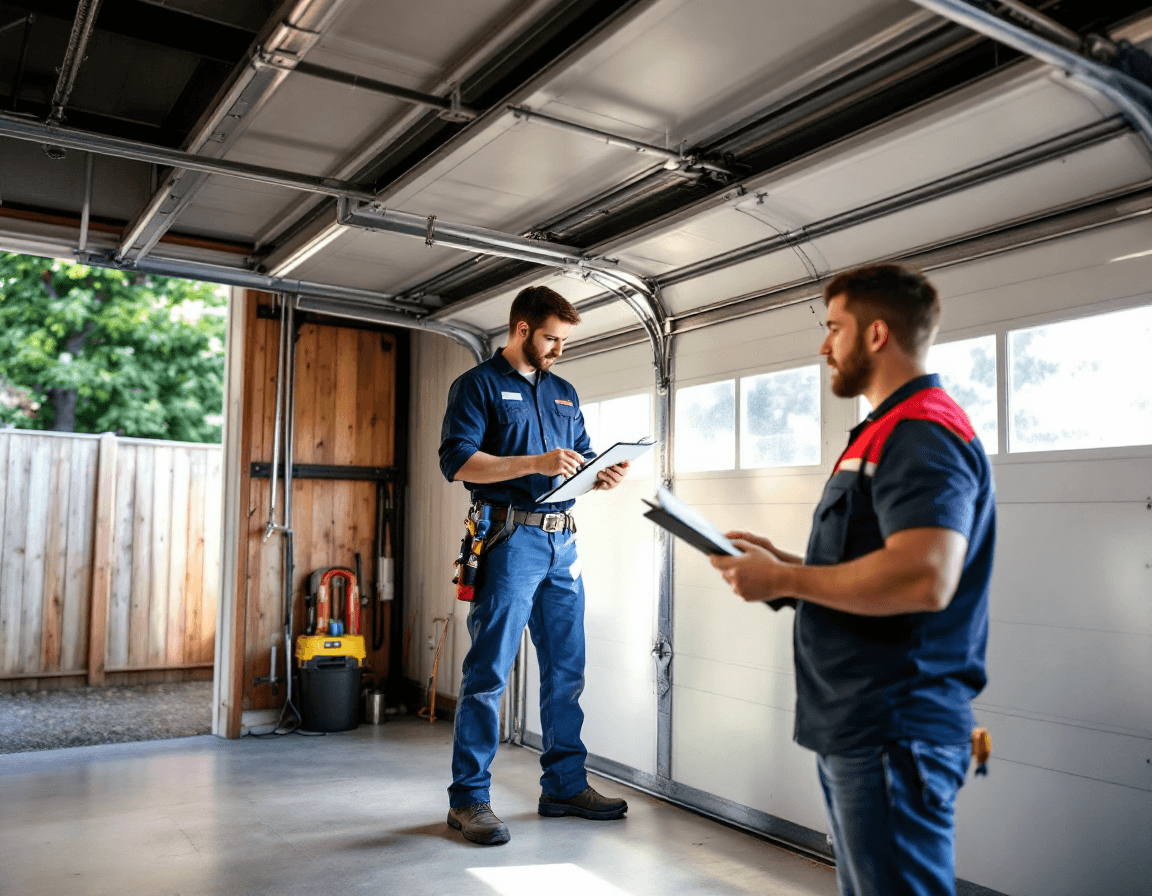
University Place sits on the west side of Pierce County, where Puget Sound air, long wet seasons, and older neighborhood housing all put steady demands on residential garage doors. Garage Door Maintenance & Tune-Ups in University Place, WA is one of the most practical ways to keep that equipment reliable, and it is also one of the easiest things to put off. Most households open and close the door several times a day without thinking about the springs, rollers, hinges, and opener that make it move. Those components carry a lot of weight, and they wear down gradually long before they stop working.
Many homes in the 98466 and 98467 ZIP codes have garages that take a beating from moisture. Morning fog rolls in off the water, winter rain can stretch for weeks, and humid air settles into closed spaces where it condenses on cold metal. A door that performed perfectly during a dry summer may start to groan, stick, or drift out of level once the fall rains arrive. A scheduled tune-up gives a technician the chance to catch these changes while they are still small, adjust what needs adjusting, and replace worn parts before they turn into a weekend emergency.
A full multi-point tune-up covers the moving parts, the safety systems, and the opener in a single visit. Pricing for a complete service typically falls in the range of $89 to $149, depending on the door type, the opener model, and what the inspection reveals. The sections below explain what that visit includes, why local conditions matter, and how to tell when your garage door is asking for attention.
Why Scheduled Upkeep Makes More Sense Than Waiting for a Breakdown
Garage doors rarely fail without warning, even though it can feel that way on a cold morning when the door refuses to open. Lubricant dries out, hardware loosens from constant vibration, and small misalignments grow into friction that strains the opener. By the time a homeowner notices a dramatic problem, several components have usually been working harder than they were designed to for months. A tune-up interrupts that pattern by checking everything before the wear becomes expensive.
In University Place, the timing of maintenance matters as much as the maintenance itself. Scheduling a visit before the wettest months gives the technician a chance to address rust spots, sticking tracks, and weatherstripping that has started to crack from repeated temperature swings. A visit in late spring or early summer can focus on checking seals and opener settings after the damp season has taken its toll. Either way, the goal is to have the door in good working order before the weather makes every problem worse.
Homeowners who skip routine service often end up paying more over time. A worn roller that gets replaced during a tune-up costs far less than a damaged track or a burned-out motor that failed because nobody noticed the strain. Keeping a simple maintenance record, with the date of each visit and any parts that were adjusted or replaced, also helps when it is time to sell the house or call for repairs later. A documented history tells the next technician what has already been checked.
Salt Air, Rain, and What Puget Sound Humidity Does to Steel
Homes that sit within sight of the Sound or near the wooded bluffs around Chambers Bay often notice that metal hardware ages faster than expected. Salt particles carried by onshore breezes can settle on exposed brackets, hinge plates, and torsion components, speeding up surface corrosion. Even homes farther inland experience the same moisture cycle, because the Pacific Northwest air holds water for long stretches and then releases it as rain or heavy dew. Steel that never fully dries between storms is far more likely to pit, flake, and lose its strength.
Wood and composite doors respond to the same weather in a different way. Panels can swell when they absorb humidity, causing them to rub against the header or the side jambs, and then shrink when the air dries out in summer. This movement changes the gap around the perimeter and can throw off the balance of a heavy door. A technician checking a wood door will look closely at the bottom seal, the edges of each panel, and the way the door sits against the frame when it reaches the top of its travel.
Aluminum and steel roll-up or sectional doors each have their own weaknesses. Steel holds up well when the factory finish stays intact, but scratches and chips expose bare metal that can begin to rust. Aluminum resists corrosion better but can develop oxidation at contact points and fastener holes. Good maintenance includes cleaning off grime and salt residue, checking painted surfaces for damage, and making sure drainage paths near the bottom of the door are not blocked by debris.
What a Multi-Point Safety Inspection Actually Checks
A multi-point inspection is a structured review of the components that keep a garage door operating safely and predictably. The technician looks at the door panels, hinges, rollers, tracks, springs, cables, drums, bottom brackets, and mounting hardware. Each item is checked for wear, looseness, damage, and corrosion before any adjustments are made. The point is to build a complete picture of the door's condition rather than focusing only on the one problem the homeowner noticed.
Safety systems get equal attention. Photo-eye sensors near the floor should be aligned, clean, and free of obstructions, because they tell the opener to stop or reverse when something blocks the doorway. The technician also verifies that the door reverses properly when it contacts an object and that the emergency release cord works as intended. These functions are easy to overlook, yet they protect children, pets, and vehicles every time the door moves.
Here is what a typical inspection covers from start to finish:
- Visual review of door panels, seams, and weatherstripping for cracks, gaps, or water damage
- Examination of hinges, rollers, track sections, and mounting brackets for looseness or wear
- Check of spring tension indicators and cable condition, with any repair handed to a licensed specialist
- Photo-eye alignment, cleaning, and a test to confirm the door reverses when the beam is broken
- Opener function test covering travel limits, force settings, and the emergency release mechanism
Balance Testing: Why a Door That Feels Heavy Needs Attention
A garage door should feel nearly weightless when lifted by hand, at least when the springs are properly tensioned and the door is balanced. When the door feels heavy, drags on one side, or rises unevenly, the balance is off. An imbalanced door puts extra load on the opener, wears out the rollers and track faster, and can shorten the life of the springs. Many homeowners first notice this as a grinding sound or a door that stops halfway up.
Balance testing is simple in principle. The technician disconnects the opener, lifts the door by hand to a midpoint, and checks whether it stays in place. If it drifts up or down, the springs are either over- or under-tensioned, or the door has developed an uneven load from a worn cable or damaged drum. The test is repeated at several heights to make sure the door holds steady across its full range. Any spring adjustment or cable replacement is work for a licensed professional, because the tension stored in these components can cause serious injury if handled incorrectly.
Sometimes the balance issue is not about the springs at all. A bent track, a misaligned hinge, or a roller that has worn flat can create just enough resistance to mimic a spring problem. This is one reason a thorough tune-up matters. The technician checks the mechanical path from top to bottom so that corrective work addresses the actual cause rather than just the symptom the homeowner describes.
Lubrication That Holds Up Through Wet Pacific Northwest Winters
Lubrication is one of the most important parts of any tune-up, and it is also one of the most misunderstood. Too little lubricant leaves moving parts grinding against each other, while the wrong product can attract dust and grit that turn into abrasive paste. The best approach is to use a lubricant designed for garage door hardware and to apply it sparingly to the points that actually need it. Spraying everything in sight is not the same as servicing the door.
In University Place, lubrication schedules should account for the damp season. Rain and humidity wash away lubricant from exposed hinges and roller stems, and cold mornings thicken certain greases so they stop flowing into tight spaces. A technician will typically clean old residue from the track, wipe down the rollers, and then apply a fresh coat to the hinge pivots, the roller bearings, the bottom bracket pins, and the lock mechanism. Springs and cables receive a light coat as well, though the technician will handle these with care and avoid overspraying.
Homeowners can help between professional visits by keeping the track clear of debris and wiping away moisture after heavy storms. Avoid oiling the photo-eye lenses or the opener chain in ways that could create residue on sensors. If you notice squeaking that returns within a few days of a service, that can point to worn rollers or a track that needs realignment instead of more lubricant.
Opener Safety Testing and Force Settings That Protect Your Household
The garage door opener is more than a motor that lifts a heavy panel. It is a safety device that must detect obstacles, stop movement, and reverse direction when conditions change. A tune-up includes testing the force settings and travel limits so that the door closes firmly but reverses promptly when it meets resistance. The technician uses a standard test object to confirm that the door responds correctly on the floor, which is the safest and most reliable check available.
Force settings can drift over time, especially as springs lose tension or the door becomes heavier from accumulated moisture. If the opener is set too tightly, it can fail to reverse when a real obstruction appears. If it is set too loosely, the door may stop or fail to close properly. Either situation is a problem worth fixing, and the adjustment should be made during a professional visit rather than by guessing at dial positions.
The emergency release cord also deserves attention. Homeowners should know where it is and how to use it safely, and the technician will confirm it still disengages the door cleanly. A release that sticks or fails to disconnect the carriage can leave you stranded in a power outage or during a malfunction. Testing this function during a tune-up is a quick step that makes a significant difference when you need it.
Reading the Warning Signs: Noise, Strain, and Slow Travel
Garage doors send signals long before they fail, and most of them are easy to hear or see. A door that is getting noisier with each season is usually telling you that something is rubbing, loosening, or running dry. Popping sounds often come from loose hardware or a roller that has started to flatten. Scraping or grinding can mean the track needs cleaning or that a bearing has worn out. Any change in sound pattern is worth noting and mentioning to the technician.
Opener strain is another common warning. If the motor sounds labored, if the door pauses partway through its cycle, or if the opener runs longer than it used to, the system is working harder than it should. The cause may be an imbalanced door, worn rollers, dirty tracks, or a motor that is losing efficiency. Left alone, this strain can overheat the motor or damage the drive mechanism. A slow opening or closing cycle can also indicate that the travel settings need adjustment.
Some homeowners wait until the door refuses to close at all. Ideally, the signs are noticed while there is still time to address them calmly. A good rule of thumb is that any door that has gone more than a year without service, or that shows any of these changes, is a candidate for a tune-up. Catching the issue early almost always costs less and avoids the inconvenience of a stuck door on a busy morning.
Spring and Cable Work Belongs in Licensed Hands
Garage door springs store enormous mechanical energy, and cables carry significant load. Improper adjustment, replacement, or removal of these parts can cause serious injury, including the kind that cannot be undone. For that reason, spring and cable work should always be performed by a licensed, bonded, and insured professional who has the right tools, training, and safety procedures. Homeowners should never attempt to wind, unwind, or remove a torsion or extension spring on their own.
During a tune-up, the technician will inspect springs and cables for visible wear, rust, fraying, or stretching. If replacement is needed, the work will be scheduled as a separate repair with the proper equipment and safety measures. This approach protects both the homeowner and the technician. It also ensures that the replacement spring matches the door's weight and size, which is essential for long-term balance and performance.
It is also worth knowing that many doors have springs that are approaching the end of their rated cycles after years of use. A technician can estimate remaining life based on condition and usage, though no inspection can guarantee exact timing. Planning ahead for spring replacement is far safer than waiting until a spring breaks, which can leave the door dangerously heavy and difficult to secure.
Homes Near Chambers Bay and Bridgeport Village Benefit From a Baseline Check
If you have recently bought a home in University Place, a tune-up is one of the smartest early steps you can take. Previous owners may have skipped maintenance entirely, made informal repairs, or replaced parts with mismatched hardware. A baseline inspection documents what you actually have, identifies anything unsafe, and gives you a clear maintenance plan going forward. Many buyers find it reassuring to know exactly how the door, opener, and safety sensors are performing from day one.
Households living close to Chambers Bay, the Sound, or the busy shopping corridor around Bridgeport Village often run their vehicles and garage doors on a daily schedule. Frequent openings put more cycles on rollers, springs, and openers than occasional use would. Traffic in and out of the garage can also bring in grit and road debris that accumulates in tracks. A tune-up tailored to your usage pattern helps keep the system running smoothly despite that steady workload.
Neighborhoods across the 98466 and 98467 areas include a mix of older and newer construction, and garage door equipment varies widely from one street to the next. A technician who understands local housing styles can spot issues that are common in certain builds, such as door tracks mounted to older framing or openers installed in tight ceiling spaces. Local familiarity makes the visit faster and the recommendations more practical.
What a Tune-Up Costs and What Shapes the Final Price
A full multi-point garage door tune-up in University Place typically ranges from $89 to $149. The final figure depends on several factors, including the type of door, the number of panels, the opener model, and whether any extra steps are needed to address conditions found during the inspection. A basic service covers inspection, lubrication, balance testing, and opener safety testing, while more involved work such as track straightening or sensor replacement will be quoted separately before any additional parts or labor are performed.
It helps to understand that the tune-up itself is a preventive service, not a repair. The price reflects the time and attention needed to check every component thoroughly and to make adjustments that restore smooth operation. Many homeowners find that a single tune-up uncovers small issues that would otherwise have grown into expensive problems. Spending a modest amount to keep the system healthy is typically far less than paying for emergency service after a failure.
Before any work begins, the technician should explain what was found, what can be adjusted during the visit, and what would require a follow-up appointment. You should feel free to ask questions and to request a clear explanation of any recommended repairs. A trustworthy service provider will give you the information you need to decide, without pressure, about the next steps for your garage door.
Schedule your garage door tune-up in University Place by calling Seattle Garage Door Fix at (888) 799-3819. A licensed technician can inspect your door, test the opener and safety systems, and walk you through what the visit found.