
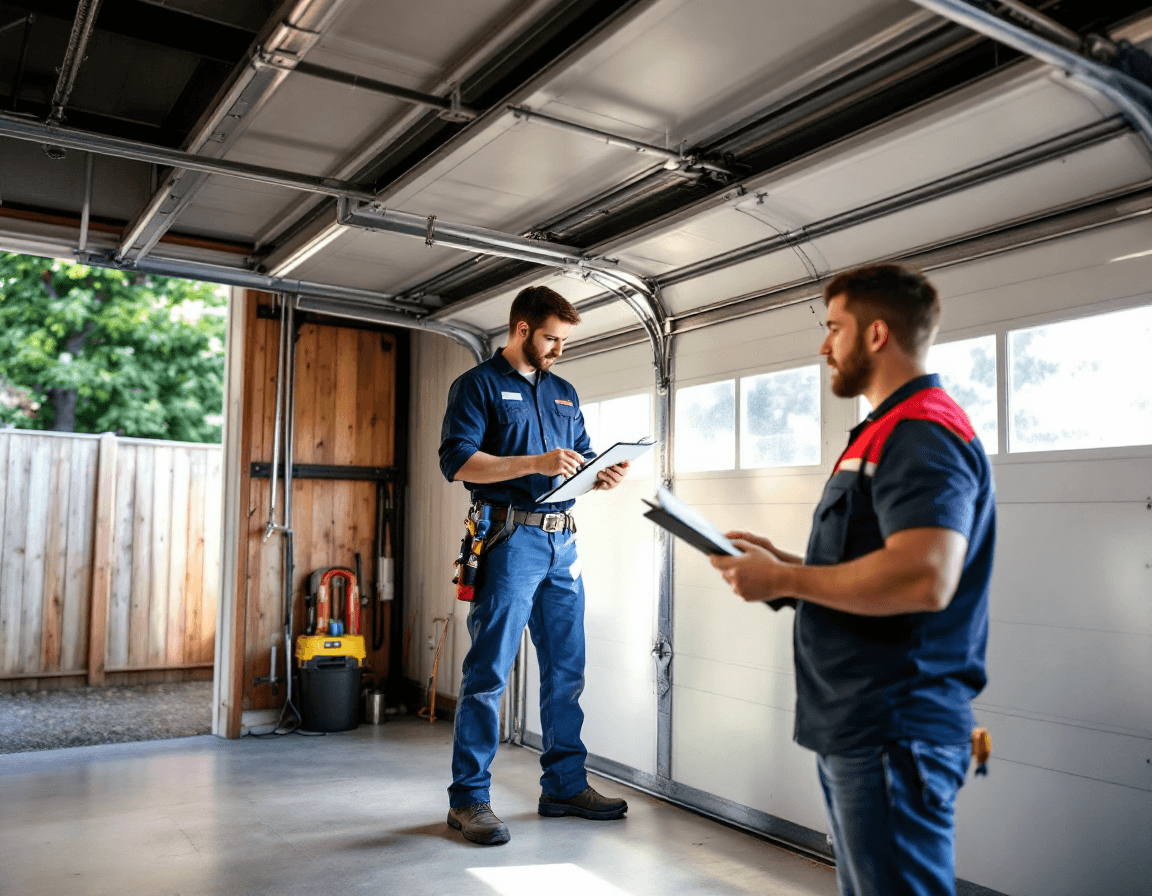
Garage Door Maintenance & Tune-Ups in Edgewood, WA is one of the most practical ways to keep a heavy, moving machine working the way it should, especially in a community where homes sit among tall evergreens and the damp season runs long. A garage door rarely fails without warning. It drifts from quiet to grinding over several months, then one cold February morning it stops halfway up with the car inside. Most of those surprises were preceded by signs that a routine check would have caught.
Our technicians serving Edgewood and nearby Pierce County neighborhoods see the same patterns repeatedly. Homeowners call after a door has been getting louder for a year, or after an opener has started to labor on the way up. Many are recent buyers who inherited a door with no service history at all. A scheduled tune-up is designed to catch these problems while the fix is still a bit of lubrication, a small adjustment, or a single inexpensive part rather than an emergency repair. This page explains what that visit includes, what it costs, and how to tell whether your door is due.
A full multi-point tune-up in our Edgewood service area typically runs $89 to $149, with the final figure depending on the door's size, its hardware, and the opener model. Nothing on this page replaces an in-person inspection of your specific door, but the sections below should help you decide what to do next. We have written them from the perspective of the people who do this work day to day, with an emphasis on what is safe for a homeowner to handle and what should always be left to a licensed professional.
What a Multi-Point Inspection Covers on Your Door
A multi-point tune-up is a systematic walk-through of every component that moves, carries load, or keeps the door aligned. The technician starts with the tracks, checking that they are straight, level, and firmly fastened, then moves to the rollers, hinges, and brackets that connect the panels to the track system. The opener, safety sensors, and manual release are tested as part of the same visit, so you leave with a picture of the whole system instead of a single repaired part. Because the visit is methodical, small problems that would otherwise hide behind a noisy door become visible.
The core checks typically include the following:
- Track alignment, track fastening, and roller condition, including wheels that have flattened or cracked
- Hinge, bracket, and fastener tightness across every panel
- Visual inspection of cables, drums, and springs for fraying, gaps, or rust (inspection only, with no tension adjustments by the homeowner)
- A balance test to confirm the door's weight is distributed correctly
- Opener force, travel limits, and auto-reverse testing, along with photo-eye alignment
Each finding is explained in plain language at the end of the visit. You should receive a clear account of what was done, what was adjusted, and what, if anything, should be watched or scheduled for repair. That written explanation is useful later when you compare notes with a future technician or review the history of your home.
Balance Testing and Why a Heavy-Feeling Door Matters
Balance is the single most important diagnostic on a garage door, and it is easy to overlook. A properly balanced door should stay wherever you leave it when lifted partway by hand, with the opener disconnected. If it sinks sharply, shoots upward, or feels noticeably heavier on one side, the springs are no longer matching the weight of the panels. That imbalance forces the opener motor to work harder on every cycle and places uneven stress on rollers, hinges, and the track.
In Edgewood, balance problems often develop gradually. Moisture and temperature swings cause springs to lose some of their stored tension over the years, and a door that once balanced perfectly may begin to drift, especially after a long, wet winter. Homeowners sometimes describe this as the door feeling "off" or "slightly heavy" even though nothing is visibly broken. That subtle change is worth taking seriously, because an unbalanced door puts the opener on borderline duty and shortens the life of components that were otherwise healthy.
Adjusting spring tension is dangerous work. Torsion and extension springs store enough energy to cause serious injury when they are released or wound incorrectly, and the correct tension depends on the door's weight and dimensions. A homeowner should never attempt to wind, unwind, or reposition springs. A licensed technician can measure the balance, identify the cause, and make any tension correction with the proper equipment and training.
Damp Winters, Evergreen Debris, and the Pacific Northwest Climate
Western Washington's climate is gentle in many ways, with few hard freezes and rarely the extreme temperature swings seen farther inland. It is also wet for much of the year, and that moisture creates problems that homeowners in drier regions rarely encounter. Rain, fog, and high humidity accelerate corrosion on hinges, bottom brackets, and exposed hardware, while weatherstripping can swell, soften, or harden depending on the season. Over time, those conditions make the door harder to move and more likely to bind.
Edgewood's tree cover adds a second layer of wear. Needles, pine cones, leaves, and fine grit wash toward the bottom of the door and collect in the track, where they mix with lubricant and form a gritty paste that grinds against the rollers. Moss and algae can also creep onto exterior surfaces near the threshold, and damp concrete slabs can keep the lower edge of the door in contact with moisture longer than homeowners expect. A seasonal check, ideally before the wettest months arrive, helps clear that buildup before it turns into a stiff or noisy door.
Ventilation matters too. Garages that stay closed for long periods can trap humidity, which encourages rust on springs, bearings, and the metal track itself. If your garage is attached to the house and you store damp gear, firewood, or recycling inside, the moisture load can be significant. A technician can recommend simple steps, such as improving airflow or keeping the floor drained, that reduce long-term wear on the door system.
Decoding the Noises Your Door Makes
A garage door almost always announces its condition through sound before it shows any visible damage. The trick is learning to tell the noises apart. A high-pitched squeal usually points to dry rollers, hinges, or bearings that need lubrication and, in some cases, replacement. A grinding noise that gets worse over time often indicates worn roller bearings, debris in the track, or a roller that is wobbling on its stem. Those are not problems to ignore, because grinding metal does not usually stop getting worse on its own.
A rattling or banging sound tends to come from different causes. Loose brackets, hinge screws that have backed out, or panels that have shifted slightly can all produce a clatter as the door travels. A sharp clunk at the top or bottom of the travel path may indicate that a track section is out of alignment or that the door is stopping against a worn stop. Some homeowners also hear a clicking from the opener itself, which can come from a worn gear, a loose mounting bolt, or a chain that needs tension.
Pay attention to when the noise happens. Sounds that appear only in the morning, after rain, or during cold snaps often point toward moisture or lubricant that has thickened. Noise that appears every time the door moves usually reflects a mechanical issue that is not going to resolve itself. Writing down the sound, the time of day, and the weather when it occurs gives the technician useful clues and can speed up the diagnosis considerably.
Opener Strain, Slow Travel, and Safety Reversal
An opener that strains, hesitates, or runs noticeably slower than it used to is telling you that it is working harder than it should. Common causes include an unbalanced door, binding in the track, a worn trolley or chain, and an opener motor that is aging. In many cases the opener is blamed when the real problem lies in the door's counterbalance or hardware. A tune-up helps separate those possibilities so you do not buy a new opener when the door only needed adjustment.
Safety reversal is equally important. Modern openers are required to reverse the door when it meets resistance, and they usually include photo eyes near the floor that stop the door if something passes through the beam. During a tune-up, the technician checks that the photo eyes are aligned, that the lenses are clean, and that the door reverses reliably when it contacts an obstacle. Homeowners can perform a simple version of this check at home by placing a flat board on the floor in the door's path and confirming that the door reverses on contact, although any failure should be reported to a professional rather than adjusted by guesswork.
Force and travel limit settings also deserve attention. If the opener is set with too much force, it may hide a balance problem by muscling the door through binding; if it is set too lightly, it may reverse unnecessarily during normal use. Adjusting these settings correctly requires care, and the technician will confirm that the door both closes fully and reverses safely after any change.
Why Lubrication Is More Than a Quick Spray
Lubrication is often the cheapest and most effective part of maintenance, but it is also the most commonly done incorrectly. Many homeowners reach for a general-purpose spray product, which is designed primarily to displace moisture and loosen stuck parts rather than to provide long-lasting lubrication. Over time, those products can leave a sticky residue that attracts dust and grit, making the rollers and hinges work harder instead of easier. A silicone-based or lithium-based garage door lubricant is generally a better choice for the moving parts that need it.
Good lubrication targets specific points. Hinges, roller bearings, the lock mechanism, and the pivot points of the opener's moving parts benefit from a light, controlled application. Track surfaces are usually cleaned rather than heavily greased, since excess lubricant on the track collects debris and creates the gritty buildup described earlier. Springs are typically lubricated by a professional during a service visit, because the work requires proper access and careful handling.
Lubrication also works best when applied after cleaning. Wiping away old grime and debris first allows the new lubricant to reach the bearing surfaces, which is why a tune-up usually includes cleaning as well. A thin, even coat is more effective than a heavy one, and excess should be wiped away so it does not drip onto the floor or the vehicle. Keeping a schedule for this kind of basic care can extend the life of rollers and hinges considerably.
Knowing When Your Door Is Overdue for Service
Most homes benefit from a professional tune-up about once a year, though the right interval depends on how often the door is used, how heavy the door is, and how much exposure it has to weather. A door that opens and closes several times a day, or that serves as the main entrance for a busy household, may need attention more often than a garage used mainly for storage. Doors with heavier insulated panels or larger custom sizes may also experience faster wear on their rollers and springs.
Several common situations justify scheduling a visit sooner. If the door has not been serviced in more than a year, it is worth having a technician establish a current baseline. If you have just purchased the home, a tune-up gives you a clear understanding of the door's condition before you settle into daily use and before small issues become costly ones. Any change in sound, speed, or balance is also a reasonable reason to call, even if the door still functions.
Waiting too long is a common mistake. Many homeowners delay service until the door fails to open or refuses to close, at which point repairs are more involved and the risk of damage to other components is higher. A proactive schedule costs less than an emergency visit and gives you more control over when the work happens.
Tasks That Belong Only to Licensed Technicians
Some garage door work is simple enough for a careful homeowner, such as wiping down tracks, tightening visible bolts with the correct tools, or lubricating accessible hinges. Other tasks carry serious risk and should never be attempted without training and proper equipment. Torsion springs, extension springs, cables, drums, and the center bearing assembly all operate under high tension, and a sudden release can cause severe injury or property damage. Even a door that appears to be lying flat can be under enough stored energy to cause harm.
If you notice a broken spring, a frayed or slack cable, or a door that will not stay in place when lifted, step back and keep others away from the door. Disconnecting the opener with the emergency release cord is generally safe when the door is closed, but do not attempt to lift a door that is stuck partway open or to crawl beneath it. Those situations call for a licensed technician who can secure the door and perform the repair correctly.
We always recommend professional service for spring and cable work. A licensed, bonded, and insured technician carries the right tools, understands the tension calculations involved, and can stand behind the work. The modest cost of a professional visit is small compared with the risk of attempting a spring replacement without the experience to do it safely.
Preparing for Your Visit and What to Expect Afterward
A little preparation makes a tune-up more productive. Clear the path in front of the door and along the sides so the technician can reach the tracks and opener. If possible, note the door's brand and any model information printed on the opener or panels, and write down any noises, odd movements, or recent problems you have observed. Let the technician know whether the door has been serviced before and roughly when that happened, since that history helps identify wear patterns.
During the visit, the technician will work through the multi-point checklist and test the door's balance and safety reversal. Ask questions as you go, especially if something seems unclear or if you are considering a repair in the future. You should receive a clear explanation of what was found and what was done, along with any recommendations for follow-up. If the inspection reveals a worn part, expect to receive a separate estimate before anything is replaced, so you can decide how to proceed.
Routine tune-ups are priced at $89 to $149 for a full multi-point service, which gives you a predictable starting point for budgeting. Many homeowners find that the visit pays for itself by catching a small problem before it becomes an emergency, and by giving them confidence that the door is safe for daily use.
Edgewood Homes and Pre-Purchase Door Checks
Homes across Edgewood and the surrounding area include a wide range of garage types, from single-car attached garages to larger detached structures. Neighborhoods such as Edgewood Meadows have their own mix of door styles, sizes, and opener installations, and it is common for buyers to inherit doors that have never been serviced by the current owners. Because garages often receive less attention than the rest of the house, they can be an overlooked source of cost surprises after closing.
A pre-purchase tune-up is a practical step for buyers who want a clear view of the door before they move in. The inspection can reveal balance issues, worn rollers, opener problems, or safety-reversal concerns that may not be obvious during a walkthrough. Armed with that information, a buyer can negotiate, budget for repairs, or schedule maintenance on their own timeline. Sellers can also benefit from a tune-up before listing, since a door that opens quietly and runs smoothly leaves a better impression during showings.
Whether you are buying, selling, or simply due for routine care, the goal is the same: a door that moves smoothly, balances properly, and reverses safely every time it is used. A clear record of service makes that goal easier to maintain for years to come.
Ready to get your Edgewood garage door checked before the next wet season settles in? Call Seattle Garage Door Fix at (888) 799-3819 to schedule a multi-point tune-up. Our licensed, bonded, and insured technicians will inspect balance, lubrication, cables, springs, and opener safety, and walk you through the results in plain language. Expect pricing between $89 and $149 for a full tune-up, and call us for any spring or cable concern so the work is handled safely by a professional.