
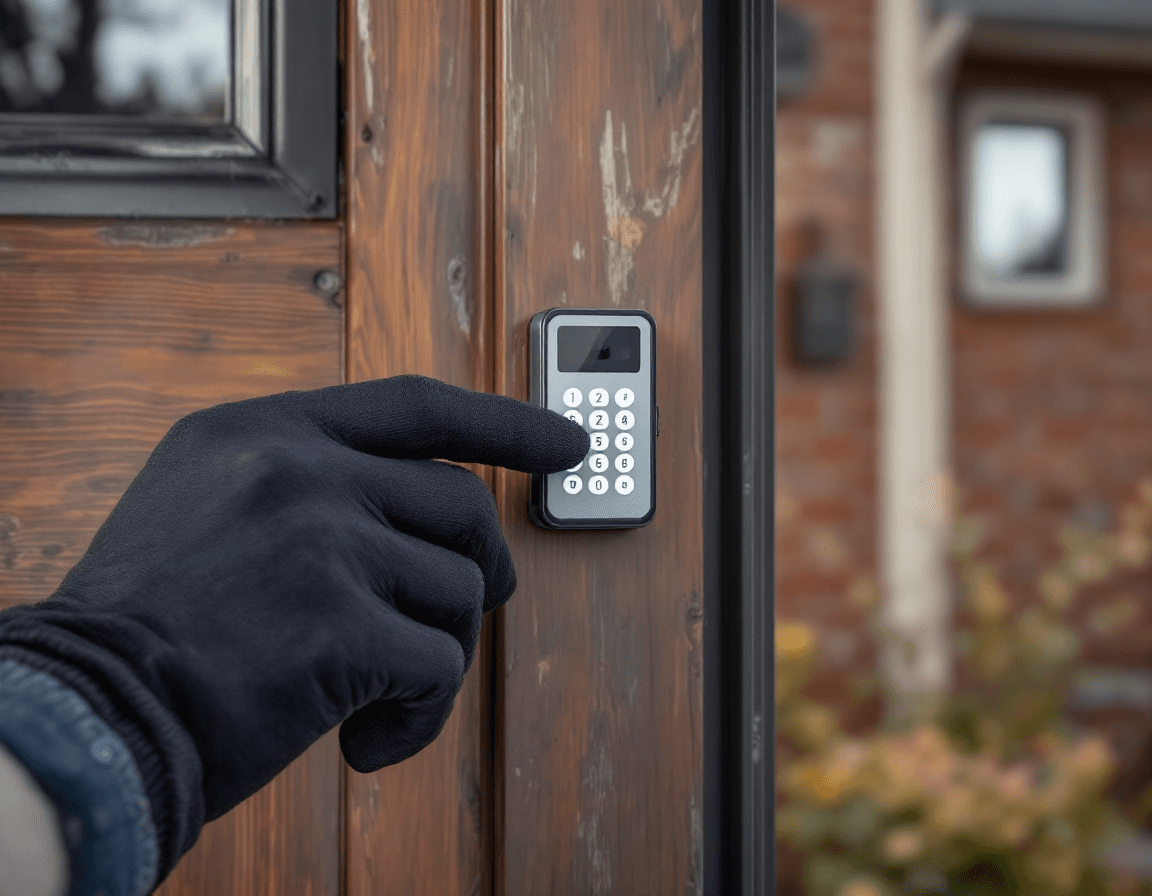
Garage door remote and keypad service in Lake Forest Park, WA, is one of the most common calls we take, and it is usually a small fix that makes a big difference to your daily routine. A remote that works from the driveway but fails at the end of the block, a keypad that rejects a code you have used for years, or a new car whose built-in buttons refuse to pair can all turn a simple exit into a frustrating morning. Most of these problems come down to signal, memory, or battery issues rather than a failed opener. Our technicians handle remote programming, keypad installation and troubleshooting, and in-car opener pairing for homes throughout the city and the surrounding 98155 area.
Lake Forest Park sits in a part of King County where garages see a lot of moisture, mature trees, and the kind of mixed-use traffic that comes with being close to the Town Center and the Burke-Gilman corridor. Homes here range from older split-levels and ranch houses to newer builds with detached or deep garages, and each layout affects how a radio signal travels from your car to the motor. A remote that worked perfectly in your last home may behave differently here, and that is normal. This page explains what usually causes remote and keypad trouble locally, what you can check yourself, and when it makes sense to call a licensed technician.
Whether you need a single extra remote for a teenager, a replacement after a lost fob, or an exterior keypad for a family that is tired of carrying keys, the goal is the same: reliable access without leaving your garage open to anyone who finds a dropped clicker. The sections below walk through each common scenario in the order most homeowners encounter them. If you would rather not troubleshoot on your own, you can call (888) 799-3819 at any time and describe what your opener is doing.
When Your Remote Works in the Driveway but Not Down the Street
Intermittent remote behavior is one of the most frustrating symptoms because it seems random. The remote may open the door on Tuesday, fail on Wednesday, and then work again once you stand in a different spot. In most cases the issue is not the opener itself but the combination of a weakening battery, a worn remote button contact, or interference from nearby signals. Lake Forest Park's tree cover, dense residential lots, and the occasional metal-framed structure can all reduce how far a weak signal reaches, which is why a remote that barely made it through the garage door last winter may now fail the moment you turn the corner.
Start by noticing when the failures happen. People who report problems typically describe a pattern that points toward one cause over another. A few of the most common patterns we see locally include:
- Failures that happen mostly on cold mornings, which often point to a battery losing capacity.
- Failures that happen only at certain spots on the property, which can indicate signal shadowing or interference.
- Failures that come and go with the weather, which can suggest moisture working into the remote's button contacts.
- Failures that began right after a new device was installed nearby, such as a new garage camera or a different wireless gadget.
Before calling for help, replace the coin-cell battery in the remote with a fresh one, clean the battery contacts gently with a dry cloth, and test again from several spots on your driveway. If the remote still behaves erratically, the problem may be the remote's internal components or the opener's receiver sensitivity, and a technician can measure that properly. Remember that you do not need to keep pressing the button repeatedly when a remote fails, since repeated presses can sometimes push the opener into a rolling-code resynchronization state that makes the problem look worse.
Rolling Codes, Frequencies, and Why Your Opener's Brand Matters
Almost every modern garage door opener uses rolling-code technology, which means each button press sends a new code that the motor has to recognize. This is a security feature that prevents thieves from capturing a single signal and replaying it later. It also means that a remote must be paired with the specific receiver in your opener, and a remote from one brand will not necessarily work with another. Many homes in the area have openers from the major manufacturers, and some have older units that operate on a different frequency band than newer ones.
Frequency matters because the remote and the receiver have to speak the same radio language. Common residential openers operate in ranges that include 315 MHz and 390 MHz, and a remote built for one band will not reliably control an opener built for the other. When a homeowner buys a universal replacement online and it refuses to work, the frequency mismatch is often the reason. Our technicians check the motor unit's label and the existing remote's model before recommending a replacement, which saves time and avoids buying hardware that will not pair.
Brand also determines how programming is done, how many remotes the receiver can store, and whether the system supports smartphone integration. Some newer systems link to a manufacturer's app, which can change how you add users or share access. Others rely entirely on a physical learn button on the motor unit. If you are not sure which system you have, look at the motor housing, the owner's manual if you still have it, or the remote itself. Knowing the brand before you order parts or schedule service will make the entire visit faster and more predictable.
Programming a New or Replacement Remote Without Guesswork
Programming a replacement remote is usually straightforward once you know where the learn button is located on your opener. On most units the learn button sits on the back or side of the motor housing, often near the antenna wire, and it is typically colored to match the pairing indicator light. Pressing that button activates a short window during which the opener accepts a new remote. The exact sequence varies by manufacturer, so the steps below are a general guide rather than a universal set of instructions for every model.
Here is a general sequence many homeowners follow, though your opener's manual should always take priority:
- Locate the learn button on the motor unit and confirm the indicator light is visible.
- Press and release the learn button, then watch for the light to turn on or blink.
- Within roughly thirty seconds, press and hold the button on the new remote you want to add.
- Wait for the door to move or the motor to click, which confirms the code was accepted.
- Test the new remote from inside and outside the garage before considering the job finished.
If the door does not respond, the most common causes are simply running out of the time window, pressing the wrong button on the remote, or trying to program a remote that is incompatible with the receiver. Some openers hold a limited number of remotes, and adding too many can require clearing the memory first. A technician can also confirm that the new remote's battery is fresh and that the signal is strong enough at the motor's location. Keep in mind that a replacement remote is not always the cheapest solution when the old one is still functioning, so it is worth discussing whether an additional unit or a keypad better fits your household.
Why Your Keypad Rejects a Code You Know Is Correct
A keypad that refuses to accept a code is frustrating, especially when you are standing in the rain with a grocery bag in each hand. The most common cause is simply a mistyped sequence, but several other issues can produce the same symptom. Many keypads lock out temporarily after several incorrect attempts, which means additional presses during the lockout period will not work until the timer expires. Others have a sensitivity problem where the buttons do not register cleanly after exposure to moisture or repeated use.
Wireless keypads add another layer of possible problems. They rely on a battery and a radio link to the opener, so a weak battery or a poor signal path can cause the keypad to send an incomplete code. Wired keypads, which connect directly to the opener's control board, are less affected by radio interference but can suffer from loose wiring or corrosion at the connection points, especially where the wiring runs through humid or cold areas of the garage. Diagnosing the difference between a code problem and a hardware problem requires a systematic check rather than repeated guessing.
When troubleshooting, avoid repeatedly pressing the keypad after a failure, since that can extend lockout periods on some models. Confirm that the keypad is not stuck or partially obstructed, check the battery if it is wireless, and try the code once more slowly. If the keypad still refuses the code, it may need to be reprogrammed or reset according to the manufacturer's procedure. A technician can verify the code storage, test the signal, and determine whether the keypad itself has failed, all without guessing at the cause.
Adding an Exterior Keypad Where the Weather Hits Hardest
Many Lake Forest Park households want an exterior keypad so family members, babysitters, or contractors can enter without carrying a remote. This is a practical upgrade, but the location and weatherproofing of the keypad matter a great deal in the Pacific Northwest. Rain driven by southwest winds can soak an unprotected keypad, and winter moisture can work its way into the seams of cheap enclosures. A keypad mounted on a exposed post or on a wall that gets direct spray from a downspout or irrigation head will often fail sooner than one placed under an overhang or a protected entry.
Choose a mounting height that is comfortable to reach from a parked car or the walkway, and avoid placing the keypad directly beside a sprinkler zone or in a spot where children or pets can easily tamper with it. Rated outdoor keypads are designed to resist water and temperature swings, and many include a rain shield or recessed design. Pay attention to the cable route if the keypad is wired, because exposed runs can be damaged by yard work or moisture, and any outdoor connection should be made with weather-appropriate fittings. Installing a keypad near the existing opener wiring can simplify the job, but it should always be done with the opener disconnected from power.
After installation, test the keypad in both dry and wet conditions if possible, and confirm that the door's safety sensors still function correctly. Adding a keypad does not change the requirement for working photo-eye sensors and proper auto-reverse behavior. If you are unsure whether your existing opener supports an exterior keypad or what hardware is compatible, a technician can review the motor model and recommend the right unit before any drilling begins.
Getting Your Car's HomeLink Buttons to Pair
Built-in garage door buttons in many vehicles, often branded as HomeLink or a similar system, let you open the door without carrying a separate remote. Pairing these buttons is common in Lake Forest Park because many households have newer vehicles and want to retire clutter from the visor or the key fob. The process typically involves holding the car's button while pressing the existing remote's button, then following a sequence of steps that differ by manufacturer. Because the car's system relies on rolling-code compatibility, some openers pair easily while others require additional steps or a compatible accessory.
Several issues commonly prevent a successful HomeLink pairing. The vehicle's programming mode may time out before the sequence is complete, the opener may be a model that uses a different code format than the car's system expects, or the car's battery may be weak, which can interrupt the programming process. Some newer systems also use a cloud-based or app-based setup that requires an account and a stable connection. If your car's buttons still refuse to pair after careful attempts, the issue may be the compatibility between the vehicle and the opener rather than your technique.
When you call for service, mention the make, model, and year of your vehicle along with the opener's brand and model. This information helps the technician determine whether pairing is possible without additional hardware. A technician can also confirm that the car's buttons are set to the correct frequency and that the opener's receiver is accepting the new signal. It is far better to learn the compatibility details before you spend time on repeated attempts that can drain your vehicle's battery.
Lost Remote? How to Lock Out Old Access
A lost remote is a security concern as well as an inconvenience, because anyone who finds it may be able to open your garage if the opener still recognizes the code. The safest response is to clear the opener's memory of all previously programmed remotes and then program only the devices you still want to use. This is a straightforward process on many models, usually involving holding the learn button on the motor for several seconds until the indicator light changes or turns off. The exact timing and steps depend on the manufacturer, so always confirm the procedure before you begin.
After clearing the memory, reprogram each remote, keypad, and car button you intend to keep. Make a written list of the devices you have added so you can track what is authorized. If you use a smartphone app for access, review the list of authorized users and revoke any account or device that no longer belongs to your household. Keeping a short list of who has access also helps when a family member moves out, a roommate leaves, or a service provider finishes a project.
It is also wise to check the door's overall condition during this process. A lost remote is a good reminder to confirm that auto-reverse and photo-eye sensors are working, and that the door closes fully without binding. Do not attempt to adjust tension springs or cables yourself while troubleshooting access problems, since those components store significant energy and require specialized tools. A licensed technician can review the entire system, clear the memory properly, and reprogram your devices in a single visit.
Batteries, Humidity, and the Lake Forest Park Wear Pattern
Remote and keypad batteries age faster in the Pacific Northwest than many homeowners expect. Damp air, temperature swings between chilly mornings and mild afternoons, and long stretches of overcast weather all put extra strain on small coin-cell batteries and the circuitry they power. Garages that are not insulated can become especially humid during the wet months, and condensation may form on remote contacts and keypad boards. Over time, this moisture can cause corrosion, sticky buttons, or intermittent connections that look like a failing opener but are really a maintenance issue.
A simple seasonal routine helps keep these components reliable. Replace remote batteries at least once a year, or sooner if you notice shorter range, and store spare remotes in a dry drawer rather than in a damp garage cabinet. Wipe down exterior keypads with a dry or lightly damp cloth, avoiding harsh cleaners that can degrade seals. If you notice white or green residue on contacts, have a technician inspect the connections before the problem spreads to the circuit board. Good airflow and dehumidification in the garage can also extend the life of electronic components significantly.
Humidity is not the only local factor. Trees that drop needles and debris can accumulate around exterior keypads, and leaves in gutters can channel water toward mounting points. A quick visual check every few months, combined with periodic battery replacement, can prevent many service calls. When you do schedule a visit, the technician can clean and test components at the same time, which is usually more efficient than repeated short fixes.
What a Remote and Keypad Service Visit Includes
Our remote and keypad service typically falls in the range of $65 to $185, depending on the work involved and the complexity of the opener system. That range does not include the cost of any new remote, keypad, or accessory, which is quoted separately so you know exactly what you are paying for. Many visits are straightforward, such as programming a replacement remote or clearing old codes, while others involve diagnosing intermittent faults, installing an exterior keypad, or resolving a vehicle pairing issue that requires additional steps.
A typical visit may include checking the motor's learn button and receiver, testing the existing remotes and keypads, confirming battery condition, programming or reprogramming devices, and verifying that the door responds correctly from every access point. The technician will also check safety reversal and sensor function as part of a responsible service call, because those systems protect people and pets. If the job reveals a larger issue, such as a worn logic board or a failing motor, the technician will explain the findings and provide options rather than pressing for unnecessary work.
Before the visit, gather the information that speeds up the job. Note the opener brand if you know it, bring every remote and keypad you currently use, list your vehicle make and model if you want HomeLink pairing, and describe when the problem occurs. Let the technician know whether you have children, pets, or frequent visitors who rely on the keypad. This context helps the technician recommend the right solution for your household rather than a generic fix.
Where Remote Service Ends and Licensed Spring and Cable Work Begins
Remote and keypad work is generally a low-risk task that most homeowners can understand and monitor, but the same cannot be said for the mechanical parts of the door. Torsion springs and extension springs store large amounts of energy, and cables, drums, and brackets can cause serious injury if they are handled incorrectly. If a remote problem seems to be connected to a door that is sticking, sagging, or moving unevenly, stop troubleshooting and call a licensed professional. Do not attempt to wind springs, loosen cable tension, or remove the door from its tracks.
Some symptoms that appear to be remote problems actually originate in the door's mechanical system. A door that stops partway, reverses without cause, or makes grinding and popping sounds may be experiencing a balance or alignment issue that will not be solved by reprogramming. In those cases, a technician should inspect the springs, cables, rollers, and tracks before making adjustments to the opener's settings. Our team is licensed, bonded, and insured, which means spring and cable work is handled by trained professionals with the proper equipment and safety procedures.
Treat any unusual door behavior as a signal to pause. Keep children and pets clear of the door, avoid standing under a door that is moving unexpectedly, and do not rely on a remote to operate a door that is out of balance. A brief service call is far less costly than an injury or a damaged door, and the technician can address both the remote issue and any mechanical concerns in one visit.
Local Notes for Lake Forest Park Homeowners
Lake Forest Park has a distinctive mix of neighborhoods, from the commercial activity around Lake Forest Park Towne Centre to the quieter residential streets and shoreline pockets near Sheridan Beach. Homes in these areas vary in age, garage construction, and proximity to trees, which means remote performance can differ even between nearby streets. A garage tucked beneath a hillside lot may experience different signal behavior than one set at street level, and a home near the lake may see more humidity. We take those variations into account when diagnosing remote and keypad issues, because the environment around your garage is part of the solution.
If you commute through the Town Center area or travel the nearby arterials, you may notice that a remote works well at home but fails in a parking structure or at a shared driveway. That pattern usually points to signal interference or range limits rather than a faulty opener, and a technician can help you find a practical fix such as a replacement remote with a stronger transmitter or a keypad placed in a better location. For homes with multiple drivers, a shared access plan can reduce the number of remotes floating around and make it easier to revoke access when needed.
Whatever your situation, the simplest first step is a clear description of what your opener is doing. Note the symptom, the time of day, the weather, and which device is involved. That information helps us prepare the right tools and parts before arriving. To schedule remote programming, keypad installation or troubleshooting, or in-car opener pairing for your Lake Forest Park home, call Seattle Garage Door Fix at (888) 799-3819 and let us help you get back to reliable, secure access.