
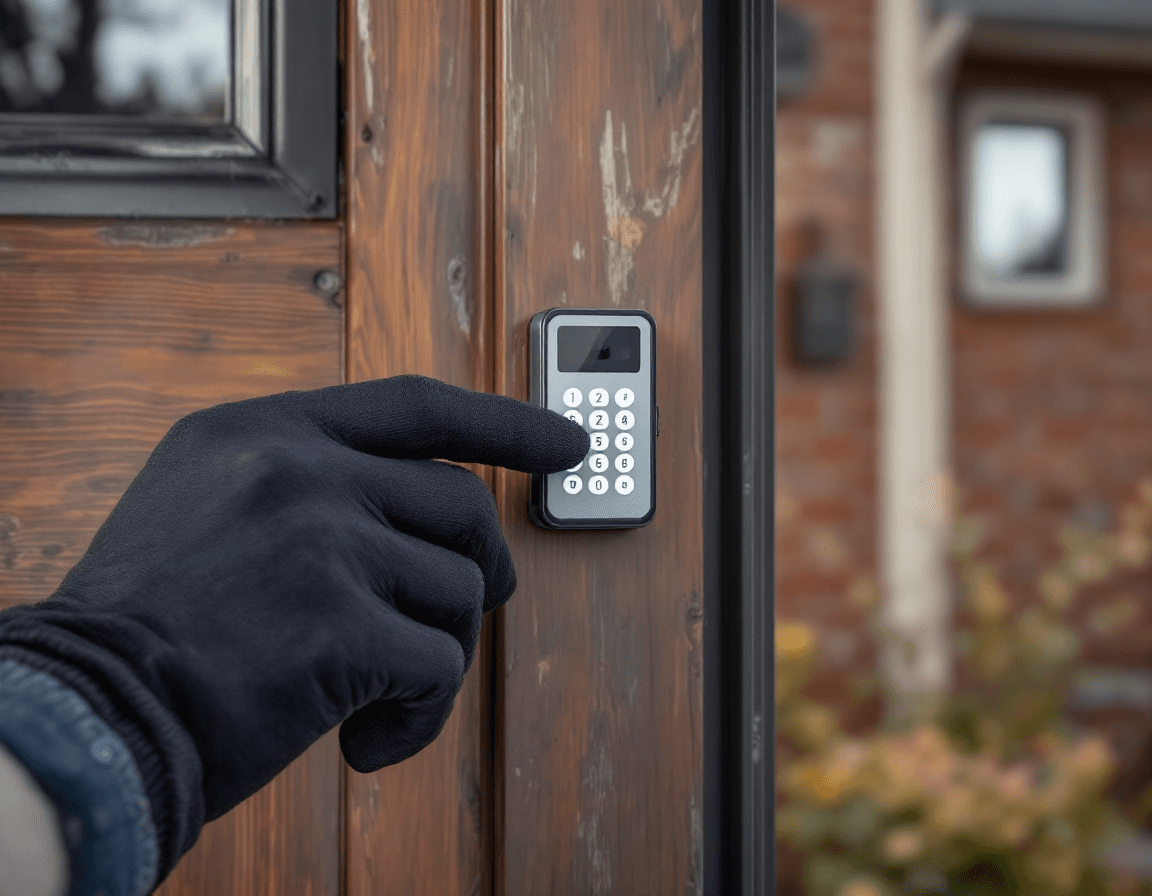
Garage Door Remote & Keypad Service in Kenmore, WA covers the small but frustrating problems that keep you sitting in the driveway with the engine running. A remote that works from the kitchen but not from the street, a keypad that rejects a code you have used for years, or a car that refuses to pair with its built-in opener can each turn a routine morning into a delay. Most of these issues have clear causes and straightforward fixes, and a technician can usually resolve them in a single visit. Our team handles remote programming, keypad installation and troubleshooting, and in-car opener pairing for homes across Kenmore and the surrounding north King County neighborhoods.
Kenmore sits on the northeast shore of Lake Washington, where the air stays damp for much of the year and winter storms roll in off the water with regularity. Homes here range from older split-levels and ranch houses to newer builds on hillside lots, and many of those driveways slope toward the garage in ways that put a remote's signal at an awkward angle to the opener. Whether you live near Kenmore Waterfront, close to the trails around Saint Edward State Park, or somewhere in the quieter streets between them, your garage door system faces the same Pacific Northwest conditions. This page explains what typically goes wrong with remotes and keypads in this part of Washington, how we approach each problem, and what you can check yourself before you call.
Every job begins with the same question: is the problem in the transmitter, the receiver, the wiring, or the environment? Answering that question first saves time and money, because a dead battery in a remote and a failed logic board in the opener produce similar symptoms from the driveway. We will walk you through what we see most often here, explain what the service includes, and tell you plainly when a new remote or keypad is the right answer. If you have a question about your specific opener or car, the phone number at the end of this page reaches a person who can help.
Why Remotes in Kenmore Homes Lose Their Range
Remote range is one of the first things people notice when something is wrong, and it is also one of the most affected by local conditions. Radio signals from a handheld remote pass through walls, garage doors, and sometimes a neighbor's metal fence before reaching the receiver mounted in your ceiling. In Kenmore, many garages are attached to homes built in an era when wall insulation and framing were different, and some older garages have metal siding or thick masonry that dampens the signal. Wet weather does not usually block a signal outright, but a remote that works perfectly in July can feel sluggish in January when the ground and air are saturated.
Hillside lots add another layer. If your driveway runs downhill toward the street, your remote may work only when you are standing close to the garage and fail once you reach the bottom of the slope. Trees along a property line, particularly tall conifers that have grown denser over the years, can also absorb or scatter the signal. We frequently find that a remote which seems weak is really competing with a nearby transmitter, such as a neighbor's garage opener operating on a similar frequency, though this is less common than people assume.
Before assuming the remote itself has failed, try a few simple checks. Stand at the spot where the door normally responds and press the button slowly, holding it for a full second. Test the remote from inside the house, from the driveway, and from the sidewalk to see whether the failure pattern follows a direction or a distance. If the door opens reliably from one side of the property but not the other, the issue is probably geographic rather than electronic, and a technician can often solve it by checking the receiver's antenna placement or the opener's position in the garage.
Diagnosing a Remote That Quits or Cuts Out
A remote that stops working altogether usually points to a short list of causes, and most of them are quick to rule out. The battery is the most common culprit, and the coin cell inside many remotes can weaken gradually without any obvious warning. Intermittent operation, where the door responds on the third press but ignores the first two, often signals a battery that is nearly spent or a worn button contact on the circuit board. Moisture is a factor here as well, since humidity can work into the remote's casing over time and cause corrosion across the contacts.
Once the battery is ruled out, a technician will look at the transmitter itself and the receiver in the opener. A remote may have lost its programming if the opener was reset, if the power was interrupted for an extended period, or if a previous service call changed the learned codes. Some newer openers use rolling-code technology that is more secure but requires the remote and receiver to stay synchronized, and repeated presses out of range can sometimes desynchronize them. Resynchronizing the system is often a matter of a few minutes at the opener's learn button.
Here is a practical sequence you can follow before scheduling a visit:
- Replace the battery in the remote, using the type printed on the back or inside the case.
- Clean the battery contacts and the button area with a dry cloth or a small amount of isopropyl alcohol.
- Check whether the opener's indicator light blinks when you press the remote, which confirms the signal is reaching the receiver.
- Test a second remote if you have one, to determine whether the problem is isolated to a single transmitter.
- Note whether the failure happens at a particular location, time of day, or after rain, and share that detail with the technician.
If none of these steps restores reliable operation, the remote may have internal damage, or the receiver may need attention. Either way, the diagnosis is worth doing carefully, because replacing a remote that was never the problem wastes money.
Replacing a Lost Remote Without Leaving the Garage Exposed
A missing remote is more than an inconvenience. Anyone who finds it can open your garage door from the street, which is why re-securing the system should be treated as a priority rather than something to get to later. Many homeowners in Kenmore keep a remote in a car, and a lost or stolen car remote can give a stranger easy access if the garage opener has no other protection. The good news is that most openers can be cleared of old codes, which prevents a found remote from working even though it still has the programming stored inside it.
Clearing the codes is a standard part of this service. On most modern openers, a technician holds the learn button for several seconds until the indicator light changes, which erases all previously learned transmitters. The remaining remotes, keypads, and in-car buttons then need to be reprogrammed one at a time. This process takes a little patience, but it gives you a clean slate and confirms that only the devices you still own can operate the door. If you own a keypad, the access code should also be changed during this step.
When you replace a lost remote, consider whether an upgrade makes sense. Newer remotes often use rolling codes, which are harder to capture and replay than older fixed-code designs, and they may offer features such as a visor clip or additional buttons for lights. Some openers support smartphone control through a separate module, which allows you to see the door status and close it remotely. We can explain which options your opener supports before you buy anything, so you are not paying for features your system cannot use.
When the Keypad Rejects a Code You Know Is Right
A keypad that refuses your code is one of the more confusing problems because the mechanical parts seem to be working. The keys light up, the panel accepts input, and the door still does not move. In many cases the code itself was entered incorrectly, the keypad was reset during a power outage, or the code was reprogrammed at the opener without anyone updating the panel. Keypads on older openers may also use a different number of digits than what you remember, which leads to repeated failed attempts.
Weather is a real factor for exterior keypads in Kenmore. Repeated rain, condensation, and the damp drip that collects on wall-mounted panels can cause buttons to stick or circuits to short. A keypad that works on a dry afternoon and fails the next morning after a cold, wet night may have moisture inside the housing. Sun exposure can also fade the labels and cause the rubber key membrane to wear unevenly, so a number may register inconsistently even though the code is correct.
Before calling for service, try clearing the keypad's memory and entering the code slowly, pressing each key firmly and completely. If the keypad has a separate learn or program button, consult the owner's manual for the reset sequence that matches your model. If the keypad is wired directly to the opener, check the wiring connections at both ends for loose or corroded terminals, but do not work on live wiring yourself. A technician can test the signal, reprogram the access code, and determine whether the panel needs replacement.
Adding an Exterior Keypad to a Kenmore Driveway
Many households decide to add an exterior keypad after a family member forgets a remote, a teenager starts driving, or a housekeeper or contractor needs periodic access. A keypad can also be useful when you want to let someone in without giving them a transmitter that could be lost or copied. For a Kenmore home, the best location is usually on a wall or post that is protected from direct spray and within easy reach of the driver's side of the car, though the exact choice depends on the layout of your driveway and the direction of prevailing wind.
Placement matters more than most people expect. A keypad mounted too low may collect splashed water and debris, while one mounted too high becomes awkward to use from a vehicle. The panel should also sit where it cannot be easily read from the street, since a visible code is a security weakness. Some homeowners choose a sheltered spot under an eave, and this is often a sensible compromise on a property that receives a lot of rain. The wire run from the opener to the keypad should be protected, typically in conduit where it crosses exposed areas, because cable that is damaged by moisture or pests causes intermittent faults that are hard to track down.
Adding a keypad involves more than screwing a panel to the wall. The unit must be connected to the correct terminals, the opener must recognize it, and the access code must be set and tested from both inside and outside the garage. We check the keypad's operation in different weather conditions where possible, and we explain how to change the code so you can keep the system secure over time. We will also tell you if your opener is too old to support an exterior keypad without a compatible accessory, so you know what to expect before the work begins.
Pairing Your Car's HomeLink Buttons Without the Guesswork
Many vehicles built in recent years include a built-in universal garage opener, often branded as HomeLink or a similar name, mounted in the overhead console or rearview mirror. When it works, it is one of the most convenient features you can have. When it does not, the buttons may simply blink, do nothing, or open a door on the wrong side of the house. Pairing the car's buttons with the opener is a common service request, and it is one that deserves a careful approach because the steps differ by vehicle make and by opener brand.
The most common reason for a failed pairing is that the opener uses a rolling-code system the car's programming routine does not handle on the first attempt. Other frequent causes include holding the car button too briefly, starting the procedure with the wrong button, or attempting to pair while the opener is still in a learn cycle from a previous attempt. Some owners find that a battery in the car's transmitter pad or a fault in the vehicle's power supply can prevent pairing entirely, while others discover that their car's system was never compatible with the particular opener installed at the house.
We pair in-car buttons with the same care we give remotes. The technician confirms the vehicle's procedure, checks the opener's learn mode, and programs the car one button at a time, testing each one before moving on. If a button cannot be paired, we will tell you whether the problem lies with the vehicle, the opener, or the way the two systems interact, and we will explain your options. If you have a vehicle that uses a separate remote-based system, we can still program that remote to the opener in the usual way.
Matching Remotes and Keypads to Common Garage Openers
Not every remote fits every opener, and buying the wrong replacement is one of the most frequent mistakes homeowners make. Garage door openers use different radio frequencies, encoding schemes, and programming methods, and a remote that looks identical to the one you lost may be incompatible with your system. Before purchasing anything, identify the opener's brand and model, which are usually printed on the motor housing or on a label near the rail. The model number tells us which remote and keypad families are supported and whether the opener needs a specific accessory.
Frequency is a useful point of reference. Many openers operate on common residential frequencies, and the remote's frequency must match the receiver. Rolling-code systems add a further requirement, because the transmitter and receiver must be compatible in their encryption method, not just their frequency. Some manufacturers also sell remotes that can be programmed to several different brands, but these universal options may not offer all the features of an original remote or may require additional setup steps. When in doubt, ask the technician to confirm compatibility before you buy.
It also helps to know what your opener can do. Some systems support multiple keypads, multiple remotes with different button assignments, and smartphone integration, while older models are limited to a small number of learned devices. If your opener has reached its limit, adding a new remote may require erasing old codes first. We will review the learn capacity and features of your system so you can plan your purchases and avoid paying for accessories that will not work.
What a Remote and Keypad Visit Includes and What It Costs
Our service for remote programming, keypad installation and troubleshooting, and in-car opener pairing typically falls within a price range of $65 to $185, depending on the work involved. Simple programming of an existing remote or a single in-car button usually sits near the lower end of that range, while troubleshooting intermittent faults, installing an exterior keypad, or resolving a complicated pairing may fall closer to the upper end. The price for the service does not include a new remote, keypad, or other hardware, which is billed separately if you choose to purchase them. We will explain the likely cost before starting work so there are no surprises.
A typical visit includes a check of the opener's response to the remote or keypad, an inspection of the receiver and wiring at the level that is safe for a non-specialist to access, and a test of the door's operation from several points around the property. We will clear old codes when you request it, program the devices you want to keep, and confirm that each one works from the location where you use it. If we find a problem outside the scope of remote and keypad work, such as a worn gear, a failing sensor, or a damaged cable, we will explain what we found and give you a clear recommendation rather than making repairs you did not ask for.
Some situations require more than a remote visit. If the door is noisy, slow, or uneven, or if the springs, cables, or drums show wear, those components need attention from a licensed professional. Spring and cable work is dangerous because the tension stored in these parts can cause serious injury, and it should never be attempted by an untrained homeowner. We will tell you when a problem falls into that category and recommend the appropriate next step, so you can address the safety issue without guessing.
Keeping Batteries, Sensors, and Antennas Working Through Wet Winters
Preventive habits go a long way in a climate like Kenmore's. Remote batteries should be replaced at the first sign of weakening rather than waiting for complete failure, since a remote that is only slightly low on power can become unreliable in cold or damp weather. Keeping spare batteries in a drawer near the garage helps you avoid being stranded. Store remotes away from direct moisture, and wipe them down if they have been left in a car during a rainy stretch, because condensation can accumulate inside the casing and cause long-term damage.
Safety sensors at the bottom of the door tracks deserve attention too. These sensors use an infrared beam to detect obstructions, and they can become misaligned or dirty over time. Spider webs, leaves, and mud splashed up from the driveway can block the beam, causing the door to reverse or refuse to close. Keep the lenses clean, check that the two sensors face each other and are mounted at the same height, and make sure the wiring is secure. If the door will not close and the sensor lights are off or blinking, the sensors or their wiring may need service.
Antennas and wiring are often overlooked. Some openers have an external antenna wire that hangs below the motor unit, and if it has been pinched, cut, or disconnected, range will suffer noticeably. Keep the antenna extended and away from metal parts where possible. The wiring for exterior keypads should be inspected every season for cracks, pinched sections, or signs of rodent activity, which are not unusual in damp neighborhoods with mature landscaping. Catching these issues early prevents the frustrating intermittent failures that are the hardest to diagnose.
Re-Securing Your Garage After a Remote Goes Missing
If you have lost a remote, the first step is to assume that someone could use it until the system is reset. Do not wait for a convenient moment to address this, since a lost remote left in a vehicle, a jacket pocket, or a shared space can be found by someone you would not want in your garage. The steps below help you protect the household while you arrange service.
- Clear the opener's memory of all learned remotes and keypads, which prevents the lost transmitter from working.
- Change the keypad access code if you have an exterior or interior keypad.
- Reprogram each remote, keypad, and in-car button you still have, one device at a time.
- Review whether a smartphone app or door monitoring feature is available for your opener, so you can see activity and close the door remotely.
- Keep a written list of which devices are programmed, so you can verify the system after future service.
Taking these steps promptly gives you confidence that the garage is secured, and it creates a record that makes future troubleshooting faster. If you are unsure whether your opener supports these features, ask the technician during the visit. We can explain the options in plain language and help you decide what makes sense for your household and your budget.
Garage Door Remote & Keypad Service in Kenmore, WA is available when you need a dependable fix for a remote, keypad, or car opener that is not doing its job. Call Seattle Garage Door Fix at (888) 799-3819 to describe the problem, confirm your opener type, and schedule a visit. We are licensed, bonded, and insured, and we will tell you clearly what we find and what it will cost before we begin. For spring, cable, or other safety-related repairs, we will recommend a licensed professional and help you take the right next step.