
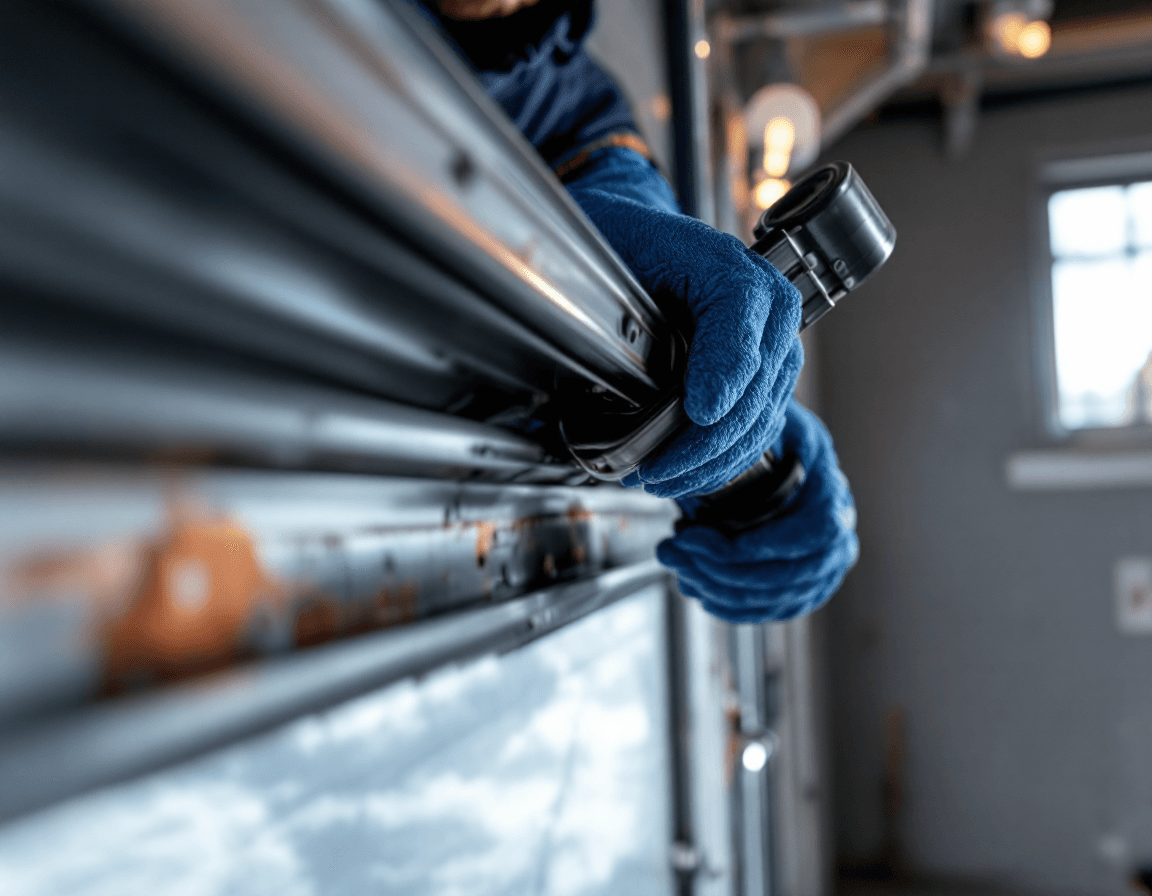
Garage Door Roller Replacement in Black Diamond, WA is one of the most common repairs we handle for homeowners in this part of King County, and it's often the cheapest fix that makes the biggest difference in how your door feels. Rollers are the small wheels that ride inside the vertical and horizontal tracks, and they carry the weight of the door every time it opens and closes. When they wear out, seize, or crack, the door starts to complain long before it stops working altogether. Many people in Black Diamond first notice the problem as a rough grinding noise at seven in the morning, when the rest of the house is still quiet.
This page explains what worn rollers look like, why they fail faster in our climate, and what a practical replacement involves. We also cover the difference between original steel rollers and quieter nylon options with sealed bearings, so you can decide what fits your home and your budget. Pricing is included for context, along with the points where a door needs a licensed technician instead of a weekend project. Everything here reflects how we approach these jobs in and around Black Diamond, Ten Trails, and the neighborhoods near Lake Sawyer.
If your door is grinding, squeaking, jerking, or sticking, you don't have to guess at the cause. A short inspection can tell you whether the rollers alone are the problem or whether the track, hinges, or springs need attention too. Reading the rest of this page will help you describe what you're hearing and seeing when you call. Then, if you'd like a professional to take a look, you can reach us at (888) 799-3819.
Why Black Diamond Garage Doors Wear Their Rollers Faster
Our region has a reputation for rain, and the garage door hardware in Black Diamond feels that reputation every winter. Long stretches of damp weather keep moisture sitting on the tracks, and that moisture mixes with road grit and fallen debris to form a thin, abrasive film. Steel rollers and their bearings are particularly vulnerable because water finds its way past worn grease and begins to corrode the inner surfaces. Over time, that corrosion turns smooth travel into a rough, uneven ride.
Temperature swings add another layer of stress. A cool, damp evening can be followed by a warm afternoon, and the metal track expands and contracts slightly with each change. Those small movements can shift the track out of alignment, which forces rollers to ride at an angle and wear unevenly on one edge. Homeowners often notice that a door sounds fine in July but begins to complain once the weather turns wet in October.
Many homes in the area also have detached or semi-detached garages, long driveways, and rural-style exposure to wind and falling needles or leaves. Debris that collects in the track can jam against a roller and gouge its surface, while a garage that stays cool and damp for weeks at a time can keep moisture locked around the hardware. None of this means your door is poorly built. It simply means that rollers in Black Diamond tend to deserve a closer look every year or two, especially if the door is more than a decade old.
Reading the Sounds Your Garage Door Is Making
Sound is usually the first clue, and each type of noise points toward a slightly different problem. A steady grinding noise that rises and falls with the door often means a roller bearing is dry, pitted, or failing. A sharp squeak that appears only at one point in the travel frequently signals a roller stem that has worn loose or a roller that is starting to seize. Metal-on-metal scraping usually indicates that a steel roller has flattened, cracked, or lost its tire and is now dragging on the track surface.
Pay attention to where in the cycle the sound occurs. If the noise is loudest when the door first starts moving, the rollers closest to the bottom bracket may be the culprit. If the sound intensifies near the top of the track, the upper rollers or the curve where the track changes direction deserve attention. Listening carefully will help a technician find the worn component faster, which saves you time and keeps the repair focused.
It also helps to notice whether the door shakes or jerks along the track. A door that lurches sideways, bounces slightly at the top, or hesitates before lifting is often telling you that one or more rollers have lost their smooth rotation. Sticking or binding at certain points is another sign, especially if the door seems to catch and then suddenly release. Write down what you hear and where you hear it before calling, because those details make a real difference in how quickly we can diagnose the problem.
Steel Rollers Versus Nylon Rollers: What Quieter Really Means
Most garage doors come from the factory with steel rollers, which are durable and inexpensive to manufacture. Steel rollers hold up well under load, but they have a metallic ring that carries through the house, and their bearings can wear out after years of exposure to moisture and dust. Once the bearings begin to fail, steel rollers become one of the loudest parts of the entire door system.
Nylon rollers, especially those with sealed bearings, run much more quietly because the material absorbs vibration instead of transmitting it. A good nylon roller also resists corrosion, which matters a great deal in a damp climate like ours. Many homeowners who upgrade to nylon say the change is most noticeable in the early morning and late evening, when ambient noise is low and the garage is closest to bedrooms. Quieter operation is a reasonable goal, but it should be paired with a properly sized, correctly installed roller that matches your track and door weight.
Not every door benefits equally from a switch, and some heavier doors do better with steel-tired rollers that are rated for the load. We discuss the options on site, look at the existing hardware, and recommend what suits the door rather than pushing a single product. Whatever material you choose, a full set of rollers replaced at once usually performs better than mixing old and new, because uneven wear can otherwise start again on the untouched rollers.
How a Roller Replacement Typically Unfolds
A roller replacement starts with a careful inspection of the entire door system, not just the noisy spot. The technician checks each roller for flat spots, cracks, play in the stem, and bearing condition, then examines the track for dents, gaps, or debris. Hinges, bottom brackets, and the balance of the door are reviewed as well, because a worn roller can sometimes be a symptom of a larger alignment issue. This step prevents the frustrating situation where new rollers are installed and the noise returns a few weeks later.
Once the inspection is complete, the work follows a predictable sequence. The opener is disconnected, the door is secured so it cannot move unexpectedly, and the rollers are removed one section at a time. Each new roller is fitted to the correct stem type, aligned in the track, and checked for smooth rotation before the door is lowered back into position. The technician then tests the door through several full cycles to confirm that the old noise, jerking, or binding has stopped.
Most full-set roller replacements are completed in a single visit for a typical residential door. Cleaning the track and lubricating the hinges and springs is often included at the same time, because a clean track lets the new rollers ride without picking up fresh grit. Homeowners should expect the technician to explain what was replaced, why it was necessary, and what maintenance will keep the door quiet over time.
Track Alignment and Why It Matters More Than You Think
Rollers only perform well when the track they ride in is straight, level, and properly fastened to the wall and ceiling. Over time, lag bolts can loosen, bracket screws can back out, and minor impacts from vehicles or stored items can bend a section of track. A slight bend that you can barely see may be enough to force a roller to climb or drag, and that is where grinding noises often begin. Fixing the track is sometimes as important as replacing the rollers themselves.
Alignment checks look at both the vertical and horizontal runs, along with the transition curve where the door changes from upright to flat in the ceiling. The technician measures gaps, confirms that the track is plumb, and tightens or repositions brackets as needed. If the track has a dent or crack, it may need to be replaced rather than straightened, and we will tell you clearly when that is the case. Adjustments should always be made with the door secured and the opener disconnected.
Homeowners can help by keeping an eye on the track between visits. Look for gaps between the track and the wall, rust streaks near the bolts, and any section where the door seems to pull harder on one side. Reporting these signs early can prevent a minor roller issue from turning into a damaged track and a larger repair bill.
Matching the Right Roller Stem and Size to Your Existing Hardware
Roller replacement is not a one-size-fits-all purchase. Rollers come in different diameters, widths, and stem styles, and the stem is the short shaft that fits into the hinge bracket. Common stem types include the standard stem, the stub stem, and the long stem, and using the wrong one can leave the roller wobbling or sitting at an angle. Mismatched rollers can also strain the hinges and cause uneven wear that defeats the purpose of replacing them in the first place.
Before ordering, the technician confirms the existing track radius, the door's construction, and the roller's ball bearing or stem configuration. Wheel diameter affects how smoothly the door rolls and how the track fits, while the tire material influences noise and durability. Matching the new rollers to the door's weight and the opener's rating also matters, because a lightweight roller on a heavy insulated door can wear quickly. Good parts selection is what turns a repair into a lasting improvement.
If you are considering a DIY attempt, take a photo of each roller and its mounting point before removing anything. Bring the old rollers to a parts counter or send clear photos to a technician so the replacements match exactly. Many problems we see come from homeowners who guessed at the stem type and ended up returning parts that didn't fit.
What a Roller Replacement Costs in Black Diamond
Pricing for a full set of garage door rollers generally falls between $120 and $250, depending on the number of rollers, the material chosen, and how much track work is needed at the same visit. A standard two-car door may use a larger number of rollers than a single-car door, and nylon sealed-bearing options typically cost more than basic steel. The price range reflects parts and labor for a straightforward replacement, but every door is different, and the technician will confirm the total after inspection.
Costs can change if the inspection reveals additional issues. Worn hinges, a bent section of track, or a failing bottom bracket may need attention alongside the rollers, and those repairs are quoted separately. We believe homeowners should understand each line of the estimate before work begins, so you will know exactly what is included and why. Asking for a written breakdown is always reasonable.
It is also worth considering the cost of waiting. A roller that has seized can strain the opener motor, cause the door to bind at the worst moment, and sometimes lead to damaged panels or track. Replacing rollers when the first symptoms appear is usually the most economical path, and it keeps the rest of the system from absorbing extra wear.
Safety Lines You Should Never Cross on Your Own
Garage doors are heavy and store a great deal of energy in their springs. Torsion springs and extension springs can cause serious injury if they are adjusted, released, or removed without the correct tools and training. For this reason, any work involving springs, cables, or the door's counterbalance system should be performed by a licensed professional, not by a homeowner with a wrench and a YouTube video. Even experienced DIYers can be surprised by how much tension a spring holds.
Roller replacement itself can be a reasonable task for some homeowners, but it still involves lifting a heavy door and working near components that can shift suddenly. If the door is off its track, cracked, or leaning, do not try to force it back into place. If you see frayed lift cables, a broken spring, or a door that drops when released, disconnect the opener and call for service right away. A licensed technician carries the tools and training to handle these situations safely.
We recommend that homeowners leave spring, cable, and counterbalance work to licensed professionals in every case. Our technicians are licensed, bonded, and insured, and they will explain clearly when a repair crosses from routine maintenance into specialized work. Your safety is always more important than saving a few dollars on a rushed fix.
Keeping Rollers Quiet Between Professional Visits
Simple habits can extend roller life and keep your door running quietly. Wipe the tracks with a dry cloth every few months to remove dust, grit, and debris, and avoid spraying heavy oils into the track because they attract more dirt. Use a light lubricant on the roller bearings and hinge pivots when the manufacturer recommends it, and keep the lubricant away from the door's contact surfaces where it can drip onto driveways. A clean, lightly lubricated system is much less likely to start grinding or squeaking.
Watch the weather as well. After long rainy stretches, look for rust spots, loose brackets, or a door that seems to sit unevenly. Trim vegetation that drops needles and leaves near the garage, and keep the area around the door clear so debris does not get pulled into the track when the door moves. Small seasonal checks take only a few minutes and often catch problems before they become noisy.
If you notice a return of the grinding, squeaking, shaking, or binding after a roller replacement, schedule a follow-up inspection rather than waiting. A persistent sound can point to a track alignment issue, a worn hinge, or an opener that needs adjustment. Early attention keeps the repair small and helps your door stay quiet through many more seasons.
Ready to get your garage door running smoothly again? Call Seattle Garage Door Fix at (888) 799-3819 to schedule a roller inspection for your Black Diamond home. Our licensed, bonded, and insured technicians will assess the rollers, track, and hardware, explain your options clearly, and help you choose the quiet, reliable setup that fits your door.