
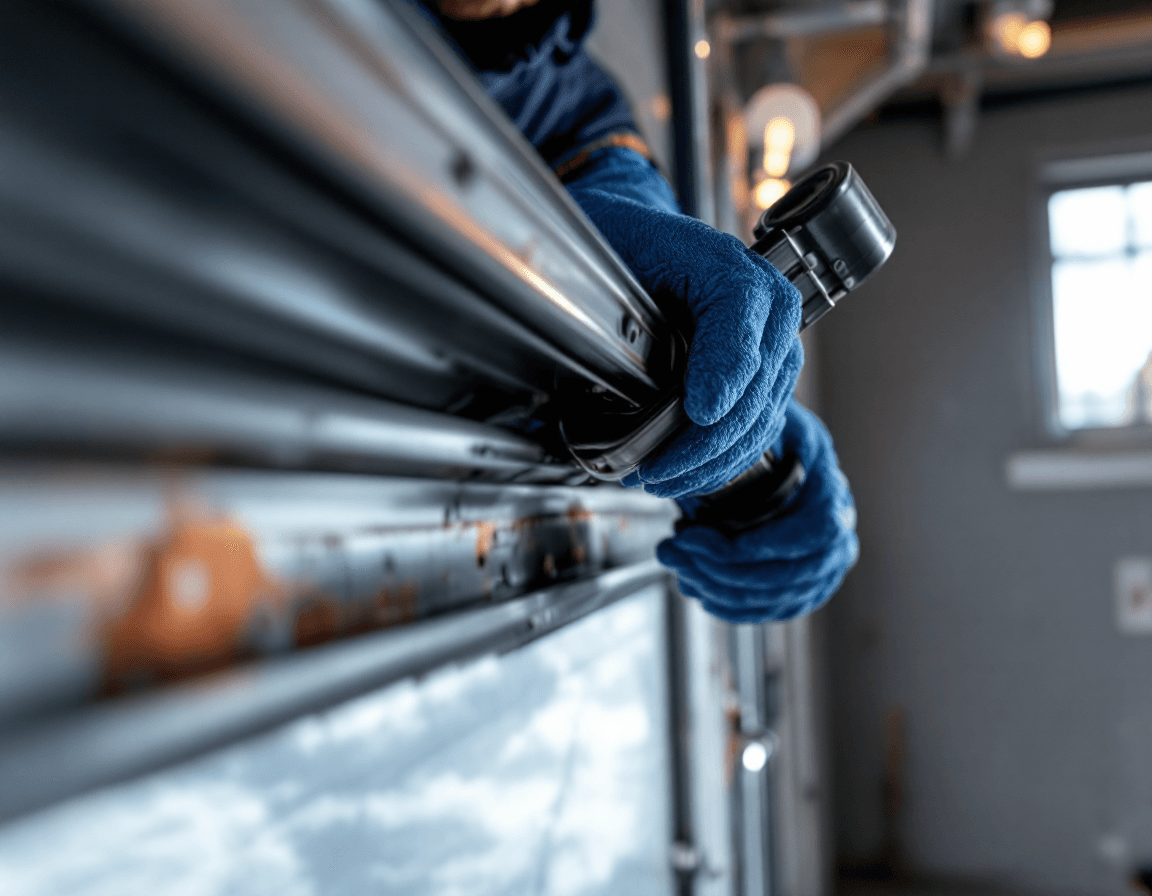
Garage Door Roller Replacement in Maple Valley, WA is one of the most common repairs we handle for homeowners in this part of King County, and it is often the cheapest fix that brings a noisy, jerky door back to smooth operation. The rollers are the small wheels that ride inside the vertical and horizontal tracks and carry the weight of the door as it lifts and lowers. When they wear out, crack, or seize, the whole door has to work harder, and the sound and motion problems start to show up. Most homeowners first notice a squeal on a dry morning or a rumble that makes the neighbors look over, and they reasonably wonder whether something major is wrong.
Maple Valley sits in a landscape of rolling hills, mature evergreens, and a mix of older neighborhoods and newer subdivisions, and the garage doors here reflect that variety. Some homes near Lake Wilderness have doors that have spent decades absorbing damp air off the water, while newer builds around the Four Corners area often have larger, heavier insulated doors that put more load on each roller. Whatever the age of your door, the rollers are doing constant work every time you open or close it. The good news is that roller problems are usually straightforward to diagnose and correct, and a full set of replacement rollers is a modest investment compared with a new door.
This page explains how rollers wear, what the warning signs sound and feel like, how to choose between standard steel and quiet nylon rollers, what a typical replacement involves, and where safety boundaries lie. We also explain why some symptoms point to a track or hardware problem rather than the rollers alone. Our goal is to help you make an informed decision, whether you schedule service with us or simply want to understand what your door is telling you.
Why Rollers in Maple Valley Wear Out Faster Than You Might Expect
Rollers do not wear out only because of age. In the Pacific Northwest, the combination of long damp stretches, morning condensation, and temperature swings from cool nights to warm afternoons puts steady stress on every moving part of a garage door. Moisture works its way into the bearings of steel rollers and encourages rust, which turns a smooth spin into a gritty one. Nylon rollers resist corrosion but can still become brittle, flat-spotted, or cracked after many seasons of expansion and contraction.
Dust, pine needles, and fine grit tracked in from the driveway also collect in the track channels that rollers ride in. Over time that debris acts like sandpaper, grinding down the roller surface and the inside edges of the track. Homes surrounded by trees often see this more often, because leaves and needles gather at the base of the door and get pulled into the track each time the door moves. A roller that might have lasted many years in a dry climate can start to show wear within a few seasons here.
Repeated use plays a role as well. A household that opens and closes the garage several times a day, or a door that serves as the primary entry for a family with active schedules, will cycle rollers far more than a seldom-used door. Each cycle is a small load event, and across thousands of cycles the rollers, their axles, and the track surfaces all gradually change. Recognizing this wear early helps you avoid the kind of seized roller that eventually damages the track or strains the opener.
Reading the Sounds Your Garage Door Is Making
A garage door is usually good at telling you what is wrong, as long as you know how to listen. A loud grinding or squeaking noise as the door moves often comes from a roller whose bearing is dry, worn, or full of debris. The sound may be steady throughout the travel or may change in pitch as the roller passes a particular section of track. If the noise is worst at the start of travel, the rollers nearest the bottom bracket may be the culprit.
Metal-on-metal scraping is a more serious sign. It usually means a roller has lost its surface, has cracked and is rubbing against the track, or has seized and is dragging instead of turning. Scraping can also indicate that a roller stem has worked loose from its bracket. Continuing to operate a door that scrapes can gouge the track, which makes the next repair more involved and expensive. If you hear scraping, it is worth having the door inspected before the damage spreads.
Quieter symptoms deserve attention too. A soft clicking or ticking that repeats with each roller can point to a flat spot or a bearing starting to fail. Some homeowners describe a faint chirp that appears only on cold mornings, which can be a sign of stiff bearings that loosen once the door warms up through use. Keeping a mental note of when the sound appears, whether it is cold, damp, first thing in the morning, or after a long day, helps a technician narrow down the cause quickly.
Steel Versus Nylon: Choosing Quiet Rollers for Your Household
Most standard garage door rollers are made with steel tires on steel or sealed ball bearings. Steel rollers are durable and handle heavy doors well, and they remain a sound choice for many installations. However, steel tends to be noisier, especially when the track is older or slightly out of line, and it can transmit vibration into the door panels. For a home where the garage shares a wall with a bedroom or a home office, that added noise can be a real nuisance.
Nylon rollers, often called quiet or sealed rollers, use a durable polymer tire that absorbs more sound and runs smoother against the track. Many of them also use sealed bearings that resist moisture and grit better than open designs. The upgrade is especially appealing in Maple Valley, where damp mornings and seasonal debris can accelerate wear on steel. A set of nylon rollers can noticeably reduce the rumble and squeal, giving the door a calmer, more controlled feel.
Nylon is not automatically the right answer for every door. Heavier doors, especially larger insulated models or those with glass panels, may need a roller rated for the load, and a technician should confirm that the chosen roller matches the door's track size and weight. Some older tracks are worn enough that even quality nylon rollers will not perform well until the track is corrected. The right choice depends on your door, your opener, and how you use the space, so a quick on-site evaluation is the best way to decide.
What a Full Roller Set Typically Costs in the Maple Valley Area
For a full set of replacement rollers, our typical pricing ranges from $120 to $250, depending on the roller type, the number of rollers your door uses, and the specific hardware involved. Standard steel rollers generally fall toward the lower end of that range, while quiet nylon or sealed rollers may sit toward the higher end. Doors with additional hardware, such as stems or brackets that need replacement, can change the final figure, and we will explain those differences before any work begins.
It helps to understand what the price covers. A roller replacement usually includes the new rollers themselves, the time required to remove the old ones and install the new set, and a check of the track and hinges to confirm the door is moving evenly. Many doors use between eight and twelve rollers, though the exact count depends on the design, so the cost reflects the number of wheels on your particular door. Price should never be the only deciding factor, because a poorly fitted roller can wear quickly and create new problems.
Every estimate is different, and we do not want you to guess. If you call for a quote, describe the sounds and the door's behavior, and tell us roughly how old the door is and whether it has glass or an insulated panel design. That information helps us prepare for the visit and makes it easier to discuss whether steel or nylon fits your needs. Clear communication up front avoids surprises at the end of the job.
Track Alignment and Why Rollers Fail Early
Rollers rarely fail in isolation. When a track is bent, loose, or out of plumb, the rollers are forced to ride at an angle, which concentrates pressure on one edge of the wheel and on one side of the bearing. That uneven load can flatten a roller, crack its tire, or wear through the bearing much sooner than expected. Replacing the rollers without addressing the track may give you a few quiet weeks before the same noise returns.
Common track issues include mounting bolts that have backed out over time, a section of track that was knocked during a delivery or a backing accident, or gaps where the track has pulled away from the wall or header. Older homes sometimes have tracks that were installed with slight variations, and settling can shift the framing over the years. A technician should check that the vertical tracks are plumb, the horizontal tracks are level, and the gap between the track and the door is consistent along its length.
Our technicians typically look for a short list of alignment indicators during a roller visit:
- Track bolts that are loose or stripped, or brackets that have pulled out of the wall
- Visible bends or dents in the track, especially near the bottom where the door is most often struck
- Uneven gaps between the door edge and the track on either side
- Rollers that wear on only one side of the tire, a clear sign of misalignment
Correcting these issues is usually straightforward, and doing so protects the new rollers and extends their life considerably.
Recognizing Binding, Jerking, and Uneven Travel
A door that binds or sticks at certain points is telling you that resistance has changed somewhere along its path. Many homeowners notice that the door moves freely for most of its travel but hesitates or jerks at one spot, often where a seized roller or a damaged section of track is located. The door may stop briefly, then continue, which can put strain on the opener motor and the springs. Binding is worth addressing early because it tends to get worse, not better.
A door that shakes or jerks along the track often has rollers that are no longer rotating smoothly. Instead of gliding, the roller skips or catches, sending a shudder through the panels. You may see the door shiver as it passes a certain height or hear a knocking sound as the roller bumps over a flat spot. Shaking can also come from a roller that has partially separated from its stem, which is a condition that should be fixed promptly.
There are a few simple observations you can make safely before calling for help. Watch the door from the inside as it travels, noting where it slows, shakes, or leans. Check whether the door sits level when closed and whether the edges line up evenly with the track. Do not attempt to adjust springs, cables, or the bottom bracket yourself, because those components carry significant tension. Your observations, combined with a professional inspection, will point to the right fix.
What Happens During a Roller Replacement Visit
A roller replacement visit begins with a conversation and a visual inspection. Our technician will ask when you first noticed the noise or movement, whether the problem is worse in certain weather, and how often the door is used. Then the door is operated manually and with the opener while we observe the rollers, tracks, hinges, and panel alignment. This helps us separate roller problems from issues with the opener, the springs, or the track itself.
Once the cause is confirmed, the technician prepares the door for safe roller work. This involves disconnecting power to the opener, securing the door so it cannot move unexpectedly, and removing the old rollers one section at a time. Replacing rollers is generally done with the door supported and in a stable position, and the work is planned so that the tension in the springs is not disturbed. The new rollers are then installed, the hinges and track bolts are checked, and the door is cycled several times to confirm that travel is smooth.
After the job, we test the door for balance and quiet operation, and we explain what we found and what we did. If additional work is needed, such as track realignment, worn hinges, or an opener adjustment, we will walk you through the options and the associated costs before proceeding. You should never feel pressured into work you did not ask for or do not understand. A good visit leaves you with a clear picture of your door's condition and a smoother, quieter operation.
Keeping Rollers Healthy Through Wet Maple Valley Seasons
Preventive care can extend roller life significantly, and most of it takes only a few minutes each season. Wipe the inside of the track with a dry cloth to remove dirt, leaves, and pine needles, paying special attention to the bottom curve where debris settles. Keep the area in front of the garage clear of clutter that can be swept into the track. In the fall, when needles and leaves are heavy, a quick check every few weeks can prevent grit from accumulating.
Lubrication matters, but it has to be the right kind. Use a silicone-based or garage-door-specific lubricant on the roller bearings and hinge pivots rather than heavy grease, which attracts dust and can gum up the mechanism. Avoid spraying lubricant directly onto the track surface, because it can collect grime and create a slick residue that makes the rollers slip. A light application on the roller stems and hinge points is usually enough, and it should be repeated after a particularly wet season.
Watch for early warning signs during routine use. If the door seems slower to start, if a new squeak appears after rain, or if one roller sounds different from the others, schedule an inspection rather than waiting for the problem to become severe. In a region where moisture is a constant factor, small changes often reflect conditions that will continue to develop. Catching them early keeps the repair simple and the cost predictable.
When Springs and Cables Need a Licensed Professional
Roller replacement is a manageable service for a trained technician, but it sits close to components that are genuinely dangerous to handle without training. Torsion springs and extension springs store enormous amounts of energy, and a spring that releases unexpectedly can cause serious injury. Cables carry tension that can snap with force. Our strong recommendation is that homeowners never attempt spring or cable work themselves, and that any repair involving those parts be performed by a licensed, bonded, and insured professional.
Some roller problems are accompanied by signs that point toward spring or cable trouble. If the door is noticeably heavy, sags on one side, sits crooked when partly open, or makes a loud bang at the top or bottom of travel, the springs may be worn or unbalanced. Frayed or kinked cables, or a cable that has come off a drum, also require professional attention. Do not attempt to tighten a spring or reroute a cable to make the door move more easily.
When we visit for a roller issue and find that springs or cables need work, we will explain the findings clearly, tell you what is safe to leave alone for now, and provide a separate estimate for the additional repair. Our role is to keep you and your household safe while getting the door working as it should. Never let anyone, including a friend or a handy neighbor, adjust tension on a spring without proper training and equipment.
Serving Maple Valley and Nearby Neighborhoods
Our technicians regularly serve homes throughout Maple Valley, including the area around Four Corners, the neighborhoods near Lake Wilderness, and surrounding communities in ZIP code 98038. Because our crews work across more than sixty cities in the greater Seattle and Western Washington region, we understand the range of door styles, track configurations, and housing ages you are likely to encounter locally. That experience helps us arrive prepared and work efficiently on the first visit.
Homes in this area vary widely. Some have older single-car garages with lighter doors that have served for decades, while others feature double-wide insulated doors that carry more weight and demand a more precise roller setup. Lakeside properties may see more humidity, and wooded lots may collect more debris in the track. We account for these conditions when recommending roller types, and we always try to match the solution to the door in front of us rather than to a generic template.
If you are in Maple Valley and your garage door is grinding, squeaking, shaking, sticking, or scraping, we are glad to help. Our licensed, bonded, and insured team can inspect the rollers and tracks, explain your options between standard and quiet nylon rollers, and give you a clear price before any work begins. Call us today at (888) 799-3819 to schedule a roller inspection and enjoy a smoother, quieter garage door.