
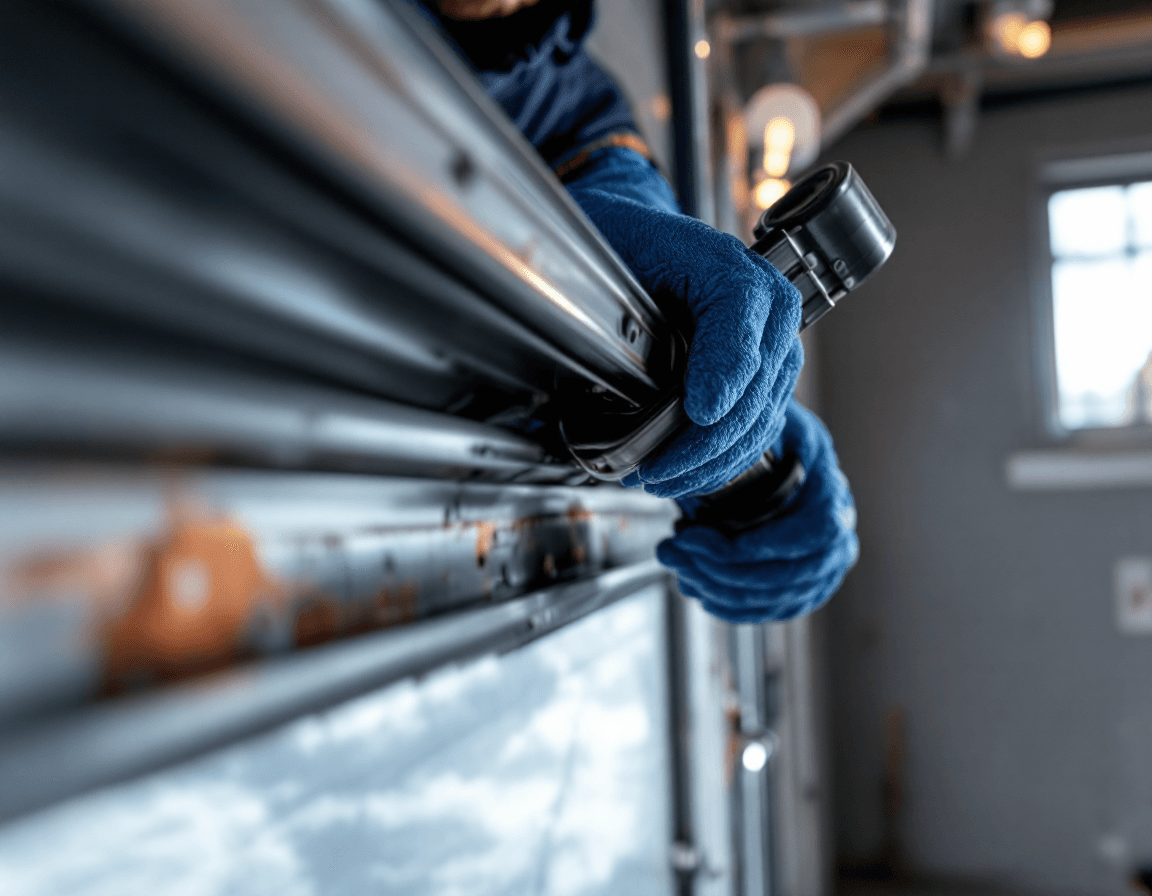
Garage door roller replacement in Covington, WA is one of the most common repairs we handle, and it is also one of the most satisfying to fix. A door that grinds, squeaks, jerks, or sticks is usually telling you that its rollers have worn down, cracked, or seized, and replacing them restores the smooth, quiet motion the opener and door were designed for. Most homeowners in town first notice the problem as a racket every morning when they back out of the driveway, or as a door that hesitates halfway up and then lurches the rest of the way. Those sounds are easy to ignore for a while, but they rarely get better on their own.
Covington sits in a part of King County where garages see a lot of moisture, temperature swings, and tree debris, and all of those conditions affect the small wheels that guide your door. Many homes here have two-car doors that carry significant weight, and the rollers and tracks have to handle that load every time the door cycles. Replacing worn rollers with a complete set, and choosing the right material for your door and your household, can make the difference between a noisy door that wears out its opener and a quiet one that runs for years. This page explains what the symptoms mean, what a roller replacement involves, what a full set typically costs, and where the safety boundaries are for homeowners.
Seattle Garage Door Fix is a licensed, bonded, and insured garage door company serving Covington and dozens of nearby communities across Western Washington. If your door is making new noises or behaving differently than it used to, a professional inspection will tell you whether rollers are the cause or whether something else, such as a track alignment problem or an opener issue, is involved. The sections below walk through the details so you can have an informed conversation with the technician who comes to your home.
Reading the Noise: What Grinding and Squeaking Tell You
Every sound a garage door makes carries a clue about its condition, and rollers are responsible for a surprising share of the racket. A rough, grinding noise that rises and falls as the door travels usually means a roller bearing has lost its lubrication or its internal surfaces have pitted. A higher-pitched squeak, especially one that appears on the first few inches of lift, often points to a dry axle or a nylon wheel that has begun to glaze. Knowing the difference helps you describe the problem accurately when you call for service.
Metal-on-metal scraping is more serious and deserves prompt attention. When a steel roller has cracked, flattened, or lost its rolling surface, the metal edge of the roller or its stem can drag along the track rather than rolling smoothly through it. That friction generates heat, shaves metal off the track, and places extra strain on the opener. Homeowners sometimes assume the track itself is the culprit, but in many cases the rollers are the source and the track is only showing the damage.
A useful habit is to listen to the door from both inside and outside the garage, and to note whether the noise happens on the way up, on the way down, or both. Sounds that appear only at one stage of travel often point to specific roller positions or to a section of track that is out of alignment. Write down what you hear, when it happens, and whether it is getting louder over time. A technician can use that information to narrow down the problem quickly and to decide whether a full roller set or a partial replacement makes more sense.
How Pacific Northwest Damp Weather Works Against Steel Rollers
The Pacific Northwest climate is gentle in many ways, but its persistent dampness is hard on garage door hardware. Moisture gets into the small gaps around roller bearings and encourages rust, especially on steel rollers and the steel stems that hold them in place. Rust does more than look unsightly; it roughens the bearing surfaces, traps grit, and eventually causes the roller to bind. Garages that stay cool and humid through the wet months are particularly prone to this kind of slow deterioration.
Temperature changes add another layer of stress. Metal expands slightly in warmer weather and contracts when it cools, and during the transitions between seasons, the rollers and tracks can shift in tiny increments. Over many cycles, these movements can loosen mounting hardware, widen gaps, and change how a roller sits in the track. When a door that worked perfectly in summer starts to stick in late fall, weather-driven movement is often part of the explanation.
Tree debris is a constant presence in Covington neighborhoods, and it finds its way into garage tracks more often than most people expect. Fine needles, leaves, and wet sediment collect in the track channel, where they can pack around the rollers and hold moisture against the metal. Over time that grime works like sandpaper, wearing down roller surfaces and making the door feel gritty as it travels. Keeping the track reasonably clean, and having it inspected during routine service, goes a long way toward extending roller life in this environment.
Nylon Versus Steel: Choosing Quieter Rollers for a Covington Home
Roller material is one of the most important decisions in any replacement, and it has a direct effect on how quiet your door will be. Steel rollers are strong and have long been the standard choice for heavy doors, but their metal surfaces tend to produce more noise, especially as they age. Nylon rollers, often with sealed ball bearings or sturdy inner cores, run more quietly and absorb a bit of vibration, which is why many homeowners choose them when noise is the main concern.
Nylon is not automatically the right answer for every door, though. The weight of the door, the design of the track, the condition of the existing hardware, and the way the door is used all influence which material will perform best. A heavy, insulated door that sees daily use may benefit from a hybrid approach, with quieter nylon rollers in certain positions and steel rollers where extra load capacity is needed. A technician who measures the door and inspects the track can recommend a configuration that balances quiet operation with durability.
Stem size and length also matter, even though they are less obvious to a homeowner. Roller stems come in different diameters and lengths, and the wrong size can cause wobble, misalignment, or premature wear. When replacing rollers, the goal is to match the new set to the track and the existing hardware so the door tracks straight and runs smoothly. This is one reason we recommend a professional fit rather than guessing from a box at the hardware store.
Here are some points to consider when comparing roller options for a Covington garage:
- Nylon rollers usually run quieter and are a strong choice when operating noise is the primary complaint.
- Steel rollers offer high load capacity and can suit heavier doors, though they may produce more sound as they age.
- Sealed bearings help keep moisture and grit out, which is valuable in damp Pacific Northwest garages.
- Stem diameter and length must match the track and hardware to prevent wobble and uneven wear.
- Replacing the full set at once keeps the door balanced, rather than mixing old and new rollers that wear at different rates.
When a Door Jerks Along the Track: Diagnosing Uneven Roller Wear
A door that jerks, hops, or shudders as it moves is often signaling uneven roller wear. When one roller on a side wears faster than the others, it creates a rough spot that the door must push over on every cycle. The result is a lurching motion that can strain the opener, loosen fasteners, and make the door feel unsafe even when it is technically working. Because garage doors rely on balanced travel, even one bad roller can affect the whole system.
Diagnosing the pattern takes a careful eye. A technician will look for flat spots, cracks, discoloration, or grooves on each roller, and will check whether the wear is concentrated on one side of the door or spread across the set. Uneven wear on one side may point to a track that has shifted slightly, a mounting bracket that has come loose, or a roller that has begun to bind in its housing. Sometimes the cause is not the roller at all, and a complete inspection helps prevent unnecessary parts from being installed.
Once the cause is clear, replacing the full roller set is usually the most reliable fix. Mixing new rollers with old ones can cause the door to ride unevenly, because the fresh rollers will move more smoothly than their worn neighbors. Installing a matched set ensures that every point of contact along the track behaves consistently, which restores balanced motion and reduces the chance of the same problem returning in a few months.
Seized Rollers and Binding Spots: Why the Door Sticks Mid-Travel
A roller that has seized will not turn at all, and the door must drag it along the track rather than rolling it. This is one of the more frustrating symptoms because the door may move fine for part of its travel and then stop or stutter at a particular point. The seized roller often sits at a specific location on the track, which is why many homeowners notice the sticking happens in the same place every time.
Binding can also occur when a roller is partly stuck or when its bearing has failed in a way that causes resistance. Rust, dried grease, and debris can all contribute, and in damp Covington garages it is common to see buildup that makes a roller feel sluggish. Some doors bind only when they are cold, because the lubricant inside the bearing thickens and the metal contracts, creating a tighter fit that the door cannot easily overcome.
Stuck doors deserve careful handling. The opener may strain or reverse automatically when it encounters resistance, and continuing to force a binding door can damage the track, the opener, or the door panels. If your door stops partway through its travel, avoid repeatedly pressing the button to push through the obstruction. Instead, have a professional inspect the rollers, track, and opener settings, since a seized roller is a clear sign that the set is due for replacement.
What a Covington Roller Replacement Involves, Step by Step
A roller replacement follows a predictable sequence, although every door has its own quirks. The technician begins by confirming the door is safely secured and that the opener is disconnected, then checks the condition of the track, brackets, hinges, and cables to be sure the rollers are the root cause. Experienced technicians also verify the door's balance before removing anything, because a door that is out of balance can behave unpredictably once its supports are moved.
Next, the old rollers are removed, usually one section at a time. On many residential doors, the technician will lift the door slightly, secure it with appropriate clamps or supports, and then remove the roller stems from the hinge and track assemblies. Each old roller is compared to the replacement to confirm the stem length, diameter, and wheel type match. Using the correct components at this stage prevents the door from riding unevenly once it is reassembled.
Finally, the new rollers are installed, the track is checked for alignment and debris, and the door is cycled several times to confirm smooth operation. The technician listens for noise, watches for binding, and adjusts any loose hardware along the way. Once the door is running well, the opener is reconnected and tested, including its safety reversal features. A thorough finish includes lubricating the rollers with an appropriate product, since over-greasing can attract dust and grit in the track.
Pricing a Full Roller Set: What the $120–$250 Range Covers
For most Covington homeowners, a full set of garage door rollers falls in the range of $120 to $250. The exact figure depends on the number of rollers the door requires, the material you choose, and the complexity of the installation. Standard residential doors often use anywhere from about eight to twelve rollers, and larger or specialty doors may need more, so the total can shift accordingly. Choosing quieter nylon rollers or sealed bearings may adjust the price somewhat, since those components are built to different specifications.
It is worth understanding what the price typically includes. A quality roller replacement should cover the rollers themselves, the labor to install them, a check of the track and related hardware, and a test of the door's operation. If the technician discovers additional issues, such as a worn hinge, a bent track section, or an opener problem, those should be explained separately so you can decide how to proceed. A transparent estimate protects you from surprises and helps you compare options fairly.
Be cautious about extremely low quotes that seem too good to be true. Inexpensive rollers may be built with lower-grade bearings or thinner materials that wear out quickly in damp conditions, which means you could be paying for the same work again within a short period. Asking what material is included, whether the set is matched, and what the warranty covers will help you judge the value of a proposal rather than simply comparing the bottom-line number.
Safety Lines a Homeowner Should Never Cross
Garage doors are heavy, and the components that control their movement store a great deal of energy. Torsion springs and extension springs are under high tension, and cables carry significant load even when the door appears to be at rest. Attempting to adjust, remove, or replace these parts without proper training and tools can cause serious injury, and it is one of the main reasons we advise homeowners to leave spring and cable work to licensed professionals. Roller replacement sits close to these systems, which is why a careful approach matters even for a seemingly simple job.
As a homeowner, you can take several safe steps. Keep the opener disconnected or the power off when you are inspecting the door, never stand under a door that is not fully supported, and never try to force a stuck door by hand. If you notice a broken spring, a frayed cable, or a door that drops suddenly, keep everyone away from it and call a professional right away. Those conditions are not do-it-yourself territory, and waiting can make an already dangerous situation worse.
Licensed and insured technicians bring training, specialized equipment, and accountability to the job. They know how to release tension safely, how to balance the door, and how to verify that the system is working correctly before handing it back to you. When you hire a professional for roller work, ask about their licensing and insurance and confirm that the scope of work includes a safety check of the entire door system, not just the rollers.
Maintenance Habits That Keep Rollers Quiet Between Service Visits
Good maintenance can extend the life of your rollers and keep your door running quietly for longer. Start with a simple monthly habit: open the door fully and listen as it travels, watching for new sounds or hesitation. Wipe down the track with a dry cloth to remove dust and debris, and remove any visible leaves or needles that have collected in the channel. Keeping the track clean reduces grit and helps the rollers turn freely.
Lubrication is equally important, but it should be done thoughtfully. Use a lubricant recommended for garage door components, apply it to the roller bearings and hinges rather than to the track surface, and wipe away excess so it does not attract dirt. Avoid heavy grease, which can gum up in cold weather and trap grime. Because damp conditions in Covington can wash lubricants away over time, a light application every few months is often more effective than a single heavy coat.
Seasonal checks offer a good opportunity to catch small problems early. In late fall, before the wettest months arrive, look over the rollers and track for rust spots, cracks, or loose brackets. In spring, after the coldest weather passes, listen for any new noises that developed during winter. Early attention can prevent a minor squeak from turning into a seized roller, and it gives you time to schedule service on your terms rather than in an emergency.
Serving Covington Neighborhoods and Nearby Landmarks
Covington has a mix of established neighborhoods, newer residential developments, and homes with varied garage layouts, and our technicians are familiar with the range of door styles found throughout the city. Whether your home sits close to Covington Town Center, near the trails and green spaces along Jenkins Creek, or on a quieter residential street farther from the main corridors, the core needs are similar: reliable roller performance, smooth operation, and quiet travel. We take local conditions into account when recommending materials and maintenance routines.
Our service area extends across King County and into neighboring communities, so Covington homeowners benefit from technicians who regularly work in the area. Scheduling is straightforward, and we aim to explain the problem clearly, present practical options, and complete the work in a way that respects your home and your time. If you live in a multi-generation household or work from home near the garage, we can also discuss quieter roller options that reduce noise during early mornings and evenings.
If your garage door has started grinding, squeaking, jerking, or sticking, the sooner it is inspected, the better. A short visit can determine whether new rollers will restore smooth operation or whether another component needs attention. We are happy to walk you through the findings and answer questions about materials, timing, and pricing before any work begins.
Ready to restore quiet, smooth operation to your Covington garage door? Call Seattle Garage Door Fix at (888) 799-3819 to schedule a licensed, insured technician. We will inspect your rollers, explain your options in plain terms, and get your door moving the way it should.