
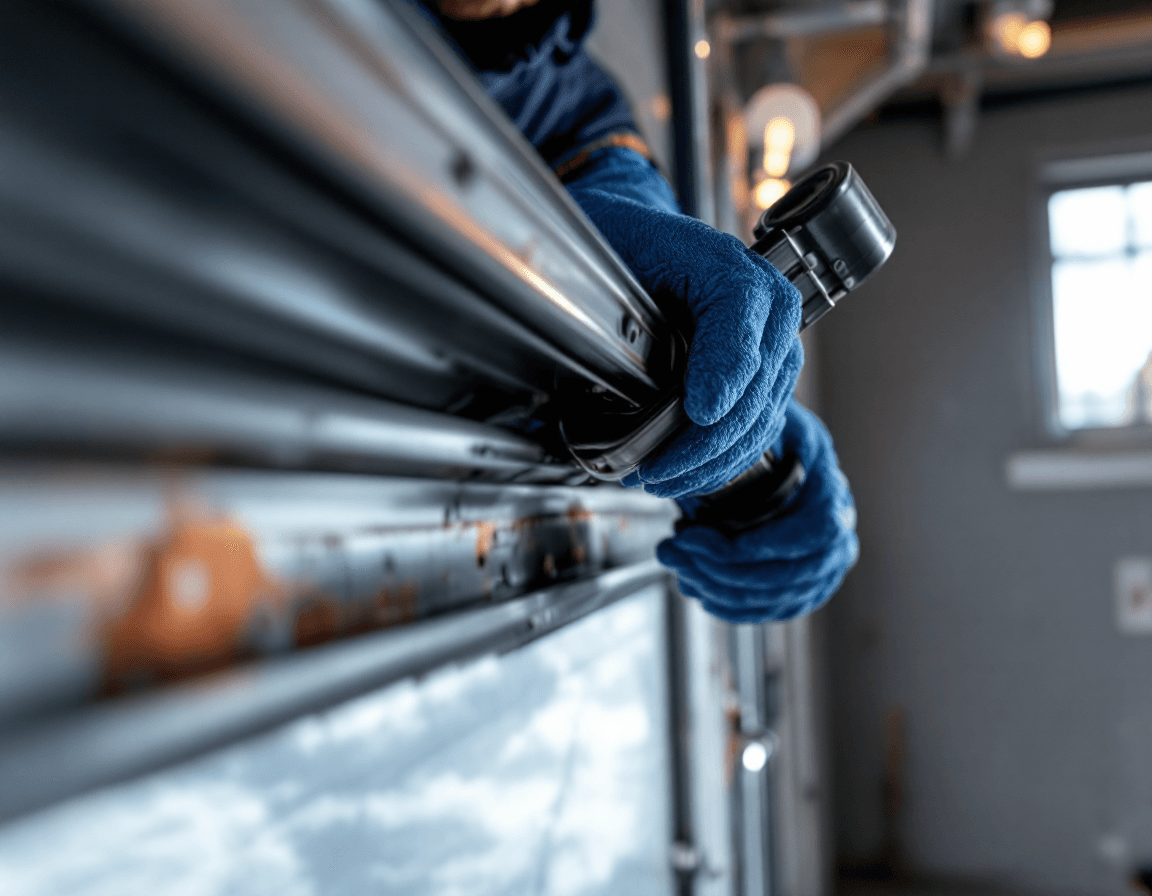
Garage Door Roller Replacement in Auburn, WA is one of the most practical repairs a homeowner can schedule, because worn rollers quietly make every other part of the door work harder. Auburn sits in the Green River valley, where damp air, cool winters, and frequent rain are normal for much of the year. Those conditions gradually break down the small wheels that guide your door along its tracks. When they wear out, the result is noise, jerky movement, and sometimes a door that stops halfway up.
Most rollers fail slowly, so the change is easy to overlook at first. A door that once rose smoothly may start to hesitate or rattle a little more each month, and many owners simply adjust to the noise. Replacing a worn roller set before it causes damage to the track, the bottom bracket, or the opener is usually far cheaper than waiting. Seattle Garage Door Fix handles these repairs for homes across Auburn, including the neighborhoods around Auburn Downtown, Lakeland Hills, and Lea Hill, as well as nearby areas in the 98001, 98002, and 98092 ZIP codes.
This guide explains what rollers do, why they wear out in our part of King County, how to recognize the warning signs, and what to expect from a professional replacement. It also covers a few things you should never attempt yourself. Garage door springs and cables store serious tension, and that work belongs in the hands of a licensed, insured technician. Roller replacement itself is often a manageable job for a trained tech, and understanding the process will help you ask better questions and avoid overpaying.
Why Auburn Garages Wear Rollers Faster Than You'd Expect
Rollers spend their entire working life rolling along a metal track, carrying the weight of the door with every cycle. In a typical Auburn home, that means several openings and closings each day, sometimes more if the garage doubles as the main entry for kids heading to school or a family that uses the driveway for deliveries. Every trip exposes the roller's bearing, axle, and tire to friction, dust, and moisture. Over several years, even high-quality parts reach the point where they no longer roll cleanly.
Western Washington's climate speeds that process in a few specific ways. Winter rain and fog leave the track and roller assemblies damp for long stretches, and moisture is the enemy of lubricated bearings. Auburn's cooler nights and occasional freezing mornings can cause the lubricant inside a steel roller to thicken, so the door strains to start moving. Fallen leaves, tree debris, and the fine grit tracked in from driveways accumulate in the track channel and grind against the roller tire. Over time those small particles wear flat spots into the nylon or pit the steel.
Older Auburn homes add another layer of wear. Many houses in established neighborhoods still have original door hardware that was installed decades ago, and the rollers may have been replaced once or never. Garages in these homes often sit on slightly settled foundations, so the track may no longer be perfectly plumb. A roller that is forced to ride at an angle wears unevenly, sometimes developing a flat side long before the rest of the roller shows damage. Recognizing that a worn roller can be a symptom of a larger alignment issue helps prevent repeat failures.
Reading the Sounds Your Door Is Making
Your garage door communicates through noise more than almost any other appliance in your home. Each sound points to a different problem, and learning to read them can save you a service call that turns out to be unnecessary. Worn rollers tend to produce a few distinct patterns, and some of them are easy to confuse with problems in the opener, the springs, or the hinges. A careful listener can narrow things down before anyone climbs a ladder.
Common roller-related sounds include:
- A rough grinding noise that starts when the door begins to lift and fades once it reaches full speed, often caused by a seized bearing.
- A high-pitched squeak that repeats with each revolution of the roller, which usually signals dry or contaminated bearings.
- A clicking or thumping that matches the spacing of the roller stems or hinges, pointing to a flat spot on the wheel.
- Metal-on-metal scraping when the roller passes a particular section of track, which can mean the roller has cracked or the track has a bend.
Pay attention to where the noise happens, not just what it sounds like. A sound that occurs only in the first foot of travel may point to a bottom roller, while noise near the top of the track often involves the upper roller or the curve where the door transitions from vertical to horizontal. Also note whether the sound changes with the weather. Many homeowners in Auburn notice that their door seems louder on damp mornings, which often reflects moisture in old lubricant rather than a failing part. Those observations give a technician a head start when you call.
Steel Versus Nylon: Choosing the Right Roller for Your Door
Garage door rollers come in two main families, steel and nylon, and each has a legitimate place in a home. Steel rollers, usually built around a sealed ball bearing and a steel or hard composite tire, handle heavy doors well and tolerate high cycling. They are a solid choice for heavier insulated doors and for households that open the garage many times a day. The drawback is that steel tires can be noisier, particularly when they meet a slightly rough or dirty track.
Nylon rollers, often paired with sealed bearings, are the usual choice when quiet operation is the priority. The nylon tire absorbs vibration and rolls with a softer sound, which makes a noticeable difference in attached garages where the living space sits just on the other side of a wall. Many Auburn homeowners upgrade to nylon when they notice the door rattling loudly through the house, especially in the early morning. The best nylon rollers still carry substantial loads, so the upgrade is not a compromise on strength when the correct size and load rating are used.
Choosing between them depends on your door's weight, your cycling habits, and how much noise you can tolerate. A technician should check the existing roller stem size, the axle style, and the track width before recommending a replacement, since mismatched parts can cause binding. Ask whether the new rollers are sealed or open, because sealed bearings resist the moisture and debris common in our region. A good installer will explain the tradeoffs in plain terms rather than pushing the most expensive option.
What a Full Roller Set Typically Costs in Auburn
Homeowners often want a straight answer on price before they schedule any work, and the most common question involves a full set of rollers. For most standard residential doors, a complete set of replacement rollers typically falls in the range of $120 to $250. That figure reflects the parts and the labor involved in swapping out the rollers on one door, and it can shift depending on the roller type you select, the number of rollers your door uses, and whether additional hardware needs attention during the same visit.
Several factors can push the cost toward either end of that range. Nylon rollers with sealed bearings generally cost more than basic steel rollers, though the difference is often modest. Doors with more rollers, such as larger multi-panel doors or those with extra reinforcement, require more parts and more time. Older hardware sometimes needs a bit of cleanup, like freeing a seized hinge or replacing a worn bracket, which adds to the total. A technician should give you an itemized quote before starting, so you know exactly what is included.
Keep in mind that a roller replacement is most cost-effective when it is done before other damage occurs. A worn roller that continues to run can crack the track, bend a section of rail, or strain the opener motor. Repairing those secondary problems often costs far more than the roller set itself. If a technician recommends additional work beyond the rollers, ask them to show you the worn part and explain why it needs attention. A trustworthy tech will welcome those questions.
How Technicians Replace Rollers Without Disturbing the Springs
Understanding the process can make you a more informed customer, and it also helps explain why this job belongs with a professional. A roller replacement typically begins with the door safely secured. On a standard torsion spring system, the spring is under significant tension, and the technician must never allow it to release. For roller work, the tech usually keeps the door closed, disconnects the opener, and uses proper clamps or locking methods to ensure the door cannot move while the old roller comes out. That step alone is why roller replacement should never be attempted by a homeowner without training.
Once the door is secured, the technician removes the old roller by loosening the hinge bracket on the track and sliding the roller stem out of the hinge slot. The track is then inspected for dents, dirt buildup, or loose bolts. Many roller failures are accompanied by track damage that causes the new roller to bind, so the tech will often clean the track and tighten the mounting hardware at the same time. The new roller is then inserted, the hinge is reattached, and the door is cycled slowly to confirm smooth movement.
Good technicians test the door through its full travel before leaving. They watch for binding at the curve, check that the door sits level, and listen for any remaining noise. They also confirm the auto-reverse function of the opener, since a properly functioning safety system is a basic requirement for any door. Finally, they should walk you through what they replaced and any maintenance you can do between visits. That final conversation is part of what separates a quality repair from a rushed one.
Track Alignment and Why New Rollers Need It
New rollers cannot perform well on a track that is out of alignment, which is why alignment checks are a standard part of a quality roller replacement. The track must be vertical on each side, parallel to the other track, and securely fastened to the wall and ceiling. When a track leans even slightly, the roller pushes against one edge, causing rapid wear and a scraping sound that new parts will not eliminate. Replacing rollers on a misaligned track is like putting new tires on a car with a bent axle.
In Auburn, track misalignment often develops from a few predictable causes. Vehicles bumping the track or the bottom bracket during parking can bend the rail. Loose lag screws in older wood framing can gradually pull the track out of plumb. Seasonal shifts in the house, including the expansion and contraction that come with wet and dry periods, can slowly move the mounting points. Each of these issues can seem minor at first but can damage new rollers within a few months if left alone.
A technician checks alignment using a level and a measuring tape, looking at the gap between the track and the door panels at several points. They also look for gaps at the top and bottom of the track curve, which are easy to miss. If adjustments are needed, they can loosen the mounting hardware, reposition the track, and retighten everything securely. The goal is a door that rolls smoothly without any part of the track pressing hard against the rollers.
Lakeland Hills and Lea Hill Homes: Common Door Setups
Several neighborhoods in and around Auburn share construction patterns that influence how garage doors are installed and how rollers wear. Lakeland Hills contains a mix of newer residential developments and homes built over the past couple of decades, many of which feature larger, insulated doors. Those heavier doors place more load on each roller, and they often run quieter-sounding systems that make even a small roller problem noticeable from inside the house. Homeowners here commonly ask about nylon upgrades, especially when the garage shares a wall with a bedroom or a home office.
Lea Hill has its own character, with homes on slopes and lots that sometimes sit at varied elevations. Driveways on sloped lots can introduce subtle tilts into garage door systems, and the track may not sit perfectly level relative to the floor. Those conditions do not necessarily cause immediate problems, but they can cause uneven roller wear over time. A technician working in these areas often pays closer attention to track plumbness and the position of the bottom bracket, which helps prevent the uneven loading that shortens roller life.
Because these neighborhoods contain many different home ages and builder styles, a single standard approach does not always work. Some houses have tracks with older hinge designs, while others use newer systems that accept a wider range of roller types. A technician who regularly works in Auburn will know which hardware is common in each area and can bring the right parts to the first visit. That local familiarity can save time and avoid a second trip for a part that was not on the truck.
Downtown Auburn Garages and Older Track Systems
Auburn Downtown includes many homes and older multi-generational properties where garage doors have been in service for a long time. Those doors frequently come with track systems that were manufactured by companies no longer producing the same parts, which makes matching replacement rollers more challenging. Owners of older doors sometimes assume the entire door needs replacement when only the rollers are the problem. In many cases, a careful technician can source compatible rollers and restore smooth operation without replacing the door panels.
Older tracks can also show signs of long-term fatigue, including small cracks at the bends and mounting holes that were not present when the door was new. When a technician finds this kind of damage, they should explain the risk clearly and recommend the right repair. Sometimes that means replacing a short section of track, and in other cases it means upgrading the entire track assembly. A good tech will show you the damage, describe how it affects the door, and let you decide how to proceed.
Downtown homeowners often benefit from a thorough inspection rather than a quick roller swap. Because the goal is a door that operates safely for years, the technician should check the hinges, the bottom bracket, the roller stems, and the opener's connection to the door arm while they are working. Addressing several small issues during one visit is usually more efficient than returning again in a few months. It also gives you a clearer picture of the door's overall condition.
A Homeowner's Quick Self-Check Before You Call
You can learn a lot about your door's condition with a few simple observations, and these checks help you describe the problem accurately when you call for service. Start by closing the garage door and watching it open slowly with the opener, then repeat the process with the door in manual operation only if you are comfortable doing so safely. The goal is to observe, not to adjust anything under tension. Look for jerks, pauses, or sections where the door seems to bounce or lean.
Consider following these steps during your check:
- Stand inside the garage and watch the bottom roller near the floor as the door lifts, noting any wobble or sudden stops.
- Look at the top rollers where the door curves into the horizontal track, checking for flat spots, cracks, or visible wear on the tire.
- Listen for the specific sound pattern and note whether it appears at a particular height or throughout the full travel.
- Check that the track is tight to the wall and ceiling, and look for bent sections or loose bolts without loosening anything.
- Wipe down the visible track surface with a dry cloth to remove grit, but do not spray any lubricant into the roller bearings unless your technician has recommended a specific product.
Write down what you observe before the technician arrives. Notes like "grinding at the bottom third of travel, worse on rainy mornings" give the tech useful information. If you took photos or a short video of the door in motion, include that as well. These details help the technician prepare the right parts and allocate enough time for a thorough repair.
When to Stop and Call a Licensed Technician
Some garage door problems look like roller issues but actually involve dangerous components, and recognizing that boundary is essential. Springs, cables, drums, and the lift system carry serious tension and can cause severe injury if handled incorrectly. If you see a frayed cable, a gap in a torsion spring, a door that drops suddenly, or a drum that appears to have slipped, stop immediately and keep everyone away from the door. Those conditions require a licensed, bonded, and insured technician who has the training and tools to make safe repairs.
Roller replacement itself, when done properly, is a lower-risk job, but it still involves holding a heavy door in a secure position and working around hardware under load. A homeowner who attempts the repair without the correct clamps and procedure can be injured or can damage the door. The safest course is to schedule a professional visit, even if the work seems straightforward. A licensed technician carries the insurance and training to handle unexpected problems that appear once the old parts are removed.
If you are unsure whether a problem is roller-related or involves springs or cables, call for an inspection and describe what you are hearing and seeing. A qualified technician can assess the situation, explain what is safe for you to monitor, and recommend the right repair. Quick, accurate answers protect your family and keep a small problem from becoming a larger one.
Keeping Rollers Quiet Through Western Washington Winters
Once your rollers are replaced, a few simple habits can extend their life and keep the door running quietly through the wet months. Regular cleaning is the most valuable of these. Sweep the track channel every few weeks to remove grit, leaves, and debris, since those particles act like sandpaper on the roller tire. A dry cloth or a soft brush works well, and you should avoid using harsh solvents that can damage seals or lubricants already in place.
Lubrication also matters, but it needs to be done correctly. Silicone-based or lithium-based products designed for garage door parts are generally appropriate for the moving parts of the hinge and roller stem, while the track itself usually should not be heavily coated. Over-lubricating can attract dirt and create a sticky film that holds grit against the roller. Ask your technician which product they recommend for your specific door and climate, since the right choice can change with the seasons.
Finally, schedule a periodic inspection, especially before the heaviest rainy season arrives. A technician can check the roller condition, verify track alignment, and confirm that the opener and safety systems are working properly. Catching a worn roller early keeps the door quiet and prevents the chain reaction of damage that comes from running parts too long. A short annual visit is a small investment compared with the cost of replacing a cracked track or a strained opener.
Garage door rollers do their job quietly until they do not, and that is exactly why a short, well-timed repair pays off. If your Auburn garage door is grinding, squeaking, jerking, or sticking, the team at Seattle Garage Door Fix can inspect the rollers, the track, and the surrounding hardware, then recommend a quiet, reliable solution. Call (888) 799-3819 to schedule a visit and get a clear, itemized quote before any work begins.