
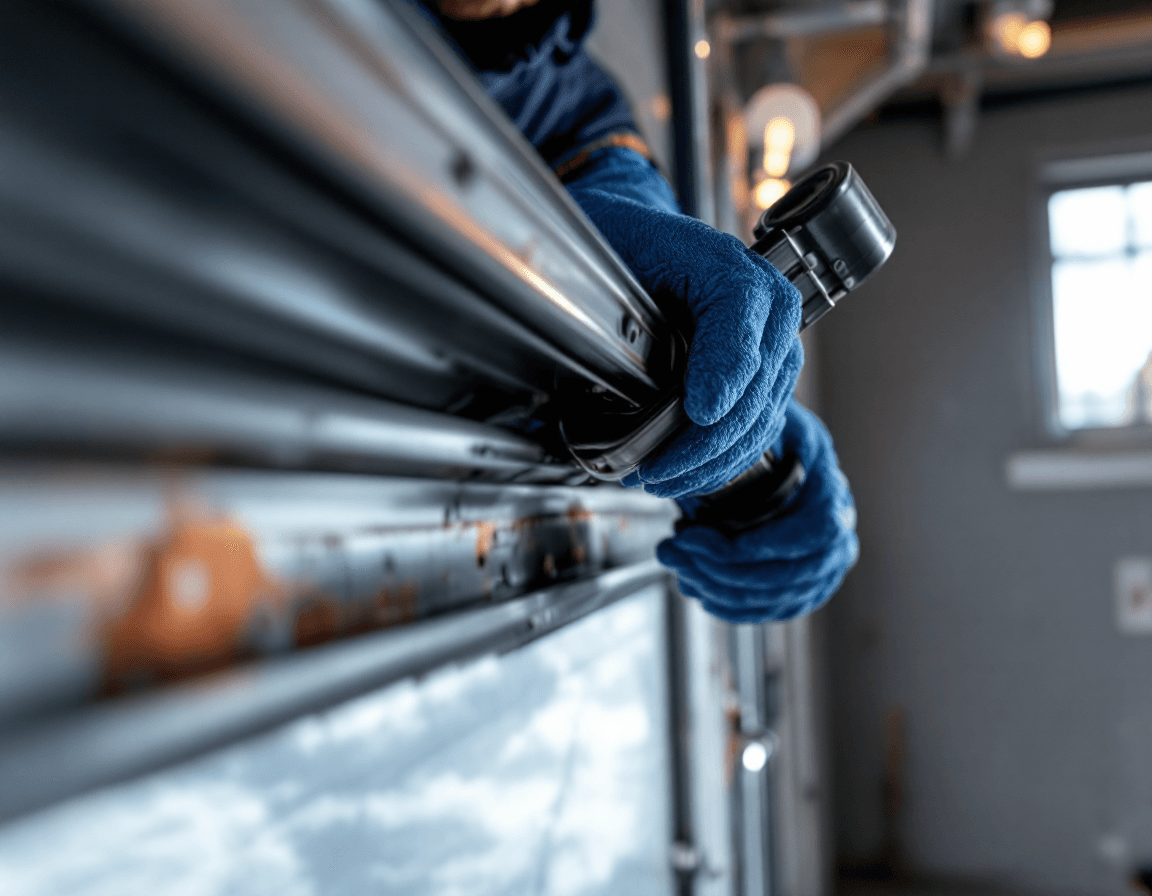
Garage Door Roller Replacement in Federal Way, WA is one of the most affordable repairs a homeowner can schedule, and it often makes the biggest difference in how a door sounds and feels day to day. Rollers are the small wheels that ride inside the tracks on either side of your door, and they carry the full weight of the panels every time the door opens or closes. When they wear out, the door still works, but it works harder, louder, and less smoothly than it should.
Federal Way homes see a particular mix of conditions that wear rollers faster than many homeowners expect. Damp winters, shaded driveways, and a steady supply of fir needles and dust settle into tracks and collect around roller stems. This guide explains what worn rollers look like, what a replacement involves, what a full set costs in our service area, and when you should leave the work to a licensed technician. Our team serves homeowners across the greater Seattle and Western Washington area, including ZIP codes 98003 and 98023.
Why Federal Way Doors Wear Their Rollers Faster
Rollers do most of their work in the track, and the track is where Federal Way's weather tends to cause trouble. Our winters bring long stretches of rain and moisture, and that moisture finds its way into the small gaps where a roller spins around its steel stem. Once water sits in those spots, it washes out the factory grease and encourages surface rust on exposed metal.
Many homes in the area also sit under mature conifers, which means needles, pine pitch, and fine grit drift down onto the garage floor and into the tracks. Those particles act like sandpaper every time the door cycles. Over several seasons, a roller that started out smooth can develop flat spots, cracks in its outer shell, or a wobble that makes the whole door shift sideways. A roller that looked fine last spring may be the source of a new rattle this winter.
Garages that face the open sky tend to see more temperature swings, and those swings change how the rubber or nylon tire on a roller expands and contracts. Rollers that have been sitting in a cold garage through a Puget Sound morning can feel stiff, then loosen up later in the day, which can mislead homeowners into thinking the problem has resolved itself. Keeping an eye on how your door behaves across seasons gives you a far better picture of when replacement makes sense.
Reading the Noises Your Door Is Making
Your garage door usually tells you what is wrong before anything fails completely. The trick is learning to tell the sounds apart, because a squeak, a grind, and a bang each point toward a different part of the system. Roller problems tend to show up in a few recognizable patterns that homeowners can spot without taking anything apart.
The most common warning signs include:
- Loud grinding or a rough squeal that starts when the door begins to lift
- A shake or jerk as the door travels along the track, especially near the top or bottom
- Metal-on-metal scraping that suggests a roller has seized and is dragging on the track edge
- Visible cracks, flat spots, chips, or a roller that wobbles when you rock the door by hand
- A door that binds or sticks at one particular point in its travel
Each of these symptoms can have causes beyond the rollers, so it helps to observe carefully. A grinding sound that happens only at one height often points to a single bad roller in that section of track. A door that shakes all the way through its cycle may have several worn rollers, or it may be dealing with track misalignment. If you hear scraping and the door hesitates, stop using the opener and schedule a service visit rather than forcing the door through the track.
Nylon, Steel, and Sealed Bearings: Choosing the Right Roller
Not all rollers are built the same, and the right choice depends on how you use your door and what kind of sound you want to live with. Steel rollers have been the traditional option for decades. They hold up well under heavy doors and tend to be durable, but they are noisier because metal rolling on metal transmits more vibration through the track and into the wall framing.
Nylon rollers, sometimes called quiet rollers, use a tough polymer tire around a steel or nylon core. They absorb more vibration, which is why they are the usual choice for homeowners who want quieter operation, especially if the garage sits beneath a bedroom or shares a wall with living space. Many nylon options also come with sealed ball bearings, which keep grit and moisture away from the moving parts and reduce the need for frequent lubrication.
Stem size and bearing type matter as much as the tire material. Standard garage door rollers come in several stem lengths and diameters, and the wrong size will not seat properly in your track. A reputable technician will measure the existing roller, check the track width, and match the replacement to your specific door model rather than guessing from a photo. Ask whether the rollers are sealed or open bearing, since sealed units generally handle damp conditions better in our climate.
What a Full Roller Set Covers in Federal Way Homes
For most residential doors in our service area, a full roller set for a standard single or double door typically runs between $120 and $250. That range generally reflects the cost of the rollers themselves and the labor needed to replace them across both sides of the door. Pricing can shift depending on the roller type you choose, whether you upgrade to nylon, and how many rollers your door uses.
A full set usually means replacing every roller on the door rather than swapping only the one that failed. This is worth considering because the rollers on a door tend to wear at roughly the same rate. Replacing just one roller can leave the others mismatched, and the new roller may end up carrying extra load while the older ones continue to degrade. Many homeowners find that doing the full set once is more practical than repeated single-roller visits.
Costs for other parts can come into play during the same visit. Tracks that have bent, hinges that have loosened, or a bottom seal that has torn may need attention at the same time. A good technician will explain what the door needs, separate the urgent items from the optional ones, and let you decide how to proceed. You should never feel pressured into work you did not request.
Safety First: Why Spring and Cable Work Belongs to a Licensed Technician
Roller replacement can look like a simple job, but garage doors carry some of the most dangerous stored energy in a typical home. The torsion springs above the door are wound under very high tension, and the cables and drums that lift the door can fail violently if they are mishandled. For this reason, we recommend that homeowners leave spring, cable, and drum work to a licensed professional every time.
Even when the job is limited to rollers, the door has to be held securely while the old rollers come out and the new ones go in. A door that shifts unexpectedly can pinch fingers, damage the panels, or cause the track to bend. Professionals use proper clamps, locking pliers, and balance checks to keep the door stable throughout the process. Trying to improvise those steps with household tools is where most injuries happen.
Safety also means keeping the opener disconnected and the power off during any work near the door. If you do attempt any inspection yourself, never stand underneath a door that is not fully supported, and never attempt to adjust the springs. Any visible tension cable fraying, a broken spring, or a door that drops suddenly should be treated as an emergency and handled by a licensed technician right away.
How a Roller Swap Unfolds, Step by Step
A typical roller replacement visit follows a predictable sequence, and knowing what to expect can help you feel more comfortable with the process. The technician begins by inspecting the door in both the closed and open positions. They check the track, hinges, and rollers, noting which rollers are cracked, seized, or loose. This inspection also helps identify any problems that could cause the new rollers to wear quickly.
Once the assessment is complete, the door is secured and the old rollers are removed. In many cases, the roller stem must be lifted out of the hinge bracket or the track section must be gently separated to allow access. The new rollers are then installed, and the door is cycled slowly to confirm that each one rides smoothly. Technicians also check that the rollers are seated correctly and that the door tracks straight from bottom to top.
Before leaving, the technician should test the door through several full cycles, listening for any remaining noise and watching for binding. They should also confirm that the opener's auto-reverse safety feature is working as intended. A quality visit ends with a clear explanation of what was replaced, what was left alone, and what you should watch for over the next few months.
Track Alignment and Hinge Checks That Protect Your New Rollers
New rollers will only perform well if the track they ride in is in good shape. A track that is out of plumb, bent at a joint, or loose at its mounting bolts can grind even the quietest nylon roller down over time. This is why a roller visit should include a close look at the track, not just the wheels.
Track problems often start small. A car door bumped the bottom section, a wall anchor loosened over several winters, or a bracket pulled slightly away from the framing. Over time, these small shifts put side pressure on the rollers and cause them to chatter or wear unevenly. Tightening mounting bolts, straightening minor bends, and confirming the track is level and plumb can extend the life of your new rollers significantly.
Hinges deserve the same attention. Hinges connect the door panels together and guide the rollers as the door curves from vertical to horizontal. Loose or worn hinges can allow the panels to flex, which places uneven load on individual rollers. A technician who checks hinge fasteners during the roller visit can prevent a future repair that would otherwise cost more.
Quieter Mornings: What Nylon Upgrades Do and Don't Change
Homeowners often choose nylon rollers because they want a quieter garage, and in most cases the upgrade delivers a noticeable improvement. Nylon tires absorb vibration that steel rollers would otherwise transmit into the track and wall framing. For many households, the difference is most obvious early in the morning or late at night, when the door is the loudest thing in the house.
However, it helps to set realistic expectations. Nylon rollers reduce roller noise, but they do not silence the entire garage door system. The opener motor, the springs, and the drive mechanism still make sound, and a door with misaligned tracks or loose hardware will remain noisy even with quiet rollers installed. Think of the roller upgrade as one important step in a broader approach to quiet operation.
Some homeowners also consider lubrication as part of the same plan. Silicone-based or lithium-based lubricants are generally recommended for garage door components, and they should be applied sparingly to hinges, rollers, and springs as directed by the technician. Avoid heavy greases that attract dust and grit, since they can make a quiet door sound rough within a few weeks.
Neighborhood Notes: Twin Lakes, Dash Point, and the Wild Waves Corridor
Federal Way is a city of distinct neighborhoods, and the homes in each area can present slightly different garage door challenges. Homes in the Twin Lakes area often feature attached garages with longer driveways and a mix of older and newer construction. Doors in these homes may have been installed with different roller types depending on when they were built, so a technician should confirm the exact roller specifications before ordering parts.
Dash Point sits closer to the water, and homeowners there may notice that salt air and damp breezes accelerate corrosion on exposed metal parts. If your garage door is in a more exposed location, consider asking about sealed bearings and corrosion-resistant hardware during your service visit. Regular wiping of the track to remove salt residue can also help preserve the rollers.
The Wild Waves area, with its mix of commercial traffic and residential streets, brings its own considerations. Homes near busy corridors may have more dust and road grit drifting into garages, which can accelerate wear on rollers and track surfaces. Keeping the garage door bottom seal in good condition helps limit how much debris enters the space. Whatever your neighborhood, a seasonal look at your door can catch small problems early.
Simple Upkeep Between Service Visits
A little routine care can help your new rollers last longer and keep the door running quietly. The goal is to keep the track clean, the moving parts lubricated, and the hardware tight, without disturbing the springs or cables. Most homeowners can handle these basic tasks safely while leaving the high-tension components to a professional.
A simple monthly routine might include:
- Wiping the inside of the tracks with a dry cloth to remove dust, needles, and grit
- Checking that the roller stems sit squarely in their hinge brackets without wobble
- Lightly applying a silicone or lithium garage door lubricant to the roller bearings and hinge pivots
- Listening for new sounds during a full open and close cycle, and noting when they occur
- Confirming that mounting bolts on the track brackets remain snug
Stay away from spraying lubricant into the springs, and never pry on the track to make it fit. If a roller feels stuck or the door binds after cleaning, stop and call a technician rather than forcing the door. Taking photos or short videos of the door during an odd noise can also help a technician diagnose the issue faster at your next visit.
Booking a Roller Visit in ZIPs 98003 and 98023
If your garage door is grinding, shaking, or scraping along the track, the sooner you address it, the less likely a worn roller will damage the track, hinges, or opener. A roller replacement is typically a focused visit, and it can often be scheduled to fit around your routine. Homeowners in ZIP codes 98003 and 98023 can call our team to describe what the door is doing and to arrange an inspection.
When you call, it helps to share your door's approximate size, whether it is a single or double door, and the specific sounds or symptoms you have noticed. Let the team know if the door binds at certain points, if you see cracked rollers, or if you want the quieter nylon option. This information helps us prepare the right rollers and plan a visit that addresses your actual concerns.
Our licensed and insured technicians will inspect the full door system, explain what they find, and provide clear pricing before any work begins. If a roller set falls within the typical $120 to $250 range for your door, you will know that upfront. For questions or to schedule a roller replacement in Federal Way, call (888) 799-3819 today.