
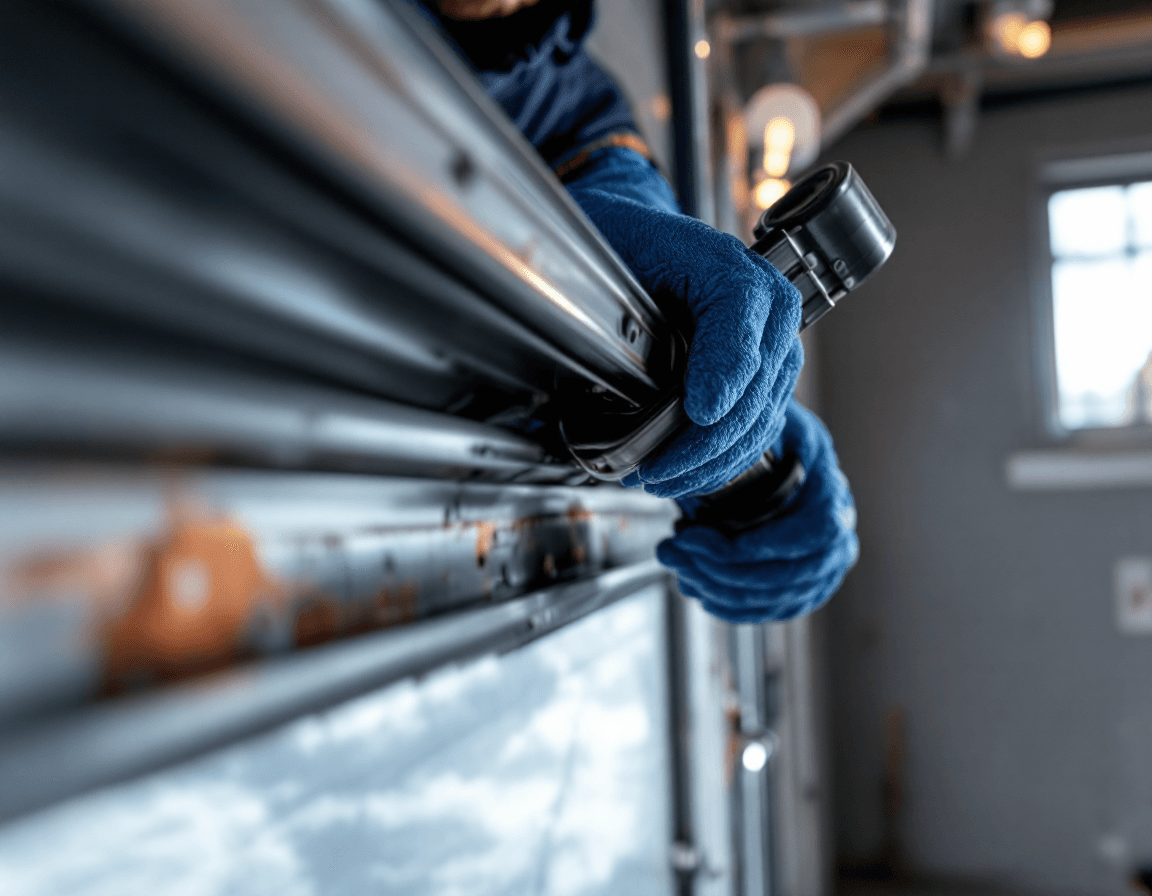
Garage Door Roller Replacement in Des Moines, WA is one of the most common repairs we handle on the south end of King County, and it is also one of the most affordable ways to bring a noisy, jerky door back to smooth operation. Rollers are the small wheels that ride inside the vertical and horizontal tracks and carry the weight of your door as it opens and closes. When they wear out, crack, or seize, the door has to work harder to move, and you hear and feel the problem long before the door fails outright. For most Des Moines homes, replacing a full set of rollers costs between $120 and $250, depending on the door and the roller style you choose.
Homes here see a particular mix of conditions that tends to wear garage door hardware faster than people expect. Long stretches of gray, damp weather are followed by sudden dry spells, and the moisture that settles into metal tracks and bearings does not always fully evaporate between storms. Homes closer to the water can also pick up a fine layer of salt-laden air that accelerates corrosion on exposed steel. This page explains what worn rollers look and sound like, how nylon and steel options compare, what a replacement visit involves, and where you should draw the line between a roller job you can plan around and work that belongs with a licensed professional. If your door is grinding, shaking, or sticking right now, the sections below will help you understand what is happening and what to ask for when you call us at (888) 799-3819.
Why Des Moines Doors Tend to Wear Their Rollers Faster
Garage doors in Des Moines and the surrounding Puget Sound communities live in a damp environment for much of the year. Rain, morning fog, and the cool, humid air that lingers after storms all find their way into the track system and the bearings inside each roller. Once moisture reaches a steel roller's ball bearings, it can wash out factory lubricant and start a slow process of rust that makes the roller rougher and harder to turn with every cycle. Doors that sit in a driveway with little overhead cover are exposed to this cycle more directly than doors tucked under a deep porch or a covered carport.
Homes near the marina, Woodmont, and Redondo can add another layer of stress. Salt air carries fine particles inland on the breeze, and those particles settle on exposed hardware, including the track, the hinges, and the rollers themselves. Over time, that residue combines with road grit and dust to form an abrasive paste that wears down roller surfaces and grinds into the track's edges. A door that once rolled quietly can begin to protest within a few seasons, even when it has been well cared for.
Age and use matter as well. A typical household door may open and close several times a day, and every cycle puts load on each roller's contact point. Early in the life of a door, rollers usually go unnoticed. Later, the first symptoms tend to be a faint squeak that gradually becomes a grind, and eventually a jolt or hitch as a worn roller catches on a rough patch of track. Understanding that progression helps you act while the repair is still simple and inexpensive.
Reading the Sounds and Movements Your Door Is Telling You
Your garage door usually gives you warnings before a roller fails completely. The most common early sign is a squeak or chirp that appears on the first few inches of travel and then fades as the door warms up. As rollers wear further, that squeak turns into a louder grinding sound that persists through the entire movement, and it often gets worse in cold, damp mornings. A sharp metal-on-metal scrape is a sign that the roller's surface or its bearing has broken down enough for the steel to contact the track directly.
Movement problems are just as telling. A door that shakes, bounces, or jerks as it travels along the track is often reacting to a roller that is no longer turning freely. You may also notice that the door seems to stop or hesitate at one specific point in its path, which can point to a roller that has seized or to a section of track where a worn wheel is catching. In some cases, one side of the door moves more smoothly than the other, which is a useful clue that the problem is isolated to particular rollers rather than the whole system.
Visible damage is the final stage. Cracked nylon rollers, flat spots on steel wheels, and rollers that wobble noticeably when you look at them from the side all indicate that replacement is overdue. If a roller has seized completely, the door may bind or refuse to lift until the roller is freed or replaced. Here is a practical list of what to watch for:
- A squeak that begins at the start of the door's travel and gets louder over time
- Grinding or scraping that continues through the full range of motion
- Shaking, bouncing, or a jolt when the door passes a specific point on the track
- Binding or sticking that appears on one side more than the other
- Rollers with visible cracks, chips, flat spots, or a wobble when spun by hand while the door is closed
Nylon Versus Steel: Picking Rollers That Suit Your Door
Most homeowners face a choice between steel rollers and nylon rollers, and the right answer depends on how the door is used and how you want it to sound. Steel rollers are sturdy and have long been the standard for heavier doors, and they are generally the least expensive option. The trade-off is noise. Steel on steel, especially when lubrication has dried out, produces a rattle or clatter that many people find irritating, particularly in attached garages where the sound carries into living space.
Nylon rollers are the quieter upgrade. Their surface absorbs much of the vibration that would otherwise travel through the track and into the surrounding wall and framing, so the door runs with a softer, more even sound. Many quality nylon rollers use sealed bearings that resist moisture and reduce the need for frequent lubrication, which is a real advantage for Des Moines homes that deal with long wet seasons. Nylon is not indestructible, however, and low-grade rollers can wear flat or crack if they are overloaded or installed on a misaligned track, so quality matters.
Roller size, stem style, and bearing type also need to match your door. Rollers come in a range of diameters and stem configurations, and the wrong size can cause uneven movement or fail to seat properly in the bracket. A technician will check the existing rollers and track profile before recommending a replacement, and that check is part of what keeps the job from becoming a repeat visit. When you compare options, ask whether the rollers are sealed or open, what material the bearing uses, and whether they are sized specifically for your door's track.
What a Roller Replacement Visit Actually Involves
A roller replacement is a focused service, but it still requires care and proper tools. The technician begins by inspecting the door, the track, and each roller position to confirm the source of the noise or binding. They will often open and close the door by hand, or with the opener disconnected and the door secured, to feel where resistance occurs. This step helps separate a worn roller from a bent track section, a loose bracket, or a hinge problem that only looks like a roller issue.
The actual swap is usually straightforward for a trained technician. Each old roller is removed from its hinge or bracket, the track is checked for debris and roughness, and the new roller is seated and aligned. Because the door's weight is supported by springs and cables, the technician works with the door in a controlled position and follows safe procedures throughout. Homeowners are welcome to watch the process, and a good technician will explain what they are replacing and why.
Once the new rollers are installed, the door is tested through several full cycles to confirm smooth movement along its entire path. The technician checks that the door sits level, that it does not drift in either direction when partially open, and that the opener is not straining to compensate for any remaining resistance. Many homeowners notice an immediate difference in sound, and a well-done job should leave the door moving with a noticeably quieter, steadier rhythm.
Track Alignment, Hinges, and the Hidden Causes of Binding
Not every noise or jerk in a garage door comes from the rollers alone. The track holds the rollers in place, and even a small bend or gap can cause a new roller to bind or wear unevenly. Track sections that have been bumped by a vehicle, or that have shifted over years of use, may need minor adjustment before new rollers can perform properly. Replacing rollers on a misaligned track is like putting new tires on a car with a bent axle: the new parts still will not run true.
Hinges are another common factor. Each hinge connects two door panels and carries rollers at its ends, and a loose or bent hinge can pull a roller out of alignment. Worn hinge pins and bent brackets can create the same sticking or shaking sensation that people attribute to rollers. During a proper inspection, the technician checks the hinges, brackets, and bolts to make sure the roller replacement addresses the real problem rather than just the most obvious sound.
Balance and opener strain should also be considered. A door that is out of balance can place uneven load on certain rollers, causing them to wear faster on one side. If the opener seems to labor or the door rises unevenly, the underlying cause may be spring tension or cable condition rather than the rollers. Those issues require a licensed professional, and it is smart to address them at the same visit so that the new rollers are not stressed by an unbalanced door.
Keeping Salt, Drizzle, and Grit From Undoing the Repair
Once your rollers are replaced, a little routine care goes a long way toward keeping them quiet. Track and roller maintenance should focus on keeping the metal clean and lightly lubricated, since moisture and grit are the main enemies of smooth travel. A dry lubricant or a silicone-based spray is generally preferred for the track and roller surfaces, because heavy grease attracts dirt and can turn into a gritty paste over time. Avoid spraying lubricant onto the door's tension springs or cables, because those parts need specialized care and are not meant to be coated.
Wiping the track with a clean cloth every few months helps remove the salt film and road dust that gather in Des Moines homes, especially those close to the water. After a stretch of heavy rain or a windy week, take a moment to look for debris, leaves, or small stones that may have collected in the track. If your door is exposed to direct spray from the driveway, a simple splash guard or a small adjustment to your landscaping can reduce how much grit reaches the hardware.
Consistency matters more than intensity. A quick check and wipe-down each season will do more for roller life than an occasional heavy application of product. If you notice a return of squeaking or a new hitch after the rollers have been replaced, it is worth scheduling a short inspection rather than assuming the new parts have failed. Early attention keeps a small adjustment from becoming a larger repair.
What the $120–$250 Range Covers and What Can Change the Price
For most Des Moines homeowners, a full set of garage door rollers falls within the range of $120 to $250. The final figure depends on several factors, including the number of rollers your door uses, the roller material you select, the type of bearing and stem, and whether the job includes minor track or hinge work. Standard doors with a typical number of rollers generally land near the lower end of the range when steel or basic nylon rollers are chosen, while upgraded sealed nylon rollers and doors with more hardware sit toward the higher end.
It helps to understand what the quoted range does not cover. Replacing torsion springs, repairing or replacing cables, fixing a broken drum, or correcting a significantly bent track is a different category of service and will be priced separately. Those repairs involve high-tension components that must be handled by a licensed professional, and their cost reflects the time, equipment, and safety procedures involved. A good technician will tell you clearly whether your door needs only rollers or whether additional work is advisable before you commit.
When you call for an estimate, have the following information ready: the approximate width and height of your door, the type of door (steel, wood, or insulated), any noise or movement symptoms you have noticed, and whether you prefer quieter nylon rollers or a more economical steel option. Providing those details helps the technician give you a more accurate expectation before arriving on site.
Why Spring, Cable, and Tension Work Belongs With a Licensed Professional
Garage door rollers are a manageable repair, but the system they support is not. Torsion springs and extension springs store enormous amounts of energy, and when they are adjusted, removed, or replaced without the right tools and training, they can cause serious injury. Cables carry the door's load and can snap under stress, and a damaged drum or cable can drop a door suddenly. These components are why we always recommend a licensed, bonded, and insured professional for anything beyond basic visual checks.
Homeowners should never attempt to wind springs, loosen spring set screws, or disconnect a door from its tension system to reach a roller. Even when a roller looks like an easy fix, the door may need to be safely supported and secured during the work, and that process is part of what a trained technician brings to the job. If your roller replacement reveals a spring, cable, or drum problem, stop and call for help rather than trying to finish the work yourself.
Choosing a licensed provider also means you have accountability if something goes wrong. Insurance and bonding protect your home, your vehicles, and the people working on your property. When a company is clear about its credentials and its scope of work, you can make informed decisions about what to repair now and what to monitor. That transparency is part of how we approach every visit.
Simple Checks You Can Safely Do This Week
While you should leave tension and spring work to professionals, there are several safe checks that help you understand your door's condition. Start by closing the door fully and making sure it is disconnected from the opener by pulling the emergency release cord, then gently lifting the door by hand a short distance. The door should feel reasonably balanced and should not drop or jerk. If it does, stop and call for service rather than continuing to test it.
Next, look closely at the rollers while the door is closed. Check for visible cracks, chips, or flat spots on nylon wheels, and watch for wobble or play in the stem. Rotate each roller gently by hand if it is accessible and safe to do so, listening for grinding or feeling for roughness. Make a note of which rollers seem worse, because that information is valuable when the technician arrives.
Finally, inspect the track for debris, dents, or gaps, and confirm that the bolts holding it in place are snug. Use a dry cloth to wipe the track and remove any grit, and avoid heavy grease. If the door seems fine after these checks but still makes noise, keep a short record of when the sound occurs, such as cold mornings or after rain, because that pattern can help a technician narrow the cause quickly.
Serving Redondo, Woodmont, the Marina Area, and Beyond
Seattle Garage Door Fix supports homeowners throughout Des Moines and the wider Western Washington region, including the neighborhoods that surround the waterfront, the Woodmont area, and the Redondo community. Our technicians are familiar with the way moisture, salt air, and seasonal rain affect garage hardware in these parts of King County. Homes near the marina often have doors that see more weather exposure, and we plan roller service with that in mind, from the choice of rollers to the lubrication recommendations we share.
Des Moines is part of a larger network of communities that we serve across King County and beyond, and the same principles apply throughout the region. Whether your door is in a newer subdivision or an older home that has seen decades of weather, the goal is the same: a quiet, steady door that opens and closes with confidence. We match the repair to the door you actually have, explain what we find, and leave you with a clear picture of what the next few years should look like.
If your garage door is grinding, shaking, sticking, or simply louder than it used to be, a roller replacement may be all it needs. Call (888) 799-3819 to schedule an inspection, describe the symptoms you are noticing, and ask whether nylon rollers are the right upgrade for your home. Our team can give you a straightforward estimate within the $120 to $250 range for a full set of rollers, and we will tell you plainly if your door needs additional service before the job begins.