
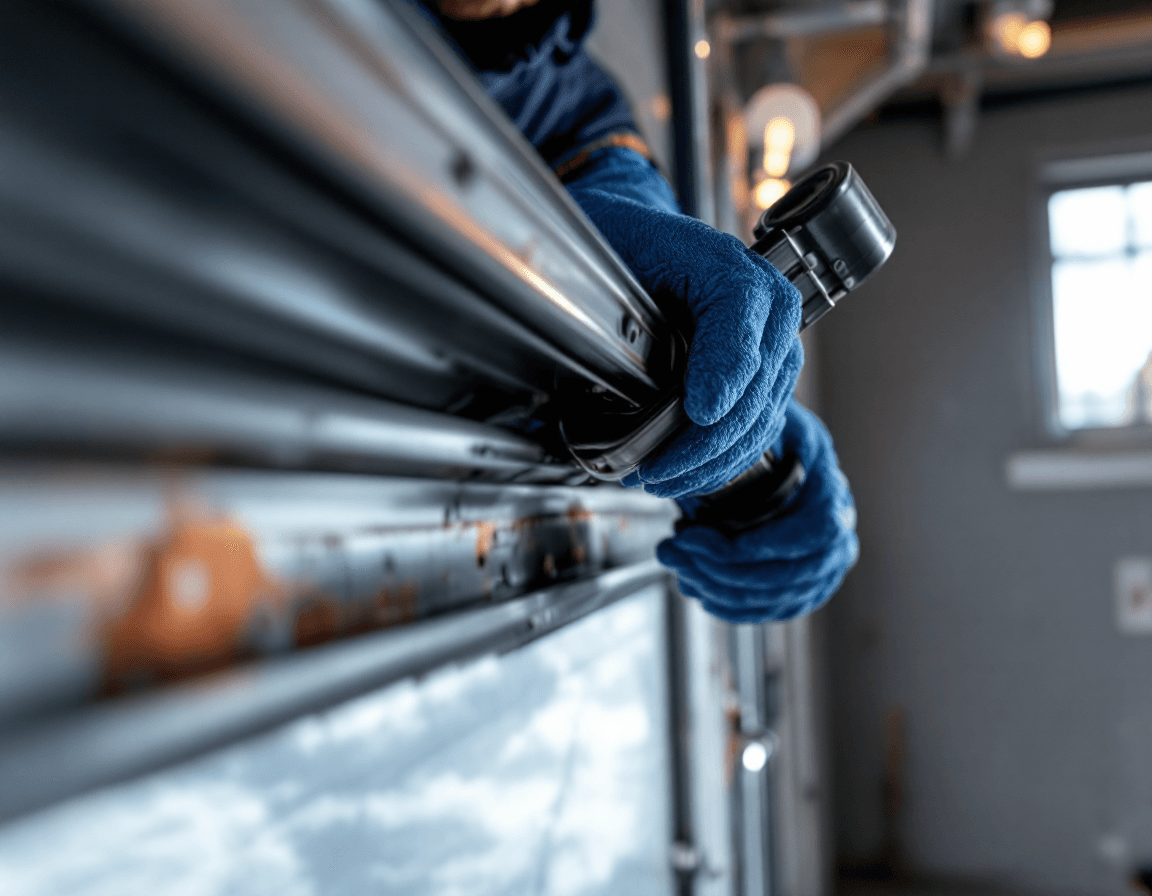
Garage door roller replacement in SeaTac, WA is one of the most common and affordable fixes homeowners can book, and it often makes the biggest difference in how the door sounds and feels day to day. Rollers are the small wheels that ride inside the vertical and horizontal tracks, and when they wear out, the whole door pays the price. A door that once glided upward can start to grind, shudder, or hesitate, and many people assume the opener is failing when the real culprit is a set of tired rollers. Seattle Garage Door Fix works with homeowners across SeaTac and the surrounding South King County communities, and roller work is one of the first services we recommend when a door has started to complain.
The good news is that roller problems tend to develop gradually, which gives you time to act before a minor noise becomes a stuck door or a damaged track. Most households notice a squeak first, then a faint rattle, and eventually a jerky movement near the top of the travel. Catching those early signs means a quicker visit, usually a simpler job, and a quieter garage without replacing major components. Full roller sets typically fall in the $120 to $250 range, depending on the door size, the roller style you choose, and whether any track repairs are needed during the same visit.
This page explains how rollers work, what the symptoms look like, how the wet Pacific Northwest climate affects them, and what to expect from a professional replacement. It also covers the points where a homeowner should stop and call a licensed technician, especially for anything involving the springs or cables that hold the door's weight. Read through the sections that match what your door is doing right now, and feel free to call (888) 799-3819 if you would like a second opinion on what you are hearing.
What Your Rollers Actually Do Every Time the Door Moves
Each section of a typical sectional garage door is linked to its neighbors by hinges, and the rollers are what carry the door along the curved and straight track sections. A standard roller consists of a central stem, a set of bearings or a bushing inside the wheel, and the wheel itself, which is either steel or a molded nylon or plastic composite. Most residential doors use rollers with a stem that fits into the hinge slot on the door panel, so the roller pivots and rolls as the door transitions from vertical to horizontal. When the bearing is smooth and the wheel is round, the door glides with very little friction.
Because rollers handle the constant movement of the door, they absorb thousands of small loads over the years. Every opening and closing cycle asks the bearing to spin under weight, and the wheel to track cleanly along the steel rail without wobbling. Dirt, grit, and dried lubricant gradually change that behavior, and the wheel begins to drag rather than roll. Once a roller starts to flatten, crack, or seize, the adjacent rollers and hinges inherit extra stress that can accelerate wear across the door.
It helps to understand that rollers do not lift the door. The springs and cables handle the heavy lifting, while rollers simply guide the panels so they follow the track without binding. That distinction matters because a roller replacement is a relatively contained repair, while spring work carries much higher stakes. Keeping that picture in mind will help you decide which symptoms point toward a simple roller swap and which ones call for a professional assessment of the entire lift system.
Reading the Noise: Common Roller Symptoms Worth Taking Seriously
Sound is usually the first clue that rollers need attention, and each type of noise tends to point to a slightly different problem. A high-pitched squeak often comes from a dry bearing or a steel wheel rubbing against a dusty or rusted track. A deeper grinding noise usually suggests the bearing has broken down internally, leaving metal parts scraping against one another. Metal-on-metal scraping can also come from a wheel that has lost its tire surface or a track section that has shifted out of alignment.
Homeowners in SeaTac commonly describe the following symptoms when they call us about rollers:
- Loud grinding or squeaking that starts as soon as the door begins to rise
- A door that shakes, shudders, or jerks as it travels along the track
- Visibly cracked, flattened, or chipped roller wheels, or a wheel that will not spin freely by hand
- Metal-on-metal scraping sounds, especially near the top curve of the track
- Spots where the door binds or sticks momentarily before continuing to move
- A general desire for quieter operation, particularly if the garage shares a wall with a bedroom or living space
Any one of these signs is worth investigating, but several together strongly suggest the rollers are the source. Pay attention to whether the noise changes with the season, since a door that is loud on cold, damp mornings may be dealing with stiff lubricant and moisture in the bearings. If the door shakes only in one section of the track, the problem may be a single worn roller or a loose track bracket rather than a full set needing replacement.
Be careful not to ignore a door that sticks or binds. Continuing to run the opener against resistance can strain the motor, twist panels, and loosen hardware that was never designed for that load. If the door stops partway through its travel, stop using the opener and schedule service rather than forcing it.
How SeaTac's Damp Winters and Airport-Corridor Conditions Wear Rollers
SeaTac sits in the mild but persistently damp climate typical of the Puget Sound lowlands, and that moisture has a real effect on garage door hardware. Long stretches of gray, wet weather keep humidity high inside many attached garages, especially in older homes where ventilation is limited. Condensation can form on steel tracks and rollers overnight, then evaporate during the day, a cycle that encourages surface rust and lets grit stick to lubricated parts. Over several rainy seasons, that combination can turn a smooth roller into a noisy one.
The area's proximity to the airport and the busy commercial corridors around it also contributes to a dusty, road-grime environment for many homes. Fine particles from traffic and construction settle on tracks and get carried into the bearings every time the door cycles. Garages that open toward the street often collect more debris than those tucked behind a fence or deeper in a residential lot. Because these particles are abrasive, they wear down roller surfaces faster than a clean suburban garage would experience.
Seasonal temperature swings are another factor, although they are usually milder here than in inland parts of the state. A cold snap can thicken old grease so the door strains to start moving, while a warm afternoon can soften lubricant and let it drip onto the floor or attract dust. Technicians serving neighborhoods such as McMicken Heights, areas around Angle Lake, and homes near Bow Lake often see the same pattern: a door that runs smoothly in summer but complains through the wet months. Recognizing that cycle can help you schedule maintenance before the worst of the rainy season arrives.
Nylon Versus Steel: Choosing a Roller That Stays Quiet
Once a technician confirms that rollers need replacing, the next decision is which material to install. Steel rollers have long been the default because they are strong, inexpensive, and familiar. They handle heavy doors well and stay rigid under load, but they can be noisy, especially on older tracks, and they rely heavily on lubrication to run quietly. Once the lubricant dries out or gets contaminated, steel-on-steel contact tends to produce the grinding and rattling many homeowners complain about.
Nylon and other composite rollers have become a popular upgrade because they run more quietly and often require less lubrication. The softer wheel absorbs small vibrations and reduces the metallic ring that steel rollers can produce when they pass over track seams. Many quality nylon rollers use sealed bearings, which keep grit out and extend service life in damp conditions. For homes where the garage sits beside a living area or a bedroom, the reduction in noise can be one of the most noticeable improvements from a single service visit.
It is worth knowing that not every nylon roller performs the same. Cheap versions can flatten under heavy use or crack in cold weather, which defeats the purpose of the upgrade. A reputable technician will recommend a roller rated for your door's weight and size, and will explain the tradeoffs between steel and nylon for your specific setup. In many cases, a mixed approach works well, with nylon rollers on the lower sections where noise is most noticeable and steel or heavier-duty rollers on high-travel areas.
Sizing, Stem Types, and Track Compatibility Checks
Replacing rollers is not simply a matter of buying the first set that looks similar to the old ones. The critical measurements include the roller diameter, the wheel width, the stem length, and the stem style, which can be a straight stem, a stepped stem, or a stem with a specific shape designed to fit a particular hinge. Track width matters as well, because a roller that is too wide or too narrow will bind, wear unevenly, or pop out of the track during operation. Many doors also use different roller types on the top and bottom rows, so a single generic set may not fit every position.
Technicians check these details by removing one roller at a time and comparing it to the replacement before installing the full set. This approach reduces the chance of ordering the wrong size and keeps the door supported during the change. It also gives the technician an opportunity to inspect the hinge sockets and bracket attachments, since a worn hinge can cause a new roller to wobble even when it is the correct part. If the stem slot in a hinge is stretched or cracked, that hinge may need replacement as well.
Track condition is part of the compatibility picture. A track that is bent, out of level, or loose at its mounting brackets can destroy new rollers quickly, no matter how well they fit. During service, a technician should verify that the track is aligned, the bolts are tight, and the curve transitions are smooth. Addressing those issues during the same visit protects your investment and prevents the new rollers from wearing unevenly from the start.
When Rollers Need Replacing and When Something Else Is Going On
Not every noisy garage door needs new rollers, and a careful inspection often reveals that the rollers are only part of the problem. Dry hinges, loose bolts, a worn bottom seal dragging on the floor, or an opener that is struggling with an unbalanced door can all produce sounds that homeowners attribute to rollers. A quick test is to disconnect the opener and lift the door manually to the halfway point. If it feels heavy, uneven, or jerky, the balance or spring system may need attention, and rollers alone will not solve the problem.
Replacement is usually the right call when several rollers show visible wear, when wheels have flat spots or cracks, or when a roller will not turn freely by hand. It also makes sense when the stems are worn or the wheel tire has separated from the core. If only one roller is damaged, some homeowners choose to replace just that one, but technicians often recommend changing the full set so the door wears evenly and the new roller does not fight older, rougher neighbors.
Timing matters too. A roller that has begun to crack can break mid-travel, and a broken roller may drop a panel out of the track. That scenario can damage the door, the track, and the opener, and it can create a safety hazard. If you notice a roller that appears split or a door that suddenly lurches, keep people and vehicles clear of the opening and call for service promptly.
What a Technician Inspects Before Starting Any Roller Work
A thorough roller visit begins with a walk-around rather than an immediate parts swap. The technician will confirm that the door is disconnected from the opener and that the power is off, then inspect the tracks for straightness, level, and secure mounting. The hardware is checked next, including bolts, brackets, hinges, and the bottom weatherstrip. This step catches small problems that could undermine a new roller installation, such as a bracket pulling away from drywall or wood framing.
The technician then operates the door by hand, watching how each section travels through the curve and along the horizontal track. Noises are compared against the symptoms you described, and any roller that binds or wobbles is marked for replacement. Lubrication is evaluated as well, since the right product for steel tracks is not the same as what is appropriate for nylon wheels or sealed bearings. Using the wrong lubricant can attract dust or damage plastic components.
Once the diagnosis is clear, the technician explains the options, including roller material, expected results, and any additional repairs that are recommended. You should feel comfortable asking questions about what is being replaced and why. A good visit ends with a clear summary of the work completed and advice on how to keep the door running quietly until the next maintenance check.
Realistic Pricing: What Influences the $120 to $250 Range
For a full set of rollers, pricing typically falls between $120 and $250, though the final number depends on several factors. The door size and number of rollers are the largest variables, since a double-car door uses more wheels than a single-car model. The roller material also affects cost, with quality nylon or sealed-bearing options usually priced above basic steel rollers. Stem style and hinge compatibility can add minor expense if the technician needs specialty parts.
Additional repairs can change the total as well. If a track bracket is loose, a hinge has cracked, or a bottom seal needs replacement, those items will be quoted separately or included as part of the service call. Some homeowners prefer to address all visible wear at once to avoid returning for a second visit, while others prefer to start with rollers and monitor the rest of the door. Either approach can be reasonable, as long as the technician explains what is recommended and why.
It is also worth remembering that rollers are one of the more affordable garage door repairs compared with spring or opener replacement. Because the work is relatively contained, the expense is usually modest relative to the comfort gained. A quieter door that moves smoothly can make daily life noticeably more pleasant, especially for households that use the garage as a regular entry point.
Safety Boundaries: Why Spring and Cable Work Belongs to Licensed Pros
Roller replacement is a manageable task for many homeowners who are comfortable with basic tools, but it is important to know where the safe boundary lies. Garage door springs store enormous amounts of tension, and a torsion or extension spring that releases unexpectedly can cause serious injury. Cables carry the door's weight and can snap or unravel if they are damaged or improperly tensioned. Anything involving the spring system, the drums, or the cable assembly should be handled by a licensed, bonded, and insured professional.
Even during a roller job, a homeowner should never attempt to loosen or adjust spring tension, remove a drum, or pull a cable off a pulley. If a roller replacement reveals a damaged cable or a spring that appears stretched or broken, stop work immediately and call for professional help. Keep children and pets away from the door during any maintenance, and make sure the opener is disconnected so the door cannot move unexpectedly.
Our technicians follow these boundaries as a matter of routine, and we recommend the same caution to every homeowner. If you are unsure whether a task is safe for you, that uncertainty is a sign to call a professional. A short service visit is far less costly than an injury or a damaged door, and it gives you certainty that the entire system is working as designed.
Keeping Rollers Quiet Between Service Visits
Once new rollers are installed, a little regular attention keeps them performing well for years. Wipe the tracks gently with a clean cloth to remove dust and grit, especially in the lower sections where debris collects. Apply a lubricant recommended for garage door components to the hinges and roller bearings, taking care to use the product your technician suggests for your roller type. Excess lubricant attracts dirt, so a light application is more effective than a heavy coating.
Watch for early warning signs such as a new squeak, a slight hesitation, or a roller that appears to wobble. Catching these changes early keeps small repairs small. Schedule an inspection before the wettest months if you notice moisture buildup in the garage or rust forming on the tracks. Keeping the garage ventilated, when possible, also reduces the humidity that slowly degrades metal parts.
Finally, consider a periodic professional check, especially if your door sees heavy daily use or if it has been several years since the last service. A technician can spot wear that is not yet audible and recommend replacement before the door becomes loud or unreliable. Regular attention costs far less than emergency repairs, and it helps your garage run quietly through every season.
Ready for a smoother, quieter garage door in SeaTac? Call Seattle Garage Door Fix at (888) 799-3819 to schedule a licensed technician who can inspect your rollers, recommend the right material for your door, and explain every step before any work begins. Whether you are dealing with grinding, shaking, or simply want a quieter ride, we are happy to help you find the most practical solution for your home.