
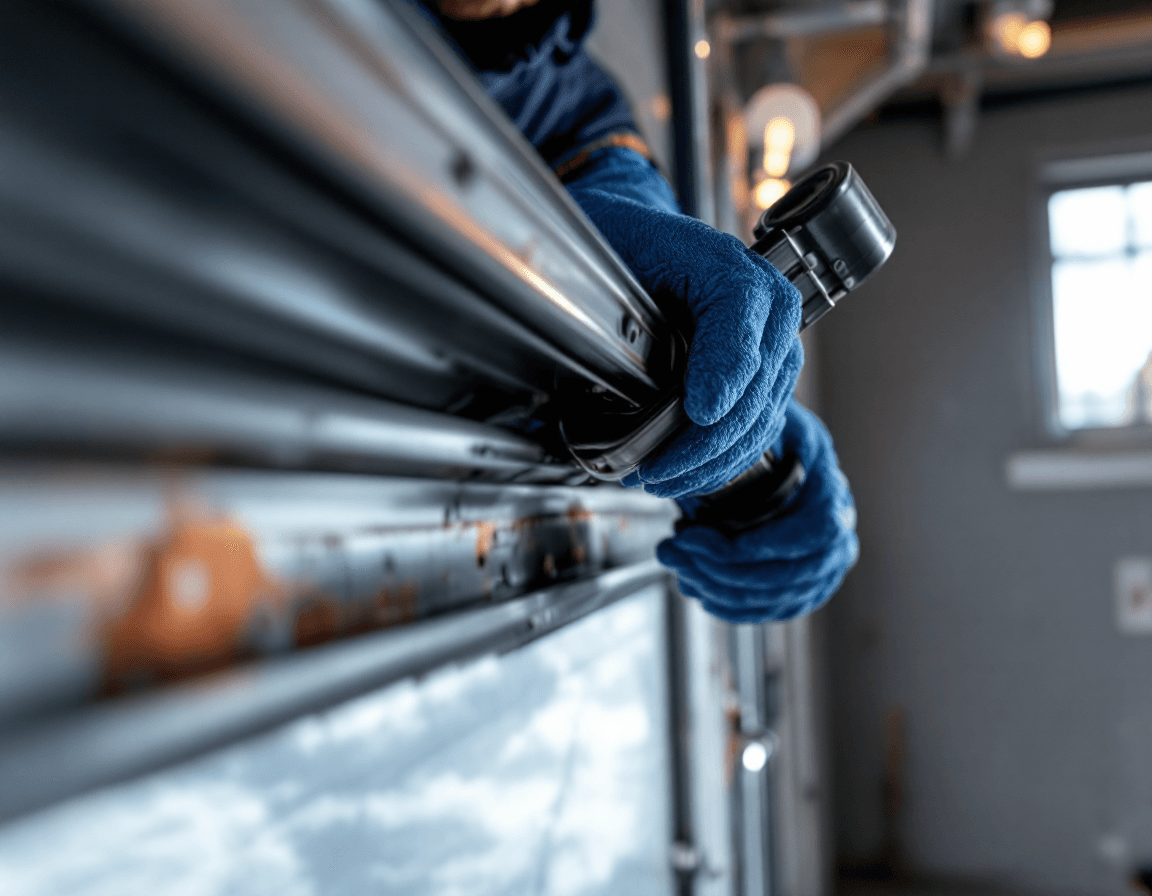
Garage door roller replacement in Sumner, WA is one of the most common repairs we see, and also one of the most affordable ways to bring a noisy, jerky door back to smooth operation. Rollers are the small wheels that ride inside the vertical and horizontal tracks and carry the weight of the door as it opens and closes. When they wear down, crack, or seize, the door has to work harder, and you hear and feel it every time you pull into the driveway. Our technicians serve Sumner and the surrounding Pierce County communities, and we see the same handful of symptoms over and over again.
The good news is that a worn roller set is rarely a major expense. Most homeowners in Sumner pay between $120 and $250 for a full set of replacement rollers, and the job is typically completed in a single visit. Upgrading to quiet nylon rollers with sealed ball bearings can make a surprising difference in how the door sounds, especially in attached garages where the noise travels straight into the kitchen or bedrooms. This page explains how rollers fail, what the warning signs look like, what a replacement involves, and where the job stops being a roller job and becomes a safety job for a licensed professional.
Why Rollers Wear Out Faster in the Pacific Northwest
Western Washington's climate is kind to lawns and hard on steel and lubricants. Our winters bring long stretches of cool, damp air, and our falls and springs bring frequent rain that can sit in driveways and blow into open garage bays. Moisture finds its way into roller bearings and washes away the grease that keeps them turning freely. Over time, that moisture encourages surface rust on steel rollers and stem bearings, which then grind away at the track surface and at the roller itself.
Temperature swings also matter. A garage in Sumner might be chilly at 40 degrees on a February morning and noticeably warmer by afternoon when the sun breaks through. Metal expands and contracts with those changes, and the door's panels and hardware shift slightly with them. A roller that was already a little stiff can start binding during the coldest mornings, then seem fine by lunchtime, which confuses many homeowners into thinking the door is fixing itself.
Dust and grit matter too, particularly in older neighborhoods near downtown Sumner where detached garages may sit near gravel alleys or unpaved shoulders. Fine debris gets pulled into the track every time the door cycles, and it acts like sandpaper on the roller's surface. Even a well-made roller can wear out prematurely if it spends years rolling through a track that never gets wiped down.
Reading the Sounds Your Door Is Making
Your garage door communicates through sound long before it stops working, and learning to read those sounds is the fastest way to decide whether rollers are the issue. A squeak that appears only on the first cycle of the morning often points to dry or cold-stiffened bearings. A grinding noise that gets louder across the whole travel of the door usually means a roller's bearing or stem has deteriorated. Rubbing or scraping that sounds like metal dragging on metal often means the roller has flattened, cracked, or lost its shape and is now riding on its hub rather than its tread.
Most homeowners describe the noise in a few predictable ways. Here are the sounds we hear most often during roller calls in Sumner and Lakeland Hills:
- A high-pitched squeak that repeats with each lift, often strongest near the top of the track
- A rough grinding or rumbling that changes in intensity as the door moves
- A metallic clicking or ticking when the door passes a particular spot on the track
- A scraping sound on one side only, which can indicate a single failed roller
- A thumping or bouncing noise that suggests the door is jerking along uneven track
Pay attention to where in the travel the noise occurs. A noise that starts only when the door is halfway up may be a roller sitting in a dent or a section of track that has been bent slightly by a past impact. Noise that happens only when the door is fully closed often relates to the bottom roller sitting in the lock area or the weatherstrip dragging. Keeping a mental note of timing and location gives your technician a head start and helps prevent unnecessary part swaps.
Steel Versus Nylon: Choosing a Roller for Quieter Operation
Garage door rollers come in several materials, and the choice affects both sound and longevity. Steel rollers are sturdy and inexpensive, and they still appear on many older doors. Their main drawback is noise. Steel-on-steel contact inside a metal track produces a distinct clatter, and steel rollers that lack sealed bearings tend to need regular lubrication to stay quiet.
Nylon rollers, particularly those with sealed ball bearings, are the usual choice for homeowners who want a quieter garage. The nylon tire absorbs vibration and rolls with less rattle inside the track, which is why many Sumner homeowners notice an immediate change in how the door sounds after an upgrade. Sealed bearings also keep moisture and grit out of the mechanism, which is a real advantage in a region where damp conditions are the norm for much of the year. Look for rollers that match your door's track size, typically 2-inch or 3-inch, and confirm the stem type so the new roller fits the existing brackets without modification.
There is a trade-off worth understanding. Nylon rollers are very good at quiet operation, but lower-quality nylon can flatten under constant load, especially on heavier doors such as insulated double-wide models. For that reason, we usually recommend a quality nylon or nylon-composite roller with a sealed ball bearing rather than the cheapest option on the shelf. The right choice depends on your door's weight, how often it cycles each day, and how much noise you can tolerate.
How Sumner Homes Put Rollers to the Test
Sumner has a mix of housing styles, and the garage door on each one has a different history. Around downtown Sumner, many homes are older, with detached or semi-detached garages that were built decades ago. Those doors may have original steel rollers that have been running in the same tracks for a long time, sometimes through several owners and many winters. When these rollers fail, they often fail together, which means a full set replacement is usually more cost-effective than replacing a single roller.
Lakeland Hills presents a different picture. Many homes there were built in newer phases with builder-grade garage doors, and those doors often come with nylon rollers from the factory. Even so, the rollers can wear out sooner than expected if the door sees heavy daily use, such as multiple cycles for school runs, commuting, or running a home business out of the garage. Homeowners in both areas tend to notice roller wear sooner in the spring and fall, when the rain and temperature changes are most noticeable.
Attached garages in Sumner also deal with a particular issue: noise. A door that grinds or rattles in a detached building may only bother the owner, but in an attached garage, the vibration can carry into living spaces. For families with young children, shift workers who sleep during the day, or anyone working from home, a quiet nylon roller upgrade often gives the best return on a modest investment. It is one of the few garage repairs where the improvement is immediately obvious to everyone in the house.
Signs That a Single Roller Has Seized or Cracked
Not every roller failure looks the same, and recognizing the difference between a tired roller and a dead one will save you time. A seized roller stops turning, so it drags instead of rolling. You may see a shiny flat spot on the roller's tread, or a dark streak on the track where the roller has been sliding. Seized rollers also create heat and friction that can distort the door section above them, so catching the problem early protects the rest of the hardware.
A cracked roller is usually visible if you look closely. Check the tire for splits, chunks missing from the rim, or a hairline crack running around the circumference. Cracks often start at the outer edge and spread inward, especially on nylon rollers that have been exposed to repeated temperature changes and sunlight through a small window. A cracked tire can also come off the stem entirely, which can cause the door to jump or bind suddenly.
Here are a few quick checks you can perform safely with the door fully closed and the power disconnected:
- Spin each roller by hand and feel for wobble, grit, or uneven resistance
- Look at the tire for flat spots, cracks, or missing sections
- Check that the stem sits straight in the bracket and is not bent or loose
- Inspect the track near each roller for scoring, debris, or a bent section
- Note whether any roller is noticeably different from the others
If a roller fails any of these checks, replacing the full set is generally the best approach. The rollers on a door are designed to share the load, and a new roller paired with worn ones will carry more stress than it should.
What a Roller Replacement Involves, Step by Step
A roller replacement is one of the more straightforward garage door repairs, but it still requires care. The technician begins by confirming the door is fully closed and that the opener is disconnected, so the door cannot move during the work. The door is then supported safely so the tension on the springs and the cables does not put pressure on the rollers during removal. This step is essential, because the springs and cables store significant energy, and this is where a homeowner should never attempt the work alone.
Once the door is secured, the technician removes the old rollers one at a time, usually by unlatching the bottom bracket and carefully lifting the roller out of the track's hinge area. Each roller is checked against the track's size and stem style, and the replacement is installed to match. The technician then tests the door through a few slow cycles to confirm each roller rides smoothly inside the track and that no panel binds at the hinges. Final adjustments may include tightening brackets, checking track alignment, and confirming the weatherstrip is not dragging on the threshold.
Most roller jobs in Sumner take a single visit, and the homeowner can usually see the difference immediately. A properly installed set of nylon rollers should make the door roll with less effort, stop the squeaking or grinding, and reduce the vibration you feel through the floor. We always recommend running the door through several cycles afterward to make sure the sound has settled and no new noise has appeared.
Pricing Expectations for a Full Set of Rollers
Roller replacement pricing depends mainly on how many rollers the door uses and which type you choose. Our typical range for a full set of rollers is $120 to $250, which covers the rollers and the labor to install them. Doors with more rollers, heavier panels, or specialty track configurations may fall at the higher end of that range, while standard single-car doors with straightforward tracks generally land toward the lower end.
The type of roller you select will affect the final cost. A basic steel roller set is usually the least expensive option, while sealed ball-bearing nylon rollers cost more but deliver a quieter ride and better resistance to moisture. Some homeowners choose to upgrade only part of the set, but for consistent performance we typically recommend replacing all of the rollers on the same door at the same time. Mixing old and new rollers can create uneven loading and new noise.
Your technician should give you a clear explanation of the work before starting. Ask about the roller type, the number of rollers included, and whether any track or bracket adjustments are part of the quote. A reputable company will explain the scope of work in plain language and will not pressure you into unrelated repairs. If the inspection reveals a problem beyond the rollers, the technician should explain the issue, provide options, and let you decide how to proceed.
Keeping the Track Clean and Rollers Running Smoothly
Good maintenance can extend the life of new rollers and keep your door quiet between service calls. Start by wiping the inside of the tracks with a dry cloth every few months to remove dust, leaves, and grit that wash in from the driveway. Avoid spraying heavy oils or penetrating lubricants into the track, since those products attract dirt and can create a sticky film that holds debris against the rollers. Instead, a light silicone-based lubricant applied sparingly to the roller stems and hinges is generally the safer choice.
Keep your garage door's weatherstrip and threshold clean as well. A strip that has hardened or cracked can drag on the floor and create resistance that feels like a roller problem. Check the bottom seal once in a while, especially after the wet season, and replace it if it is torn or flattened. Clearing debris from the threshold and sweeping the area near the door before the rainy months can also reduce the amount of grit that enters the track.
Finally, run the door manually at a slow pace once or twice a month and listen carefully. Catching a new squeak early often means a simple cleaning or lubrication instead of a larger repair. Do not attempt to adjust tension springs, loosen cable drums, or disassemble brackets during this check. Those components carry significant force and belong to a trained professional.
When Rollers Are Not the Real Problem
Sometimes the noise or resistance you attribute to rollers actually comes from another part of the door system. Worn hinges can produce a creaking or popping sound that resembles a roller squeak, and a bent or loose track can create a rattle that seems to come from the rollers themselves. Opener issues, such as a worn drive chain or an unbalanced door, can also cause jerky movement that feels like a roller problem. A careful inspection should look at the whole system before any rollers are replaced.
A door that will not stay open at the halfway point or that slams down when released may point to an imbalance in the springs rather than a roller issue. Similarly, a door that opens unevenly, with one side lifting faster than the other, often involves cable or spring problems. These are situations where replacing rollers alone will not fix the root cause, and the work should be diagnosed before any parts are ordered.
If your technician finds that the rollers are fine but another component needs attention, they should explain the issue clearly and give you the chance to ask questions. The goal is an accurate diagnosis, not an unnecessary sale. A quality service call should leave you understanding exactly what was wrong and why the recommended fix addresses it.
Why Springs and Cables Belong to Licensed Professionals
Roller replacement is a manageable task for a trained technician, but the same door contains components that can cause serious injury if handled incorrectly. Torsion springs and extension springs store enormous amounts of energy, and a spring that releases suddenly can cause severe harm. Cables under tension can snap and whip, and drums and brackets can shift without warning. For these reasons, any work involving springs or cables should be performed only by a licensed and insured professional with the right tools and training.
Homeowners in Sumner should never attempt to adjust, wind, or remove springs, even if they have experience with other home repairs. Winding a torsion spring requires specialized bars and precise technique, and a mistake can be fatal. If you suspect a spring or cable problem, such as a visibly stretched spring, a broken cable, or a door that drops suddenly, keep everyone away from the door and call a licensed technician. Until then, disconnect the opener and keep the door closed.
Our team is licensed, bonded, and insured, and we approach every roller job with the same caution, whether the repair is straightforward or involves multiple components. If your door needs roller replacement in Sumner or anywhere else in the greater Seattle and Western Washington area, we can inspect the full system, explain what we find, and recommend the right solution for your home and budget.
Ready to get your garage door running quietly again? Call Seattle Garage Door Fix at (888) 799-3819 to schedule a roller inspection or a quiet nylon roller upgrade in Sumner, WA, and let our licensed technicians help you enjoy a smoother, more peaceful garage.