
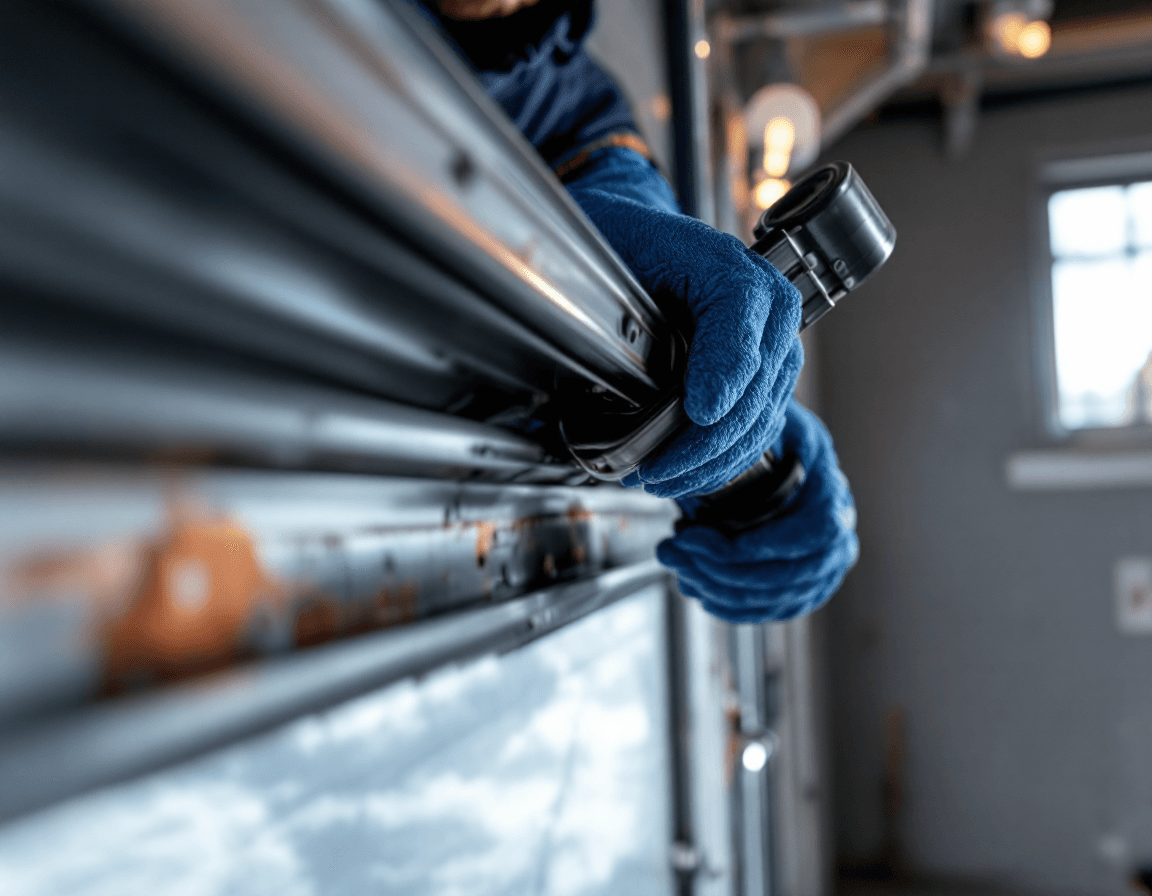
Garage Door Roller Replacement in Edgewood, WA is one of the most common and affordable repairs homeowners can get done, and it often makes a bigger difference than people expect. A door that grinds, squeaks, or shakes is usually telling you that its rollers have worn down, cracked, or stopped turning freely. Those small plastic or steel wheels carry the full weight of the door as it rises and falls, so when they fail, the whole system works harder than it was designed to. Catching the problem early keeps the rest of the hardware from taking a beating.
Edgewood sits in the foothills of Pierce County, a short drive from Puyallup, Milton, and Fife, and its homes range from older ranch-style houses to newer builds with larger two-car garages. Many of these garages have sectional doors that run on steel tracks bolted to the ceiling and walls. Whether your door is an older model that has been running for two decades or a newer insulated panel door, the rollers are the parts that guide each panel along the track. This guide explains what worn rollers look and sound like, why our damp Pacific Northwest weather speeds up the wear, and how a roller replacement is handled from start to finish.
If you are reading this because your door has started making noise or behaving strangely, you are in the right place. Rollers are not an exotic part, and a full set typically falls within a $120 to $250 range, depending on door size, roller type, and how much track adjustment is needed. The sections below walk through the symptoms, the upgrade options, and the safety considerations that matter most. Read on to decide whether a roller swap is the right fix for your door, and what to expect if you call in a professional.
Why Your Door Sounds Like It Is Complaining
Most garage door noise is not random. A door that is working correctly moves with a steady, even hum, and the rollers spin quietly inside their track as the panels pass. When a roller starts to wear, the first change is usually a faint squeak that appears on certain mornings or after a damp night. Over time that squeak turns into a rougher grinding noise as the roller's bearing or outer surface breaks down.
The sound also tells you where the problem is concentrated. A roller that has seized will often produce a flat scraping noise, because the roller is no longer turning and is sliding along the metal track instead. A cracked nylon roller tends to make a rhythmic clicking or thumping as the crack catches the track edge on each pass. If you hear a metal-on-metal scrape that gets louder as the door climbs, that is a strong sign that one or more rollers have failed completely.
Pay attention to whether the noise is constant or only happens in one part of the travel. Noise that appears only near the top of the door, where the track curves from vertical to horizontal, often points to rollers in the curve or to the hinges between panels. Noise that is present along the entire length of the track usually suggests that the rollers across the whole door are wearing at a similar rate. Noting this detail before you call makes it much easier for a technician to diagnose the problem quickly.
The Rainy-Season Problem Edgewood Doors Face
The Pacific Northwest climate is hard on garage door hardware, and Edgewood is no exception. Long stretches of wet weather through fall and winter mean that moisture regularly gets into the track, the hinges, and the roller bearings. Steel rollers exposed to that moisture can begin to rust, and the rust roughens the surface that is supposed to roll smoothly along the track. Even when the rollers themselves are not corroded, grit and dirt tracked in on damp shoes and tires can mix with old lubricant and form a gritty paste.
Temperature swings add another layer of stress. A cold, damp morning can make the grease in a roller bearing stiff, so the door sounds rough until the garage warms up a little. In summer, the same bearings may run quieter but can dry out and wear faster if they were never properly lubricated. Over a year, these cycles of wet, cold, and dry conditions accelerate the wear that eventually shows up as squeaking and binding.
Because so many Edgewood garages sit in shaded lots surrounded by trees and lawns, the track and rollers may stay damp for longer than they would in a sunnier, drier location. Leaves and pine needles that collect at the bottom of the door can also be pulled into the track as the door moves. Keeping the track clear and wiping off standing water can help, but when rollers are already worn, a replacement is usually the most reliable long-term fix.
Reading the Warning Signs in Your Track
Your track holds many clues about the health of your rollers. Start by looking at the track itself with the door closed and the power disconnected. Look for shiny, bright lines where a roller has been rubbing against the metal, or for rust-colored streaks that suggest moisture has been sitting in one spot. Check whether the track is bent or loose, since a bent section can force a roller to ride at an angle and wear unevenly.
Next, inspect the rollers themselves if you can reach them safely from the ground. Look for flat spots, cracks, chipped edges, or a wobble when you gently spin the roller by hand. A roller that does not spin freely, or that feels gritty and resistant, is likely seized or nearly seized. Remember that a door under spring tension can move unexpectedly, so never attempt to lift the door or adjust anything tied to the springs or cables yourself.
Some of the most useful warning signs are the ones that show up in how the door behaves. Watch the door as it operates and listen for changes, paying close attention to these common indicators:
- A squeak that appears only on cold or damp mornings, which often points to dry or stiff bearings
- A rhythmic click or thump that repeats with each roller, which can mean a cracked nylon wheel
- A scraping or grinding sound that increases as the door rises, which usually signals a seized or flat roller
- Visible rust, pitting, or flaking on the track near the rollers
- A door that stops, sticks, or stutters at a specific point along the track
If you notice two or more of these signs together, the rollers are probably worn enough to justify replacement rather than just lubrication.
Steel Versus Nylon: Choosing the Right Roller
When a technician replaces rollers, there are generally two main options: standard steel rollers and nylon rollers. Steel rollers are durable and handle heavy doors well, but they can be noisier, particularly as they age and the bearings wear. They are also more prone to rust in a wet climate if the surface coating breaks down. Many older doors came from the factory with steel rollers, and replacing them with new steel ones is a straightforward way to restore the door's original performance.
Nylon rollers, often called quiet rollers, are a popular upgrade for homeowners who want smoother, quieter operation. Nylon does not rust, and it tends to run with less friction against the track, which reduces both noise and the wear that comes with it. For a garage in a damp area like Edgewood, nylon's resistance to moisture is a genuine advantage. Quality nylon rollers, paired with sealed bearings, can make a noticeable difference in how the door sounds in the morning, especially for attached garages where the household lives close by.
A good technician will help you decide which option makes sense for your door. Heavier insulated doors and doors with a lot of daily use may benefit from a steel or hybrid design that balances strength and quiet. Lighter doors, or doors where noise is the main concern, often do very well with nylon. Ask whether the rollers include sealed bearings, since that feature reduces how often the door will need relubrication and helps keep grit out of the moving parts.
What a Roller Swap Involves on a Typical Edgewood Garage
A roller replacement is a focused job that usually takes a single visit for a standard residential door. The technician begins by inspecting the entire door, including the springs, cables, hinges, and track, so that the new rollers are not installed on a system that has other problems. Before any work begins, the door is secured so that it cannot move, and the spring tension is handled only by trained personnel. This step is critical, because the springs store a large amount of energy, and mishandling them is one of the most dangerous things that can happen in a home garage.
Once the door is secure, the technician removes the worn rollers one section at a time. Each roller is typically held in a hinge or a roller bracket, and the old wheel slides out of the bracket or the entire hinge is opened to release it. The new roller is fitted in place, and the technician checks that it sits squarely in the track and turns freely. Old track sections are cleaned of rust and debris, and any minor bends are corrected so that the new rollers run true from bottom to top.
After the new rollers are in place, the technician tests the door through its full range of motion several times. This test confirms that the door opens and closes evenly, that the rollers track smoothly through the curves, and that the balance of the door is correct. Lubrication is applied only to the parts that need it, since over-oiling can attract dirt. The technician should also verify the auto-reverse safety features and the opener's force settings, because a door that binds during testing may trigger safety sensors even when the rollers are new.
Pricing Honestly: What the $120 to $250 Range Covers
For a full set of rollers, a typical price range is $120 to $250. That figure reflects the cost of the rollers themselves along with the labor needed to install them on a standard residential door. The exact price depends on how many rollers your door uses, whether you choose steel or nylon, and whether the technician needs to replace any hinges, brackets, or related hardware during the job. Larger or heavier doors, such as a double-wide door on a three-car garage, usually require more rollers and can fall toward the higher end of the range.
It is worth understanding what a quote should include before you agree to it. A reasonable estimate should list the number and type of rollers, whether any track cleaning or minor adjustment is included, and whether a safety check of the springs, cables, and opener is part of the visit. Be cautious of any quote that is far below the range without explanation, since that may mean the work is incomplete, or far above it without a clear reason. Asking a technician to walk you through the parts and labor on the estimate is a normal and reasonable request.
Keep in mind that a roller replacement is often one of the more cost-effective ways to fix a noisy or jerky door. Replacing worn rollers before they damage the track, hinges, or the door panels can prevent larger repairs later. If the same symptoms persist after a roller swap, the cause may lie elsewhere, such as in the springs or the opener, and a good technician will tell you so rather than charging for unnecessary work.
Why Rollers Are a Job for a Licensed Technician
Roller replacement itself is manageable for a trained technician, but it sits close to the springs and cables that carry the door's full weight. Torsion springs and extension springs are under extremely high tension, and even a small mistake while working near them can cause serious injury. Cables can snap or unwind if they are damaged or improperly seated, and a door that drops unexpectedly can crush hands, fingers, or vehicles. For these reasons, any work involving springs or cables should be performed only by a licensed, bonded, and insured professional.
Homeowners sometimes try to replace rollers on their own to save money, and this is where the risk becomes real. Removing a roller often means working at the top of the track, where the door's weight is supported by the springs and cables. If the door is not properly secured, it can move while you are working. A professional has the tools, training, and procedures to keep the door locked in place and to release the tension safely, and that expertise is the main reason to call someone rather than do it yourself.
If your door has any sign of spring or cable trouble, such as a gap in the coils, a frayed cable, or a door that sits crooked or hangs unevenly, stop and call a licensed technician immediately. Do not attempt to run the door in that condition, since doing so can make the damage worse. A professional can address the rollers and any related spring or cable issues together, which is usually faster and safer than fixing them one at a time.
Binding, Shaking, and Jerky Movement: Diagnosing Before You Replace
Not every bump or stutter comes from the rollers, so a careful diagnosis matters. When a door binds or sticks at a particular point, the most common cause is a roller that has seized or a section of track that has shifted out of alignment. However, the same symptom can also come from a bent track, a loose bracket, or an unbalanced door. Checking the track alignment and verifying that the bracket bolts are snug can sometimes solve the problem without replacing a single roller.
Shaking or jerking as the door travels along the track often signals uneven wear. If one roller is much worse than the others, it can pull the door slightly out of square and cause the panels to rattle as they move. The shaking may be strongest on one side of the door, which is a useful clue when comparing rollers from left to right. Replacing the full set, rather than just the worst one, is usually the better choice, because the new rollers will wear at a more balanced rate and avoid putting extra strain on the track.
A technician will typically check the balance of the door while diagnosing these symptoms. An unbalanced door places extra load on certain rollers and can make a healthy roller appear worn. If the door is out of balance, correcting the spring tension is a job for a licensed professional, and it should be addressed alongside the roller replacement so that the new rollers do not wear out prematurely.
Keeping Quiet Operation Going Between Service Visits
Once new rollers are installed, a little routine care will help them stay quiet for years. The most important habit is to keep the track clean. Once or twice a year, wipe the inside of the track with a dry or slightly damp cloth to remove grit, leaves, and old residue, and take care not to scrape the metal with anything abrasive. Clean track lets the rollers ride smoothly and reduces the chance that dirt will be ground into the bearings.
Lubrication matters too, but it should be done carefully. Use a silicone-based or lithium-based garage door lubricant on the roller bearings and the hinges, and avoid spraying oil onto the track itself, since that can attract dust and create a sticky film. Wipe away any excess so that dirt does not stick to it. Nylon rollers often need less lubrication than steel rollers, but the hinges and the opener's moving parts still benefit from periodic care.
Finally, watch for changes in the door's sound and behavior. A new squeak or a slight change in how the door climbs can be an early warning that a roller, hinge, or bracket is starting to wear again. Catching these changes early means a smaller, cheaper repair and fewer surprises. A quick annual inspection by a technician can also confirm that the rollers, springs, cables, and opener are all in good working order before the wet season arrives.
Serving Edgewood Neighborhoods and Landmarks Like Edgewood Meadows
Our technicians regularly work across Edgewood, including homes near Edgewood Meadows and the surrounding residential streets. Whether your garage is attached to a family home, sits in a detached building on a larger lot, or is part of a newer development, the same principles of smooth, quiet operation apply. We understand that a noisy door can be especially noticeable in quieter neighborhoods, where early-morning squeaks and grinding carry farther than people expect.
Edgewood's mix of housing means that garage doors vary widely in age, size, and style. Some homeowners have older doors that have been serviced several times, while others have recently installed doors that are still under warranty. Before any work begins, a technician should review the door's age, its brand where it can be identified, and any previous repairs, so that the roller replacement is matched to the door in front of them. This approach helps avoid overcharging and ensures the right parts are used.
If you live in Edgewood or the nearby Pierce County communities and your door is grinding, squeaking, shaking, or sticking, a roller replacement may be the simple, affordable fix you need. Our team serves the Edgewood area and many surrounding cities across Western Washington, and we are happy to schedule a visit at a time that fits your household. Reach out and describe the sounds and movements you are noticing, and we will help you decide on the next step.
If your garage door is squeaking, grinding, shaking, or sticking, call Seattle Garage Door Fix at (888) 799-3819 to schedule a roller replacement in Edgewood. Our licensed, bonded, and insured technicians will inspect your door, explain your options between steel and quiet nylon rollers, and give you a clear estimate in the $120 to $250 range for a full set. Because springs and cables carry serious risk, we handle every step of the job safely so your door runs smoothly and quietly again.