
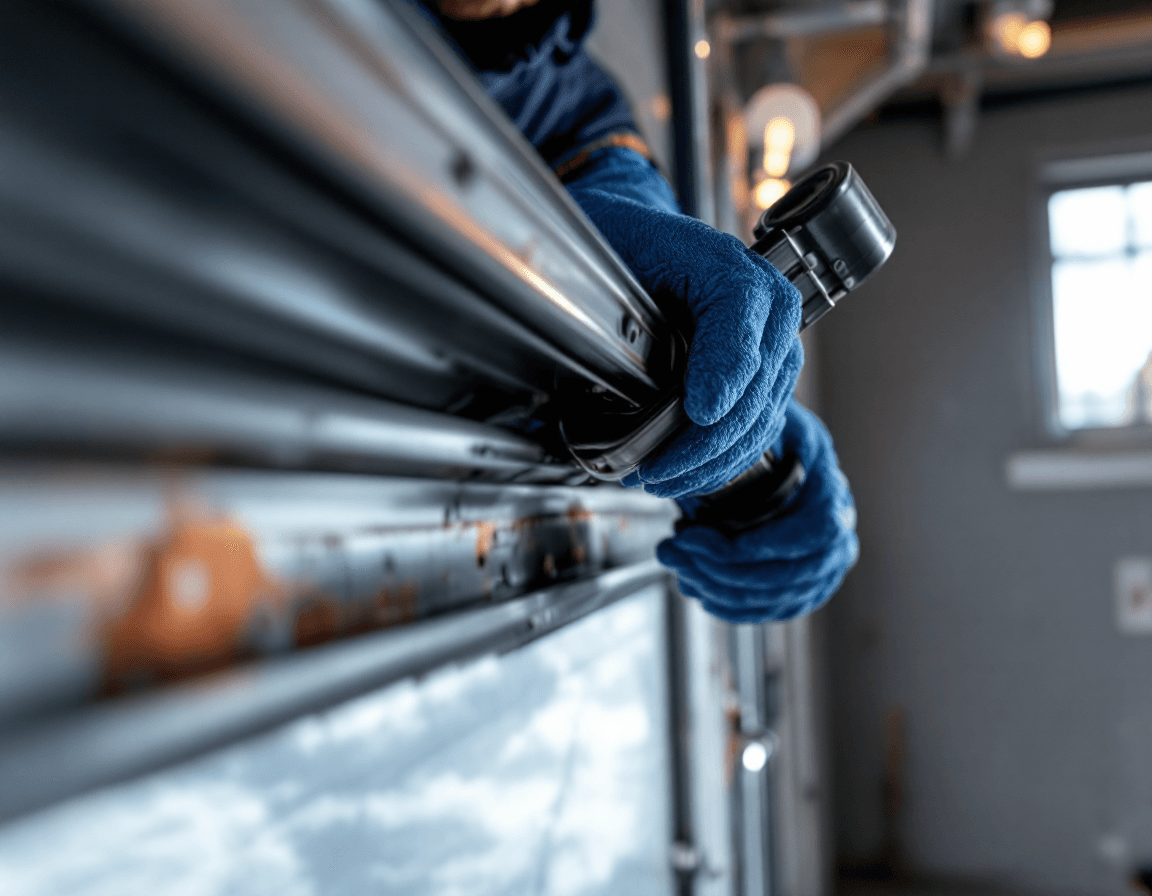
Garage door roller replacement in Fife, WA is one of the most common fixes we handle, and for good reason. Rollers are the small wheels that ride inside your tracks and carry the weight of the door on every open and close. When they wear out, crack, or seize, the whole door pays for it with noise, jerky movement, and extra strain on the opener. Most homeowners first notice a racket in the early morning or a door that stutters halfway up, and they assume something major has failed when the culprit is often a set of rollers that cost a fraction of a repair bill.
Fife sits in a part of Pierce County where garage doors work hard. Homes and businesses here are close to the Port of Tacoma, the Fife Industrial area, and the busy corridors that feed Interstate 5 and State Route 167, so many households have doors that open and close more often than a typical suburban garage. Add the damp, cool winters and the salty, humid air that drifts in from the water, and you have conditions that gradually take their toll on steel tracks, bearings, and roller stems. The good news is that rollers are inexpensive, the job is well understood, and a timely swap can restore smooth, quiet travel for a modest investment.
This page explains what worn rollers look and sound like, why the Fife area tends to accelerate wear, how steel and nylon options compare, and what to expect when a licensed technician replaces a full set. We also cover the parts of the job that should never be attempted by a homeowner, along with simple habits that keep rollers running well between service visits. If your door is grinding, shaking, or sticking, read on to figure out whether a roller swap is the right next step.
Why Garage Doors in Fife Wear Rollers Faster Than You Might Expect
Rollers do most of their work at the seams where the door curves from vertical to horizontal. Every time the door moves, each roller spins inside the track and absorbs the friction and weight passing through it. Over thousands of cycles, the bearing inside the roller dries out or collects grit, the outer surface flattens or cracks, and the stem that holds the roller can loosen in its bracket. Ordinary use is enough to cause wear, but local conditions shorten the timeline in ways that surprise many homeowners.
Western Washington winters bring long stretches of moisture, and that moisture finds its way into tracks and bearings. Water washes lubricant out of the bearing, and in colder months the residue can thicken and cling to grit from the road. Along with rain, many Fife driveways collect fine dust and debris from nearby industrial traffic, and that grit migrates into the track where it grinds against the roller surface. Doors that sit close to busy roads or industrial lots often show this wear sooner than doors in quieter neighborhoods.
Salt air and humidity also play a role, especially for homes and businesses closer to the water and the Port. Moisture-laden air encourages surface corrosion on exposed steel hardware, which can roughen a track or stiffen a roller stem. When you combine that with heavy seasonal use, it becomes clear why a roller set that lasted a decade in a drier climate may need attention much sooner here. Checking your rollers every season is a small habit that prevents bigger problems down the line.
Reading the Sounds Your Door Is Making
Your garage door communicates its problems through sound long before it stops working. A healthy roller rolls quietly and evenly, producing little more than a soft hum as the door travels. When a roller begins to fail, the noise changes character, and learning to recognize those changes can help you describe the problem accurately when you call for service. The sounds below are among the most common complaints we hear from Fife homeowners.
Grinding and squeaking are usually the first signs. A squeak often points to a dry bearing that needs replacement or a roller whose bearing has lost its seal, while a grinding noise tends to mean grit or pitting has worked into the bearing or the track. Loud metal-on-metal scraping is more concerning, because it can indicate that a roller has worn down to its core or that a stem has gone out of alignment, and continued operation can damage the track itself.
Other symptoms are less about noise and more about feel. A door that shakes or jerks as it travels along the track is often reacting to a roller that is flat-spotted, cracked, or seized in place, causing it to skip rather than roll. Doors that bind or stick at specific points usually have a roller that has stopped turning or a section of track where a worn roller is catching. Visibly cracked nylon, flattened treads, or wobbly stems are direct evidence that the rollers have reached the end of their useful life.
- A squeal or chirp at the same spot every time the door passes, which often signals a dry or failing bearing
- A rough, gravelly grinding sound that gets louder as the door climbs or descends
- Jerky movement or shaking along the vertical or horizontal track, especially in the first few feet of travel
- Sticking or binding at a particular point, sometimes accompanied by the opener straining
- Roller tires with visible cracks, chunks missing, or flat spots that make a thumping sound
If you notice any of these signs, avoid forcing the door open or closed repeatedly, since that places extra load on the opener and the remaining rollers. A quick visual check with the door fully closed and the opener disconnected (only if you are comfortable doing so safely) can show whether a roller is cracked or visibly out of place. Writing down when the noise happens, such as cold mornings or after rain, also helps the technician pinpoint the cause.
Steel Versus Nylon: Choosing the Right Roller for Your Door
Garage door rollers come in two main families, steel and nylon, and each has a place depending on how your door is used. Steel rollers are durable and handle heavy loads well, but they tend to be noisier because metal contacts metal along the track. Many older doors came from the factory with steel rollers, and they can still perform reliably when kept in good condition. The tradeoff is sound: a steel roller can transmit a rattle or clatter through the entire door panel, which many homeowners find disruptive, especially in attached garages next to living spaces.
Nylon rollers, sometimes called quiet rollers, have a tire made from a tough nylon compound that rolls more softly against the steel track. They reduce noise considerably and often produce a smoother, more consistent motion that feels gentler on the opener and the hinges. Nylon is not indestructible, though, and in high-use situations or harsh conditions it can wear, crack, or flatten over time. Quality matters here, so a technician should confirm that the replacement tires are rated for your door's weight and cycle frequency.
Many Fife homeowners choose nylon upgrades because they want a quieter garage without compromising the door's reliability. The right choice depends on the door's size, its weight, whether it is insulated, and how often it opens each day. A heavier insulated door or a double-wide door may need a roller designed for greater load, while a lighter single-car door can run beautifully on a standard nylon set. A licensed technician can recommend the best match after inspecting the existing hardware.
What a Roller Swap Looks Like on a Fife Driveway
A roller replacement is one of the more straightforward garage door repairs, but it still requires careful work. The technician begins by confirming the door is closed, the opener is disconnected, and the door is stable. Springs are under significant tension, so the work is designed to avoid disturbing the spring system entirely. The roller replacement itself involves removing the old roller from the track, which typically means lifting the door slightly and working each roller free from its bracket or hinge.
Once the old rollers are out, the technician inspects the track for burrs, debris, and alignment. This is a good moment to clean the track thoroughly, since grit left behind will shorten the life of the new rollers. The replacement rollers are then installed on their stems, checked for smooth rotation, and seated carefully in the track. Hinge and bracket hardware are often inspected at the same time, because loose brackets can cause a new roller to wobble as readily as the old one.
Once the installation is complete, the door is tested by hand and then with the opener. The technician watches for smooth travel, listens for any remaining noise, and confirms the door stops and starts evenly at both the top and bottom of its cycle. A full set of rollers, depending on the door and the type chosen, generally falls within the $120 to $250 range, though the exact figure depends on the quantity, the material, and the complexity of the job.
Track Alignment and When Rollers Are Not the Whole Story
Replacing rollers is often enough to solve a noisy or jerky door, but sometimes the rollers are only part of the picture. A track that has been bent, loosened, or knocked out of line can cause new rollers to wear unevenly or to bind at the same points as the old ones. Vehicles bumping the lower track, a loose bolt at a bracket, or years of vibration from the opener can all shift the track just enough to create friction. A good technician checks alignment before and after the swap to avoid returning a few weeks later with the same complaint.
Pay attention to whether the noise follows a pattern. If the door is smooth in the middle of its travel but jerks near the top or bottom, the track curve or a hinge bracket may be the source. If the problem appears on only one side, the roller on that side may be seized, or the track may be out of level. Checking these details during the visit saves time and prevents unnecessary parts from being installed.
Track problems are not always obvious to a homeowner, which is why a professional look is valuable. A technician can measure clearances, check the vertical and horizontal runs, and tighten or adjust brackets as needed. In many cases a modest adjustment combined with fresh rollers produces a dramatic improvement, and the door runs quietly for years afterward. If the track itself is damaged beyond repair, the technician will explain the options clearly before any further work is done.
Lubrication Habits That Help and Habits That Hurt
Lubrication is one of the most misunderstood parts of garage door care. Many homeowners reach for whatever oil is in the garage and spray it liberally on the tracks, rollers, and hinges. That approach often backfires. Heavy oils attract dirt and grit, which then forms a grinding paste inside the track. Penetrating oils meant for loosening rusted bolts are not designed for long-term lubrication and can leave a sticky residue. The result is a noisier door than before.
A better approach is to use a lubricant made specifically for garage door components. Silicone-based sprays and white lithium grease are popular choices for hinges, bearings, and the rollers' stems, because they stay in place without collecting debris. Apply sparingly to the roller stems and hinge pivots, wipe away any excess, and avoid spraying directly onto the track surface where the roller tires contact the steel. Nylon rollers in particular benefit from a clean track rather than a coated one, since a film can cause the tires to slip or squeal.
Seasonal timing matters too. Before the wetter months, a light wipe-down of the track and a fresh application to the moving parts can help the door shed moisture more easily. After a period of heavy use or a storm that brought mud and debris into the garage, cleaning the track is often more valuable than adding more lubricant. Keeping the track free of grit extends the life of every roller and reduces the chance of a sudden seizure.
- Use a silicone spray or white lithium grease on roller stems and hinge pivots
- Wipe the track clean with a dry or lightly damp cloth before applying anything new
- Apply lubricant sparingly and wipe off any drips that land on the track or the floor
- Avoid heavy motor oil, cooking oil, and penetrating oils for ongoing door maintenance
- Never lubricate the springs or cables with generic products; leave that work to a professional
Safety Lines a Homeowner Should Never Cross
Garage doors carry real hazards, and the most serious ones involve the spring system. Torsion springs and extension springs store enormous amounts of energy, and a spring that releases unexpectedly can cause severe injury. Cables carry tension as well and can snap or unwind dangerously when mishandled. These components are not part of a typical roller replacement, and they should never be adjusted, removed, or wound by a homeowner. Any spring or cable work must be handled by a licensed, insured professional with the right tools and training.
Roller replacement can usually be done safely without touching the springs, but only when the technician understands how the door is balanced and braced. Even a roller swap requires the door to be secured properly, the opener disconnected, and the weight managed so the door does not drop or shift during the work. Trying to pry a roller free with a screwdriver or hammer can damage the track, bend the bracket, or cause the door to lurch. These are the moments when a professional's experience makes the difference.
If your door is out of balance, stuck partway open, or makes a loud bang when it moves, stop using it and call for help rather than experimenting. A door that is not balanced can put dangerous strain on the opener and the hardware. A licensed technician can assess the entire system, replace the rollers safely, and address any spring or cable concerns with the appropriate precautions. Our team is licensed, bonded, and insured, which means you are covered when the work is done properly.
Budgeting for a Full Roller Set and What Affects the Price
Homeowners often ask what a roller replacement should cost, and the honest answer is that it depends on the door. A full set of rollers for a typical residential door generally falls within the $120 to $250 range. The lower end usually reflects a standard set of steel or basic replacement rollers for a lighter door, while the higher end may cover quiet nylon upgrades, heavier-duty rollers, or doors with more rollers because of their size or design. Labor, travel, and any necessary track adjustments are included in the quoted service, so you receive a clear picture before the work begins.
Several factors influence the final total. The number of rollers matters, since a standard two-car door uses more than a single-car door. The roller style matters as well, with quiet nylon options often costing more than basic steel but delivering noticeably quieter operation. If the track needs realignment, bracket tightening, or other minor repairs, those tasks may add to the visit, though they often prevent future service calls. The age of the door and the condition of the hinges can also shape what is needed.
It helps to think of roller replacement as an investment in both comfort and equipment life. Worn rollers force the opener to work harder, and a stressed opener can wear out sooner than it should. Quiet, smooth rollers reduce vibration through the door and the wall, which many homeowners appreciate in shared walls or bedroom-adjacent garages. Compared with the cost of an opener motor or a damaged panel, a timely roller swap is a relatively modest expense that keeps everything running as designed.
A Seasonal Maintenance Rhythm for Western Washington Doors
A regular maintenance rhythm is the best defense against unexpected roller failures. In Fife, where winters bring steady moisture and springs bring pollen and dust, a simple seasonal check can catch small problems early. Each season, take a few minutes to observe the door as it travels, listening for changes in sound and watching for any jerky movement. Look at the rollers themselves when the door is closed and safe to inspect, checking for cracks, flat spots, and debris lodged in the track.
Late fall is an excellent time for a more thorough look. Clean the track, wipe the rollers, and apply a light coat of appropriate lubricant to the stems and hinges before the wettest months arrive. Check that the bolts on the brackets and hinges are snug, since vibration from daily use can loosen them over time. If you notice any roller that spins unevenly, sticks, or shows visible damage, schedule service before a cold snap or heavy rain makes the problem worse.
Spring is a good time to revisit the door after the winter season. Wash away accumulated grit from the track, check for any rust spots on the hardware, and listen for changes in the door's sound. Rollers that have quietly worn through the winter often reveal themselves once the weather warms and the door is used more often. A quick inspection now can prevent a frustrating breakdown during a busy week.
Booking a Roller Replacement Visit in Fife and Surrounding Areas
When you are ready to schedule service, the most helpful information you can share is a clear description of what you are hearing or seeing. Note the sounds, when they occur, whether the door shakes or sticks, and whether you have noticed any cracked or flattened rollers. Tell the technician the approximate size of the door, whether it is insulated, and whether you are interested in quiet nylon rollers. This information helps determine the right parts and the right amount of time for the visit.
Fife homeowners, business owners, and property managers can all benefit from a prompt inspection. Industrial and commercial traffic around the area can accelerate wear, so doors that serve busy operations may need more frequent checks. We serve Fife and dozens of nearby communities across the greater Seattle and Western Washington region, and our technicians bring the same careful approach to every visit. Clear communication about the work, the parts, and the price is part of how we operate.
If you are unsure whether your door needs new rollers or a different repair, that is exactly the kind of question we are happy to answer. A careful assessment often clarifies whether a roller swap alone will solve the problem or whether a track adjustment is needed too. Give us a call and describe what you are experiencing, and we will help you decide on the best next step for your door.
Your garage door should move smoothly, quietly, and safely, and worn rollers are often the simplest fix for a door that has started to complain. If your Fife garage is grinding, shaking, or sticking, call Seattle Garage Door Fix at (888) 799-3819 to schedule a licensed technician. We will inspect your rollers, recommend the right replacement for your door, and walk you through the options before any work begins.