
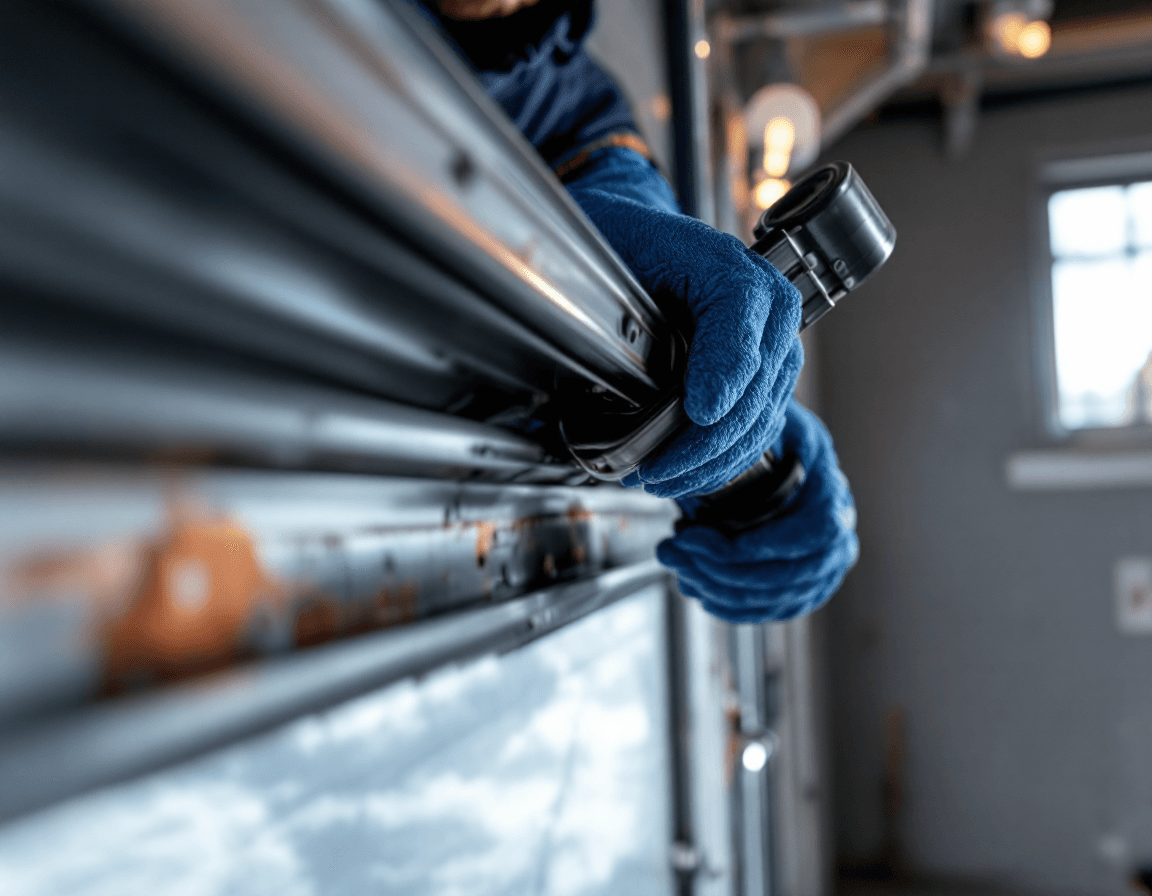
Garage Door Roller Replacement in Tacoma, WA is one of the most common repairs we handle, and one of the easiest to postpone until a small squeak turns into a door that refuses to move. Tacoma homes range from hillside bungalows above the Thea Foss Waterway to split-levels tucked into the foothills of the Puget Sound's southern shore, and most of them depend on a garage door that opens and closes several times a day. The rollers are the small wheels that ride inside the vertical and horizontal track and carry the door's weight through each cycle, so when they wear out, the opener, the springs, and the track all end up working harder than they were designed to.
Our technicians see the same pattern across Pierce County. A roller that has started to flatten, crack, or seize rarely fails all at once, and homeowners often describe the change as a gradual loss of smoothness rather than a single dramatic event. By the time the noise is loud enough to notice from the kitchen, the wear may have spread to the hinges, the track brackets, or the opener's drive components. This guide explains what worn rollers look like, what a replacement involves, what a full set typically costs, and how to decide whether a nylon upgrade makes sense for a home near you.
Why Tacoma Garages Wear Rollers Faster Than You Might Expect
Tacoma's climate is mild by national standards, but it is persistently damp, and that combination matters for garage door hardware. Between October and April, the region receives a steady run of drizzle and wet mornings, and garages that are not fully insulated can hold moisture against steel tracks and the metal cores inside older rollers. Moisture encourages surface rust, and rust makes the roller's bearing run rough long before the outer wheel looks damaged. Salt air drifting in from the Sound during winter storms can add to the problem for homes on the western slopes and near the waterfront.
Temperature swings also play a role. Cool, damp mornings followed by warmer afternoons cause the steel track to expand and contract slightly, and the door's rollers must follow that movement without binding. Older garages in neighborhoods like the North End and Proctor often have hand-built or retrofitted tracks where the alignment has shifted over decades of settling, which puts extra side-load on the rollers. Many of these homes also have garages that are used as workshops or storage, meaning the door may open more often than a typical two-car garage would.
Finally, a surprising number of roller failures come down to the factory-standard steel rollers themselves. Many doors leave the factory with small steel-tired rollers that are inexpensive but noisy, and they wear faster when the lubrication dries out. Replacing them with sealed nylon or composite rollers addresses both the noise and the moisture problem at the same time, which is why upgrades have become a common request on our Tacoma calls.
Reading the Noise: What Grinding, Squeaking, and Scraping Tell You
Every sound a garage door makes is a clue, and learning to read them can save you from paying for the wrong repair. A high-pitched squeak that appears only when the door starts moving usually points to a dry or worn roller stem or a hinge that needs attention. A deeper grinding noise that follows the door along its full travel often indicates that the roller's bearing has failed and the wheel is turning against its shaft instead of spinning freely. Metal-on-metal scraping is more urgent, because it can mean the roller tire has split or disappeared, leaving the steel stem to run directly along the track.
Several symptoms commonly show up together, and they tend to get louder over time. Homeowners in Tacoma often mention the following patterns when they first call us:
- Loud grinding or squeaking that starts as the door leaves the closed position
- A door that shakes, jerks, or hesitates as it travels along the track
- Rollers that look visibly cracked, flattened on one side, or seized and unable to turn by hand
- Metal-on-metal scraping that is most noticeable near the top of the vertical track
- A door that binds or sticks at a specific point, often where the track curves from vertical to horizontal
- A general desire for quieter operation, especially in homes where the garage shares a wall with a bedroom or home office
If you hear any of these, it is worth looking at the rollers soon rather than waiting for a more expensive failure. A door that binds can strain the opener motor, and a jerking door can loosen brackets that were never designed to absorb that movement.
Nylon Versus Steel: Choosing the Right Roller for Your Door
Roller choice is one of the most important decisions in this repair, and it is less about a single "best" option than about matching the roller to how your door is used. Standard steel-tired rollers are common, inexpensive, and perfectly serviceable on lightweight doors that open infrequently. However, they tend to be louder, they depend heavily on lubrication, and the steel tire can wear flat or crack in damp conditions. Nylon and composite rollers, by contrast, run quietly, resist moisture, and typically hold their shape longer when the environment is humid.
For most homes in Tacoma, we recommend discussing a sealed nylon upgrade, particularly where the garage is attached to living space or where the door is opened multiple times a day. A quieter roller reduces the hum and rattle that travels through a shared wall, and it lowers the friction that the opener must overcome. That said, not every door is a candidate for every roller type. Heavier insulated doors, older wood doors, and certain tension configurations may need a specific roller size or a steel-core design, and a technician should confirm the correct fit before ordering parts.
Roller size also matters. Rollers are measured by their diameter, stem length, and bearing type, and a mismatch can cause the door to sit crooked or stress the brackets. We always check the existing roller stamp or measure the stem before selecting a replacement, because a roller that looks similar can still bind if the stem length is off by a fraction of an inch. This is one reason we recommend a professional visit rather than trying to buy rollers at a hardware store and guessing.
Inspecting Your Rollers Without Touching the Springs
Homeowners can safely perform a basic visual check of their rollers, provided they stay well away from the spring system. Garage door springs, whether torsion or extension, store a large amount of energy, and they should only be handled by a licensed technician. The rollers, by contrast, sit inside the track, and a careful look at them requires nothing more than a flashlight and a few minutes with the door in the closed position. Always disconnect the opener by pulling the emergency release cord before you begin, and never place your hands inside the track while the door is moving.
A useful inspection starts at the bottom of the door, where the first set of rollers sits in the lower track. Look for flat spots, cracks in the nylon, or a stem that appears bent or wobbly. Then move up the vertical track and check the middle and top rollers, paying attention to any that look dry, discolored, or pitted with rust. A roller that can be spun by hand should turn smoothly and quietly; one that resists, wobbles, or makes a gritty sound needs replacement.
Keep notes as you inspect, since they will help the technician who visits. Taking a photo of the track and rollers can also be useful, especially if the wear is uneven across the door. If you notice a roller that has come completely out of the track, do not try to force the door back into position, because the cables and springs may have shifted. Call a professional instead, and keep the opener disconnected until someone arrives.
What a Full Roller Set Typically Costs in Pierce County
For a standard residential door, replacing a full set of rollers generally runs between $120 and $250, depending on the number of rollers, the type selected, and the complexity of the track. Most two-car garage doors use a set of eight to twelve rollers, and the price reflects both the parts and the labor needed to install them safely. Sealed nylon upgrades typically sit at the higher end of that range, while basic steel replacements tend to fall toward the lower end. Our technicians will confirm the exact figure after reviewing your door, and we will explain the options before any work begins.
Several factors can affect the final total. Doors with heavy insulation, custom sizing, or tracks that need minor alignment may require additional time, and a door that has also developed worn hinges or damaged brackets will need those parts addressed as well. Replacing rollers alone is often sufficient when the track and hardware are in good condition, but a technician should check for loose bolts and stripped holes while the door is open. Addressing these details during the same visit usually costs less than scheduling a second appointment later.
It is worth asking for a clear written estimate that lists the roller type, quantity, and any additional items before the work begins. A reputable company will be willing to explain each line item and will not pressure you into upgrades you do not need. If the door also requires spring or cable service, that work is priced separately, and it must be performed by a licensed technician because of the stored energy involved.
How a Technician Replaces Rollers Step by Step
A professional roller replacement follows a consistent sequence, and understanding it can help you know what to expect during your appointment. The technician begins by securing the door, disconnecting the opener, and confirming that the springs and cables are in safe condition. Lifting the door slightly or using locking pliers on the track helps relieve tension on the rollers while they are removed. Once the door is supported, the old rollers are pulled from their track positions and inspected for debris, rust, or damage to the track itself.
Next, the technician checks the track for alignment and cleans away any grit or old lubricant that may have caused the previous roller to wear unevenly. New rollers are inserted one at a time, usually starting at the bottom and working upward, and each one is checked for smooth movement as it enters the track. Hinges and brackets are tightened as needed, and the technician will often test the door several times through a full cycle. Listening carefully during these tests helps confirm that the grinding, squeaking, or binding has been resolved.
Before leaving, the technician should walk you through the result and explain any remaining maintenance. A good visit ends with a quick demonstration of the door's balance and movement, along with a clear statement of what was replaced and what, if anything, still needs attention. If the springs or cables show wear, the technician should recommend licensed service rather than attempting it on the spot. Safety is always the priority, and spring and cable work is never a do-it-yourself task.
Neighborhood Notes: Serving Downtown, the North End, Proctor, and Hilltop
Tacoma is a city of distinct neighborhoods, and garage conditions vary from one to the next. Downtown Tacoma includes a mix of older brick buildings, converted spaces, and newer residential developments where garages may be tight and used for storage. Homes near the Stadium District often sit on steep lots with narrow driveways, and the garage door there may open and close many times a day as residents come and go. Doors in these areas benefit from quiet nylon rollers, because the shared walls and close spacing mean noise carries easily between neighbors.
The North End and Proctor have a different character, with many older homes, tree-lined streets, and garages that have been modified over the years. Track alignment can drift in older structures, and a technician will often find that a roller issue is partly caused by a slightly bent track section or a loose bracket. Hilltop, with its hillside homes and varied slopes, presents its own challenges, since the garage may sit at an angle and the door can experience uneven loading. In each of these areas, we take time to check the track as well as the rollers, because the two are closely connected.
Our technicians who work in these neighborhoods are familiar with the common layouts, from detached single-car garages behind older homes to attached two-car garages in newer subdivisions. This local experience helps us anticipate problems before we open the door, such as older tracks that need careful handling or tight headroom that affects how a roller set can be installed. Whether you live near the waterfront or on a quiet street off Sixth Avenue, the goal is the same: a door that runs smoothly and quietly for years to come.
Quieter Mornings: Maintenance That Extends Roller Life
Good maintenance can meaningfully extend the life of your rollers and reduce the chance of sudden failure. Because Tacoma's damp season is long, a little attention every few months goes a long way. Most of the work is simple and can be done by a homeowner, as long as the springs and cables are left alone and the opener is disconnected during any hands-on task. Keeping the track clean and dry is often the single most effective step.
Here are practical habits that help rollers last longer in a Pacific Northwest garage:
- Wipe down the tracks with a dry cloth every few months to remove grit, leaves, and tracked-in dirt
- Use a silicone-based or garage-door-specific lubricant on the roller stems and hinges, avoiding heavy grease that attracts dust
- Keep the garage ventilated and avoid storing damp items directly against the door
- Check the rollers twice a year, looking for flat spots, cracks, or rust
- Schedule a professional tune-up when you notice a new sound, since early attention often prevents a larger repair
Avoid spraying lubricant onto the door's painted panels or into the opener's motor housing, since both can attract dirt or cause damage. Also avoid using household oils that can gum up over time. If a roller already sounds rough, lubricant may quiet it briefly, but it will not restore a worn bearing, and replacement is the more reliable fix.
When Rollers Are Not the Only Problem
Sometimes the rollers are only part of what is causing trouble. A door that grinds or sticks may also have worn hinges, loose track bolts, or an opener that is struggling under extra load. The technician should examine these components during the same visit, because replacing rollers while ignoring a loose bracket can lead to a repeat problem within months. Hinges that have stretched or cracked will allow the door panels to shift, which places uneven pressure on the rollers.
Balance is another factor that can mimic roller problems. A door that is out of balance may feel heavy or jerky even when the rollers are in good shape, and it can put strain on the opener and the springs. A simple test is to disconnect the opener and lift the door by hand to about waist height; a properly balanced door should stay in place without drifting. If it slides up or down on its own, the springs need professional adjustment, and that work must be left to a licensed technician.
Finally, check for obstructions and debris inside the track. A small pebble, a fallen piece of weatherstripping, or a bent section of track can make a roller appear faulty when the real issue is elsewhere. Addressing these factors together gives you a door that runs smoothly and reduces the chance of a second visit. A thorough technician will explain each finding and will not charge you for repairs you did not agree to.
Booking Service Across Tacoma and Pierce County
We provide garage door roller replacement and quiet nylon upgrades across Tacoma and the surrounding communities of Pierce County. Our service area includes the 98402, 98404, 98405, 98406, 98407, 98408, 98409, 98418, 98421, 98422, 98444, 98445, 98465, 98466, and 98467 ZIP codes, along with the many neighborhoods that make up the greater Tacoma area. Whether your home sits near Downtown Tacoma, the North End, Proctor, the Stadium District, or Hilltop, our technicians can typically work with you to find a convenient appointment window.
Every visit begins with an honest assessment of your rollers, track, and hardware, followed by a clear explanation of your options and a written estimate. We are a licensed, bonded, and insured garage door repair company, and we recommend licensed professional service for any spring or cable work, since those components carry significant stored energy. We will tell you plainly when a repair is a good investment and when it is wiser to wait, so you can make the decision that fits your home and budget.
If your garage door is grinding, squeaking, shaking, or sticking, or if you simply want a quieter, smoother door, call us today at (888) 799-3819. Our team will help you determine whether a roller replacement or nylon upgrade is the right fix, and we will get your door moving quietly again.