
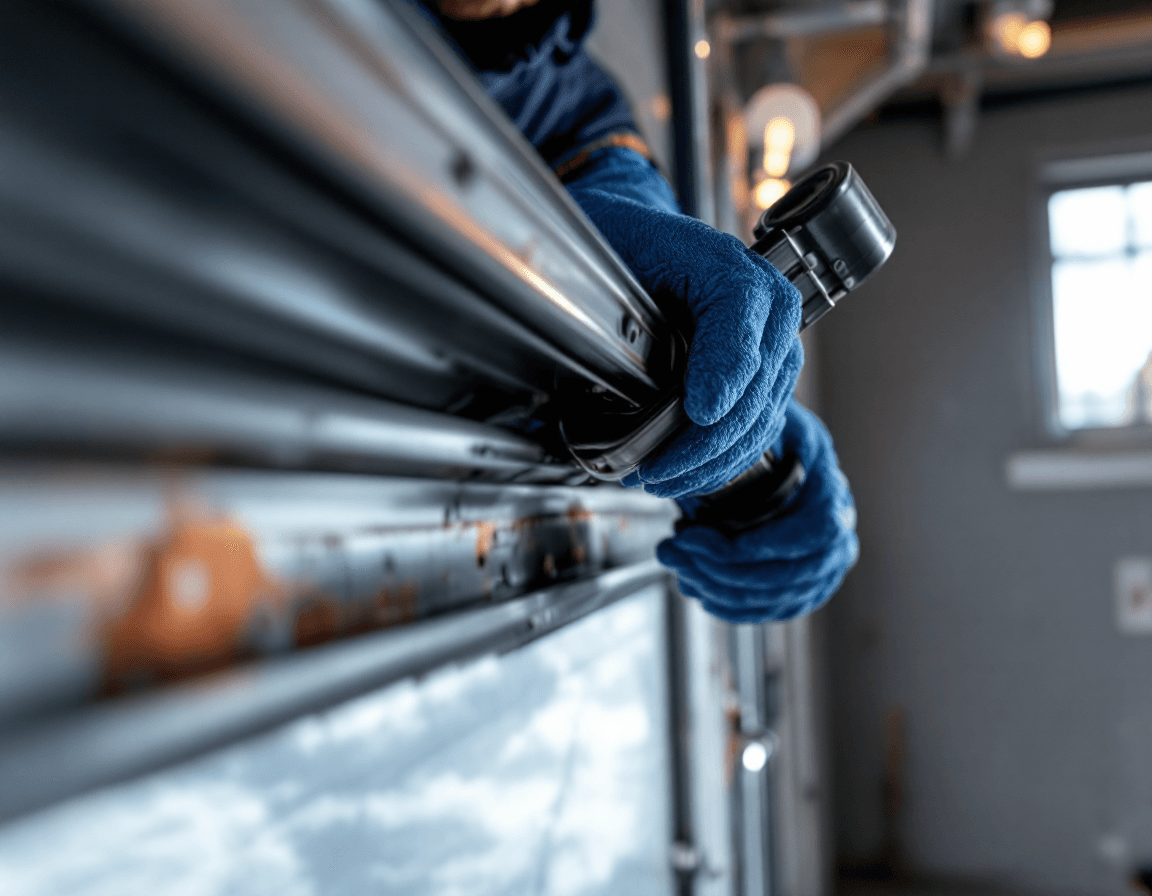
Garage door roller replacement in University Place, WA is one of the most common repairs we handle for homeowners across the Tacoma side of Pierce County, and it is also one of the most affordable ways to bring a noisy, jerky door back to smooth operation. The rollers are the small wheels that ride inside the vertical and horizontal tracks and carry the weight of every panel as the door rises and falls. When they wear out, the whole door has to work harder, and you usually hear about it before anything else fails. Our technicians replace worn rollers with either steel or quiet nylon versions, and a full set typically runs $120 to $250 depending on door size, roller type, and how many tracks need attention.
University Place sits right on the water, with neighborhoods that reach toward Chambers Bay and a commercial corridor that includes Bridgeport Village, so many garages here see a mix of damp air, salt-tinged breezes, and the long, gray stretches of Western Washington weather. Those conditions are hard on hardware. Moisture gets into roller bearings, grit settles into the track, and the metal parts slowly oxidize even when the door looks fine from the street. If you have been noticing a new sound or a sluggish door, the rollers are a reasonable place to start, and this page walks through how to recognize the problem, what your options are, and what to expect when we come out.
Whether your door is in a home near the water in the 98466 or 98467 ZIP codes or tucked into a quieter residential street, the goal is the same: a door that moves predictably, stops where it should, and does not announce every trip in and out of the driveway. Read on for the details, and call (888) 799-3819 if you would like a licensed technician to take a look.
Why Rollers Wear Out Faster in the Puget Sound Air
Rollers do not fail on a schedule. Their lifespan depends on how often the door cycles, how well it is lubricated, how much debris reaches the track, and how much moisture the bearings are exposed to over the years. In University Place, the damp months stretch long, and condensation can form on cold metal overnight, especially in garages that are not insulated or that share a wall with an unheated space. That moisture washes lubricant out of the bearings and invites a thin film of corrosion that makes each rotation a little rougher than the last.
Tracks also collect fine grit that blows in under the door or gets tracked in on shoes and tires. Pine needles and fir debris from wooded lots around the area can work their way into the track corners, and once they lodge against a roller they act like sandpaper. Over time the roller's outer surface flattens or develops small pits, and the wheel no longer rolls cleanly. You may notice that the door sounds fine when you first push the button but gets louder as it warms up and the lubricant thins.
Salt air is a separate concern for homes closer to the water. Even when you cannot smell it, the air carries fine particles that settle on exposed metal, and these accelerate corrosion on steel rollers, hinges, and the track itself. Nylon rollers resist this kind of attack far better, which is one reason many homeowners choose them when they replace a set. Understanding why your rollers are wearing helps us recommend a durable solution rather than simply swapping parts and sending you back into the same conditions.
Decoding the Sounds: Grinding, Squeaking, and Metal Scraping
Your garage door speaks to you constantly, and each sound carries a clue about what is happening at the rollers. A high, repetitive squeak usually points to a dry or worn bearing, most often in a steel roller that has lost its lubricant. A deeper grinding or rumbling tends to suggest that the roller's bearing surface has pitted or that grit has worked its way into the wheel. Metal-on-metal scraping is more serious, because it often means a roller has flattened, cracked, or seized and is dragging along the track instead of turning freely.
Timing matters as much as tone. If the noise is loudest at the very start of the door's travel, the lower rollers near the bottom bracket may be the culprit, since they carry the most load when the door begins to lift. If the sound builds in the middle of travel, check the rollers along the vertical track and near the curve where the door transitions to horizontal. A sound that appears only when the door is closing can point to an uneven track or a roller that has shifted out of its channel.
Try to describe what you hear before you call. Something like "a squeal on the way up that stops after the door is fully open" gives a technician a head start. We can often narrow down the problem in a few minutes of watching the door cycle, and that tells us whether rollers are the main issue or whether a hinge, bracket, or track bolt is contributing to the racket. A careful diagnosis keeps you from paying for parts that will not solve the noise.
- Squeaking that repeats evenly with each cycle often means dry bearings or worn roller stems.
- Grinding that starts low and gets louder as the door climbs can point to pitted or contaminated rollers.
- Sharp metal-on-metal scraping usually calls for prompt inspection because a seized roller can damage the track.
- Noise that appears only at one spot in the travel suggests a localized binding point rather than a whole-door problem.
When a Shaking or Jerking Door Signals Roller Trouble
A smooth garage door should glide with a steady, even motion. When it shakes, jerks, or seems to hesitate, something is interrupting that motion, and worn rollers are one of the most frequent causes. A roller that has developed a flat spot will bump over the track every time it turns, sending a small jolt through the panel above it. Multiply that by every panel and you get the shuddering, stop-start movement that homeowners describe as "the door is hiccupping."
Jerking can also come from rollers that have lost their proper alignment in the track. If a stem has bent, or a bracket has loosened, the roller may ride at a slight angle, creating friction on one side and a pull on the other. You might notice the door tilting slightly as it moves, or one side lagging behind the other. These are signs that the rollers need attention and that the track should be checked at the same visit.
Keep in mind that jerky movement is not always a roller problem. Uneven spring tension, a damaged cable, or a worn opener can produce similar symptoms. This is one reason we always start with a full look at the door before recommending a fix. If we see signs that the springs or cables are the real issue, we will tell you plainly, and we will recommend that a licensed professional handle that work, because springs and cables are under very high tension and can cause serious injury if mishandled.
Steel Versus Nylon: Picking the Right Roller for Your Door
Most garage doors come from the factory with steel rollers, usually with sealed ball bearings or simple stems that rotate inside a steel sleeve. Steel rollers are durable and handle heavy doors well, and they are often the most economical choice when you need a quick replacement. Their main drawback is noise. Steel rolling against steel track transmits vibration and sound through the whole door, and steel bearings are more prone to corrosion in damp coastal conditions.
Nylon rollers, sometimes called quiet rollers, have a plastic or composite tire over a steel core, and they run much more smoothly along the track. They dampen vibration, reduce rattling, and resist moisture and salt far better than bare steel. Homeowners who use their garage as a workshop, a music space, or simply want a quieter house at dawn often find the upgrade worth the modest extra cost. Nylon does wear over time, so it is not a permanent fix for a misaligned or damaged track, but in most residential doors it outlasts steel in damp environments.
Choosing between them comes down to your priorities. If your main concern is noise, go with nylon. If your door is heavy and your budget is tight, steel may be the practical choice, though we can still recommend a sealed bearing style that resists corrosion better than bargain versions. Either way, we will match the roller diameter, stem length, and bearing type to your specific door so the new set fits correctly and does not put uneven strain on the panels.
What a Full Roller Set Costs and What Affects the Price
Our pricing for a full set of garage door rollers runs from $120 to $250. That range reflects the typical differences in door size, the type of roller selected, and how many rollers the door uses. A standard two-car door with a common number of rollers will generally fall toward the lower end when steel is chosen, while a larger door or a premium nylon set can move the total upward. Pricing also depends on whether the track needs a minor adjustment during the same visit, since a straight, well-aligned track gives the new rollers the best chance to last.
It helps to understand what you are paying for. The rollers themselves are a modest part of the cost; the real value is in a technician who checks the entire door system while the panels are accessible. We look at hinges, track bolts, bottom brackets, and the condition of the bearings on the remaining rollers that you might want to keep. If a roller you are not replacing is already showing wear, we will tell you so you can decide whether to address it now or later.
Ask for a clear written estimate before work begins. A good estimate should list the roller type, the quantity, any track or bracket work included, and whether there are any additional parts recommended. If a technician suggests a spring or cable replacement, that should be a separate conversation with its own explanation, because those components involve significant safety considerations and should always be handled by a licensed professional.
Inside the Visit: How We Replace Rollers Safely
When a technician arrives, the first step is a visual and functional check of the door. We test the balance by disconnecting the opener and lifting the door partway by hand, which reveals whether the springs are doing their job and whether the rollers are binding. We then open the panels to the extent needed and look at each roller, its stem, and the track around it. This inspection often reveals secondary issues, such as a loose track bolt or a worn hinge, that contribute to the noise.
Replacing rollers involves releasing the door from its tracks at the appropriate points and working each old roller out of its hinge or track channel. The new roller is then seated, aligned, and checked for smooth rotation. Where the design allows, we replace rollers in a sequence that keeps the door supported, and we avoid any step that requires working on the tensioned spring system. Once the new set is in place, we cycle the door several times to confirm it runs evenly from the bottom to the top of the track.
Safety is central to every part of this process. A garage door is heavy, and a panel that slips can cause serious injury, so our technicians follow strict procedures and never attempt tension-related work that falls outside the scope of roller replacement. If the inspection shows that a spring or cable is damaged, we will stop there, explain what we found, and recommend that a licensed professional complete that repair. Homeowners should never attempt to adjust, remove, or wind springs or cables on their own.
Track Alignment and Binding: Why Rollers Alone Sometimes Fall Short
Replacing rollers is often enough to quiet a door, but not always. If the track itself is bent, loose, or out of plumb, new rollers will wear prematurely and the noise will return within a season or two. Binding points, where the door sticks at a particular height, are a common sign of a track that has shifted slightly over time. You might notice the door catching near the halfway mark or sticking briefly as it closes, and these pauses are usually the result of a track or hinge out of alignment rather than a single bad roller.
Checking alignment requires patience. We look for gaps between the track and the door, verify that the vertical track is plumb, and confirm that the horizontal section is level from front to back. Small adjustments to track brackets and bolts can make a dramatic difference, and tightening loose fasteners is often a quick fix that improves both sound and smoothness. Where the track is severely damaged, we will explain the options and the cost of repair or replacement so you can make an informed decision.
Binding can also come from debris that has built up in the track over the years. A thorough cleaning, followed by proper lubrication with a silicone-based or garage-door-specific product, often restores smooth movement at the sticking points. We avoid heavy grease on tracks because it attracts grit and turns into a gummy film that makes the problem worse. A clean, aligned track paired with the right rollers is what gives you the quiet, consistent operation most homeowners want.
Quieting the Door Without Compromising Safety
Many homeowners ask how to make the garage quieter without calling for service every few months. There are reasonable steps you can take, and they are worth doing even after a roller replacement. Keeping the track clean, wiping away grit and leaves, and applying a light coat of the right lubricant to the hinges and roller stems can reduce friction and keep the door running more smoothly. Check the opener's mounting bolts as well, because a loose opener rail can add a surprising amount of vibration to the whole system.
Some noise reduction options are safe to try on your own, such as adding rubber isolators to the opener mounting points or using a foam pad where the door meets the header stop. These small changes can make a noticeable difference in how much the door rattles when it reaches the top of its travel. They do not affect the spring or cable system, so they carry no tension-related risk, and they are easy to undo if they do not suit your setup.
What you should avoid is any attempt to alter the springs to change the door's feel. Adjusting spring tension changes how the door balances, and an improperly balanced door can slam, drop, or fail unexpectedly. If the door is too heavy or too light, or if it does not hold position when partly open, that is a job for a licensed technician. Quiet operation should never come at the cost of safe operation, and we will always choose the safer path when the two seem to conflict.
A Quick Homeowner Checklist Before You Call
You can learn a great deal about your door in a few minutes, and the information helps us serve you faster. Start by closing the door fully and listening carefully as you open it. Note where the noise is loudest, whether it changes with temperature, and whether it appears on both sides of the door or only one. Look at the rollers themselves through the gap between panels, and check for flat spots, cracks, rust, or debris caught in the wheel.
Next, watch the track as the door moves. Look for visible gaps, bends, or places where the roller seems to lift out of the channel. Confirm that the track bolts and bracket fasteners are snug, but do not overtighten them, since that can distort the track. Make sure nothing is lodged in the track, such as a dropped tool, a stray toy, or a buildup of dried leaves. Take a photo or short video of the door in motion if you can, because seeing the problem is often more helpful than describing it.
Finally, avoid the springs and cables entirely. Do not stand under the door when it is moving, do not attempt to unwind or adjust tension, and keep children and pets clear of the work area. If anything looks frayed, stretched, or out of place near the springs, stop and call a licensed technician. Your observations, combined with a professional inspection, give you the most accurate picture of what your door needs.
Keeping Your New Rollers Running Smoothly Through Wet Seasons
Once new rollers are installed, a little routine care goes a long way in the Pacific Northwest. Plan a quick check at the start and end of the rainy season, when moisture and temperature swings are most intense. Wipe down the track to remove any grit or salt residue, and inspect the rollers for early signs of wear, such as a faint squeak or a hint of roughness. A few minutes of attention twice a year can prevent the slow decline that leads to another service call.
Use a lubricant designed for garage door components, applied sparingly to the roller stems and hinge pivots. Over-lubricating can attract dust, so a thin, targeted application is more effective than a heavy coat. Keep the garage floor clear near the door so that debris is not swept into the track, and consider a weatherstrip at the bottom seal to limit the amount of moisture and grit that enters. These simple habits protect the investment you made in new rollers and help the door stay quiet for years.
If you notice the noise returning, the door catching at a new spot, or any sign of damage to the rollers or track, do not wait for the problem to grow. Early attention usually means a simpler, less expensive fix. Our team serves homes throughout University Place and the surrounding Pierce County communities, including the 98466 and 98467 areas, and we are happy to schedule an inspection at a time that works for your household. Call (888) 799-3819 to talk with a licensed technician about your door, whether you need a full roller set, a quieter nylon upgrade, or a careful look at what is causing the sound.