
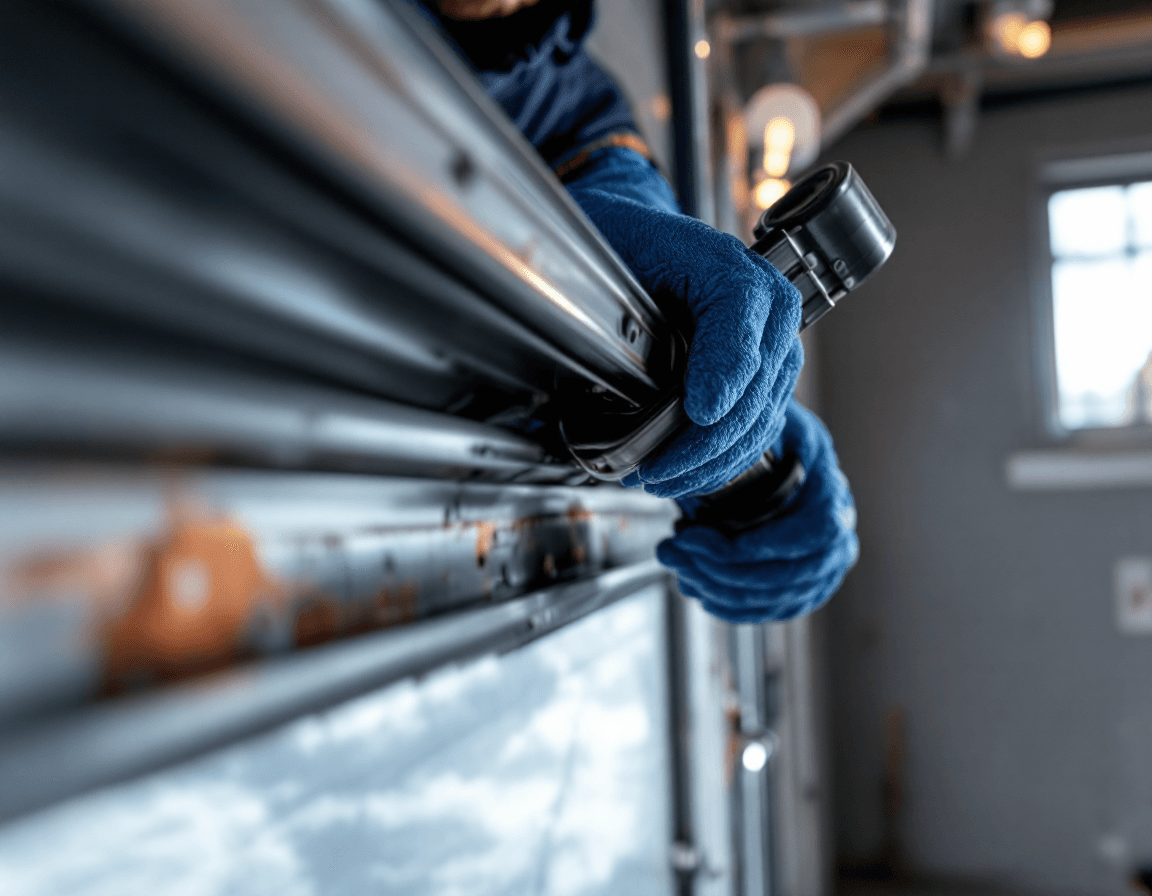
Garage door roller replacement in Fircrest, WA is one of the most common and affordable fixes homeowners can make to get a noisy, jerky door running smoothly again. The rollers are the small wheels that ride inside the vertical and horizontal tracks and carry the weight of the door as it opens and closes. When they wear down, crack, or seize, the whole door has to work harder, and you feel it in every trip out of the driveway. This page explains what those problems look like, why they show up so often in our part of Pierce County, and what to expect when you have the rollers replaced.
If your door has started to grind, squeak, or shudder, you are probably wondering whether the problem is serious or just an annoyance. In most cases, worn rollers are a manageable repair that costs far less than a new door or a damaged opener. A full set of rollers typically runs between $120 and $250, depending on the door size, the roller type you choose, and how much track adjustment the job requires. The sections below walk through the warning signs, the roller options, and the safety boundaries that every homeowner should understand before anyone picks up a wrench.
Whether you are dealing with a door that binds halfway up the track or you simply want a quieter ride when you leave for work at dawn, we are glad to help. Our technicians work across Fircrest and the surrounding Tacoma area, and we bring the parts and experience to replace rollers in a single visit in most cases. Call (888) 799-3819 to describe what your door is doing, and we will help you figure out the next step.
Why Fircrest Doors Lose Their Rollers Sooner
Fircrest sits in the Tacoma area of Pierce County, where winters are long, gray, and wet, and where the air often carries moisture for weeks at a time. That damp environment matters more to a garage door than most homeowners realize. Steel track picks up condensation on cold mornings, and rollers that sit in those conditions can develop surface rust that roughens the bearing surface and makes every rotation a little harder. Water also washes away the thin film of lubricant that should keep a roller turning freely.
Temperature swings add another layer of stress. A door that sits in an unheated garage can go from a chilly 40 degrees in the early morning to a much warmer afternoon, and the metal expands and contracts with each change. Over time, this movement can loosen track bolts, shift the track slightly out of alignment, and push the rollers against the edges of the track instead of letting them ride true. Once a roller starts to run at an angle, it wears unevenly and can flatten or crack much faster than it would in a stable environment.
Many homes in the older neighborhoods around Fircrest also have garages built with less insulation or ventilation than modern construction. That can trap humidity inside, especially in homes where cars come in wet from the road and the garage stays closed for long stretches. If your garage smells damp or you notice water spots on the floor near the door, expect your rollers to need attention sooner than the manufacturer's estimate suggests.
What Grinding and Squeaking Are Trying to Tell You
Noise is usually the first thing homeowners notice, and it is also the most useful clue. A sharp squeak that repeats with each rotation often points to a dry or worn roller stem rubbing against the bracket, or to a roller whose bearing surface has begun to break down. A low grinding sound, especially one that gets louder as the door climbs, can mean the roller is seized or that a flat spot has formed and is dragging along the track. Both situations are worth addressing before the damage spreads to the track or the door panels.
Metal-on-metal scraping is a more serious sign. When a roller is cracked or its wheel has separated from the stem, the metal hub can contact the track directly. You may hear a rhythmic clatter or a sound like a spoon dragged across a plate. Continuing to run the door in that condition can gouge the track, bend the bracket, and put extra load on the opener, which is the kind of cascade that turns a $200 roller job into a much larger repair.
Pay attention to when the noise happens, too. If the sound appears only on cold mornings, moisture and temperature are likely involved, and cleaning and lubricating the track may solve part of the problem. If the noise is constant and gets worse over several weeks, the rollers are probably wearing out. Keep a short note of what you hear and when, because that information helps a technician diagnose the problem faster during a visit.
- A squeak that repeats with every roller turn usually means dry or worn stems.
- A grinding sound that increases as the door climbs often indicates a seized or flat roller.
- A clattering or metallic scrape suggests a cracked wheel or separated hub and should be checked soon.
- Noise that appears only on cold, damp mornings can point to moisture and track corrosion.
Reading the Track for Shakes, Jerks, and Binding
A door that shakes or jerks as it travels is telling you that its weight is no longer moving smoothly along the track. Rollers are designed to let the panels glide, so when one of them stops turning evenly, the door has to be pushed or pulled past that point with a little jolt. You may notice the door hesitating for a moment, then lurching forward, or bouncing slightly at the top of its travel. Those movements can also stress the hinges between door sections, so the sooner you address them, the better.
Binding is different. It happens when the door sticks at a specific spot, often at the transition from the vertical track to the horizontal section or near the top of the opening. Binding can come from a single roller that has partially seized, from a bent track section, or from a roller that has worked its way partly out of the track channel. Because the cause is not always obvious from the outside, a technician will usually check the track alignment and each roller as part of the same visit.
Try a simple test before you call. Close the door and disconnect the opener by pulling the emergency release cord, then lift the door by hand slowly and watch how it moves. The door should feel balanced and move with steady, even effort. If one side feels heavier, or if the door seems to snag at a particular point, note exactly where that happens. Do not force the door or attempt to adjust the track yourself while the springs are under tension, since that is a job for trained technicians.
Choosing Between Nylon, Steel, and Sealed Ball Bearing Rollers
When it is time to replace rollers, you will usually choose among three main types. Steel rollers are durable and inexpensive, but they tend to be louder, and the steel can wear grooves into the track over time if the bearing fails. Nylon rollers, which many homeowners request for quieter operation, run smoothly and reduce metal-on-metal contact, though they can wear faster in very high-use situations or in extreme heat. Sealed ball bearing rollers combine a steel or nylon wheel with a sealed bearing that keeps dirt and moisture out and keeps the roller turning freely for longer.
For most Fircrest homes, nylon or sealed nylon rollers are the practical choice. They handle the damp, cool conditions common in the Puget Sound region well, and they cut down on the noise that carries from the garage into a bedroom or kitchen. If your door is a heavy insulated model with a lot of weight, a technician may recommend a higher-grade sealed bearing roller for extra durability. The right choice depends on your door's weight, how often you use it, and how much noise you can tolerate.
Roller diameter and stem length also matter. Rollers come in a range of sizes, and the stem must match the bracket holes and the track width on your specific door. Using the wrong size can cause rubbing, misalignment, or premature wear. A technician will measure the existing rollers and track before ordering parts, which avoids the frustration of a return trip because the wrong set arrived.
What a Roller Replacement Involves on a Typical Home
A standard roller replacement starts with a safety check before any hardware is touched. The technician confirms that the door is in a safe position, inspects the springs, cables, and drums, and verifies that the opener is disconnected. Springs and cables are under very high tension, and their hardware is not something a homeowner should attempt to handle. Once the area is confirmed safe, the work on the rollers can begin.
The technician then removes the old rollers, usually by lifting the door section slightly, sliding the old roller out of the track or unhooking it from the bracket, and inspecting the track for scratches, debris, or rust. The track is cleaned and any loose track bolts are tightened. New rollers are installed, the door is checked for smooth travel, and the opener is reconnected and tested. A typical single-door replacement can often be completed in one visit, depending on how many rollers need replacing and whether the track requires alignment.
Once the work is done, the technician should walk you through what was replaced, how the door should sound and move, and what to watch for in the coming weeks. A good service visit leaves you with a clear understanding of the condition of your door, not just a quieter noise. If other components look worn, such as hinges or bottom brackets, you should hear about it during that conversation so you can plan for future repairs.
Understanding Roller Replacement Pricing Without the Guesswork
Roller replacement is usually priced by the full set rather than by the individual roller, because a single new roller next to worn ones will not move the same way and often leads to uneven wear. The range we typically see for a full set is $120 to $250. Where your door falls in that range depends on the number of rollers on the door, the roller type you select, and whether the track needs any adjustment. A basic steel-to-nylon swap on a standard two-car door sits near the lower end, while a heavy insulated door with sealed bearings and track alignment will land higher.
It helps to ask what the quoted price includes. A reliable estimate should cover the rollers themselves, the labor to install them, a track inspection, and a functional test of the door. It should also be clear whether any additional work, such as replacing a bent track section or a worn bracket, is separate. If a technician recommends extra service, ask them to explain why it is needed and what happens if you wait.
Be cautious of any quote that seems far below the typical range or that pressures you to replace springs or cables at the same time without showing you the reason. Spring and cable work carries more risk and different pricing, and a legitimate technician will explain those needs clearly and separately from the roller job.
Why Replacing the Full Set Usually Makes More Sense
It can be tempting to replace only the roller you can hear or feel, especially when the other rollers look fine. Unfortunately, rollers on the same door tend to wear at similar rates, since they share the same weight, exposure, and use. Replacing one worn roller while the others remain old creates an uneven feel, with the new roller moving smoothly and the old ones still grinding or binding. That mismatch can put stress on the new roller and shorten its life.
Replacing the full set also gives you a fresh baseline. Everything is matched, the track is cleaned, and the door can run the way it was designed to. You will likely notice the difference immediately, especially in the quieter, more even motion of the door. For a homeowner, that consistency is often worth more than the small savings of patching one roller at a time.
There are exceptions. If your door is relatively new and only one roller has been damaged by an object or accident, a single replacement may be appropriate after inspection. Your technician should explain that reasoning honestly, not simply push the most expensive option.
Keeping Rollers and Tracks Healthy Between Service Visits
Good maintenance can extend the life of your rollers and reduce the noise that drives you to call in the first place. The most important habit is keeping the track clean. Wipe away dirt, dust, and debris from the inside of the track with a dry cloth, and avoid spraying cleaners that can wash away existing lubrication or leave residue. A quick visual check every few months lets you catch rust spots or loose bolts early.
Lubrication is equally important, but it needs to be done correctly. Use a silicone-based or lithium-based garage door lubricant, applied to the roller bearings and hinges rather than to the track surface itself. Heavy grease or oil can collect dust and grit, which then grinds against the roller and speeds wear. In the wetter months, a light application may be needed more often than in drier seasons.
- Wipe the inside of the track with a dry cloth every few months to remove grit.
- Apply silicone-based or lithium-based lubricant to roller bearings and hinges, not to the track surface.
- Check that track bolts are snug, but do not overtighten them, since that can warp the track.
- Keep the garage ventilated and avoid storing wet items against the door.
- Schedule a professional inspection if noise or binding returns after cleaning.
When Rollers Are Only Part of the Story
Sometimes a door that sounds like a roller problem is actually showing signs of something more serious. Springs, cables, drums, and the opener are all part of the same system, and they can interact in ways that make the door feel jerky or noisy. A broken or stretched torsion spring, for example, can cause the door to slam down or lift unevenly, which places extra strain on the rollers and tracks. A frayed lift cable can cause one side of the door to sag or tilt.
These components are dangerous to work on without proper training and tools. Torsion springs store enormous energy, and improper handling can cause severe injury. Spring and cable repairs should only be performed by licensed, trained professionals who have the right equipment and experience. If a technician finds that springs or cables need attention, they should explain the findings clearly and give you a separate, transparent estimate for that work.
Keep yourself and your family safe by never attempting to adjust, wind, or remove springs on your own. Do not stand under a door that is not fully supported, and keep children and pets away from the door during any repair. If you notice a broken spring, a cable hanging loose, or a door that falls quickly when released, use the emergency release cord only as directed and call a licensed professional right away.
Scheduling a Roller Visit Around Life in Fircrest
Booking a roller replacement is usually simple. Describe what your door is doing, including the sounds, the places where it binds, and whether the problem happens on cold mornings or throughout the day. This helps the technician arrive prepared with the right roller type and any tools needed. If you are planning a trip or have a busy week, mention your availability so the appointment fits your schedule.
Many Fircrest homeowners find that a morning or early afternoon visit works well, especially on weekdays when the household is already on a routine. If you live near Fircrest Park or in one of the neighborhoods that border the Tacoma area, you may find it convenient to have the work done while you are home to answer questions and see the door in motion. Our team works across Fircrest and nearby communities, so give us a call and we will help you find a time that suits you.
When you are ready to stop the grinding and start enjoying a quieter, smoother door, call Seattle Garage Door Fix at (888) 799-3819. Our licensed, bonded, and insured technicians will inspect your rollers, explain your options in plain language, and get your door moving the way it should. Whether you need a full set of nylon rollers or a careful look at your track, we are here to help Fircrest homeowners keep their garage doors reliable through every Pacific Northwest season.