
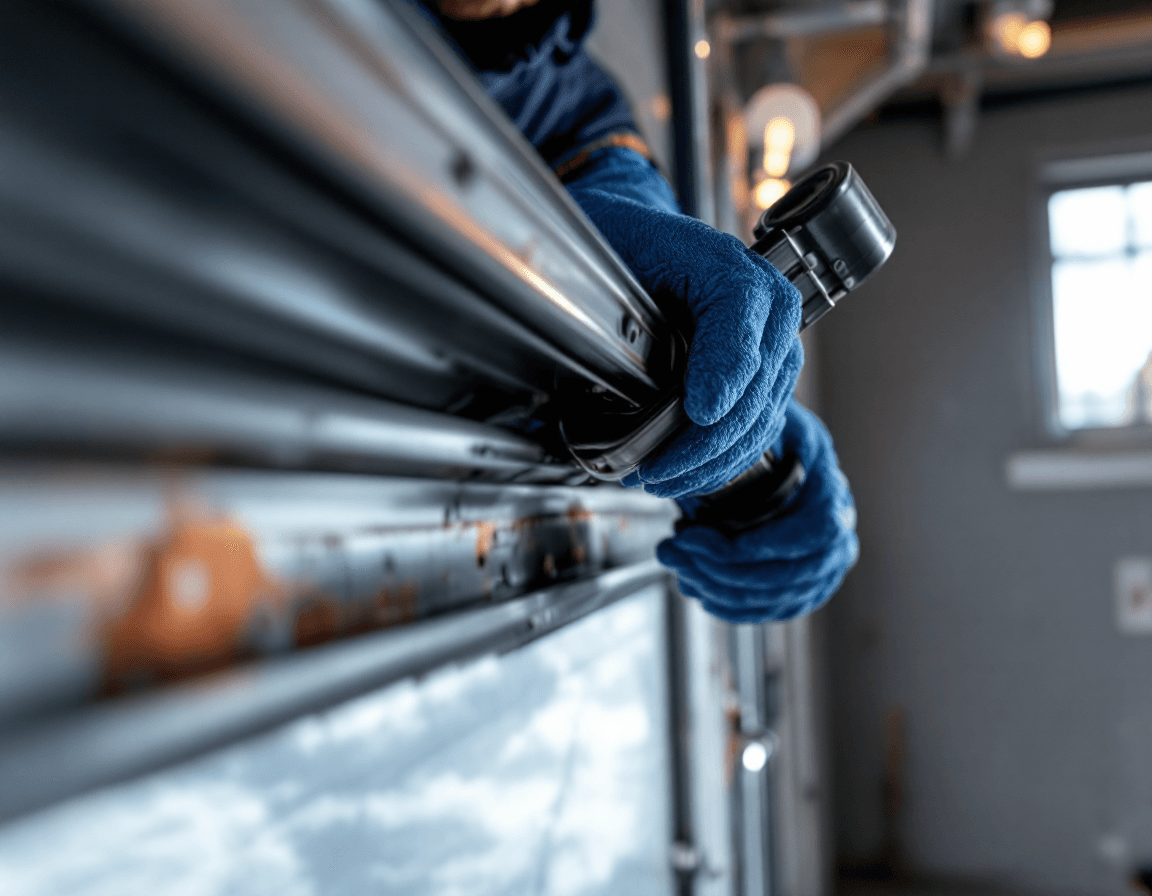
Garage Door Roller Replacement in Ruston, WA is one of the most common repairs we handle for homeowners on the Ruston side of Tacoma, and it is also one of the most affordable ways to restore a door that has started to groan, shake, or stick. Rollers are the small wheels that ride inside the vertical and horizontal tracks and carry the weight of the door through every cycle. When they wear out, the door still moves, but it does so with noise and strain that can quickly spread to the opener, the tracks, and the door panels themselves. Catching the problem early usually means a simpler and less expensive repair.
Ruston is a compact community with a lot of character, sitting close to Commencement Bay and within a short drive of the waterfront redevelopment at Point Ruston. Many of the garages we service here are attached to homes with a mix of older construction and newer builds, and the doors vary widely in age, size, and track configuration. What they share is exposure to the Pacific Northwest climate: long stretches of drizzle, damp mornings that linger well past sunrise, and the occasional hard freeze that makes steel and plastic parts behave differently. Those conditions shape how rollers wear, which is why we approach this repair with local conditions in mind.
This page explains what worn rollers sound and feel like, how the choice between steel and nylon affects noise and longevity, what a typical roller replacement involves, and where the work stops and a professional's judgment becomes essential. If your door has been loud, jerky, or unpredictable lately, the information below should help you decide what to do next and what to expect when a technician arrives.
Reading the Noise: What Grinding and Squeaking Are Trying to Tell You
Every garage door makes some sound, but there is a difference between the gentle rumble of a healthy system and the harsh grinding that signals something has failed. A worn roller often produces a rhythmic squeak at the start of travel, a scraping note when the door passes a certain point on the track, or a grinding noise that grows louder over several weeks. Homeowners in Ruston frequently describe it as the door "complaining" on cold mornings, and that observation is often accurate, since lubricant thickens in the cold and worn bearings reveal themselves more clearly.
Sound alone rarely tells the full story, so it helps to pay attention to where and when the noise happens. A roller that has seized may cause a single loud bang or a shudder at one exact spot, while a bearing that is wearing unevenly tends to produce noise that changes depending on the door's position. Metal-on-metal scraping usually means a roller stem or hinge is rubbing against the track itself, which can gouge the track surface if left alone. Each of these patterns points toward a slightly different fix, and a technician can often identify the source within a few minutes of watching the door cycle.
Here are the sounds and movements we most often hear described by Ruston homeowners:
- A squeal or chirp that starts when the door begins to lift and fades as it warms up
- A grinding or rough rumble that repeats along the same stretch of track
- A sharp clunk or jerk when the door passes a particular point, often near the top or where the track curves
- A shudder or shake through the whole panel, especially when the opener starts or stops
- A metallic scrape that suggests a roller stem or hinge is contacting the track
Steel Rollers Versus Nylon: Choosing the Right Upgrade for Quieter Travel
When a technician replaces rollers, the homeowner usually has a choice between steel and nylon. Steel rollers have traditionally been the standard on many residential doors, and they hold up well under heavy use, particularly on large or insulated doors that carry more weight. The downside is that steel rolling against steel track can be noisy, and as the bearing inside begins to wear, the sound becomes harsher. Steel rollers are a sensible choice when the door is heavy and the existing hardware is in good condition, but they are rarely the quietest option.
Nylon rollers, especially those with sealed ball bearings and a nylon tire, absorb more vibration and run considerably more quietly. Many Ruston homeowners upgrade to nylon specifically because they want the garage to feel calmer, particularly when the space shares a wall with a bedroom or a home office. Quality nylon rollers also resist the moisture that can cause steel to pit over time, which matters a great deal in a region where damp air lingers for much of the year. The tradeoff is that cheap nylon wheels with poor bearings can wear out faster than steel, so the quality of the component matters more than the material label alone.
When we discuss this choice, we typically ask a few questions: How heavy is the door? Is it insulated? How loud is the current setup? Does anyone use the garage as a workspace or hangout? The answers help us recommend a roller that balances quiet operation with durability. In most cases, a full set of nylon rollers with sealed bearings offers the best combination of smoothness and longevity for residential doors, but we always confirm compatibility with the track size and the door's weight before ordering parts.
What a Full Roller Set Typically Costs in Ruston
Pricing for a roller replacement depends on the number of rollers, the type of roller, the door's size, and whether any related components need attention at the same visit. For a full set of rollers, the typical range we see is $120 to $250. The lower end often reflects a standard steel or basic nylon set for a single-car door with a common track configuration, while the higher end may include premium sealed-bearing nylon rollers, a larger door, or a set that requires extra hardware such as new stems or brackets.
It is worth understanding what is and is not included in that range. A roller replacement is primarily the cost of the parts and the labor to swap them safely, but a good technician will also inspect the track, the hinges, and the cables while the door is accessible. If the inspection reveals a problem that falls outside the roller work, such as a worn cable or a spring issue, that repair is a separate matter and will be quoted on its own. We think homeowners deserve to know this before any work begins, so we explain the scope of the visit and the options at the start.
Most Ruston homeowners find that replacing the full set at once is more practical than replacing only the noisiest rollers. Rollers wear at similar rates because they share the same load, so a single failed wheel is often a sign that the others are close behind. Replacing the whole set restores even movement, reduces the strain on the opener, and avoids a second service call a few months later. Single-roller replacement can still make sense in some cases, particularly if the rest of the set is nearly new, and we will tell you honestly if that is the situation.
How a Professional Replaces Rollers Without Risking Injury
Roller replacement looks simple from the outside, but it involves working around a door that is under significant mechanical tension. The springs that counterbalance the door can store enough energy to cause serious injury if they are released improperly, and the cables that lift the panels are under load even when the door is closed. For this reason, roller replacement should always be performed by a licensed and insured technician who knows how to secure the door and work safely within the system. Homeowners should never attempt to remove springs, loosen cable drums, or force a door off its track.
In a typical service visit, the technician first closes the door fully and confirms that the opener is disconnected so the door cannot move unexpectedly. The door is then supported and the old rollers are removed one section at a time, usually by removing the roller from the track bracket or the hinge where it is attached. Each new roller is installed with the correct stem length and bearing type, and the technician checks that the wheel turns freely and sits squarely in the track. The process is repeated for each section, and the door is cycled slowly to confirm smooth operation before the visit concludes.
Throughout the job, the technician also checks the track for dents, gaps, or debris that could cause the new rollers to wear unevenly. A roller that is correctly installed but running in a damaged track will still produce noise and early failure. Taking the time to inspect and, where needed, adjust the track alignment is part of doing the repair properly. A quiet door depends on the whole system working together, not just on new wheels.
Why New Rollers Sometimes Need Track Alignment Work Too
Many homeowners are surprised to learn that replacing rollers does not always eliminate the noise. If the track is out of plumb, loose at its mounting points, or bent from an old impact, the new rollers will still be forced to work at an angle, and that angle produces friction and sound. This is especially common on older doors in Ruston where the track has been in place for many years and the mounting bolts have gradually loosened under the constant vibration of daily use. A technician who only swaps rollers may leave the customer with a door that is quieter for a few weeks and then returns to its old habits.
Track alignment is a careful task. The vertical track should be plumb, the horizontal track should be level and parallel, and the gap between the track and the door panels should be consistent along the full height of the door. Small adjustments can make a dramatic difference, but overcorrecting can create new binding points, so the work requires patience and a feel for how the door should move. We check each track against these standards and tighten or reposition brackets as needed, always confirming the door's travel before leaving the job.
If the track is significantly damaged, it may need to be replaced rather than adjusted. This is more common when a door has been struck by a vehicle, a ladder, or a moving object, and it is a repair that deserves a clear explanation and a fair quote. We will always show you the problem before recommending a major change, and we will not suggest work you do not need.
Salt Air, Moisture, and Keeping Bearings Healthy Near the Water
Ruston sits close enough to Commencement Bay that salt-laden air and moisture are a real factor in how garage hardware ages. Metal parts exposed to damp conditions can develop surface corrosion, which roughens the roller stems and the track where they meet. Bearings are particularly vulnerable when water gets past the seals and mixes with old grease, forming a paste that traps grit and accelerates wear. Over a few seasons, this can turn a smooth roller into one that squeaks and grinds, even when the door has seen only moderate use.
Good maintenance helps counter these effects. Use a lubricant designed for garage door components, such as a silicone-based or lithium-based product, rather than heavy grease or general-purpose oil that attracts dust. Apply it sparingly to the roller stems, hinges, and the track surfaces where the rollers ride, and wipe away any excess so it does not collect grit. Avoid spraying lubricant directly into the bearings of sealed rollers, since this can push contaminants inside. A light application every few months, or after a wet stretch of weather, is usually enough for a residential door.
Nylon rollers with sealed bearings have an advantage in this environment because the bearing is protected from moisture and the nylon itself does not rust. Homeowners who live closest to the water often find that the upgrade pays off not only in quieter operation but also in fewer seasonal adjustments. If you notice rust-colored staining on the track, flaking on the roller stems, or a gritty feel when the door moves by hand, those are signs that moisture has been working on the hardware, and a service visit can address the damage before it becomes more expensive.
Doors That Work Hard: What Point Defiance and Point Ruston Homes Experience
The Ruston area includes homes that sit within walking distance of the waterfront at Point Ruston and close to the wooded trails and open spaces of Point Defiance Park across the city line in Tacoma. Garages in this part of Pierce County often see frequent use. Households with outdoor gear, bicycles, kayaks, and yard equipment may open and close their doors several times a day, especially during the warmer months when recreation is at its peak. That repeated cycling puts steady wear on rollers, and it means small noises can become significant problems more quickly than they would on a door that is used only once or twice a week.
Doors used heavily for recreational gear also tend to carry added weight, whether from heavier storage racks, insulated panels, or the moisture that comes with wet equipment being brought in and out. Those conditions reward a roller set that is matched to the door's load and that is inspected regularly. A technician who services homes near the water and in the Point Defiance corridor will often look closely at the hinges and the bottom roller brackets, since these are the points where stress tends to concentrate on busy doors.
Our goal is to give homeowners in Ruston a practical plan rather than a sales pitch. If your garage sees heavy daily use, we recommend scheduling an inspection once a year and paying attention to any change in sound or movement between visits. That approach catches wear early, keeps the door running smoothly, and prevents a single worn roller from putting extra strain on the opener and the cables.
When a Roller Problem Is Really a Spring or Cable Emergency
It is important to know when a sound or movement is not a roller issue at all. A loud bang from the top of the door, a door that sags or sits unevenly, or a visible gap in a torsion spring or cable can signal a far more serious problem. Springs and cables carry the weight of the door, and when they fail, the door can drop suddenly, which is dangerous to anyone nearby. A door that will not open after a loud snap, or one that hangs crooked after a noise, should be treated as a safety concern rather than a simple maintenance task.
Homeowners should avoid certain actions entirely. Do not attempt to adjust, wind, or remove springs, since they are under extreme tension and can cause serious injury. Do not pull on loose cables or try to reattach them yourself. Avoid standing under a door that is partially open or unsupported, and do not force a door that is binding, since doing so can damage the opener or the panels. If the door has come off its track, keep people and pets away from the area and call a licensed professional for assessment.
Spring and cable work must be left to licensed and insured technicians who have the training and equipment to do it safely. Roller replacement can often be scheduled as a routine service, but a spring or cable failure should be treated as urgent, and the technician will explain what is involved before starting. We would much rather you call early than attempt a repair that could lead to injury or additional damage.
Simple Habits That Extend the Life of Your Rollers
Most roller problems develop gradually, and a few regular habits can extend the life of the set considerably. Start by watching the door move once a month. Listen for new sounds, notice whether the door starts or stops smoothly, and check whether it seems to pause or jerk at any point along the track. Changes that show up early are usually easy to address, and noting them helps a technician diagnose the problem faster if a service visit becomes necessary.
Keep the track clean. Sweep out debris, leaves, and gravel that collect at the bottom of the door, since these can get into the rollers and grind against the bearings. Wipe the track with a dry cloth periodically, and avoid using harsh solvents that can strip the protective coating or leave residue. In the wet months, check that the weatherstripping along the bottom of the door is intact, since gaps let rain and debris reach the rollers and the lower brackets.
Finally, schedule professional inspections regularly. A technician can check the rollers, the track, the hinges, the cables, and the springs during a single visit and catch problems before they become emergencies. For Ruston homeowners dealing with the damp, salty air that drifts in from the bay, an annual inspection is a sensible baseline, and more frequent checks may be worthwhile for doors that see heavy use.
If your garage door is grinding, squeaking, shaking, or sticking, or if you simply want a quieter and smoother ride, Seattle Garage Door Fix is ready to help Ruston homeowners get the door moving the way it should. Call (888) 799-3819 to schedule a roller inspection or to ask about a full set of quiet nylon rollers, and our licensed, bonded, and insured technicians will explain your options clearly before any work begins.