
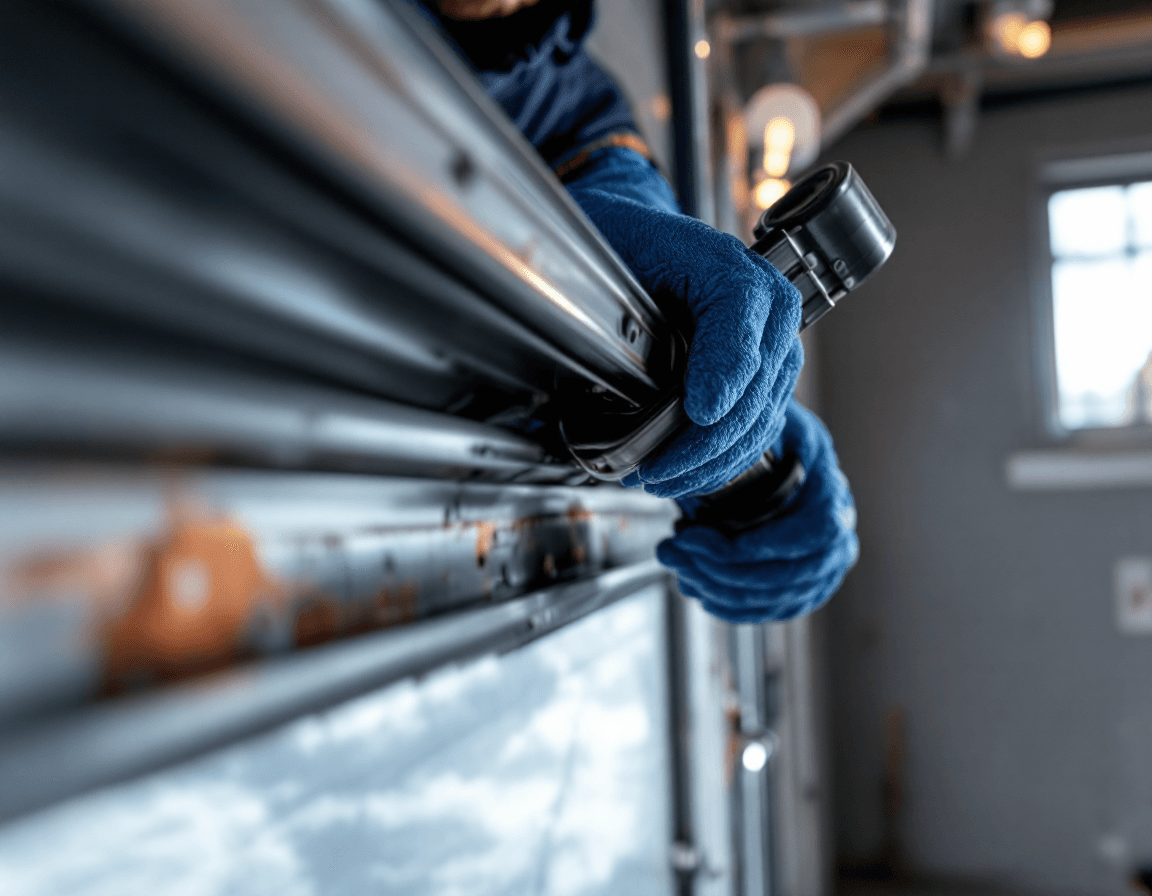
Garage door roller replacement in Renton, WA is one of the most common and affordable fixes we handle, and it often makes a bigger difference than homeowners expect. A door that groans, shakes, or catches partway up the track is usually telling you that its rollers have worn out, cracked, or seized. Replacing them restores smooth travel, reduces strain on the opener, and can quiet a noisy door considerably. For most single-door households, a full set of rollers falls in the $120 to $250 range, depending on the roller type and the size of your track.
Renton sits in the Green River valley, where the weather shapes how a garage door ages. Wet winters, frequent drizzle, and damp mornings from the Cedar River corridor all work their way into a garage, and moisture is hard on the bearings and stems inside a roller. Summers are usually mild, but the day-to-day temperature swings between a cool, damp evening and a warm afternoon add expansion and contraction to every metal part of the door. Whether you live near The Landing, up in Highlands, out in Fairwood, or on the older streets around Talbot Hill, your door is working against the same seasonal patterns.
If your door has started making new sounds or behaving unevenly, the rollers are a sensible place to start. This page explains what worn rollers look like, how to tell them apart from other problems, what your options are for steel and nylon, and what you can reasonably check yourself before calling a licensed technician. It also covers the safety boundaries that matter most, because roller work is straightforward but spring and cable work is not something a homeowner should attempt. Read on for a practical, local guide, or call us at (888) 799-3819 if you would rather have someone look at the door in person.
Why Rollers Wear Faster in a Damp Renton Garage
Garage door rollers spend their working lives under load. Each time the door opens or closes, the rollers carry the weight of the panels as they travel through the curve of the track, and they do it thousands of times over the life of the door. Most residential rollers are built around a steel or nylon wheel mounted on a stem with a bearing or bushing inside. When that bearing picks up moisture, grit, or road dust, the wheel stops turning freely and begins to drag, scrape, or flat-spot against the track.
Renton's damp season is hard on this arrangement. Water that gets past weatherstripping or condenses on cold metal can wash lubricant out of the bearings and leave behind a film that attracts dust and fine grit. Garages in older Renton homes, including many along the hillside streets of Talbot Hill, often have less insulation and more temperature swing, which means more condensation on the tracks overnight. Over several seasons, that combination can cause a bearing to dry out, pit, or seize, even when the door itself looks fine from the outside.
Nylon rollers handle moisture better than untreated steel bearings, but they are not immune to aging. Over time, UV exposure from garage windows, repeated heat from a parked car, and general fatigue can make nylon harden, crack, or develop flat spots. A roller that looks intact from a distance may have a hairline split that eventually lets the wheel wobble off the track. This is why we recommend inspecting rollers as part of a routine check rather than waiting for a noise to become a problem.
Reading the Sounds Your Door Is Making
Your garage door communicates through sound long before a roller fails completely. A high-pitched squeak usually points to a dry bearing or a stem that has lost lubrication, while a deeper grinding noise often means the wheel has worn unevenly or a bearing is breaking down. Metal-on-metal scraping is more serious, because it suggests a roller has seized or the wheel has worn down to the bare hub, which can damage the track itself. Learning to tell these sounds apart helps you describe the problem accurately when you call, and it helps a technician narrow down the cause quickly.
Movement can tell you as much as noise. A door that shakes or jerks along the track, especially near the top or in the curve, often has a roller that is no longer rolling smoothly and is hopping over a worn spot or a dent in the track. A door that binds or sticks at certain points may have a roller that has seized at that exact location, or a track section that has been pushed slightly out of alignment. When a problem appears only at one spot in the travel, the roller at that spot is a strong suspect.
Visual signs are easy to check from the floor with the door closed. Look for wheels with visible cracks, chips, flat spots, or a glazed, shiny surface where the wheel has been dragging. Check whether the wheel wobbles side to side on its stem when you gently push it, and whether the stem itself has rust or bends. Note which rollers look different from the others, because uneven wear often shows up on one side of the door before the other.
- Squeaking that is loudest during the first few feet of travel, often points to dry bearings
- Grinding or rumbling that changes with speed, often points to worn or flattened wheels
- Metal-on-metal scraping, which suggests a seized roller or a wheel worn to the hub
- Shaking or jerking in the curve, which often points to a cracked or wobbling roller
- Binding at one specific point in the travel, which often points to a single failing roller
- Uneven movement from side to side, which can point to mismatched rollers or track misalignment
Steel Versus Nylon: Choosing the Right Roller for Your Track
Most garage doors use one of two roller styles: steel or nylon. Steel rollers tend to be sturdier under heavy loads, and they are a good fit for heavier doors or older tracks that are already a bit out of true. They usually come with sealed or lubricated ball bearings, and a good steel roller can last a long time when it is kept clean and properly lubricated. The trade-off is noise, since steel wheels can rattle and ring against the track, especially in a door that is already loose or unbalanced.
Nylon rollers are the usual choice for homeowners who want quieter operation. The wheel itself absorbs vibration and dampens the sound of the door moving along the track, which makes a noticeable difference in an attached garage where the living space is just on the other side of the wall. Many nylon rollers are built with sealed bearings that hold up better in damp conditions, which is a practical advantage in a wet Pacific Northwest climate. For most standard residential doors in Renton, a quality nylon roller set is the best balance of quiet, durability, and cost.
Choosing between the two also depends on your track and your door. Some tracks are designed to work with a specific roller diameter or stem type, and mixing sizes can cause the door to sit crooked or bind. Doors with heavier insulated panels may benefit from a combination of steel rollers at the load-bearing points and nylon elsewhere, although that is a judgment best made after inspecting the door. A technician can measure the stem, check the track gauge, and recommend the right option instead of guessing from the box.
What a Full Roller Set Typically Costs in Renton
Most residential garage doors in the Renton area use somewhere between eight and twelve rollers, depending on the door's height, the track configuration, and whether it has a single or double track setup. Our pricing for a full roller set generally falls between $120 and $250, which covers the rollers themselves and the labor to replace them. The final number depends on the material you choose, the number of rollers your door needs, and whether any stems, hinges, or track sections also need attention.
Costs can move up or down based on a few practical factors. Upgrading to quieter nylon rollers may add a bit to the materials price compared with basic steel, but many homeowners find the difference worthwhile in a living-area garage. Doors with heavier panels or unusual track layouts can require specialty rollers that cost more. If a technician finds a bent track section, a worn hinge, or a damaged bearing plate during the visit, those repairs are separate from the roller set and will be quoted before any extra work begins.
It helps to know what the price usually does not include. Spring replacement, cable repair, and major track reconstruction are different jobs with different safety requirements and different costs. If you hear a loud bang, see a gap in the spring coil, or notice a cable that has frayed or come off its drum, stop using the door and call a licensed technician rather than trying to fix it with rollers alone. Those problems carry real risk and should be treated as a separate service.
How a Technician Replaces Rollers Without Touching the Springs
A roller replacement is one of the more manageable garage door repairs, but it still requires care and the right tools. The technician begins by securing the door so it cannot move unexpectedly, which usually means supporting the panels and confirming that the springs and cables are in their normal state. From there, the door is lifted slightly, the old roller is removed from its track position, and the stem and bearing are inspected for wear or damage before the new roller is installed.
Rollers in the lower part of the track are often the easiest to access, while rollers near the top or in the curve require more careful handling because the door is supported by a different set of forces. A good technician works through the door methodically, checking each roller for smooth rotation, correct alignment, and firm seating in the track. Any roller that wobbles on its stem or sits crooked in the track is a sign that a related part needs attention, and that check is part of the job rather than an add-on.
Throughout the process, the springs and cables should remain untouched by a homeowner. Torsion springs and extension springs store a large amount of energy, and even a small mistake during a repair can release that energy with serious force. Because roller replacement sometimes brings the technician close to the spring system, it is important that the work is done by someone trained and licensed for garage door service, who knows how to protect both themselves and your household.
Track Alignment, Hinges, and Why Rollers Are Rarely the Only Problem
A new roller will not solve a door that is fighting its track, and experienced technicians check the whole system before calling the job finished. Track alignment matters because a track that is slightly out of plumb, level, or square will force rollers to run at an angle, which causes uneven wear and noise no matter how good the rollers are. Loose track bolts, bent sections from a bump with a vehicle, and gaps where the track meets the wall bracket can all produce the same symptoms as a failing roller.
Hinges and roller brackets deserve equal attention. Hinges connect the door panels, and when a hinge loosens or cracks, the panels can shift in a way that pulls rollers out of their correct path. Bent or worn roller brackets can let a roller wobble, while worn bearing plates can cause the stem to tilt. Replacing rollers while ignoring a loose hinge is like changing the tires on a car with a bent axle: the new parts will wear quickly because the underlying problem is still there.
For this reason, a proper roller service includes a look at the track, the hinges, and the bracket fasteners. A technician should be able to tell you whether the door is square, whether any track sections need adjustment, and whether any hardware is worn enough to cause trouble soon. If the door also has a balance issue, such as one side lifting noticeably faster than the other, that is worth raising because it relates to the spring system and should be handled by a licensed professional.
Neighborhood Notes: Highlands, Fairwood, Talbot Hill, and The Landing
Renton's neighborhoods vary in age, lot shape, and garage layout, and those differences can affect how roller problems show up. Homes in the Highlands area, with their hillside lots and varied grades, can put extra stress on tracks that are not perfectly level, so homeowners there often notice shaking or binding in the curve before anything else. Keeping the track fasteners snug and watching for a door that seems to lean on one side is a practical habit in sloped driveways and garages.
Fairwood's neighborhoods include a mix of newer and established homes, and many of the attached garages there have doors that get daily use from busy households. Frequent cycling wears rollers faster than occasional use, and a door that goes up and down several times a day will show roller wear sooner than one that sits closed for long stretches. For families in these homes, scheduling a roller check before a noisy phase becomes a daily annoyance can save both time and money.
Talbot Hill and the older streets nearby often feature homes with garages that were built before modern insulation and sealing standards were common. Those garages can be more exposed to damp air and temperature swings, which speeds up bearing wear and can cause condensation on the track. Around The Landing, where many homes and businesses sit close together, road grit and dust can also reach garage door tracks more easily. In every part of Renton, a simple habit of wiping the tracks during seasonal checks helps keep grit from grinding into the rollers.
Ten-Minute Checks You Can Do Before Calling
There are a few safe checks any homeowner can do to understand their door better before a technician arrives. These checks do not involve the springs, cables, or any tension adjustment, and they help you describe the problem clearly. Start with the door fully closed and the opener disconnected or the power switched off, so the door cannot move while you work. Use a flashlight to look along the track from the floor, and do not put any part of your body under a door that is not fully supported.
Walk the door through a slow manual cycle only if the opener is disconnected and the door is balanced, which you can usually tell by whether it stays put when raised partway. Listen for the noise and watch where it occurs. Note whether one side moves differently from the other, and whether the noise changes with temperature or after rain. Those observations are valuable, and they often point directly to the roller or track section that needs attention.
- Confirm the opener is off and the door is fully closed before inspecting anything
- Look along the track for visible cracks, chips, flat spots, or glazed wheels on the rollers
- Gently wiggle each roller stem to check for looseness or a bent bracket
- Wipe grit and dust from the track with a dry cloth, and do not use oil on the track itself
- Write down where in the travel the noise or binding occurs, and whether it is worse in the morning or after rain
- Take a short video of the noise if possible, since it helps a technician diagnose the problem faster
When a DIY Roller Swap Turns Dangerous
Replacing a roller can look like a simple home project, and in some cases it is manageable for someone with the right tools and experience. However, the line between a roller swap and a spring or cable job can be thin, and many serious garage door injuries start when a homeowner moves from one to the other without realizing it. If a door will not stay in position when lifted, or if the door seems to be dragging against a spring that is under strain, the safest move is to stop and call a professional.
Certain warning signs mean the door should be left alone entirely. A broken torsion spring often shows up as a door that will not lift smoothly or a loud crack from the top of the door. A cable that has come off the drum, frayed, or snapped is a hazard even if the door appears to move. Any gap in a spring coil, rust that has weakened the spring, or a door that drops suddenly when released should be treated as an emergency and handled only by a licensed technician.
Remember that roller work also involves handling heavy panels at height. Even a single section can weigh enough to cause injury if it shifts, and a door that is not properly supported can fall. Use a sturdy ladder on level ground, keep children and pets away from the work area, and never stand under a door that is not secured. If there is any doubt about the condition of the springs or cables, the cost of a professional visit is small compared with the risk of getting hurt.
Keeping New Rollers Quiet Through Seattle-Area Winters
Once new rollers are installed, a few seasonal habits will help them stay quiet and smooth for years. Wet winters bring moisture and grit, so it is worth wiping the track and rollers during the dry spells that often come in late summer and early fall. Use a dry or lightly damp cloth on the track, and avoid spraying penetrating oil on it, since oil can attract dust and turn into a gritty paste. Keep the garage door weatherstripping in good shape, because sealing out wind-driven rain reduces condensation on the tracks.
Lubrication should be targeted rather than generous. Use a lubricant that is recommended for garage door rollers and hinges, and apply it to the roller stems and hinge pivots rather than to the track surface. Lubricating the track itself can make it slippery and collect dirt. Many nylon rollers with sealed bearings need little or no lubrication, so check the manufacturer's guidance before adding anything, and be cautious about over-oiling, which can attract grime.
Finally, schedule a periodic inspection rather than waiting for a new noise to appear. A technician can check the rollers, track, hinges, and brackets in one visit and catch small problems before they become expensive ones. A yearly or seasonal check is a reasonable routine for most Renton homes, and it gives you a chance to ask questions about the door's overall condition. Keeping the system balanced and well maintained is the best way to make sure your new rollers deliver the quiet, smooth operation you paid for.
If your Renton garage door is grinding, squeaking, shaking, or sticking, a roller replacement may be the simple fix you need. Our licensed, bonded, and insured technicians serve homes across the greater Seattle and Western Washington area, including Renton and the surrounding King County neighborhoods, and we will explain your options clearly before any work begins. Call (888) 799-3819 to schedule an inspection and get a straightforward quote for a full set of rollers, with honest advice on whether steel or nylon makes the most sense for your door.