
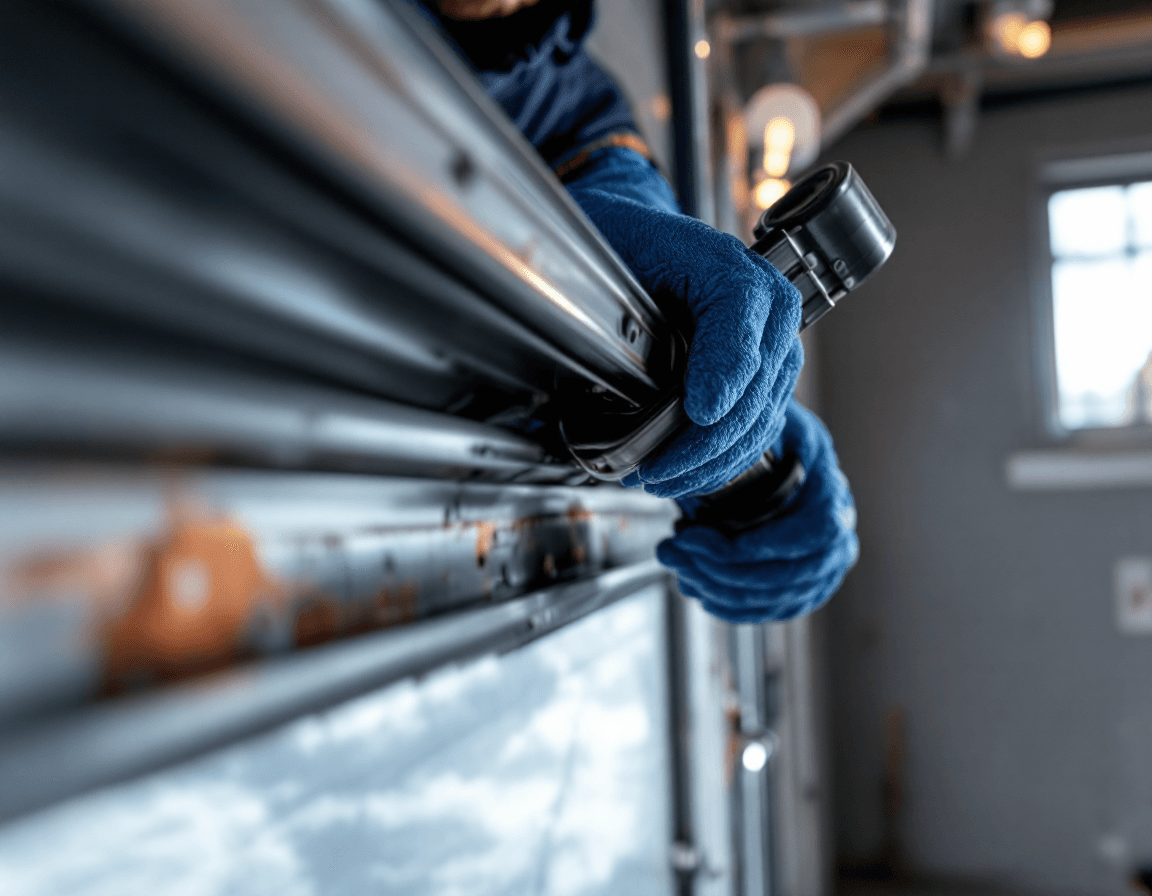
Garage Door Roller Replacement in Mercer Island, WA is one of the most common and affordable fixes homeowners on the island can make to restore a door that has turned loud, rough, or unpredictable. Your garage door rides on a set of rollers that travel along the steel tracks with every opening and closing cycle, so when those rollers wear out, the whole door feels the effect. Many Mercer Island homeowners first notice a squeal on a cold morning or a grinding noise as the door climbs, and they assume something major has failed when the real culprit is a set of tired rollers.
This page explains how rollers work, what symptoms point to worn hardware, how the damp Pacific Northwest climate affects garage door components, and what a roller replacement typically involves. We also cover the difference between standard steel rollers and quieter nylon rollers, what a full set usually costs, and why track alignment deserves attention at the same visit. Our goal is to help you make an informed decision before you call anyone to the house.
Whether you live near the Mercer Island Town Center, closer to the lake, or on a quiet residential street farther from the commercial core, the same principles apply. Garage doors on the island see the same moisture, temperature swings, and daily use as the rest of the Seattle metro, and the rollers absorb the wear. Understanding what is happening inside the track will help you decide whether a roller upgrade is the right move for your household.
What Rollers Actually Do Inside the Track
Every garage door panel is hinged to the next one, and the rollers are the wheels attached at the edges of those panels. They sit inside the vertical and horizontal tracks on either side of the opening and guide the door smoothly from closed to open and back again. Each roller has a stem that fits into a hinge bracket and a wheel that spins on a small internal bearing or bushing. When everything is working, the door glides with very little resistance and you barely notice the motion.
Rollers are rated by the materials they are made from and the size of their wheels. Older and budget doors often use steel rollers with a sealed ball bearing, while many newer doors come with nylon or nylon-composite rollers with a sealed or greased bearing. Standard roller stems are commonly available in several lengths, and the wheel diameter and bearing type vary by manufacturer. Because of that variation, a good technician measures your existing rollers and confirms the stem length, wheel size, and track profile before ordering any replacements.
The rollers take on a significant share of the door's workload. Every time the door moves, the weight of the panels passes through the rollers, and the bearing inside each one has to turn freely. When the bearing dries out, cracks, or loses its seal, friction increases and the wheel starts to resist rather than roll. That resistance is what you hear as grinding, squealing, or the sensation that the door is pulling against itself.
Warning Signs That Your Rollers Are Wearing Out
Most roller problems announce themselves long before the door fails completely. The earliest sign is usually a new noise that appears during normal operation. A high-pitched squeak often points to a dry bearing or a stem that has lost its lubrication, while a low grinding sound can mean the wheel itself is flattening, cracking, or picking up debris. If you hear a scraping sound that seems to come from the metal track rather than the panels, the rollers may be seized or badly out of round.
Pay attention to how the door behaves, not just how it sounds. A door that shakes or jerks as it travels along the track is often reacting to rollers that no longer turn evenly. Some homeowners describe a door that seems to hesitate, bump, or lurch at a particular point in its travel. Others notice that the door sticks briefly before continuing, which is a classic sign of a roller that has seized or is catching on a track seam.
A visual inspection can confirm what you are hearing. Look at the rollers when the door is closed and the tension is off the panel. Check for cracked nylon, flat spots on the wheel, rust or pitting on steel rollers, and stems that appear bent or loose in their brackets. Here are the most common warning signs homeowners should watch for:
- Loud grinding or squeaking as the door moves, especially in the first few feet of travel
- A door that shakes, jerks, or lurches along the track
- Rollers that look visibly worn, cracked, flattened, or seized in place
- Metal-on-metal scraping sounds coming from the track area
- Spots where the door binds or sticks before continuing its movement
- A general desire for quieter operation, especially if the garage is attached to a living space
If you notice any of these symptoms, schedule an inspection before the problem spreads. A door that is running on failing rollers puts extra strain on the opener, the cables, the springs, and the track brackets, and a small repair can turn into a larger one.
How Pacific Northwest Moisture and Mild Winters Affect Rollers
The Pacific Northwest climate is famously mild, but it is not gentle on garage door hardware. Mercer Island experiences long stretches of damp weather, frequent morning condensation, and temperature swings that cause metal and nylon to expand and contract throughout the year. Those cycles accelerate wear on bearings and stems, especially in garages where moist air settles and does not dry out quickly. Even a garage that feels dry to the touch can hold enough humidity to cause surface corrosion on steel parts over time.
Moisture also drives the growth of moss, mildew, and grime in the tracks, and that debris can work its way into roller bearings. A track that carries damp leaves, dirt tracked in from the driveway, or the residue of road spray will grind against the wheel with every cycle. Homes near tree-lined streets or the wooded parts of the island often deal with more of this material, so the tracks may need cleaning more often than a homeowner expects. Keeping the track clear is one of the simplest ways to protect new rollers after installation.
Cold mornings bring their own challenges. When temperatures drop overnight, lubricants stiffen and the bearing inside each roller becomes less forgiving. Many homeowners notice that the door is loudest on the first open of the day and quiets down after a few cycles as the components warm up. That pattern is a clue that the lubrication is aging and the rollers are approaching the end of their useful life, even if the door still functions.
Steel Versus Nylon: Choosing the Right Roller for a Quieter Door
Steel rollers have been the traditional choice for decades because they are strong, widely available, and inexpensive. They handle heavy doors well and they resist wear from repeated use, but they can be noisy, especially when the bearing begins to dry out or the steel picks up surface rust. In a home where the garage shares a wall with a bedroom or a family room, that noise can become a daily annoyance. Steel rollers also tend to transmit more vibration into the track and the door panels.
Nylon rollers are a quieter alternative that many homeowners choose during a repair. The wheel material absorbs more sound and rolls with less metallic chatter, so the door typically runs more smoothly. High-quality nylon rollers with sealed bearings can be a strong option for doors that see frequent use, although the exact lifespan depends on the product, the load on the door, and how well the track is maintained. A technician can recommend the right material based on your door's weight, track type, and how you use the garage.
Here are the main differences to consider when comparing steel and nylon roller options:
- Steel rollers are durable and cost-effective, but they can be louder and may corrode in damp conditions
- Nylon rollers are generally quieter and smoother in operation, which many homeowners prefer for attached garages
- Sealed bearings help keep moisture and grit out of the wheel, which matters in the Pacific Northwest climate
- Stem length and wheel size must match your existing hardware to avoid binding or misalignment
- A full-set replacement is usually more effective than swapping only the noisiest rollers, because mixed wear rates can cause uneven movement
Choosing between steel and nylon is not just about noise. The best option balances sound, durability, and the specific demands of your door, and a knowledgeable technician will explain the tradeoffs before any parts are ordered.
What a Roller Replacement Involves on an Island Driveway
A typical roller replacement starts with a careful inspection of the entire door, not just the rollers you can hear. The technician checks the track for dents, gaps, and loose mounting brackets, confirms that the door is balanced, and looks at the hinges and panel connections. Mercer Island homes often have driveways that slope toward the garage or sit on hilly lots, which can affect how the door tracks and how the rollers take on load. Recognizing those conditions helps the technician set realistic expectations for how smooth the door can become.
Once the inspection is complete, the work itself is usually straightforward. The door is secured while the tension is handled by a licensed professional, and the old rollers are removed from the hinge brackets and track. The new rollers are installed, the track is cleaned and inspected, and the door is cycled several times to confirm that it moves evenly from bottom to top. A good technician will watch the door through its full range of travel and listen for any remaining binding, squeaking, or scraping.
Many replacements can be completed in a single visit, although the timing depends on the number of rollers, the condition of the track, and whether any other repairs are needed. Some homeowners choose to have the opener adjusted or the safety sensors tested during the same appointment, since those components directly affect how the door operates. A thorough service call should leave you with a door that runs quietly, a clear explanation of what was replaced, and any maintenance steps you should take to protect the new hardware.
Pricing a Full Roller Set Between $120 and $250
For most standard residential doors, the cost of a full roller set typically falls in the range of $120 to $250. That range generally reflects the number of rollers required, the material you choose, and the amount of labor needed to inspect and adjust the door during installation. Nylon rollers and sealed-bearing options may sit at different points within that range, depending on the product and the size of your door. Replacing the entire set is almost always more cost-effective than piecemeal repair, because mixed wear across old and new rollers can cause uneven movement and new noise.
Several factors can push a job toward the higher or lower end of the range. A door with more panels or heavier construction needs more rollers and may require stronger components, while a simpler two-car door with standard hardware may come in at the lower end. If the track also needs straightening, cleaning, or bracket reinforcement, the total job will reflect that additional attention. Your technician should explain these variables clearly and provide an upfront estimate before starting any work.
It is also worth asking what is included in the quoted price. Some service calls cover the inspection, the roller installation, and a basic function test, while others may list additional items separately. A reputable company will be transparent about the scope of work, will not pressure you into unnecessary repairs, and will tell you when a different problem is more urgent than the rollers. If you have questions about the estimate, ask them before work begins.
Why Track Alignment Matters as Much as the Rollers
New rollers can only perform as well as the track they ride on. If the track is bent, loose, or misaligned, even brand-new nylon rollers will bind or bump as they travel. A track that has been struck by a car bumper, a stray bicycle, or a shifting grocery load can develop a slight bend that is invisible to the eye but very noticeable to the rollers. That is why a responsible technician checks the track as part of every roller job.
Alignment also affects how evenly the door closes and seals at the bottom. When one side of the track sits slightly higher than the other, the rollers on that side work harder and the door may appear to lean or hesitate. Over time, that imbalance wears the new rollers unevenly and can shorten their life. Correcting alignment during the roller replacement protects your investment and keeps the door running smoothly for years.
Mounting brackets deserve the same attention. Loose bolts, cracked brackets, or worn holes can allow the track to shift during operation, which creates the jerking motion many homeowners describe. Tightening or replacing brackets is usually a simple adjustment when it is done as part of a complete service visit. Addressing the track and brackets together gives the new rollers the best possible environment.
Safety Boundaries: Springs, Cables, and Licensed Professionals
Roller work is one of the more approachable garage door repairs, but it sits close to components that can be extremely dangerous. Torsion springs and extension springs store enormous amounts of energy, and a spring that releases unexpectedly can cause serious injury. Cables carry heavy tension and can snap or unwind if they are mishandled. For these reasons, any work involving springs, cables, or the door's balance system should be performed only by a licensed, bonded, and insured professional with the right tools and training.
Homeowners should avoid attempting to adjust tension, remove a spring, or loosen a cable to access a roller. Even if a roller looks like an easy fix, the door may be under load in ways that are not obvious. If the door is heavy, sagging, or noticeably unbalanced, stop using it and call for service rather than trying to force it. Keeping the door disconnected from the opener and stepping away from the track until a technician arrives is the safest approach.
A professional visit also protects you from the consequences of a mistake. A licensed technician can identify whether the rollers are the true source of the problem or whether a spring, cable, or opener issue is contributing to the noise. That diagnosis matters because replacing rollers will not fix a door that is out of balance, and continuing to operate an unbalanced door can damage the opener and other components. Let a qualified expert determine what the door needs.
Simple Maintenance Habits That Extend Roller Life
Good maintenance is the best way to protect new rollers and delay the next replacement. Start by keeping the tracks clean. Wipe away dirt, leaves, and moisture from both the vertical and horizontal tracks, and remove any debris that has collected in the corners where the track meets the wall or ceiling. A soft cloth and mild cleaner are usually enough, and the track should never be coated with heavy grease, which can attract grit.
Lubrication matters too, but it needs to be done correctly. Use a silicone-based or manufacturer-recommended lubricant on the roller stems and hinge contact points, and avoid spraying lubricant directly onto the track surface where it can collect dust. Sealed-bearing rollers generally do not need frequent lubrication, so check your door's documentation or ask your technician before adding oil to the bearings. Over-lubricating can create more mess than benefit in a damp garage.
Finally, watch the door through a full cycle at least once a month. Listen for new sounds, watch for hesitation or jerking, and note any spots where the door behaves differently. Catching a small change early often prevents the need for a complete roller replacement. If you notice a new squeak after a long wet season, schedule an inspection before the problem grows into a larger repair.
Quiet, smooth operation is within reach for most Mercer Island homeowners, and a well-planned roller replacement can make a noticeable difference in daily life. If your garage door is grinding, squeaking, jerking, or sticking, or if you simply want a quieter ride, call Seattle Garage Door Fix at (888) 799-3819 to schedule an inspection. Our licensed, bonded, and insured technicians will evaluate your rollers, track, and brackets, explain your options, and give you a clear estimate before any work begins.