
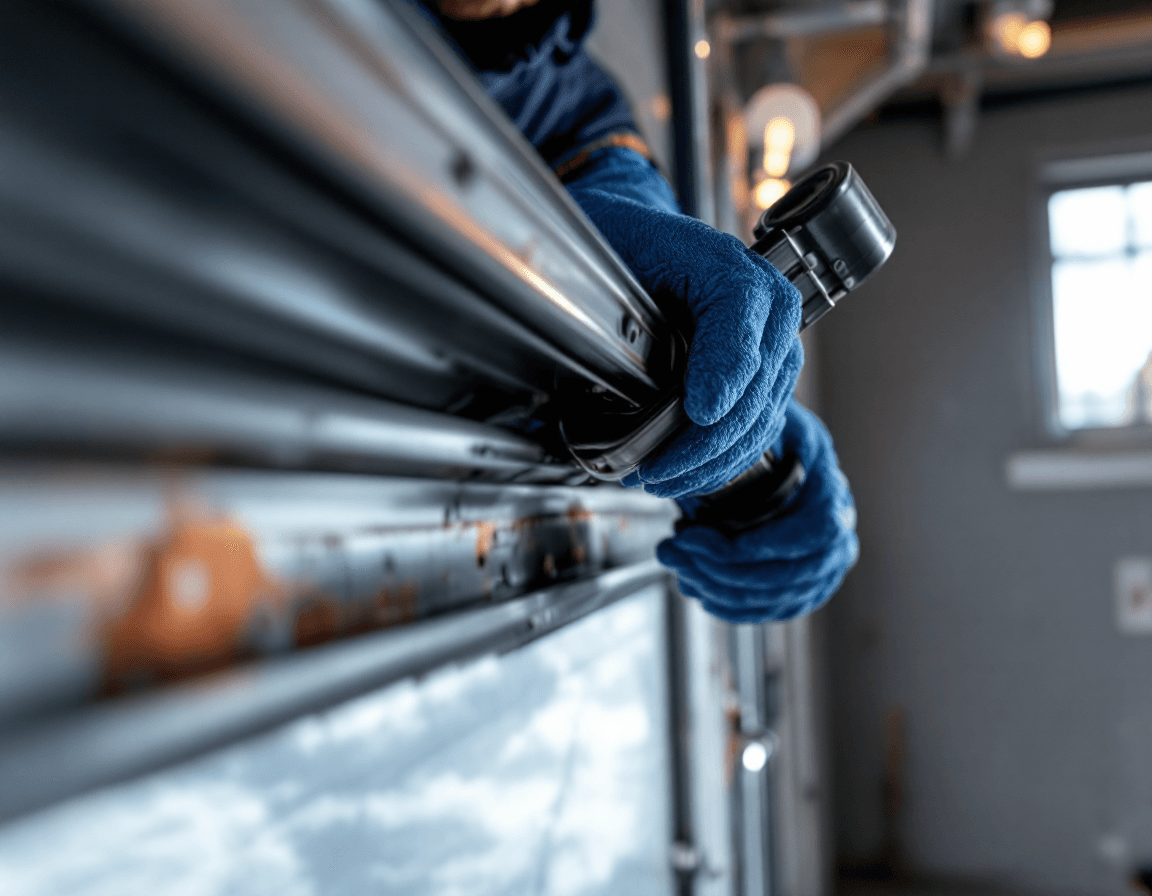
Garage door roller replacement in Bellevue, WA is one of the most common and affordable repairs homeowners on the Eastside need, and it often makes the biggest difference in how your door sounds and feels day to day. The rollers are the small wheels that ride inside the vertical and horizontal tracks, guiding each section of the door as it rises and lowers. When they wear out, crack, or seize, the whole door has to work harder, and you hear it every morning when you back out of the driveway. This guide explains what worn rollers look like, why they fail in our climate, and what to expect when you upgrade to quieter nylon rollers.
Bellevue homes range from older split-levels near Lake Hills to newer townhomes around Downtown and Factoria, and their garage doors reflect that mix. Many use the standard 2-inch steel rollers that came with the door, while others have heavier insulated panels or wider double-car doors that put more load on each roller. Regardless of the door's age, the rollers are usually the first hardware to show wear because they turn thousands of times a year. Catching that wear early keeps the springs, opener, and tracks from taking on extra strain. If you hear grinding or your door feels uneven, this is a good time to schedule a look.
Whether you are dealing with a noisy door right now or simply want a quieter household, this page walks through the signs, the options, the pricing, and the safety boundaries that matter. Our team serves homeowners across 98004, 98005, 98006, 98007, and 98008, and we can usually tell within a few minutes whether rollers are the root cause. Read on for a practical, locally grounded explanation, and call (888) 799-3819 whenever you are ready to talk through your door.
Why Bellevue Garage Doors Wear Their Rollers Faster Than You Expect
Rollers wear for a simple reason: they carry weight and spin constantly, and every rotation adds a little friction and fatigue. A typical household door might open and close several times a day, which adds up quickly over a decade. The steel rollers that ship with many doors use a small ball-bearing or sealed bearing inside a metal or hard plastic wheel, and that bearing is the part most likely to dry out or pit over time. Once lubrication is gone, the bearing begins to grind, and the wheel stops rolling freely.
Bellevue's conditions add another layer of stress. Our winters bring long stretches of cool, damp air, and summers are usually mild, so the door rarely experiences the extreme heat that cracks plastic in drier regions. The problem is moisture. Humidity and rain work their way into bearings and onto track surfaces, where they mix with dust and grit from the driveway to form a thin, abrasive film. That film acts like sandpaper on the rollers, and it can shorten their life well before you would expect based on age alone.
Homes near busy corridors and tree-lined streets face additional debris. Fir needles, maple seeds, and the fine grit tracked in from wet roads can settle into the track channel, especially at the bottom where the door meets the floor. Rollers that run through that debris wear unevenly, and a single flattened or cracked roller can cause the others on the same side to work harder than they should. Recognizing this pattern early helps you avoid replacing rollers only once the damage has spread.
Reading the Sounds Your Door Is Making
Your garage door communicates its condition through noise and movement, and learning to interpret those signals is the best way to catch roller problems early. A healthy door moves with a steady, even rhythm and makes only a soft hum from the opener. When rollers start to fail, the sounds change in predictable ways, and most homeowners notice the change within a few weeks of the first symptom. Paying attention to when the noise happens, such as at the start of travel, near the top, or only on cold mornings, can help narrow down the cause.
Here are the most common warning signs we hear about from Bellevue homeowners:
- Loud grinding or a rough, gravelly sound as the door moves along the track
- Squeaking that gets worse the more the door is used, often heard on the first open of the day
- Metal-on-metal scraping, which usually means a roller has flattened, cracked, or lost its bearing
- The door shaking, jerking, or hopping as it passes certain points along the track
- Visibly worn, cracked, or seized rollers, sometimes with flat spots or wobbling wheels
- Binding or sticking at specific positions, where the door seems to catch and then release
Some of these symptoms overlap with other issues, such as misaligned tracks or a worn opener gear, so it is worth looking closely before assuming the rollers are at fault. A quick visual check can help. Look at each roller while the door is closed, and see whether the wheel is cracked, whether the surface is flat on one side, or whether the stem wiggles in its bracket. If you see any of these, rollers are a likely culprit, and replacing them is typically straightforward.
Steel Versus Nylon: Choosing the Right Roller for Your Track
When people ask about roller replacement, the first decision is usually what material to choose. Steel rollers are durable and handle heavy doors well, but they tend to be louder because metal striking metal produces more noise as the wheel rotates and meets the track seam. Nylon rollers, often with sealed ball bearings, run more quietly and absorb small vibrations that would otherwise travel through the door panels. For homes where the garage sits beneath a bedroom or next to a living area, that difference can be significant.
Nylon rollers are not a universal upgrade, though, and the right choice depends on your door's weight, track type, and how the door is used. Heavier insulated doors, especially those with thick panels common in newer Bellevue construction, sometimes do better with a steel or a reinforced composite roller that holds its shape under load. A technician will look at the door's size, the track radius, and the existing stem type before recommending a material. In most standard residential doors, though, quality nylon rollers provide a quieter, smoother ride and last a long time when the bearings are sealed.
Bearing type matters as much as the roller body. Sealed bearings keep out moisture and grit, which is especially valuable in our wet season. Open bearings can work well if they are regularly lubricated, but most homeowners do not maintain them consistently, so sealed designs are usually the better choice here. When you upgrade, ask whether the new rollers match your existing stem length and diameter, because a mismatch can cause the door to sit unevenly even if the rollers themselves are high quality.
What a Roller Swap Involves on Your Bellevue Door
A roller replacement is one of the more contained repairs in garage door service, but it still requires care. The technician begins by confirming the rollers are the source of the problem and checking the track for dents, bends, or debris. Next, the door is secured so it cannot move during the work, which protects both the technician and the homeowner. Only then are the old rollers removed, usually by lifting the appropriate section of the door slightly off the track and sliding the worn roller out of its track channel.
Installation follows a careful sequence. Each new roller is seated in the track, and the stem is aligned so the wheel runs squarely against the channel. The technician then checks that every roller on the door moves freely and that the door travels smoothly from bottom to top. This is also the moment to clean the track, remove debris from the bottom seal area, and confirm that hinges and brackets are tight. A good swap leaves the door quieter and more even, not just with new hardware.
Most full-set roller replacements on a standard residential door can be completed in a single visit, and the work does not require the springs to be adjusted. If a technician tells you the springs or cables must be touched to finish the roller swap, that is a signal to pause and confirm the scope of the job. Spring and cable work carries serious risk because the tension stored in a spring can cause injury, so those tasks belong only to a licensed professional with proper tools.
Humidity, Moss, and the Eastside Rain Cycle
The Pacific Northwest rain cycle has a direct influence on how garage door hardware behaves, and Bellevue homeowners often notice the connection without realizing it. During the wetter months, the air holds more moisture, and metal parts can develop a fine surface film that dulls lubrication and invites corrosion. Rollers and track surfaces are exposed to this moisture every time the door is opened, and the effect is strongest on doors that sit under driveway overhangs or face a shaded side of the house. Keeping the track clean and the bearings sealed becomes more important as the seasons turn.
Moss and algae are also more common on the Eastside than in drier regions. They can creep into the bottom of the track channel, especially in shaded driveways near evergreen trees, and they leave behind a slick, uneven film that makes rollers stick and jump. Homeowners sometimes mistake this for roller failure, but the fix may be as simple as cleaning the track and removing the buildup before replacing any hardware. A technician who understands local conditions can tell the difference quickly, which saves time and avoids unnecessary parts.
Cold snaps, though less frequent than the rain, can also reveal roller problems. On a chilly morning, a worn roller that seemed fine in July may stiffen and squeal as the metal contracts and the lubricant thickens. If your door is loud only on cool mornings, it is a good sign that the bearings are beginning to fail and that replacing them before a full seizure is worthwhile. Early action keeps the repair simple and prevents the door from straining its other components.
Neighborhood Notes: Downtown, Crossroads, Factoria, Somerset, and Lake Hills
Bellevue is a city of distinct neighborhoods, and the homes in each area tend to share certain garage door characteristics. Downtown Bellevue includes a mix of condominiums, older residential blocks, and newer townhome developments, many with single-car or tandem garages that open onto narrow driveways. Doors in these settings often see frequent, short cycles, which can wear rollers faster than a long daily commute would. Homeowners here frequently ask for quieter operation because the garage is close to shared walls and neighboring units.
Crossroads and the areas around Bel-Red tend to have a range of housing ages, from mid-century homes to recent builds. Older doors in these neighborhoods may still use original steel rollers that have gone years without service, while newer doors may have larger panels that put more weight on each wheel. Factoria, with its mix of apartments, townhomes, and single-family homes, sees many doors that open and close throughout the workday, which makes sealed nylon rollers a practical choice. Somerset's hillside lots can also bring extra stress to the track if the door is slightly out of level, a detail a technician should check during any roller visit.
Lake Hills and the surrounding residential streets often feature classic Northwest homes with attached two-car garages. These doors frequently serve as the main entrance for families, so they are opened many times a day, and any change in noise or smoothness is noticed quickly. Trees, shaded driveways, and seasonal leaf fall are common in these areas, so track cleaning is often part of the job. Whatever neighborhood you live in, the goal is the same: a door that rolls smoothly, sounds quiet, and stops binding at the points where it used to catch.
Understanding the Price Range for a Full Roller Set
Homeowners naturally want to know what a roller replacement costs before they schedule service, and the pricing for a full set of rollers in Bellevue generally falls between $120 and $250. The final figure depends on how many rollers your door uses, whether you choose standard steel or quieter nylon, and whether any track cleaning or minor adjustment is included. Many standard residential doors use a set of rollers per section, so the total count can vary considerably from one home to the next. Asking for an itemized quote helps you understand exactly what you are paying for.
Several factors can push the price toward the higher or lower end of that range. Upgrading to sealed nylon rollers, especially for a heavier insulated door, typically costs more than replacing with basic steel, but it may reduce noise and extend the time before the next service. Doors with specialty track radii or unusual roller stems may require matching parts that are less common. A technician who inspects the entire door during the visit can also tell you whether other wear, such as hinges or bottom brackets, should be addressed at the same time.
It is worth weighing the cost against the alternative. Ignoring worn rollers often leads to more expensive problems, including damaged tracks, strained openers, and bent panels, and those repairs can cost far more than a roller set. A quiet, smooth door also reduces wear on the springs and opener, which means the rollers are often a small investment that protects larger components. When you request service, describe the symptoms you are noticing so the technician can plan the visit accurately and give you a realistic estimate.
Signs the Problem Is Bigger Than Rollers
Not every noisy or jerky garage door needs new rollers, and recognizing when the issue lies elsewhere can save you time and money. If the door shakes even when the rollers are new, the track may be out of alignment, bent, or loose at its mounting points. A door that slams or drops suddenly may point to a broken spring or cable, which is a safety concern and not a roller issue. Similarly, an opener that strains, hums loudly without moving the door, or reverses unexpectedly may need its own diagnosis.
Some warning signs suggest that the rollers are only part of a larger wear pattern. Panels that have bent or separated, weatherstripping that no longer seals along the bottom, or hinges that have worked loose can all create the same jerky motion homeowners attribute to rollers. A technician who inspects the whole door will look at these details before recommending a fix, and a thorough check prevents a repeat visit a few weeks later. If your door has been noisy for a long time, it is reasonable to ask for a full inspection rather than a narrow roller-only repair.
Finally, be alert to any sign that the door is under unusual tension or has lost its balance. A door that does not stay open when lifted halfway, or that feels excessively heavy, may have a spring problem that rollers cannot solve. Continuing to operate a door in that condition can damage the opener and create a safety hazard. When in doubt, stop using the door manually and call a professional for an evaluation.
Safety Limits: Why Springs and Cables Belong to a Licensed Technician
Roller replacement is a manageable task, but it sits close to parts of the garage door system that carry real danger. Torsion springs and extension springs store enormous amounts of energy, and when they are adjusted or released improperly, they can cause serious injury. Cables can snap under tension and whip across the garage. These components should never be handled by homeowners, no matter how comfortable they feel with basic tools. Our technicians are licensed, bonded, and insured, and spring and cable work is performed only by trained professionals using the proper equipment.
Homeowners sometimes try to replace rollers on their own to save money, and while the rollers themselves are not dangerous, the process can lead to accidents if the door is not properly secured. A door that slips off the track or drops unexpectedly can crush fingers or cause structural damage. Lifting the door without support, or removing a roller while the door is under load, creates risk that is easy to underestimate. Calling a licensed technician keeps the work safe and ensures the door is returned to correct operation.
If you notice any spring or cable issue during a roller inspection, such as frayed cables, a gap in a spring coil, or a door that feels unbalanced, stop and schedule professional service. Our technicians can explain what they find in plain language and outline the options before any work begins. Taking that step protects your household, your vehicles, and the long-term reliability of your door.
Keeping Rollers Quiet Between Service Visits
Once your rollers have been replaced or upgraded, a few simple habits can extend their life and keep the door running quietly. Wiping down the track each season, especially after heavy rain or leaf fall, removes the grit and moss that can wear rollers unevenly. Checking that the track is clear of debris at the bottom also prevents the rollers from riding through material they were never designed to handle. These small tasks take only a few minutes and make a noticeable difference over time.
Lubrication matters, but it has to be the right kind. Silicone-based lubricants are generally recommended for garage door rollers and hinges because they resist moisture and do not attract dust the way heavy oils can. Apply a light coat to the roller stems and hinge pivots rather than soaking the track, since excess lubricant can collect grime and create a sticky film. If you use nylon rollers with sealed bearings, you may not need to lubricate the bearings themselves, but the surrounding hardware still benefits from periodic care.
Pay attention to changes in sound and movement, and address them early. A new squeak, a faint grind, or a slight hesitation at a particular point on the track is often the first sign that a roller is starting to fail. Catching it while the problem is small usually means a simpler, less expensive repair. If you are unsure whether a symptom is worth a visit, call us at (888) 799-3819 and describe what you are hearing, and we can help you decide the next step.
If your Bellevue garage door has been loud, rough, or uneven, a roller replacement or quiet nylon upgrade may be the simplest way to bring back smooth operation. Our team serves homes across 98004, 98005, 98006, 98007, and 98008, including Downtown Bellevue, Crossroads, Factoria, Somerset, and Lake Hills. Call (888) 799-3819 to schedule an inspection, ask about pricing for a full roller set, or talk through the symptoms you are noticing. We will explain what we find, recommend only what your door needs, and keep spring and cable work where it belongs: with licensed professionals.