
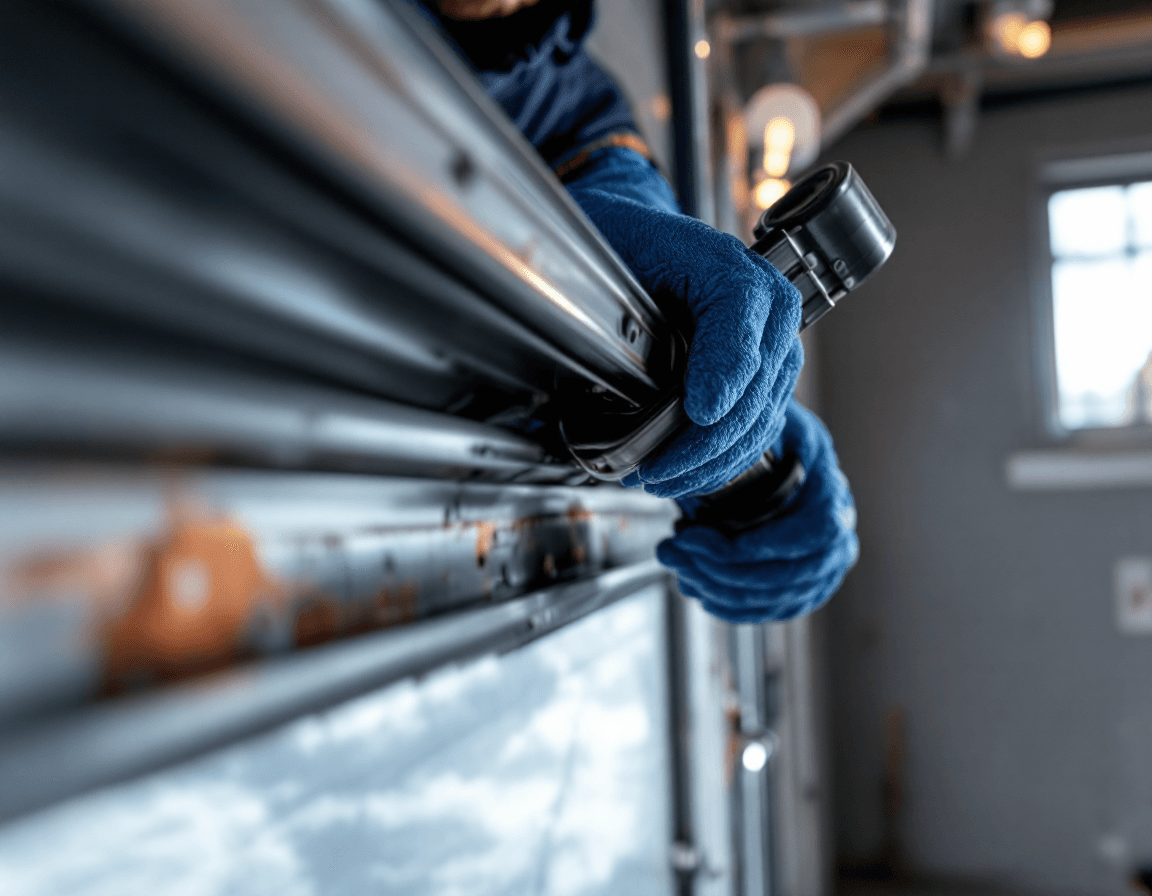
Garage door roller replacement in Redmond, WA is one of the most common fixes we handle, and it is often the cheapest way to stop a noisy, jerky door from getting worse. Rollers are the small wheels that ride inside the vertical and horizontal tracks and carry the weight of every panel as the door rises and falls. When they wear out, the whole door has to work harder, and you hear it. Most of the time a full set of replacement rollers costs between $120 and $250, though the exact figure depends on your door's size, the roller type you choose, and how many rollers your particular door uses.
Homeowners across the Redmond area tend to notice the problem in stages. First comes a faint squeak on cold mornings, then a rattle that seems to come from the ceiling, and eventually a door that stutters halfway up as though it is catching on something. Those early signs are easy to dismiss, but worn rollers rarely stabilize on their own. Replacing them while the track and hinges are still in good condition protects the opener, spares the door panels from uneven stress, and keeps the operation quiet enough that you stop thinking about the garage every time you pull in after a long day.
This guide walks through what worn rollers sound and feel like, why our local weather accelerates wear, how a replacement visit usually goes, and where the boundaries of safe DIY work sit. We have written it with Redmond homes specifically in mind, including the older split-level houses on Education Hill, the townhomes and newer builds near Overlake, the compact garages common downtown, and the family homes in the neighborhoods around Marymoor Park. Read it once from start to finish, or jump to the section that matches what your door is doing right now.
Listening to Your Door: What Worn Rollers Actually Sound Like
The first clue most people notice is sound, and learning to read it can save you a service call that does not need to happen. A worn roller with a failing bearing usually produces a steady, rhythmic squeak or a low grinding noise that rises and falls with the speed of the door. If the noise is loudest at the beginning of the lift and quiets down once the door is moving, the rollers at the bottom of the track are often the culprits, because they carry the most weight when the door is closed and starts to move. Sounds that repeat at a regular interval, like a thump every few inches of travel, frequently point to a flat spot on a steel roller or a cracked nylon tire that has started to hit the track seam.
Metal-on-metal scraping is a different sound and deserves faster attention. It usually means the roller's outer surface has worn through, or that a stem has loosened in its hinge bracket so the roller is grinding against the track's edge instead of rolling along it. If you hear a harsh scrape followed by a sudden jolt, stop using the door until someone has looked at it, because a roller that has failed completely can let a panel slip out of its track. Quiet grinding that stays constant is less urgent but still means the rollers are past their useful life.
Pay attention to what the sound does when the door reverses direction. Rollers that are beginning to seize often make a noise on the way down that is different from the noise on the way up, since gravity pulls the door down more firmly against the track. You may also notice the door pausing briefly at a particular height, which is a sign that one roller has stopped turning and is dragging. Keeping a mental note of where the noise happens helps a technician narrow down which rollers to inspect first.
Why Redmond Garage Doors Wear Their Rollers Faster Than You Might Expect
Our Pacific Northwest climate is gentle compared with places that see extreme heat or heavy snow, but it has its own steady influence on garage hardware. Redmond winters bring long stretches of rain, damp air, and cool temperatures that rarely dry out a garage completely. Moisture finds its way into roller bearings, washes away factory grease, and encourages light surface rust on steel tracks and axles. Over several wet seasons, that combination leaves a roller that turns with more resistance and more noise than it did when the door was new.
Spring and early summer add a different kind of wear. Pollen, fine dust, and the cottonwood and maple debris that drift across the Sammamish Valley settle into the track channels and get pressed into the roller grooves each time the door moves. That grit acts like sandpaper on the bearing surfaces and the nylon tire, and it can pull grease out of the bearing over time. Homes near Marymoor Park and the open green spaces often notice this more clearly, because the garage door is opened and closed frequently during warm months when people are heading out for walks, bike rides, or games.
Temperature swings matter too. A garage that warms during the afternoon and cools overnight causes slight expansion and contraction in metal tracks, which can shift their alignment a few millimeters across a season. Rollers that were comfortably seated can start to ride on the edge of the track instead of the center, and that edge contact creates the grinding noise many homeowners mistake for a motor problem. Because this kind of wear builds gradually, it is easy to miss until the door begins to stick.
Telling a Roller Problem Apart From a Track or Hinge Problem
Not every noise or jerk comes from the rollers, and a good diagnosis starts by separating the components that can produce similar symptoms. Track problems often show up as a door that feels fine in the middle of its travel but binds near the top or bottom, where the track curves. Hinge problems tend to produce a clicking or knocking sound that is tied to a specific panel rather than to the whole door. Opener problems usually come with a motor whine, a delay before movement, or a door that moves smoothly by hand but not when the opener is engaged.
A quick and safe check is to disconnect the opener, which you can do by pulling the emergency release cord, and then lift the door slowly by hand from the bottom. Move it only a short distance at a time and watch each roller as it passes the track seams. If the door moves evenly with a steady rolling sound, the rollers may be fine and the issue lies elsewhere. If the door stutters, skips, or catches at a particular height, the rollers or the track near that spot are the likely cause.
Before you assume the rollers are at fault, look at the track itself. Bent sections, loose bolts, or gaps where the track meets the wall bracket can push a roller out of line and mimic a worn wheel. A technician will typically check the track alignment, tighten brackets, and inspect the stems and bearings before deciding that the whole set needs replacing. This step matters because replacing rollers on a misaligned track simply wears the new rollers out sooner.
Steel or Nylon: Choosing a Quieter Roller for Your Door
Roller choice has a major effect on how your door sounds and how long it lasts. Steel rollers are durable, tolerate heavy loads well, and are a common original equipment choice, but they are louder because metal wheels rattle against the track as they turn. Nylon rollers, sometimes called quiet rollers, use a tire made from a tough polymer around a steel or nylon core, which absorbs vibration and produces a smoother, softer rolling sound. Many Redmond homeowners who want a quieter garage choose nylon for the living-space side of the house or for garages attached to bedrooms.
Nylon is not automatically better in every situation, and the right option depends on your door's weight, your opener, and how often you use the door. A heavy insulated door on a high-cycle household may do well with sealed-bearing steel rollers in a nylon-tire design, which combines the strength of a steel core with the quiet of a polymer surface. Ball-bearing rollers tend to feel smoother than solid stem rollers, and sealed bearings keep moisture and grit out of the mechanism longer, which is useful in our damp climate.
Here are some of the factors we consider when recommending a roller type for a Redmond door:
- The door's weight and whether it is insulated, since heavier doors need rollers with higher load ratings
- The track type, including standard lift, high lift, or low headroom configurations, which affects roller style
- How much the noise bothers you, such as a garage that shares a wall with a bedroom or office
- Whether the existing stems and brackets are in good shape or need to be replaced at the same time
- The door's age and the condition of the springs, hinges, and track, so the upgrade matches the rest of the system
Choosing the right material is only part of the decision. Installing quality rollers on a door with bent track or worn hinges will still produce an unhappy result, which is why we inspect the whole assembly before recommending a specific product.
What a Roller Replacement Visit Usually Involves in a Redmond Garage
A typical roller replacement starts with a walk-around of the door and the opener. A technician will test the balance of the door, look for signs of cracked panels or damaged hinges, and check the springs and cables to make sure the system is stable. This is also when we confirm the track is secure and identify which rollers are worn. Doing this inspection first means the replacement addresses the real problem instead of only the most obvious noise.
The actual swap is straightforward but requires care. The door must be safely supported, and the tension on the springs must be handled with the proper equipment, which is one of the reasons this work belongs with a licensed professional. Rollers are typically removed by lifting the door slightly, removing the old roller from the hinge bracket, and inserting the new one. On many doors, the roller stems are part of the hinge assembly, so the technician will work carefully to avoid bending or stressing adjacent panels.
After the new rollers are installed, the door should be tested through its full range of motion. The technician will watch for smooth travel, check that each roller seats properly in the track, and confirm the door closes fully and seals against the floor. We also reconnect the opener and run several cycles to make sure the new components are working together. A good visit ends with a door that moves quietly and predictably, and with a clear explanation of what was replaced and why.
Neighborhood Notes: Downtown Redmond, Overlake, Education Hill, and Marymoor
Redmond is a city of distinct neighborhoods, and the garages we see vary a great deal from one area to another. Downtown Redmond includes a mix of older homes and newer multifamily buildings, and many garages there are narrower or shallower than suburban standards, which can mean tighter track clearances and less room to work. Homeowners downtown often want the quietest possible operation because garages open onto shared alleys or sit close to neighboring units.
Overlake has many newer townhomes and single-family houses, and a number of them have garage doors that are heavier and more complex, including insulated models with extra hardware. Rollers on these doors carry more load, so choosing a higher-capacity option matters. The proximity to busy commercial corridors also means these doors cycle often, which speeds up wear on the rollers and makes a planned replacement schedule more practical.
Education Hill's hillside streets bring their own considerations. Many homes there sit on slopes, and the garage may be built into a grade that exposes the door to more moisture and runoff in the rainy months. Driveway slopes can also put extra strain on the door as it lifts. Marymoor and the surrounding residential streets have a mix of older craftsman-style homes and more modern builds, so we see everything from original steel tracks to newer systems with factory-installed nylon rollers. Each neighborhood has its own typical patterns, and knowing them helps us plan the right replacement the first time.
Budgeting for a Full Roller Set: What the $120 to $250 Range Covers
Our typical price range for a full set of garage door rollers is $120 to $250. That range generally reflects the cost of the rollers themselves, which vary by material, bearing type, and size, along with the labor needed to replace them safely. Lower-end sets are usually standard steel or basic nylon rollers for a common single-car door, while higher-end sets often include sealed bearings, reinforced nylon tires, or heavier-duty stems for larger or insulated doors.
Several details influence where a particular job lands within that range. The number of rollers matters, since a standard two-section door uses a different count than a taller or wider model. The roller stem style matters too, because some doors use a short stem and others use a long stem that must match the hinge bracket. If the track needs adjustment or the hinges show wear, those repairs are quoted separately so you can decide what to address now and what to watch.
We recommend asking for an itemized explanation before any work begins. A clear quote lets you compare options, understand why one roller type is recommended over another, and decide whether to bundle the replacement with other maintenance such as lubrication, bracket tightening, or weatherstripping. Any reputable technician should be able to explain the reasoning behind each line item, and that transparency is part of what makes a repair worth trusting.
Safety Boundaries: Work That Belongs With a Licensed Technician
Roller replacement is one of the more approachable garage door repairs, but it still involves forces that can cause serious injury if handled incorrectly. The door is heavy, the springs store large amounts of tension, and a panel that slips from its track can fall with little warning. Homeowners should never attempt to adjust, remove, or wind torsion springs, and should never disconnect cables under tension. Those tasks require specialized tools and training, and mistakes can be dangerous.
Replacing rollers yourself is possible on some doors, but it requires that the door be fully supported, the opener be disconnected, and the work be done with the right clamps and bracing. Even experienced DIYers can run into trouble if a roller stem is seized or a hinge is bent, because forcing the part can crack a panel or damage the track. When in doubt, call a licensed professional rather than improvising.
Spring work and cable work are always handled by a licensed technician for these reasons. We are licensed, bonded, and insured, and we treat every spring and cable job as a safety-critical task. If a technician tells you that a roller replacement reveals a spring or cable problem, that repair should be completed before the door is used again. Your safety and the safety of anyone nearby is worth more than a quick fix.
Keeping New Rollers Quiet Through Redmond's Wet and Dusty Seasons
Once new rollers are installed, a little routine care helps them stay quiet and last longer. Light lubrication of the bearings and track, using a lubricant recommended for garage door hardware, reduces friction and helps keep moisture from settling into the mechanism. Avoid heavy grease on tracks, since it attracts dust and debris. Wiping the track channels a few times a year removes the grit that accumulates from pollen, leaves, and road dust.
Seasonal checks make a noticeable difference in our climate. Before the wet months arrive in the fall, inspect the track for loose bolts, look for surface rust, and confirm the weatherstripping along the bottom of the door is sealing well. In spring, after pollen and debris build up, clean the tracks and check that rollers are still turning freely. A quick test of the door's balance and a visual check of the hinges and brackets can catch small issues before they become noisy ones.
Watch for early warning signs and act on them promptly. A new squeak, a slight hesitation, or a door that feels heavier than usual often points to a component that needs adjustment, not a full overhaul. Addressing these signs quickly keeps the rest of the system healthy and extends the life of your new rollers. If you ever notice cracked nylon tires, a roller that wobbles in its bracket, or a door that catches in the same spot each time, schedule an inspection rather than waiting for the problem to grow.
If your Redmond garage door is grinding, squeaking, jerking, or binding, or if you simply want a quieter, smoother operation, we are ready to help. Call Seattle Garage Door Fix at (888) 799-3819 to describe what your door is doing and to schedule a licensed technician for an inspection and roller replacement. We serve Redmond homes in ZIP codes 98052 and 98053, along with the wider Western Washington area, and we can explain your options clearly before any work begins.