
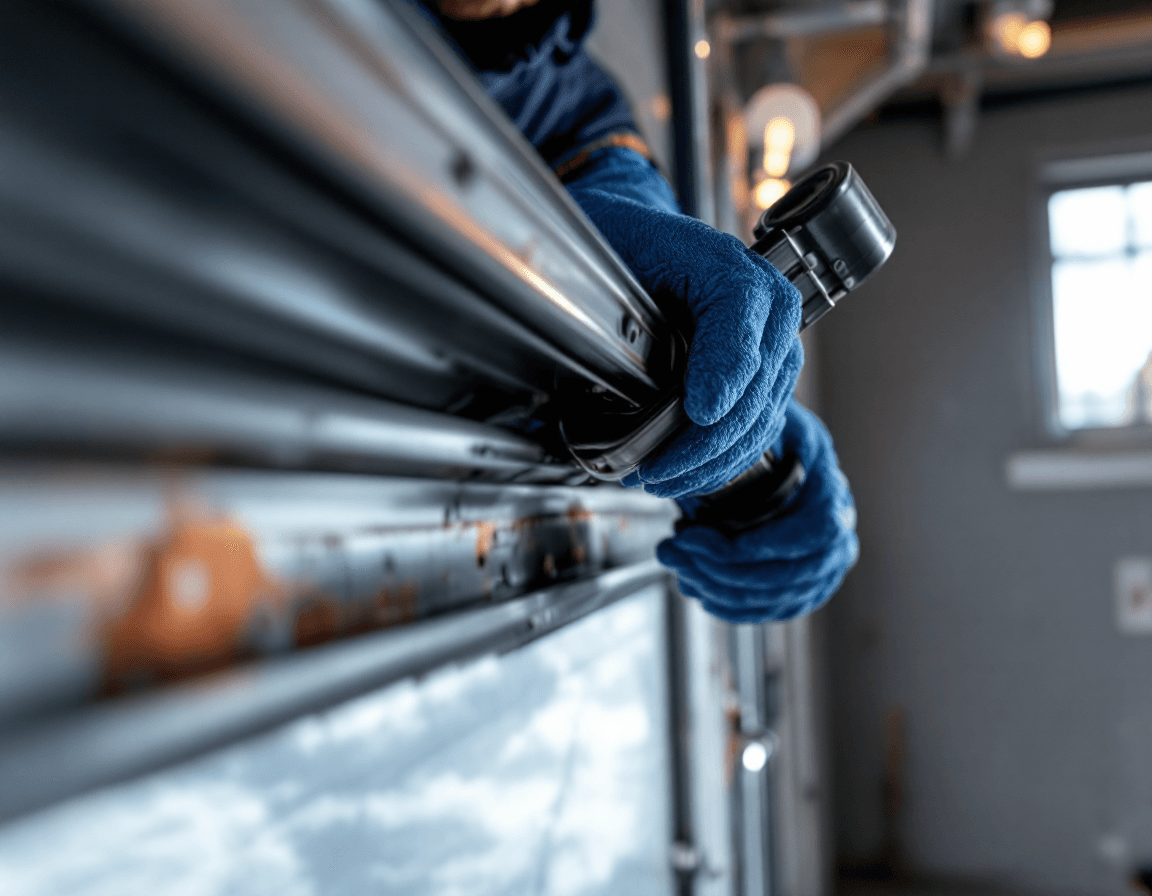
Garage door roller replacement in Duvall, WA is one of the most common and most affordable repairs we handle, and it often makes a bigger difference than homeowners expect. A door that grinds, squeaks, or jerks as it travels is usually telling you that the small wheels riding inside its tracks have worn down, cracked, or seized. Replacing them restores smooth movement and can cut the noise dramatically, sometimes to the point where the door sounds like a different appliance. For homeowners in the Snoqualmie Valley, this repair also tends to be a practical way to extend the life of the entire door system.
Duvall sits in a valley where the air stays damp for much of the year, and garages here see a steady cycle of cool, wet winters and mild, humid summers. Those conditions affect more than the siding and the lawn. Moisture gets into track seams, grit collects in the grooves, and the lubricant that once kept the rollers turning freely can thin out or wash away. If you have been wondering whether the noise from your door is worth addressing, this page walks through what is actually happening, what the repair involves, what it generally costs, and how to know when a professional should handle the job.
Our technicians serve homes throughout Duvall and the surrounding parts of King County, and we work on everything from older garages with original hardware to newer doors with upgraded components. Roller work is one of the first services we recommend when a door begins behaving badly, because it is relatively contained and rarely requires major parts. Whether your door is rattling on Main Street, tucked off a rural road near Cherry Valley, or somewhere in the 98019 area, the underlying mechanics are the same. Read on for a practical guide written the way a local technician would explain it at your kitchen door.
Why Duvall Garage Doors Wear Their Rollers Faster Than You Might Expect
Rollers are simple parts, but they work hard. Every time your door opens or closes, dozens of small rotations carry the door's weight along a curved track, and the rollers absorb a lot of friction and vibration in the process. In a climate like Duvall's, that job becomes more demanding because moisture and temperature swings change how the materials behave over time. Steel parts can begin to pit and corrode, while the bearings inside them lose their lubricant and start to drag.
Winter is usually the hardest season. Wet weather pushes water and fine debris into the track channels, and that mix can harden into a gritty film that acts like sandpaper on the roller surfaces. When temperatures drop, the grease inside a roller's bearing thickens, so the wheel may turn slowly or stop altogether during the first few openings of a cold morning. Many homeowners notice the squeal only on certain days and assume it is a passing quirk, when in fact it is an early sign of wear that is getting worse with each cycle.
Older Duvall homes also bring their own considerations. Many garages in the area were built with original hardware that has been opened and closed thousands of times, and the tracks may have shifted slightly as the house settled. A roller that once fit perfectly can begin to bind when the track no longer lines up exactly as designed. Understanding that wear is partly a matter of climate and partly a matter of age helps explain why the same problem can appear suddenly after a long, rainy season.
Reading the Warning Signs Your Rollers Are Giving You
Your garage door usually provides plenty of advance notice before a roller fails completely. The trick is recognizing the sounds and movements that point to roller trouble rather than a problem with the springs, opener, or sensors. Rollers are typically the source when the noise comes from the sides of the door as it travels, when the sound changes with the speed of the door, or when you can see visible damage on the wheels themselves. Pay attention to when the noise happens, because the pattern often reveals the cause.
Here are the most common signs that the rollers need attention:
- Loud grinding or a steady squeak as the door moves up or down
- Shaking, hesitation, or a jerking motion as the door travels along the track
- Rollers that are visibly flat, cracked, chipped, or discolored
- Metal-on-metal scraping that suggests a roller has seized or is rubbing against the track
- Spots where the door binds or sticks, often near the bottom or at a particular height
- A general desire for quieter operation, especially if the garage is attached to a living space or bedroom
If you notice any of these, it is worth a closer look soon rather than later. A roller that has seized can overheat the track, strain the opener, and put extra stress on the door panels or hinges. Shaking or jerking motion often means the door is not traveling evenly, which can eventually lead to misalignment or damage to other components. Catching the problem while it is still limited to one or two rollers usually keeps the repair simple and affordable.
Steel Versus Nylon: Choosing the Right Roller for Your Valley Home
Most garage door rollers fall into two broad families: steel and nylon. Steel rollers are sturdy and have long been the standard for heavy doors, but they tend to be louder because metal rolling on metal produces a distinct clatter inside the track. Nylon rollers, often built around a steel ball bearing stem, are quieter, smoother, and more forgiving of minor track imperfections. For a homeowner who wants a calmer garage, nylon is often the upgrade of choice.
Choosing between them depends on several factors. The weight of your door, the size of the track, and how often you use the garage all play a role. A heavy, insulated door that opens many times a day may benefit from high-quality nylon rollers with sealed bearings, which resist moisture and hold up well to frequent cycles. A lighter door in a rarely used space might do perfectly well with steel, particularly if the existing track is in good shape and the noise is not a concern.
In practice, we often recommend nylon for Duvall homes because it handles damp conditions well and reduces the noise that bounces off the walls of an attached garage. Nylon also tends to show less wear from grit that works its way into the track after rain. That said, the right choice always depends on your specific door, and a technician can confirm the correct size and type before any parts are ordered. Matching the roller stem diameter, wheel size, and bearing style to your existing hardware is essential for a smooth result.
What a Full Roller Set Typically Costs in Duvall
Pricing for garage door roller replacement is usually straightforward because the scope of the work is well defined. A full set of rollers for a standard residential door generally falls in the range of $120 to $250, depending on the material you choose, the number of rollers your door uses, and whether any related parts need attention during the visit. Nylon upgrades typically sit toward the middle or upper end of that range, while standard steel replacements may come in closer to the lower end. Your exact cost depends on your door's configuration, and a technician can confirm the figure after looking at the hardware.
It helps to understand what is and is not included in a roller-only service. Replacing rollers involves removing the old wheels, inspecting the track for damage or debris, installing new rollers, and testing the door through several full cycles. If the track is bent or the hinges are loose, those issues may need separate attention, and a technician should explain them clearly before any additional work begins. You should never feel pressured into work you did not request.
Many Duvall homeowners also ask whether it makes sense to replace only the rollers that look worn. In most cases, replacing the full set is the better choice because rollers wear at similar rates and mixing old and new wheels can produce uneven movement. A complete set gives you consistent operation, a quieter door, and a clear reset of the system. Ask your technician to explain the reasoning for your specific door so you can make an informed decision.
How a Technician Replaces Rollers, Step by Step
Roller replacement follows a predictable sequence, though every door has its own quirks. The technician begins by confirming that the door is safe to work on and that the opener is disconnected, which prevents accidental movement during the job. The door is then supported so it cannot shift, and the old rollers are removed one at a time, usually by lifting the door panel or working through a designated section of the track. Each roller is checked for size, stem type, and bearing condition before it is taken out.
Once the old rollers are out, the track is inspected closely. Technicians look for debris, rust, flattened spots, and any signs that the track has loosened from the wall or ceiling. The track is cleaned, and any obvious irregularities are noted for correction. New rollers are then installed, making sure each one seats fully in the track and rides evenly along the curve. The alignment of each section is checked as the work progresses.
After installation, the door is tested through several full cycles, both up and down. The technician listens for noise, watches for binding or hesitation, and confirms that the door stops and reverses correctly. If the opener has a safety reverse feature, that function is verified as well. A good technician will walk you through the results and explain what you should notice in the days ahead, so you know whether the door is performing as expected.
Track Alignment and Why New Rollers Are Not Always the Whole Answer
Rollers can only perform well when the track they ride in is properly aligned. If the track is slightly out of plumb, bent by an impact, or loosened from its mounting brackets, even brand-new rollers may still grind, bind, or jerk. This is one reason technicians inspect the track before and after roller work instead of simply swapping parts. A quiet door depends on the whole system working together.
Duvall's wet seasons can contribute to track problems over time. Moisture can soften wood framing around the track mounts, and repeated expansion and contraction can slowly shift brackets that were installed years ago. Vehicles bumping the lower track, or a stray ladder knocking against a panel, can bend a section just enough to cause trouble. These issues often develop gradually, so the door may feel only slightly off until a roller begins to fail.
When alignment is the underlying problem, a technician may recommend tightening the track brackets, adjusting the spacing, or correcting a small bend. These adjustments are usually modest in cost and time, but they make a real difference in how the door feels. Ask for a clear explanation of any alignment findings, and request a short demonstration of the door's movement before you approve additional work. A door that runs straight and level is the best foundation for lasting quiet operation.
Keeping the Door Quiet Between Service Visits
Once new rollers are installed, a little routine care goes a long way toward keeping them quiet and smooth. The most important habit is to wipe down the track periodically, especially after heavy rain or when leaves and debris have collected near the door. Removing grit before it hardens into a gritty film protects the new wheels from premature wear. A soft cloth and a mild cleaner are usually enough for this task.
Lubrication matters too, but it should be done carefully. Use a lubricant recommended for garage door components, applied to the roller bearings and hinges rather than to the track surface itself. Excess lubricant can attract dirt, so a light, targeted application is better than a heavy coating. Duvall's damp air can wash grease away over time, so an occasional check every few months is a sensible habit.
Here is a simple maintenance routine many homeowners find manageable:
- Wipe the vertical and horizontal tracks with a dry or lightly damp cloth every few months
- Remove leaves, mud, and gravel from the bottom of the door and the track area
- Inspect rollers for flat spots, cracks, or any new grinding sound
- Apply a light coat of garage door lubricant to roller bearings and hinge points
- Listen for changes in the door's movement, especially on cold or damp mornings
- Schedule a professional inspection if noise returns or the door starts to hesitate
These steps are safe for homeowners to perform. Anything that involves tension, springs, or cables should be left to a professional, as explained in the next section.
When Spring and Cable Work Belongs With a Licensed Professional
Roller replacement is one of the more approachable garage door repairs, but it sits next to systems that can be dangerous when mishandled. Torsion springs and extension springs store enormous amounts of energy, and a single spring can cause serious injury if it is adjusted, released, or removed incorrectly. Cables, drums, and lift components operate under tension that is easy to underestimate. These parts should never be handled by an untrained homeowner, no matter how simple the task appears.
Our guidance is consistent: if a job involves springs, cables, or tensioning, call a licensed professional. Our team is licensed, bonded, and insured, and we treat these components with the care they require. If a technician finds that a spring is worn or a cable is frayed while working on your rollers, they should explain the findings clearly and let you decide how to proceed. You should never be pressured into spring work during a roller visit.
Homeowners can still take a supportive role. Keep children and pets away from the door during service, and avoid standing beneath the door while it is being moved or tested. If the door drops suddenly, falls unevenly, or makes a loud bang, disconnect the opener if it is safe to do so and call for help. Safety is always the first priority, and roller work should never be rushed.
Neighborhood Notes: Main Street, Cherry Valley, and the 98019 Area
Duvall has a character all its own, shaped by its river-valley setting, its older downtown blocks, and the rural and semi-rural properties that spread out beyond the center of town. Homes along and near Main Street often feature older garages with original tracks, while properties in the Cherry Valley area and other outlying parts of the 98019 ZIP code may include detached garages, workshops, or pole-style buildings that see different kinds of use. Each setting presents its own pattern of wear and its own preferences for quiet operation.
Attached garages in Duvall neighborhoods are a common source of noise complaints. Because the garage often shares a wall with a kitchen, laundry room, or bedroom, even a moderate squeak can carry through the house. Nylon roller upgrades are especially popular in these homes because they reduce vibration and noise noticeably. Detached garages and workshops may tolerate more noise, but the same mechanical principles apply, and a smooth-running door still lasts longer.
Our technicians are familiar with the kinds of doors and building layouts common across King County. We understand how moisture behaves in valley settings, how older framing can shift, and how seasonal use affects different properties. Whether your home is near the center of town or farther out along a country road, we can assess the roller system and recommend a practical solution. Local knowledge helps us spot problems that a generic inspection might miss.
Booking Your Roller Visit Without the Runaround
If your garage door is grinding, shaking, or scraping, the simplest next step is to schedule an inspection. Before the visit, note when the noise happens, whether it is worse on cold or wet days, and whether any particular section of the track seems to cause trouble. Take a short video of the door in motion if you can, since that often helps a technician diagnose the issue quickly. Keep the area around the door clear so the technician can work safely and efficiently.
During the visit, expect a clear explanation of what the technician finds, what options are available, and what each one costs. A roller replacement quote for a full set typically falls within the $120 to $250 range, and any additional work should be discussed before it begins. You are welcome to ask questions, compare materials, and take time to decide. A reputable technician will never rush you into a decision.
To schedule service for garage door roller replacement in Duvall, WA, call Seattle Garage Door Fix at (888) 799-3819. Our licensed, bonded, and insured technicians can inspect your door, explain the difference between steel and nylon rollers, and help you restore smooth, quieter operation. Whether the noise is new or has been building for months, one call can get your garage moving the way it should.