
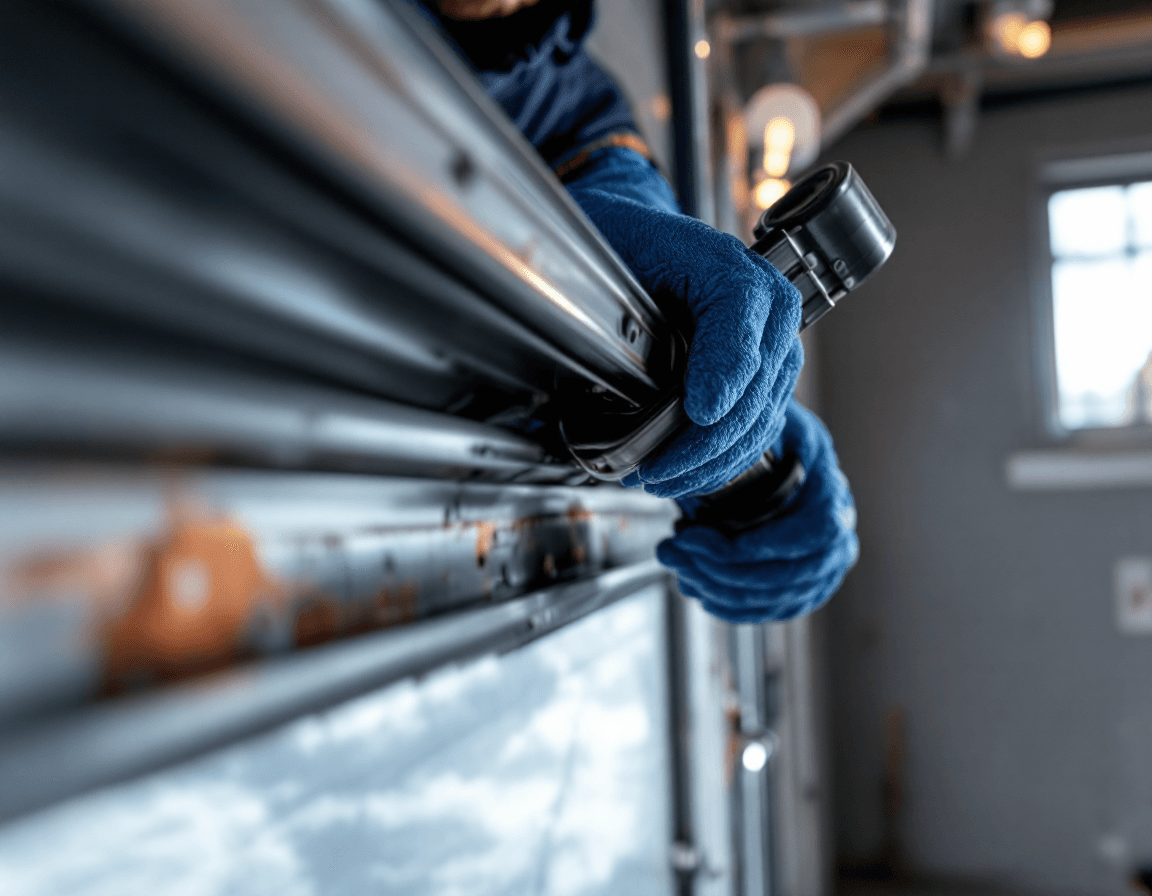
Garage Door Roller Replacement in Woodinville, WA is one of the most common repairs we handle for homeowners in the Woodinville area, and it's often the cheapest fix that makes the biggest difference in how your door feels every time you open it. Rollers are the small wheels that ride inside the vertical and horizontal tracks and carry the weight of the door as it rises and falls. When they wear out, the door still works, but it works harder, louder, and less smoothly than it should. Many homeowners live with the noise for months before they realize a set of rollers costing a fraction of a service call is the actual cause.
Woodinville sits in a part of King County where garages see a lot of wear from the environment as well as from daily use. Between the wet winters, the damp air that lingers near the Sammamish River and the lower-lying neighborhoods, and the temperature swings that come with spring and fall, the moving parts of a garage door take a steady beating. Many of the homes we service around Cottage Lake and up on Hollywood Hill have attached garages that share walls with heated living space, which can cause condensation on the cold metal parts during the colder months. This page explains how to recognize worn rollers, what replacement involves, what the typical cost looks like, and where the safety line falls for work you should leave to a licensed technician.
Our goal here is to give you a clear, practical picture so you can decide what your door needs. We don't believe in pushing a bigger job than necessary, and a roller replacement is often exactly the right amount of work. If you read through the warning signs and the notes on safety and pricing and still aren't sure, a short inspection can settle the question quickly. Everything below reflects how we approach these repairs on real Woodinville garages, not a generic checklist.
The Sound That Tells You Something Has Changed
Most homeowners first notice a problem by sound rather than by sight. A healthy door makes a low, even rumble as it travels, with maybe a faint tick at the hinges. When the rollers start to fail, that rumble turns into a grinding, squeaking, or chattering noise that often gets louder as the door climbs, and sometimes it changes depending on how fast the opener is running. The sound is usually coming from a roller whose bearing has dried out, cracked, or started to seize against its stem.
Pay attention to when the noise happens. If it's loudest at the very start of the opening cycle, the bottom rollers near the floor may be the culprit, since they carry the most sudden load when the door breaks free from the closed position. If the noise builds through the middle of the travel, the rollers in the upper track or along the curve are more likely the source. A squeal that only shows up on cold mornings often points to lubricant that has thickened, which is a different issue from a worn roller, though a worn roller will usually squeal no matter what the temperature is.
Try this simple check before you call anyone. With the door closed and the opener disconnected, lift the door by hand slowly and listen to how it moves. Run a hand gently along each roller while the door is raised a few inches, and feel for flat spots, wobble, or grit. Keep your fingers clear of springs and cables, and do not attempt to adjust tension. This kind of listening test won't diagnose everything, but it often narrows the problem to one side or one section of the door.
Warning Signs That Your Rollers Are Wearing Out
Not every noisy door needs new rollers, and not every quiet door is healthy, so it helps to know the specific symptoms that point toward roller replacement. Here are the signs we see most often on Woodinville garage doors:
- Loud grinding or squeaking that gets worse as the door moves through its range
- Door shakes, bounces, or jerks as it travels along the track
- Rollers that look visibly cracked, flattened, chipped, or discolored
- Metal-on-metal scraping sounds, which often mean a steel roller has lost its bearing or its tire
- Door binds or sticks at certain points, especially near the top of the track or at the curve
- A general desire for quieter, smoother operation after years of noise
Any one of these signs is worth investigating, and several together are almost always a good reason to schedule service. The visual signs are the easiest to spot. Nylon rollers can develop cracks or flat spots on the outer tire, and steel rollers with sealed bearings can show rust-colored staining or a visible gap where the tire has separated from the hub. A roller that wobbles when you spin it by hand has a worn bearing, and that wobble is the main reason doors begin to shake.
Some signs look like roller problems but have other causes. A door that sticks at the same spot every time may have a bent track section, a damaged bottom seal dragging on the floor, or an opener that is set with too much force. A technician should look at the whole system before assuming the rollers are to blame. That's one reason we inspect the track alignment and hardware on every roller visit rather than swapping parts on instinct.
How Pacific Northwest Damp Air Wears Rollers Down
Rollers fail for several reasons, but the Pacific Northwest climate adds some specific pressures that homeowners in Woodinville should understand. Our winters bring long stretches of rain and high humidity, and garages in this region often hold moisture even when the door is closed. That moisture gets into the bearings of steel rollers and mixes with lubricant, which can wash out the grease that keeps the bearing turning smoothly. Over time, the bearing corrodes, the roller gets tight, and the door starts to strain.
Temperature changes add their own stress. A garage that cools overnight in late fall and warms again in the afternoon creates condensation on steel surfaces, and that cycle repeats for weeks at a time. Nylon rollers handle moisture better than steel because they don't rust, but they can still become brittle after years of exposure, especially if they're in a spot where sunlight reaches them through a window or an open side door. The plastic can crack along the hub or lose its grip on the stem.
Dust and debris matter too. Woodinville garages often double as workshops, storage areas, or spaces for bikes, kayaks, and outdoor gear, and the tracks collect grit that gets pushed into the rollers every time the door moves. The fine dirt acts like sandpaper inside a bearing. A quick wipe of the tracks a few times a year can slow this process considerably, and it's one of the simplest maintenance habits we recommend to homeowners who want their doors to last.
Steel Versus Nylon: Picking the Right Roller for Your Door
When it's time to replace rollers, you'll usually have a choice between steel and nylon. Steel rollers have been the standard for decades, and they tend to hold up well under heavy doors and frequent use. Their main drawback is noise, especially when the bearing is aging or the track has minor imperfections. Nylon rollers, often called quiet or sealed rollers, run more smoothly and produce less sound, which is why many Woodinville homeowners who live close to bedrooms or home offices choose them.
Here's how the two types compare in practical terms:
- Steel rollers usually handle heavy doors and high cycle counts with confidence, but they can rust in damp garages and tend to be louder.
- Nylon rollers run quieter and resist moisture, but they should be matched to the door's weight and the track size to avoid premature wear.
- Sealed ball-bearing steel rollers offer a middle ground, with better lubrication retention and smoother travel than basic steel.
- Replacing a whole set at once usually gives more consistent results than swapping one roller at a time, since mismatched wear can create uneven motion.
The right choice depends on your door's weight, its size, how often you use it, and how much noise you're willing to tolerate. A technician should check the door's weight and track dimensions before recommending a roller type. Some older doors were built for specific roller sizes, and installing the wrong size can throw the door out of balance. We always confirm compatibility before ordering parts so the new rollers sit correctly in the track and carry the load they were designed for.
What a Roller Replacement Actually Involves
For most residential doors, a roller replacement is a focused job that doesn't require tearing the door apart. The technician first secures the door so it can't move, then removes the bottom bracket or hinge area as needed to access the rollers. Each roller is slid out of its track position, and the new one is inserted in its place. Depending on the door's design, the technician may need to lift a section of the door slightly to free the old roller or to seat the new one.
The job also includes checking the rest of the system. We look at the track for dents, loose bolts, or gaps, and we inspect the hinges for cracks and the bottom seal for damage that might be causing drag. We test the door through its full range of motion to confirm that it runs evenly and without binding. If the track needs tightening or realignment, that adjustment is usually included in the same visit because it directly affects how the new rollers perform.
Safety is a central part of every visit. The door's springs and cables carry enormous tension, and they are not part of a roller swap. Our technicians stay within the scope of roller and track work and call for the appropriate follow-up whenever they find a spring or cable issue. Homeowners should never attempt to remove a spring, loosen a cable, or disconnect tension components on their own, even when they feel confident about the rest of the job.
Other Parts to Check While the Rollers Are Out
A roller replacement is a good opportunity to look at the components that work alongside the rollers. Hinges connect the door panels and guide them through the curve, and a cracked or bent hinge can cause the same binding and noise that homeowners blame on rollers. We inspect hinge plates, bolts, and the rivets that hold them together, and we tighten or replace anything that has worked loose. Loose hardware is a common source of rattling that sounds like a bad roller but has a much cheaper fix.
The track itself deserves attention. Even slight bends in the vertical or horizontal sections can cause rollers to ride unevenly, and that unevenness often shows up as shaking or a jerky start. A technician can often correct minor alignment issues by loosening the track bolts, adjusting the position, and retightening everything to specification. Severely damaged track sections may need replacement, but that's less common than people expect.
The bottom weatherstrip and the end caps also play a role. A torn or hardened bottom seal can catch on the threshold and force the opener to work harder, which places extra load on the rollers. End caps that are cracked or missing allow the roller stems to shift and rub against the track edges. Replacing these small parts during the same visit can make a noticeable difference in how the door feels.
Understanding the $120 to $250 Price Range
For a full set of rollers, our typical price range for Woodinville homes falls between $120 and $250. That range covers the roller parts themselves and the labor to install them, and it reflects the most common residential door sizes and roller types. The exact price depends on factors like the number of rollers your door uses, whether you choose steel or nylon, and whether the track needs adjustment during the same visit. Doors with more rollers or specialty designs may land at different points in the range.
Several things can push a job toward the higher end. Sealed nylon rollers or heavy-duty sealed steel rollers generally cost more than basic steel, and a door that needs extra hinge hardware or track work will take more time. A door with unusual dimensions or a non-standard track radius may require additional parts. Conversely, a straightforward swap of standard steel rollers on a common door typically lands near the lower end of the range.
We always explain the cost before starting work, and we don't add charges for steps you haven't approved. If the inspection reveals a problem outside roller and track work, such as a spring or cable issue, we'll explain what's needed and what it would involve, but that work is quoted separately and handled by the appropriate licensed service. Our licensed, bonded, and insured status applies to every visit, so you can count on a clear scope from the start.
Keeping New Rollers Quiet Through Every Season
Once new rollers are installed, a little routine care goes a long way toward keeping them quiet. Wipe the tracks with a dry cloth every few months to remove grit, and avoid spraying heavy grease into the track, since it attracts dust. A light lubricant made for garage door components, applied sparingly to the roller bearings and hinge pivots, helps keep moving parts running smoothly. Avoid using household oils or penetrating sprays that can gum up over time.
Seasonal habits matter in Woodinville. During the wet months, keep an eye on the garage floor for standing water near the door and check that the bottom seal is still making good contact. In summer, watch for sun-baked weatherstripping that has hardened or split. If your garage stays cold and damp, a dehumidifier or better ventilation can reduce the condensation that accelerates rust on steel parts. These are small steps, but they add years to the life of your rollers.
Keep a simple log of any changes in sound or movement. A note that the door started squeaking after a cold snap or began jerking after a heavy rain gives a technician useful clues during a visit. Early attention to a small change is almost always cheaper than waiting for a roller to fail completely and possibly damage the track or hinges in the process.
Where Safety Ends and a Licensed Technician Begins
We want to be direct about the limits of do-it-yourself garage door work. Roller replacement is within reach for some careful homeowners, but the moment a job involves torsion springs, extension springs, or cables, the risk becomes serious. Springs store large amounts of energy, and a mistake during adjustment or removal can cause injury or property damage. Cables under tension can snap or recoil with force. These components should be handled only by trained, licensed professionals with the right tools and training.
If you're unsure whether a symptom comes from a roller or from something more serious, stop and call for help rather than guessing. Signs that point toward a spring or cable issue include a door that drops suddenly, a visibly stretched or frayed cable, a gap in the spring coil, or a door that won't stay open when raised by hand. Any of these means the door should be secured and inspected by a professional before anyone operates it again.
Our technicians follow this same principle on every call. We handle roller and track work with the care it requires, and when we find spring or cable concerns, we explain the situation clearly and recommend the appropriate follow-up. We'd rather tell you something needs professional attention than leave you with an unsafe door. Your safety comes ahead of any single repair.
Serving Woodinville, Cottage Lake, and Hollywood Hill Homes
Our crews regularly work throughout Woodinville and the surrounding area, including the neighborhoods near Cottage Lake and the homes spread across Hollywood Hill. Woodinville's mix of older ranch-style houses, newer builds, and properties tucked among the trees means garage doors vary widely in age, size, and track design. Some homes near the Woodinville Wine Country district have larger detached or oversized garages used for storage, workshops, or hobby space, and those doors often carry heavier loads that affect roller wear. We bring a range of roller sizes and types to match what we find on site.
Scheduling a roller visit is simple. Call (888) 799-3819, describe the noise or movement you're hearing, and let us know your garage door's approximate age and size if you know it. Our team can often give you a sense of what to expect before the visit, though a final price is confirmed after we inspect the door. Homes in ZIP codes 98072 and 98077 are both within our regular service area, and we're happy to arrange a time that fits your schedule.
We understand that a noisy garage door is an everyday annoyance, especially if the garage sits near a living space or a bedroom. Many homeowners in our Woodinville service area tell us the change after a roller upgrade is immediately noticeable, and the door feels like a different appliance. Whatever your situation, we'll explain what we find, recommend only what your door truly needs, and leave you with a quieter, smoother door.
Ready for a quieter garage door in Woodinville? Call Seattle Garage Door Fix at (888) 799-3819 to schedule a roller inspection or replacement. Our licensed, bonded, and insured technicians will assess your rollers, track, and hardware, give you a clear price before any work begins, and refer any spring or cable concerns to the appropriate professional service.