
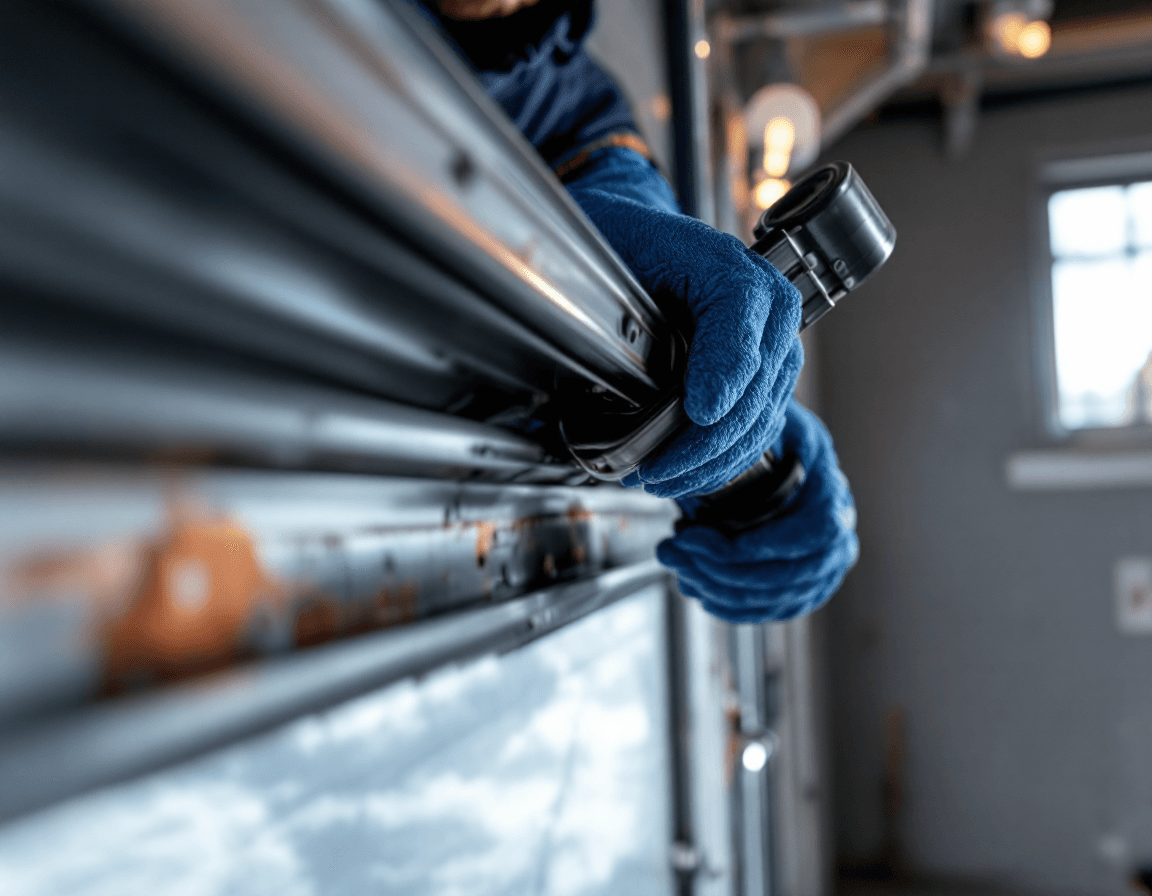
If you are searching for garage door roller replacement in Bothell, WA, you are probably dealing with a door that no longer glides the way it used to. Maybe it rumbles like a cart over gravel every time it opens, or it hesitates halfway up and then lurches the rest of the way. Those symptoms usually trace back to the small wheels that ride inside the tracks, and they are one of the most common and affordable repairs we handle across the Eastside. A full set of rollers typically runs $120 to $250, depending on the door size, the roller type, and the condition of the track.
Bothell homes sit in a wide mix of settings, from older split-levels near the Sammamish River to newer townhomes and single-family houses tucked into hillside subdivisions. Garage doors here see a lot of use, with daily commutes, weekend trips, and kids cycling in and out. Because the region's damp winters and mild, humid springs are hard on steel, rollers in this area often wear out sooner than homeowners expect. Understanding how rollers work, what the warning signs mean, and what your options are will help you decide when to schedule service and what to ask for when you do.
This guide walks through the practical side of roller replacement in plain language. It covers what rollers do, how to interpret the noises and movements your door makes, why Western Washington weather matters, and when a worn roller is simply a nuisance versus a safety concern. It also explains the difference between steel and nylon rollers, what a typical service visit involves, and when a licensed technician should take over. Whether you live near Bothell Landing, around the business corridors of Canyon Park, or in one of the residential pockets near North Creek, the goal is the same: a door that opens smoothly, quietly, and predictably.
What Your Garage Door Rollers Actually Do
Every sectional garage door rides on a set of rollers, which are small wheels attached to the hinge brackets between door panels. The rollers travel inside vertical and horizontal tracks, guiding the door up, over, and back as it opens and closes. Without them, the door would scrape directly against metal tracks, creating heavy friction and forcing the opener motor to work far harder than it was designed to. Most standard residential doors use between eight and twelve rollers, though the exact number depends on the door's height, width, and whether it has reinforcement bracing.
Rollers carry a surprising amount of load. The weight of each door section rests on the rollers as it moves through the curve at the top of the track, and the rollers are what allow the panels to pivot smoothly from vertical to horizontal. When a roller is healthy, it spins freely with almost no resistance. When it is worn or damaged, it can drag, wobble, or stop turning altogether, and that change transfers stress to the rest of the system.
Roller design matters too. Standard steel rollers have a metal sleeve around a ball bearing, while sealed nylon rollers use a plastic or composite wheel that runs quietly on the track. Some rollers are stem-style, with a long shaft that inserts into the hinge, and others are rollers with a fixed axle. Before ordering parts, a technician checks the stem length, wheel diameter, and bearing type so the replacements match the existing hardware and fit the track properly.
Decoding the Noises Your Door Is Making
A garage door tells you a lot about its condition if you listen carefully. Each type of sound points toward a particular cause, though a qualified technician should confirm the diagnosis before any parts are ordered. Learning the common patterns can help you describe the problem accurately when you call for service, which often speeds up the appointment and reduces guesswork.
Here are some of the most frequent sounds we hear from Bothell homeowners and what they often indicate:
- A grinding or rumbling noise that starts at the bottom of the door and gets louder as it climbs usually points to a rough or collapsed bearing inside the roller.
- High-pitched squeaking, especially in the first few feet of travel, often means the bearings are dry or the rollers are beginning to seize.
- Metal-on-metal scraping suggests the roller wheel has worn flat or the stem is rubbing against the track bracket, which can also damage the track over time.
- A thumping or clicking sound at regular intervals may mean a flat spot has formed on a roller, so it bumps across the track seam each rotation.
Noise alone rarely tells the whole story, so pay attention to when it happens. If the sound appears only on cold mornings, moisture or condensation may be stiffening the lubricant. If it gets worse week over week, wear is progressing and replacement is likely within a short timeframe. A door that is quiet when opened manually but loud under power may have a worn roller that the opener is overpowering.
Why Puget Sound Weather Wears Rollers Faster
Western Washington's climate is gentle in many ways, but it is tough on the moving hardware of a garage door. Long stretches of drizzle, heavy fall rains, and humidity that lingers well into spring mean steel components rarely dry out completely. Moisture seeps into bearings, washes away factory grease, and encourages surface rust on the roller stems and track edges. Once rust takes hold, the roller turns less freely, and the grit it generates accelerates wear on both the bearing and the track.
Temperature swings add another layer of stress. A damp morning in late October can be followed by a dry, cool afternoon, and the expansion and contraction of metal parts can slightly change the fit between roller and track. Over several seasons, these small movements loosen brackets, shift alignment, and put uneven pressure on individual rollers. Homeowners sometimes notice that a door sounds fine in August but grinds noticeably after the first wet stretch of winter.
Garages in older Bothell neighborhoods may also be less insulated and more prone to condensation on the inside of the door. Those conditions can cause the same wear pattern even when the door itself is relatively new. Regular cleaning, a light application of the right lubricant, and a seasonal look at the rollers can extend their life considerably, which is why many technicians recommend inspecting the door at least once a year in this climate.
Steel Versus Nylon: Choosing the Right Roller for a Quieter Door
Steel rollers have long been the standard for garage doors because they are durable and affordable. They can handle heavy doors and cope with high use, but they tend to be noisier, especially as the bearings age. When steel rollers wear, the metal sleeve can develop flat spots, and the sound of metal rolling on metal becomes hard to ignore. For a detached garage far from living space, that noise may not matter much, but for an attached garage beneath a bedroom or home office, it can be a daily annoyance.
Nylon rollers, sometimes called quiet rollers, use a sealed wheel made from a durable composite material. The wheel absorbs vibration and runs more softly against the track, which is why many homeowners choose them when they want a noticeably quieter ride. Good nylon rollers also resist moisture better than untreated steel, which is helpful in a region where the air stays damp for much of the year. Some nylon rollers are sealed for life, so they never need relubricating.
Choosing between the two depends on your goals and your door. Nylon rollers often deliver the biggest improvement in noise, while steel rollers may be a practical choice for heavy commercial-style doors or situations where the lowest upfront cost matters most. Your technician can recommend the right option after inspecting the track, checking the door weight, and confirming the existing roller stem and bearing configuration. A thoughtful recommendation keeps the door balanced and avoids overstressing the opener.
When Jerking, Shaking, or Binding Signals a Bigger Problem
A roller that causes the door to jerk, shake, or bind is more than an irritation. When the door moves unevenly, the opener, springs, cables, and track all absorb extra stress, and a small roller problem can turn into a larger repair if ignored. Jerky motion often shows up as a hesitation at a specific point in the track, such as where the vertical section meets the curve, and it may be accompanied by a shudder that you can feel through the floor.
Binding is especially worth paying attention to. If the door sticks partway up or down, that spot often marks a worn or seized roller, a bent track section, or a loose bracket. Forcing a binding door with the opener can strip gears and burn out the motor. Homeowners should stop using the door if it clearly resists movement and call for service rather than repeatedly testing it.
Here are a few quick checks you can do safely without touching the springs or cables:
- Disconnect the opener, then lift the door by hand slowly from the bottom. Note any spot where it feels heavier, catches, or seems to pull unevenly.
- Look at the rollers while the door is closed. Flat spots, cracks in the plastic, or wheels that wobble side to side are clear signs of wear.
- Check the track for dents, gaps, or grit. Debris near the rollers can make an otherwise healthy roller seem worn.
These checks help you describe the problem, but they are not a substitute for a professional diagnosis. A technician can measure track alignment, confirm that the springs are balanced, and determine whether the rollers alone are responsible.
What a Full Roller Set Typically Costs in Bothell
Roller replacement is among the more budget-friendly garage door repairs, which is one reason it is a good first step when noise or movement becomes noticeable. For most residential doors, a full set of rollers ranges from about $120 to $250. The final figure depends on the number of rollers the door needs, whether you choose standard steel or quieter nylon versions, and whether any associated hardware such as hinges or brackets also needs attention.
Several factors can move the price up or down. Larger or heavier doors often use more rollers and sturdier stems, and a double-wide door may require additional parts. Quieter sealed nylon rollers typically cost more than basic steel rollers, though many homeowners feel the difference is worth it for the reduction in noise. If the track is bent or the brackets are cracked, those repairs may be quoted separately because they affect the overall safety and balance of the door.
When you request a quote, ask what is included. A clear estimate should cover the rollers themselves, the labor to install them, a lubrication pass, and a test run of the door under power and by hand. It is also reasonable to ask whether the technician will check the springs, cables, and opener alignment during the same visit, since those components interact with the rollers and are often worth inspecting while the door is already open.
How a Technician Replaces Rollers Safely
Replacing rollers looks simple, but the process involves real safety considerations. The torsion springs or extension springs that counterbalance a garage door carry enormous tension, and they should never be adjusted or removed by a homeowner. A licensed technician takes precautions, including securing the door, supporting its weight, and working in a way that keeps the springs and cables under control while the roller assembly is replaced.
During a typical visit, the technician first closes the door and disconnects the opener. The door is then supported, the track is inspected, and the old rollers are removed from the hinge brackets. New rollers are fitted, checked for proper spin, and tested along the full range of motion. Any loose hinges or worn track sections are tightened or addressed at the same time, because a roller will not run smoothly if the surrounding hardware is out of position.
After installation, the door should move evenly from bottom to top with no hesitation, binding, or unusual sound. The technician will typically lubricate the track with a silicone-based or garage-door-specific product rather than a heavy grease that can attract dust. Silicone-based lubricants are generally recommended for garage door tracks because they resist moisture and do not gum up as easily in damp conditions. The door is then cycled several times to confirm that everything works as expected.
Neighborhood Notes: Canyon Park, North Creek, and Bothell Landing Homes
Bothell covers a lot of ground, and garages in different parts of town face slightly different challenges. Homes in the blocks around Bothell Landing often sit close to busy roads and shared parking areas, which can mean doors are opened and closed more frequently and sometimes in the dark. A roller that slips or stalls near the end of a long day becomes a real inconvenience when you are juggling groceries or trying to pull in quickly.
Canyon Park is known for its business campus and nearby residential developments, where many families have attached garages in multi-car layouts. Multiple doors within one building or cul-de-sac may all be aging at the same time, so it is common for several homes on the same street to need roller work within a short window. Scheduling a single inspection for all bays can save time and help identify whether the issue is local to one door or part of a broader pattern tied to installation or climate exposure.
North Creek area homes include a mix of townhomes, condos, and single-family properties, many of which have shared drives, narrow driveways, or garages that back up to wooded or wetland buffers. Those conditions can increase moisture around the garage and speed up corrosion on steel hardware. Technicians serving these properties often pay closer attention to rust on roller stems and to the condition of the lower tracks, where water and debris tend to collect. Our crews work throughout the 98011, 98012, and 98021 ZIP codes and understand how these local layouts influence wear.
Preventing Early Roller Wear Between Service Visits
Good maintenance does not require expertise or special tools, and a few simple habits can add years to your rollers. The most important is keeping the tracks clean. Sweep out leaves, dirt, and small debris from the bottom of the door and the track channels, especially in fall when leaves and wet soil are tracked in. Grit trapped near the rollers acts like sandpaper, wearing down both the wheel and the track surface.
Lubrication is the second key habit. Use a silicone-based garage door lubricant on the roller bearings and the track surfaces, applying a small amount rather than a heavy coat. Avoid spraying lubricant on the springs or cables, since it can attract dust and does not help them perform better. Wipe away excess so nothing drips onto the garage floor or your vehicle tires.
Finally, pay attention to what the door tells you. Schedule an inspection if you notice new sounds, slower operation, or a door that feels heavier in one spot. In the Pacific Northwest, a yearly check in the spring or early fall is a practical rhythm, because it catches problems after the wet season has done its work but before summer heat and winter damp make them worse. Early attention usually means a simpler repair and a lower bill.
When to Call a Licensed Professional Instead of DIY
Some garage door tasks are reasonable for a careful homeowner, such as cleaning tracks, wiping away dirt, and applying a light coat of lubricant to accessible moving parts. Replacing rollers, however, deserves caution. Even though the rollers themselves are small, the door must be supported safely and the surrounding hardware handled correctly. Removing a roller while the door is under tension can cause the panel to shift unexpectedly, which creates a real risk of injury or property damage.
Spring and cable work should always be left to a licensed, bonded, and insured technician. Torsion springs store large amounts of energy, and mistakes during adjustment or removal can cause serious harm. If a roller repair reveals a broken spring, frayed cable, or damaged drum, stop and call for professional service rather than attempting a fix. A licensed crew has the training and equipment to handle these components correctly and safely.
If you are unsure whether a symptom is minor or urgent, it is always reasonable to ask. A good technician will explain what they see, outline your options, and tell you honestly whether the rollers alone are enough or whether other parts need attention. Calling early often prevents a small roller issue from becoming a bigger, more expensive repair.
Ready for a quieter, smoother garage door in Bothell? Call Seattle Garage Door Fix at (888) 799-3819 to schedule a roller inspection and replacement. Our licensed, bonded, and insured technicians can explain your options, including quiet nylon upgrades, and give you a clear quote before any work begins.