
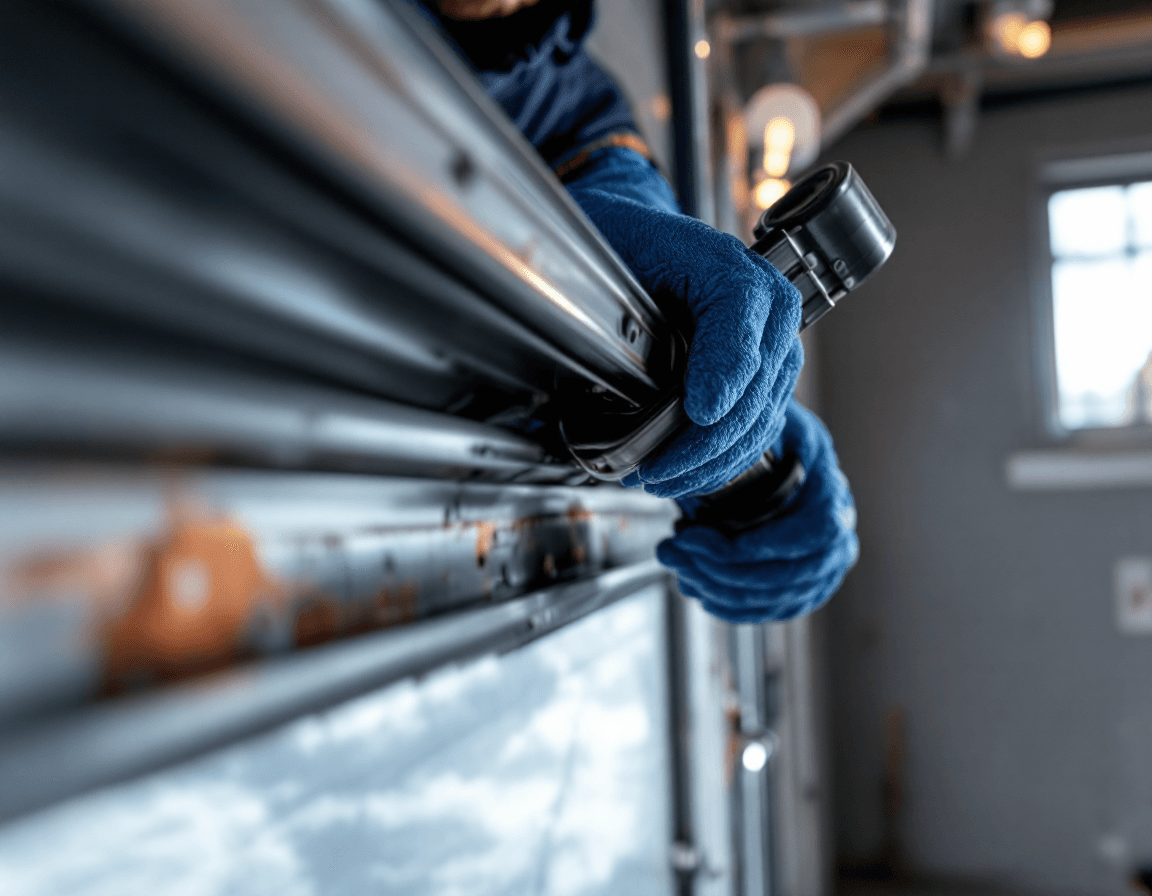
Garage door roller replacement in Mill Creek, WA is one of the most common repairs we handle for homeowners in this part of Snohomish County, and it is also one of the most affordable ways to bring a noisy, sluggish door back to smooth operation. The rollers are the small wheels that ride inside the vertical and horizontal tracks on either side of your door, and they carry the full weight of the panels every time the door opens or closes. When they wear out, crack, or seize, the whole door has to work harder, and you hear about it every morning when you pull out of the driveway. A full set of replacement rollers usually runs between $120 and $250, depending on the door size, the roller style you choose, and whether any track sections also need attention.
Homeowners in Mill Creek often notice roller trouble before they connect it to anything specific. Maybe the door used to slide up quietly and now it squeals for the first few feet, or maybe it stops halfway and needs a nudge from your hand. Those changes tend to build slowly over months, which is why many people live with a noisy door for a long time before calling someone. This page explains what worn rollers look and sound like, why our local climate matters, what your options are for quieter nylon upgrades, and where the line sits between a reasonable homeowner task and work that should be left to a licensed technician. If you are dealing with a door right now, the sections below should help you decide what to do next.
Why Rollers Deserve More Attention Than They Usually Get
Most people think about their garage door only when it fails to open, but the rollers do a huge amount of quiet work with every cycle. A typical residential door carries several hundred pounds of panel weight, and that load is distributed across the rollers as the door travels up and around the track curve. Each roller spins on a steel stem and is supposed to glide with minimal friction. When that glide is interrupted by wear, debris, or corrosion, the friction goes somewhere, and it usually shows up as noise, vibration, or uneven movement.
Rollers also protect other parts of the system. A roller that binds can put side stress on hinges, bend track sections slightly out of alignment, and make the opener motor pull harder than it was designed to. Over time, that extra strain can shorten the life of the opener and the cables. Replacing a worn roller early is far less expensive than repairing the damage a failing roller leaves behind. For that reason, we tell customers to treat roller noise as useful information rather than a minor annoyance.
Rollers come in two broad families: steel rollers with a metal or hard-plastic tire, and nylon rollers with a sealed bearing. Older doors in many Mill Creek neighborhoods were fitted with steel rollers, and those are still common on many garages today. Nylon rollers are generally quieter and run more smoothly, which is why many homeowners upgrade when they replace a worn set. Choosing the right style for your door is part of what makes a repair successful, and we cover that choice in more detail later on.
Listening for the Warning Signs: Grinding, Squeaks, and Scraping
Every roller problem has a sound, and learning to read those sounds can save you a service call that turns out to be unnecessary. A high-pitched squeal that happens during the first movement of the door often points to a dry or worn roller stem, while a grinding noise that continues through the whole travel usually means the bearing or the roller tire has broken down. A hollow rattle that comes and goes can point to a loose roller bracket or a roller that is slipping in the track rather than rolling cleanly. Metal-on-metal scraping is one of the more urgent sounds, because it often means the roller has lost its tire and the bare metal is contacting the track surface.
When you listen to your door, pay attention to where in the cycle the sound occurs. Noise at the very start or end of travel can be a sign that the roller is struggling at a transition point, such as where the vertical track bends toward the ceiling. Noise that appears only on one side of the door often suggests a single worn roller or a track that has shifted slightly. If the sound changes depending on the season, that is worth noting too, since humidity and temperature can affect how the rollers and track respond.
Here are the most common symptoms we hear from Mill Creek homeowners when rollers are the likely cause:
- Loud grinding or squeaking that starts as soon as the door begins to move
- Scraping or clicking that repeats at regular intervals along the track
- Visible flat spots, cracks, or chunks missing from the nylon or rubber tire
- A roller that wobbles, sits crooked, or looks like it has pulled partly out of the track
- Door jerking, stalling, or lurching as it passes a particular point
- Sections of the door that seem to hang or resist more than others
If you notice one or more of these signs, it is a good idea to schedule an inspection before the problem spreads to the track or hinges. A quick visual check can often confirm whether the rollers are the source, and a technician can usually tell within a few minutes whether a simple roller swap will solve the issue.
How Pacific Northwest Damp Weather Works on Roller Parts
Living in the Puget Sound lowlands means dealing with a lot of moisture, and that moisture plays a role in how garage door hardware ages. Mill Creek sees long stretches of gray, damp weather, especially in late fall and winter, and humid conditions can settle into an attached garage even when the outdoors seems merely wet rather than cold. Water vapor encourages surface rust on exposed steel stems and track edges, and rust roughens the surfaces that the rollers need to glide over. Even small amounts of corrosion can make a roller stick, then release with a jerk, which is one reason damp-season doors often feel uneven.
Temperature swings matter as well. Our winters are generally mild compared with many inland parts of the country, but cool nights and warm afternoons can still cause metal and nylon components to expand and contract. Nylon tires can become slightly stiffer in cold conditions, and a roller that runs quietly in July may protest a little in January. This is normal to a degree, but a significant change in sound from one season to the next usually means the roller is near the end of its service life.
Garages in many Mill Creek homes also collect debris from nearby landscaping, including fir needles, dust, and small bits of grit tracked in from driveways. Those particles can work their way into the track channel and get caught under the roller tire. A quick wipe of the track and a careful look at the rollers each season can prevent a lot of unnecessary wear. We also recommend checking that the garage door seal and weatherstripping are in good shape, since leaks that let water into the track area can speed up corrosion from the bottom edge upward.
Steel Versus Nylon: Choosing the Right Roller for a Quieter Door
The choice between steel and nylon rollers is one of the most important decisions in a roller replacement, and it depends on how you use your door and what kind of noise you want to eliminate. Steel rollers are durable and handle heavy loads well, and they remain a practical option for doors that work hard or see frequent use. However, steel rollers tend to be louder, especially when the bearing is not perfectly maintained, and they are more prone to rust in damp conditions. Many people are surprised by how much noise a steel roller can make once it begins to wear.
Nylon rollers, particularly sealed nylon designs with ball bearings, are the usual choice for homeowners who want quiet operation. They produce less vibration as they travel along the track, and their tires absorb small imperfections in the track surface. They are also less affected by surface rust, which is a meaningful advantage in a damp climate like ours. Some nylon rollers include a steel stem, while others use a hard composite core, and a technician can help you choose the combination that suits your door's weight and track design.
Not every door is a good candidate for a full nylon conversion, though. The right roller size and stem length depend on the track width and the door's construction, and mismatched parts can cause misalignment or premature wear. Insulated doors, carriage-style doors, and older heavy doors each have specific requirements, so it is important to match the replacement to the existing hardware rather than assuming one size fits all. A quick measurement and inspection before ordering parts prevents the frustration of a wrong-size set arriving after the old rollers have already been removed.
What a Full Roller Set Typically Costs in Mill Creek
Homeowners often ask for a clear sense of cost before they schedule anything, so here is how roller replacement pricing generally works for our Mill Creek customers. A full set of replacement rollers typically runs between $120 and $250, which covers the rollers themselves and the labor needed to swap them. The final number depends on the number of rollers your door uses, the style you select, and whether the door is a standard size or a larger custom model. Doors with more rollers, such as wide double doors or doors with extra support rollers, will naturally cost more than a single-car standard door.
Several factors can move the price up or down within that range. Choosing quiet nylon rollers instead of basic steel may change the total, and so can the need to replace worn hinges or brackets that are damaged along with the rollers. If the track is bent or misaligned, the technician may recommend track adjustment as a separate step, and that work is priced differently. We always explain what is included before any work begins, so you know exactly what you are approving.
It is also worth thinking about the cost of waiting. A set of rollers that is only slightly worn can often be replaced for a modest price, while a door that has been running on seized or cracked rollers for a long time may have damaged the track, hinges, or opener. Addressing roller issues early tends to keep the repair focused on the rollers alone. If you are unsure whether your problem is limited to the rollers, an inspection can help you understand the scope before you commit to a repair plan.
Inside the Replacement Process, Step by Step
A roller replacement is more involved than it looks, and understanding the general process can help you know what a well-run visit should involve. The technician begins by securing the door so it cannot move unexpectedly. This typically involves disconnecting the opener and using proper clamps or locking methods to hold the door in place, because removing rollers while the door is under load can be dangerous. Once the door is stable, the technician removes the old rollers from the track one at a time, checking the hinges and brackets at each point for wear or looseness.
Next, the new rollers are installed, with attention to alignment and smooth movement. The technician will typically cycle the door slowly by hand to confirm that each roller seats correctly in the track and that the door travels evenly from bottom to top. Track alignment is checked during this stage, because a roller can only run smoothly if the track around it is sound. Any loose track bolts are tightened, and bent sections are noted for further correction if needed.
Finally, the door is tested with the opener to confirm that it runs quietly and without binding through its full range. A good technician will also check the safety reversal system, since a roller issue can sometimes affect how the door responds to obstacles. We recommend asking for a quick walkthrough at the end of the visit so you can hear and see the difference for yourself. A properly completed roller job should leave the door noticeably quieter and more consistent in its movement.
Door Jerks, Shakes, and Binding Along the Track
When a garage door jerks, shakes, or sticks at a certain point, the rollers are often part of the story, but they are not always the whole story. A roller that is seized or flat on one side can create a sudden hitch when it reaches a bend in the track. A roller that has lost part of its tire can cause the door to bounce or chatter as it rolls. In other cases, the rollers are fine, but the track has shifted or the hinges have loosened, and the rollers are simply reacting to an uneven path.
It helps to observe exactly where the problem happens. A jerk at the bottom of the door, just as it leaves the floor, often points to a roller near the bottom bracket or a track section that has pulled slightly out of plumb. A shake in the middle of travel can indicate a single worn roller or a loose mounting bolt. A binding point near the top, where the door transitions to horizontal, may involve the roller stem, the track curve, or the lift cable and spring system, which is an area where we want a licensed technician involved.
A simple visual check can give you useful clues before you call. Look for rollers that sit at an angle, track sections that have a visible gap or bend, and hinges that look loose or cracked. Avoid forcing the door by hand while the opener is running, and never try to pry or hammer at the track while the door is under tension. If the door binds, stop operating it and schedule service, because continuing to run a binding door can damage the opener and the components that keep it balanced.
Neighborhood Notes for Mill Creek Homes Near Town Center and Silver Firs
Mill Creek has a mix of housing styles, and that variety shows up in the garage doors we see. Homes in the areas around Mill Creek Town Center often have larger two-car doors that carry more weight and see daily use, especially in households with several drivers and frequent errands. Those doors tend to benefit from heavier-duty nylon rollers and a careful look at track alignment, since the extra width and cycling can accelerate wear. Many of these doors also use insulated panels, which add weight and can change how the rollers share the load.
Residents in the Silver Firs area and nearby neighborhoods frequently mention a different set of concerns, often tied to older doors that have been in place for many years. Doors that have been running on the original rollers may show more advanced wear, including cracked tires and stiff stems that have not been lubricated in a long time. In some cases, these older doors have been repaired several times, and the track and hinges may have a mix of parts that no longer match. A full roller replacement, paired with a check of the track and hinges, usually gives the best long-term result on a door like this.
Whatever neighborhood you live in, the basic goal is the same: a quiet, consistent door that travels smoothly and does not strain the rest of the system. Our technicians serve homes across Mill Creek and the surrounding Snohomish County communities, and we adjust our approach to the specific door in front of us. Local knowledge helps, but a careful inspection of the actual hardware is what ultimately determines the right repair.
Safety Limits: Where DIY Stops and a Licensed Technician Starts
Roller replacement sits in a middle ground between simple maintenance and specialized repair, and it is important to know where that line falls. Cleaning the track, checking for loose bolts, and observing the door's movement are reasonable tasks for a homeowner. Replacing rollers can be within reach for an experienced person with the right tools, but it requires securing the door properly and working around a system that stores significant energy. Any work that involves the torsion springs, lift cables, or spring tension should be left to a licensed professional, because those components can cause serious injury if handled incorrectly.
Here are situations where we strongly recommend calling a licensed technician rather than attempting repairs yourself:
- The door is off track, hanging crooked, or has a cable that has come loose from the drum
- A spring is broken, visibly gapped, or the door falls or drops suddenly
- Track sections are badly bent, cracked, or pulling away from the wall or ceiling
- The door binds at the top or bottom in a way that suggests balance or spring problems
- You are unsure how to secure the door safely before removing a roller
- The opener is not reversing properly or the safety sensors are malfunctioning
Our technicians are licensed, bonded, and insured, which matters when a job involves stored spring energy and heavy panels. If there is any doubt about the safety of the door, do not attempt the repair yourself. A short service visit is far less costly than an injury or a damaged door, and a professional can usually explain the problem clearly so you understand what was done.
Keeping New Rollers Quiet Through the Seasons
Once your new rollers are installed, a little routine care goes a long way toward keeping the door quiet and extending the life of the parts. Wipe the track channel with a dry or lightly damp cloth every few months to remove dust, fir needles, and grit that can collect in the groove. Avoid spraying heavy oils or greasy lubricants into the track, because they attract dirt and can make the surface sticky. A light silicone-based lubricant applied sparingly to the roller stems and hinge pivots is generally the right choice for our climate, and it should be wiped clean of excess.
Pay attention to the door during seasonal changes. As the weather turns damp in the fall and winter, listen for any new squeaks or stiffness, and check that the weatherstripping along the bottom of the door is still sealing well. In the drier months of summer, you may notice the door running a little more quietly, which is normal. If a sound returns or changes character, it may be an early sign of a problem that is easier to fix now than after it becomes a major repair.
A good rule of thumb is to have the door inspected periodically, especially if it is heavily used or has been noisy in the past. A technician can check the rollers, track, hinges, and balance in a single visit and point out anything that needs attention before it becomes a problem. Keeping a simple record of when the rollers were replaced and what was done can also help you plan future maintenance. With a little attention, a well-chosen set of quiet rollers can keep your Mill Creek garage door running smoothly for years.
If your door is grinding, squeaking, jerking, or sticking, the team at Seattle Garage Door Fix is ready to help. Call (888) 799-3819 to schedule a roller inspection or replacement, and we will explain your options, provide a clear estimate, and get your door moving quietly again.