
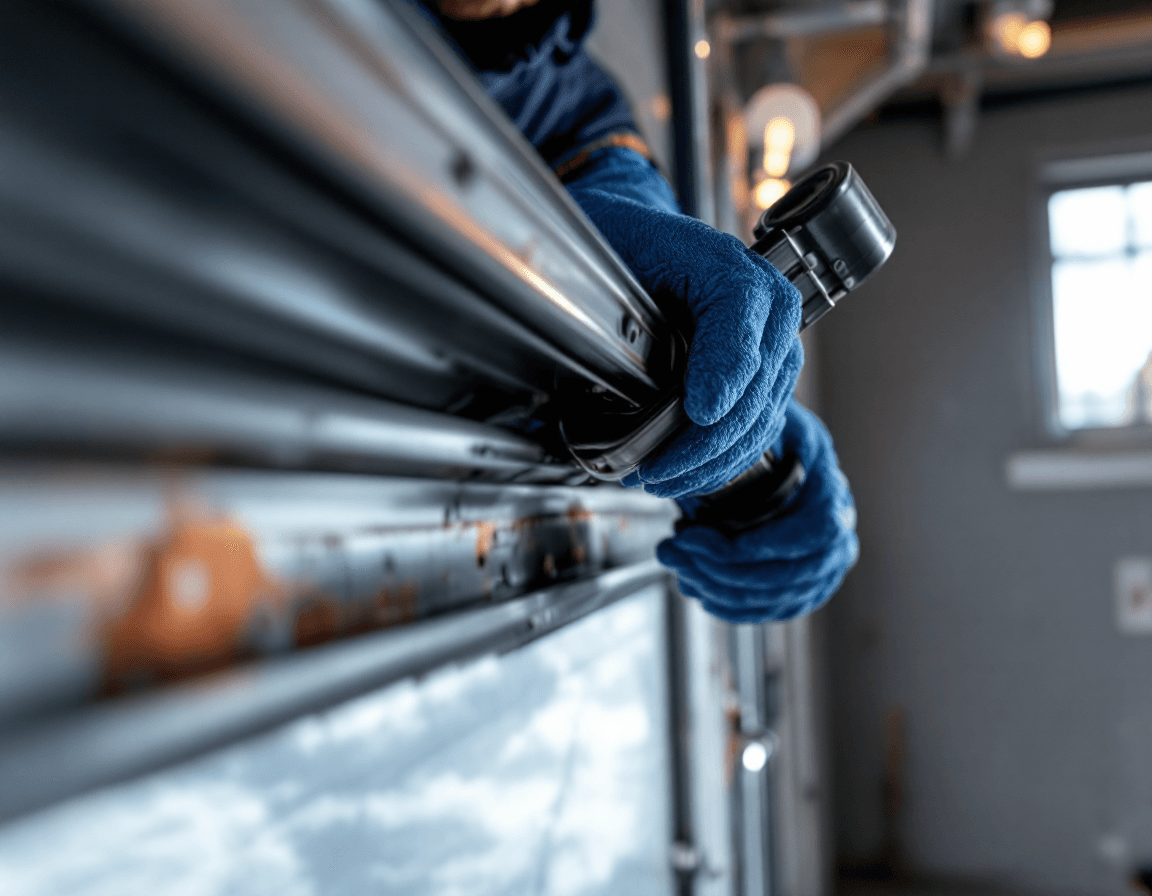
Garage door roller replacement in Snohomish, WA is one of the most common and affordable repairs homeowners in this part of Snohomish County need, and it is often the fix that makes the biggest difference in how a door sounds and feels. Rollers are the small wheels that ride inside the tracks on either side of your door, and they carry the full weight of the panels as the door rises and falls. When they wear down, crack, or seize, the door has to work harder to move, and you will hear and feel it before anything more serious breaks. Seattle Garage Door Fix replaces worn rollers with steel or quiet nylon options, and most homes in the 98290 and 98296 ZIP codes can have a full set swapped in during a single visit.
Many Snohomish homeowners first notice a problem on an ordinary weekday morning, when the door that used to glide now groans halfway up or rattles like a loose shopping cart. That early warning is useful, because a roller that is only starting to wear rarely causes sudden failure, and catching it early keeps the repair simple. Rollers are inexpensive compared with the cost of a damaged track, a bent section, or a strained opener motor, so treating the first squeak as a signal rather than background noise is the smartest approach. A quick inspection can usually tell you whether you are looking at a roller job or something else entirely.
This page explains what worn rollers look and sound like, how to choose between steel and nylon, what a replacement visit involves, and what you can reasonably expect to pay. It also covers the local factors that shape roller wear in Snohomish, including our damp winters and the way doors in older neighborhoods near Historic Downtown Snohomish and the Clearview area behave over time. Throughout, you will see where a licensed professional should take over, because spring and cable work carries real risk. If you are ready to talk through your door, the number is (888) 799-3819.
Why Rollers Wear Faster on Snohomish Garage Doors
Rollers do not wear out because of a single event. They wear because they turn thousands of times each year, every time the door opens or closes, and each turn puts friction on the bearing inside the roller and on the surface that contacts the track. In a typical home, that adds up quickly, and the rollers on a busy two-car garage may complete more cycles in a few years than a rarely used door sees in a decade. Over time the lubricant dries out, the bearing loses its smoothness, and the outer surface begins to flatten, crack, or chip.
Western Washington's climate adds its own pressure. Snohomish sees long stretches of gray, wet weather, and the moisture that settles into garages can speed up corrosion on steel roller bearings and track surfaces. Dust, fine grit from the road, and the pine needles and debris that blow into driveways get pulled into the track during door movement, and that grit acts like sandpaper on a roller that is already dry. Homes with garages that open directly to the outdoors, or with doors that sit near planted beds, tend to see this debris build-up more than homes with enclosed, drier spaces.
Door weight and door design also matter. Heavier insulated steel doors, which many Snohomish homes have upgraded to for better temperature control, place more load on each roller than lighter single-layer doors do. Rollers under that extra weight wear faster, especially at the points where the door changes direction as it moves from vertical to horizontal. If your door was installed several years ago and you have added insulation, a window package, or a heavier opener, it is worth paying attention to rollers sooner than you might expect.
Reading the Noises Your Door Is Making
Sound is the most reliable early clue that rollers need attention, but not every noise points to the same problem. A worn roller usually produces a steady grinding or squeaking that changes pitch as the door moves through different sections of track. If the noise gets louder as the door climbs or appears only in one part of the travel, a particular roller is likely the source. Listening carefully from the inside of the garage with the door running slowly can help you narrow it down before a technician arrives.
Metal-on-metal scraping is a different signal and generally means the roller surface has worn through to the bearing or that a roller has seized and is dragging along the track instead of turning. Scraping often feels rough through the door panels and can leave bright marks on the track. Shaking or jerking as the door moves usually means one or more rollers are no longer rolling freely, which forces the door to jump over the stuck point. Binding or sticking at specific spots is another pattern worth noting, because it suggests a roller has flattened or cracked at that position.
It helps to know what to look for when you do a quick visual check. Use the list below as a starting point, and remember that any door that is noticeably difficult to operate should be stopped and inspected before you run it again.
- Grinding or squeaking that grows louder as the door travels, especially on the upward stroke
- Scraping or metal-on-metal sounds that appear at one or more fixed points in the track
- Shaking, bouncing, or jerking as the door passes certain sections
- Rollers that look cracked, chipped, flattened on one side, or visibly out of round
- Rollers that will not turn when you spin them by hand, or that wobble on the stem
- Door sticking or hesitating at the same height every time it moves
If you notice any of these, avoid forcing the door by pushing or pulling it manually, since that can bend tracks and stress the opener. Keep children and pets away from the door while it is in motion, and call for service rather than trying to correct binding yourself.
Steel Versus Nylon: Choosing the Right Roller for Your Door
When it is time to replace rollers, the most common decision is whether to stay with steel or move to nylon. Steel rollers are durable and handle heavy doors well, and they are often the right choice for large, heavy, or commercial-grade doors. They do tend to be louder, particularly on older tracks, because the metal rings against the metal track and the bearing transmits that sound through the frame. Steel also has a weakness in damp conditions, since it can corrode if the bearing seal fails or if moisture gets into the axle.
Nylon rollers, especially those with sealed ball bearings, run much more quietly and smoothly. The softer surface absorbs vibration and reduces the sharp ticking and rattle that many homeowners find irritating, particularly in an attached garage that shares a wall with a bedroom or living space. Nylon also resists moisture and does not rust, which suits the wet winters common in Snohomish County. The tradeoff is that lower-quality nylon can wear faster under heavy loads, so the material grade and bearing quality matter.
Your door's size, weight, and track type should guide the choice. A technician will look at the roller stem style, the diameter, and the track width before recommending a replacement, because a mismatched roller can bind or fail to seat properly. The following points summarize how the two materials compare in typical Snohomish homes.
- Nylon rollers are generally quieter, which is often the main reason homeowners upgrade
- Steel rollers handle heavier doors and sustained load well, but they can be noisier on worn tracks
- Sealed bearings help both materials resist moisture, dust, and grit
- Stem type and diameter must match your existing hardware to avoid binding
- Quality varies widely, so ask what bearing and material the rollers use before you agree to a set
What a Snohomish Roller Replacement Involves Step by Step
A roller replacement is a focused job, but it should be done carefully and in a logical order. The technician begins by inspecting the door, tracks, hinges, and rollers to confirm that rollers are the true source of the noise or binding and not a bent track, loose hardware, or an opener problem. This inspection matters because a bent track will destroy new rollers quickly, and replacing rollers on a misaligned door only hides the real issue. Once the diagnosis is clear, the technician plans the work around the specific door in your garage.
For a standard roller swap, the technician supports the door securely and removes the old rollers from the hinges or track brackets, depending on the design. Each new roller is installed with the correct stem and bearing, and the door is then moved slowly through its full travel to check for smooth movement, consistent alignment, and quiet operation. Lubrication is applied to the track and bearings as appropriate, using products suited to the material, and the technician checks that the door balance is still correct. Many visits finish within an hour or two, though the exact time depends on how many rollers need replacing and how accessible they are.
Where spring work or cable work is involved, the job changes character entirely. Springs store enormous amounts of energy, and cables carry high tension, so those components must be handled only by trained professionals with the right tools. A roller visit should never turn into a do-it-yourself attempt to adjust tension or remove a spring. If a technician finds that the door balance is off or that a spring or cable needs attention, they should explain the findings and recommend the appropriate licensed service rather than improvising.
Pricing Expectations for a Full Set of Rollers
For most residential garage doors in Snohomish, replacing a full set of rollers typically falls in the range of $120 to $250. That range covers the rollers themselves and the labor to install them, and it is a useful baseline for budgeting. The exact cost depends on the number of rollers your door uses, the material you choose, and whether the job includes only rollers or also involves other repairs found during the inspection. Nylon rollers with sealed bearings usually sit toward the middle or higher end of the range, while basic steel sets may come in closer to the lower end.
The number of rollers varies by door. Many standard two-car doors use a set of rollers along each side, and a long or heavy door may have additional rollers that carry more load. A technician can give you a precise count after measuring, and it is worth asking for an itemized explanation so you understand what you are paying for. Be wary of any estimate that does not explain material choice, roller count, or what is included.
It is also important to know what a roller visit does not automatically include. If the inspection reveals a worn spring, a frayed cable, a damaged track, or a failing opener, those repairs are separate and will be priced on their own. A reputable technician will tell you about these issues before doing additional work, and you should feel free to ask questions and take time to decide. Keeping the roller job separate from any spring or cable repair also helps you make a clear decision about each item.
Damp Winters, Clearview Commutes, and Other Local Wear Patterns
Snohomish has a character all its own, and that shapes how garage doors perform. Homes in and around Historic Downtown Snohomish include a mix of older houses with detached or added garages and newer subdivisions with attached two- and three-car doors. Older garages may have tracks that have shifted slightly over decades, and those minor misalignments put uneven load on rollers, which then wear at different rates. Newer homes often have heavier insulated doors, which increase roller load and can make small issues noticeable sooner.
The Clearview area and the rural-edge properties that stretch out from town often see more dust, leaf litter, and wind-blown debris than denser neighborhoods do. Gravel driveways and wooded lots mean more grit can end up in the track, and that grit accelerates roller wear unless the track is cleaned periodically. Moss and damp organic material can also collect along the bottom seal and the track on shaded sides of a home, which can slow the door and make the rollers work harder during the first few inches of travel each morning.
Seasonal shifts add another layer. Wet fall and winter months raise the humidity inside many garages, and that moisture can cause steel tracks and roller bearings to develop surface rust. In a cold snap, lubricant that is too heavy can thicken, making the door seem stiff until it warms up. Spring brings the first dry stretches, and homeowners sometimes notice a squeak appearing right after a long wet season. Tracking these patterns helps you understand why a noise may come and go, and why a roller that seemed fine in summer might need attention by the time the rains return.
Safety Limits: Why Spring and Cable Work Belongs to a Licensed Pro
Garage door safety is not a place to cut corners, and it is essential to understand where the limits of a roller repair lie. Torsion springs and extension springs hold a great deal of stored energy, and a spring that releases unexpectedly can cause serious injury. Cables that are frayed, kinked, or under improper tension can snap and whip across the garage. For these reasons, any work on springs, cables, or door balance should be performed only by a licensed, bonded, and insured professional who has the training and tools to do it safely.
Homeowners should never attempt to remove, wind, adjust, or replace a spring on their own, even if they have watched videos or have handy experience with other projects. Spring tension must be set precisely to match the weight of your specific door, and incorrect tension can damage the opener, strain the door panels, or fail suddenly. Cables must be seated correctly on the drum and pulley system, and a cable that appears fine can still be compromised internally. If a technician tells you that a spring or cable needs replacement, treat that as a professional job and schedule it accordingly.
Roller work, by contrast, can often be handled safely during a routine service visit, but even there the door should be properly supported and the opener disconnected during the work. If you notice a door that will not stay open, one side that sits lower than the other, or a visibly loose or broken spring, keep the door closed, avoid using the opener, and call for help right away. Your safety and the safety of anyone who uses the garage come first, and a licensed professional is the right person to decide whether a simple roller swap is enough.
Keeping Quiet Rollers Quiet Between Service Visits
Once new rollers are installed, a little routine care keeps them running smoothly for years. Track cleaning is the single most useful habit. Wiping the inside of each track with a dry cloth every few months removes grit, dust, and debris that would otherwise grind into the roller surfaces. Taking a moment to clear leaves and small stones from the bottom of the door as well helps prevent the track from collecting material that works its way upward during operation.
Lubrication should be light and targeted. A silicone-based or lithium-based product applied to the roller bearings and hinge contact points is generally appropriate, while heavy grease or oil can attract dust and create a sticky film that slows the door. Avoid spraying lubricant directly onto the track surface itself, since it can drip onto the floor or pick up grit. If you are unsure which product suits your door, ask your technician during the visit, because the correct choice depends on the roller material and bearing type.
Pay attention to changes in sound and movement over time. A new squeak, a slight hesitation at a particular height, or a door that seems to pull to one side should prompt a closer look, even if the door still works. Catching these changes early lets you schedule a simple adjustment or small repair rather than waiting for a roller to fail completely. Keeping a short note of when you first noticed a sound can also help a technician diagnose the problem faster when you call.
Scheduling Service Across 98290 and 98296
Homeowners in the 98290 and 98296 ZIP codes can reach out to Seattle Garage Door Fix whenever a roller problem appears, whether the door is simply louder than it used to be or has begun to stick and shake. Early scheduling tends to keep repairs straightforward, and it avoids the situation where a worn roller causes additional strain on the track, hinges, or opener. If you are planning a remodel, a new insulated door, or a window installation, it is also a good time to have rollers inspected, since a heavier door changes the load picture.
When you call, it helps to have a few details ready. Note the approximate age of your door if you know it, describe the noise or movement you are hearing, and mention whether the problem happens at a specific height or throughout the travel. Let the scheduler know if you have a preference for steel or quiet nylon rollers, and ask any questions about pricing or what the inspection will cover. A clear description makes it easier to arrive with the right parts and to give you a realistic timeline.
Whatever the cause of your door trouble, a licensed professional can help you sort out whether rollers are the solution or whether other components need attention first. Quiet, smooth operation is well within reach for most Snohomish homes, and a focused roller upgrade often delivers a noticeable difference in a single visit. To schedule an inspection or ask about roller replacement, call Seattle Garage Door Fix at (888) 799-3819 and let the team help you get your door moving quietly again.