
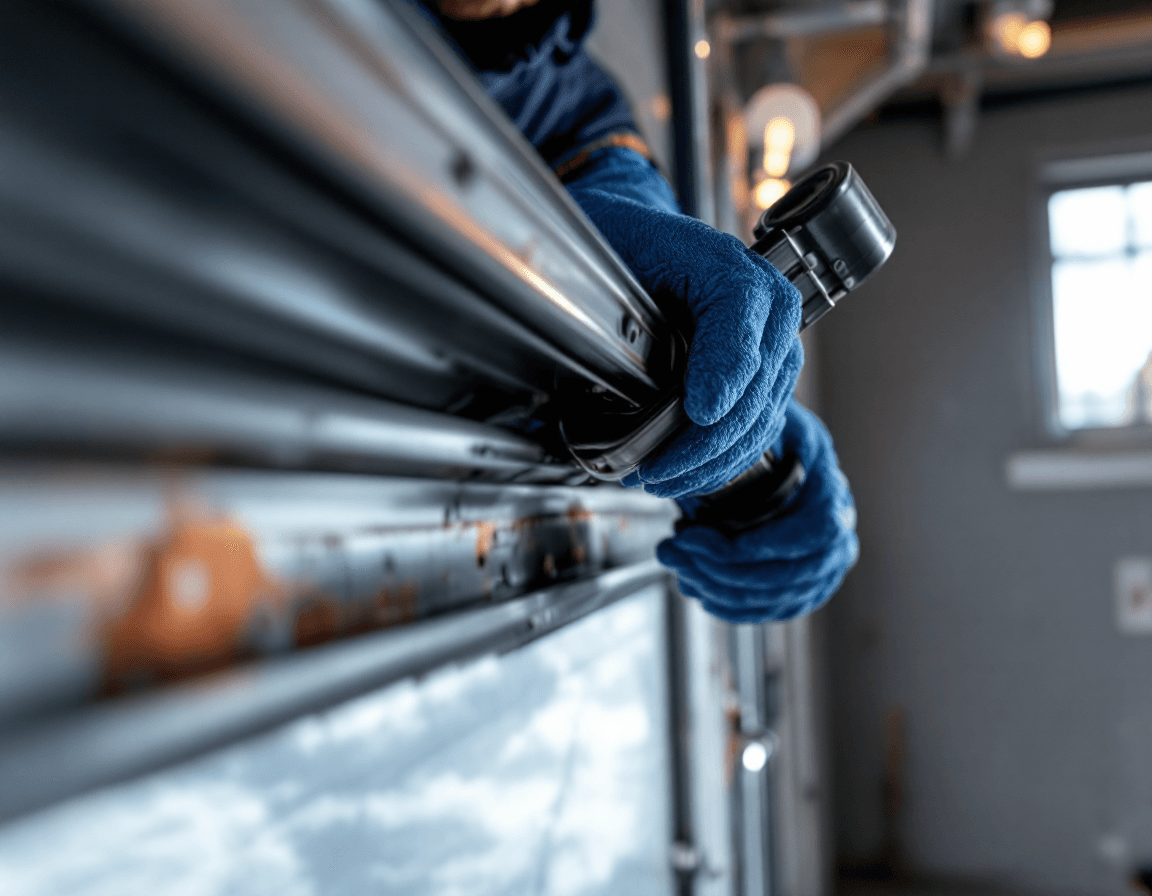
Garage door roller replacement in Lynnwood, WA is one of the most common and affordable repairs we handle for homeowners across south Snohomish County. Rollers are small parts that do a lot of work, guiding each panel along the track thousands of times a year, so when they wear down the whole door can start to sound and behave differently. A worn set often causes a loud rattle, a jerky start, or a door that stops partway up.
The good news is that the fix is usually straightforward. A full set of replacement rollers typically runs $120 to $250, depending on the door size, the roller type you choose, and whether the existing track and hinges need minor adjustments at the same visit. Many homeowners are surprised at how much quieter and smoother their door becomes once the old rollers are gone. If you have been putting up with a noisy door for months, this is often the first repair worth considering.
This page explains what roller wear looks like, why Lynnwood garages see it earlier than some people expect, how steel and nylon rollers compare, and what a professional visit should include. We also cover the safety boundaries that every homeowner should respect. If you are ready to talk with a technician now, call (888) 799-3819 and we will walk through your options.
Why Lynnwood Garages Wear Rollers Sooner Than Expected
Lynnwood sits in a climate that is gentle on paint but harder on moving metal parts. Winters bring long stretches of cool, damp air, and summers can be humid in the evenings even when the days are mild. That combination means moisture lingers on steel tracks and roller shafts longer than it would in a dry region, and surface rust can quietly start inside the roller bearings. Over time, that rust acts like sandpaper every time the door travels.
Many Lynnwood homes also sit close to busy corridors and tree-lined streets, so garages collect fine grit, pollen, and tiny road debris that get pulled into the track. When a door opens and closes daily, that grit works into the roller bearings and wears the internal surfaces down. Homes in the Alderwood area and around Lynnwood City Center often have attached garages where the door is cycled several times a day during school runs, commutes, and weekend errands. Higher cycle counts mean faster wear, even when the door itself is in good shape.
Temperature swings matter too. Metal expands slightly in the warmer parts of the year and contracts in the cold, which can cause a roller that was snug in the spring to feel tight by winter. Those small movements put uneven pressure on the roller stems and bearings. Over several seasons, the combination of moisture, grit, and temperature change is the main reason a set of rollers that lasted a decade in a drier climate might show real wear in far fewer years here.
Reading the Sounds Your Door Is Trying to Tell You
Your garage door usually gives warning signs well before a roller fails completely. The most common is a grinding or squeaking noise that starts as a faint sound and gets louder over time. A squeak that appears only on the first open of the morning often points to dry or dirty bearings, while a grind that continues through the whole travel is more likely a roller that has flattened, cracked, or lost its smooth rolling surface. Pay attention to whether the noise follows the door up, down, or both ways, because that detail helps a technician narrow things down quickly.
Metal-on-metal scraping is a more serious sign. When a roller seizes, it stops turning and drags along the track, and the sound can resemble someone pulling a shovel across concrete. Continued operation with a seized roller can gouge the track, bend the shaft, and place extra strain on the opener. If you hear scraping, it is worth scheduling service promptly rather than waiting for the next weekend.
Jerky movement is another clue. If the door shudders, bounces, or seems to jump as it passes a certain point, a roller may have worn flat or a stem may have loosened in its hinge bracket. Some homeowners notice that the door binds or sticks at a specific height, which can indicate a roller that is catching on a track seam or a worn spot where the track was not perfectly aligned to begin with. Visible cracks in the nylon wheel, flat spots, or rust streaks on the roller shaft all support the same conclusion: it is time to look at the rollers.
Steel Rollers Versus Nylon Rollers for a Quieter Door
Rollers generally come in two main families, steel and nylon, and each has its place. Steel rollers are durable and handle heavy doors well, but they produce more noise because metal rolling on metal track creates a louder, higher-pitched sound. For a single-car door that gets used lightly, a steel roller can be a sensible budget choice. For a double door, a heavier insulated panel, or any home where quiet matters, steel is often less satisfying.
Nylon rollers, often with a sealed ball bearing or a steel stem, run much more quietly. The nylon tire absorbs vibration and reduces the clatter that travels through the house, especially in attached garages where a bedroom or family room sits on the other side of the wall. Many homeowners choose nylon for exactly this reason. The tradeoff is that lower-grade nylon can wear faster than steel under heavy use, so the quality of the wheel and the bearing matters.
When we recommend rollers, we look at the door's weight, the track size, how often the door cycles, and your comfort with noise. Here is a quick way to think about the choice:
- Steel rollers suit lighter doors, budget-focused repairs, and garages where noise is not a concern.
- Sealed nylon rollers suit most residential doors and offer a noticeably quieter operation.
- Nylon with ball bearings often gives the best balance of quiet, smoothness, and long service life.
- Stem sizes and track widths must match your existing hardware, so the right fit matters as much as the material.
What a Full Roller Set Usually Includes
A typical residential roller replacement covers every roller on the door, not just the one that squeaks the loudest. This is important because rollers tend to wear at similar rates. Replacing only the noisiest one often leaves older, nearly worn rollers that will soon need attention, and the mismatch can create uneven motion. A full set usually ensures that all sections of the door travel smoothly together.
Depending on the door, a full-set job often includes inspecting the track for dents, loose mounting bolts, and debris. We check the hinge brackets and the stems where the rollers attach, because a loose stem can mimic roller failure. The work also includes confirming that the door is balanced and that the opener is not straining to compensate for friction. In many cases, a few minor adjustments at the same visit make the new rollers perform at their best. The quoted range of $120 to $250 for a full set of rollers reflects that typical scope, though the final price depends on your door and the roller type you select.
It helps to know what a fair estimate should explain. A good quote lists the number of rollers, the roller material, and whether any track or hinge work is included. It should also say whether the price covers removal and disposal of the old rollers. Ask for a clear explanation before work begins, so there are no surprises on the invoice.
Track Alignment and Why Rollers Are Rarely the Whole Story
Rollers are often blamed for problems that actually start in the track. A track that is slightly out of plumb, a bent section near the top, or a loose bolt can force a roller to ride at an angle, and that angle wears the wheel unevenly. If you replace the rollers without checking the track, the new wheels can wear quickly and the noise may return within a short time. This is why a thorough visit always includes a look at the track and its mounting points.
Lynnwood homes are built across many eras and styles, and garage tracks can shift for reasons that have nothing to do with the homeowner's care. Settling foundations, minor framing movement, and the slow loosening of bolts after years of vibration can all change how the track sits. A technician who understands these patterns can tell you whether a gap or a wobble is simply an alignment issue or a sign that a bracket needs reinforcing. Small adjustments made carefully can extend the life of your new rollers considerably.
Balance matters too. A door that is out of balance places extra load on the rollers and the opener, and it can feel heavy or uneven as it moves. We check whether the door stays put when partly open, and we look at how the opener responds at the start and end of travel. If the door drifts or the opener labors, the root cause may need attention alongside the rollers so the repair holds up over time.
Our Replacement Process from Inspection to Final Test
A well-run roller replacement follows a clear sequence, and knowing the steps can help you feel confident about the visit. Our technicians begin with a quick safety check and a visual inspection of the door, track, and rollers. We confirm that the door is disconnected from the opener and that power is handled properly before any hands-on work begins. This first stage also establishes what is actually causing the noise, which keeps the repair focused.
Next, the technician removes the old rollers, cleans the track, and inspects the hinges and stems for wear. New rollers are installed with the correct stem and track size, and the bearings are lubricated with a grease that suits garage door hardware. The door is then cycled slowly to check for smooth motion, and the technician listens for any remaining binding or scraping. Finally, the full door cycle is tested several times at normal speed to confirm that the repair performs as expected. Here is what you can generally expect during the visit:
- A visual and audible inspection of the door in operation before any parts are removed
- Removal of the worn rollers and a check of the track, hinges, and stems
- Installation of the new rollers matched to your track and door hardware
- Lubrication of the bearings and removal of built-up grit from the track
- Several test cycles to confirm smooth, quiet travel from bottom to top
Keeping Your New Rollers Quiet Between Service Visits
Once new rollers are installed, a little regular care helps them stay quiet for years. Wipe down the track with a dry or lightly dampened cloth every few months, especially in the wetter seasons when grit and moisture build up. Removing debris from the bottom of the track keeps the rollers from picking up material that wears them down. A clean track is one of the simplest ways to protect your investment.
Lubrication is important, but the product matters. Silicone-based spray or a white lithium grease is generally a good choice for the roller bearings and hinge points. Avoid using a heavy oil on the track itself, because it attracts dirt and can turn into a sticky film that holds grit against the rollers. Many homeowners reach for a general-purpose penetrant, but those products are solvents that wash away the grease the bearings need, so they are better left off the rollers themselves.
Watch the door for changes in sound and movement. If a new squeak appears, check whether the track bolts have loosened or whether a hinge bracket looks bent. Testing the door's balance once a year is also worthwhile. A simple check is to close the door, disconnect the opener, and lift it by hand to see whether it stays in place partway up. If it drifts or feels heavy, schedule a professional look before the rollers and opener start working harder than they should.
Safety Boundaries Every Homeowner Should Respect
Roller replacement is a manageable job for a trained technician, but several parts of a garage door system carry serious risk and should never be handled by an untrained person. Torsion springs and extension springs store a large amount of energy, and a mistake during adjustment can cause injury. Cables are under tension and can snap or unravel if they are damaged or improperly seated. For these reasons, any spring or cable work should be performed by a licensed, bonded, and insured professional.
Homeowners can safely do a few simple observations without touching the springs or cables. You can watch the door from inside the garage, note any noises, look for visible gaps in the track, and check whether the rollers appear cracked or flat. Keep hands and fingers clear of the track and the pinch points at each section joint while the door moves. Never stand under a door that is held up only by the opener, and do not attempt to free a stuck door by forcing it.
If the door falls, hangs crooked, or has a cable that looks frayed, disconnect the opener if you can do so safely and call a professional rather than trying to correct the problem yourself. Roller replacement itself does not usually require spring work, but a good technician will tell you immediately if the job reveals a larger issue that needs careful attention. Respecting these boundaries protects both your household and the long-term reliability of your door.
Serving Alderwood, Lynnwood City Center, and Nearby Neighborhoods
We provide garage door roller replacement across Lynnwood and the surrounding communities, including the homes near Alderwood and the residential streets around Lynnwood City Center. Our service area covers ZIP codes 98036, 98037, and 98087, and we regularly schedule visits for homeowners who need a quieter, smoother door without a long wait. Whether your garage is an older attached design or a newer build with a larger panel, our technicians plan the visit around your specific hardware.
Because Lynnwood sits within the broader Seattle and Western Washington region, we understand how the local climate, traffic patterns, and housing styles influence garage door wear. Homes near the Alderwood shopping and business area often have frequent door cycles, while homes near City Center may see different wear patterns based on age and construction. Our goal is to match the repair to the way your household actually uses the door, not to apply a one-size-fits-all solution.
We are licensed, bonded, and insured, and we will explain every recommendation before any work begins. Ask questions about the roller type, the track condition, and the expected sound and feel of the finished door. A clear conversation before the repair helps you choose the option that fits your budget and your comfort level with noise.
Ready to stop listening to a grinding, squeaking door? Call Seattle Garage Door Fix at (888) 799-3819 to schedule your Lynnwood roller replacement. Our team will inspect your door, explain your options clearly, and help you enjoy smooth, quiet operation again.