
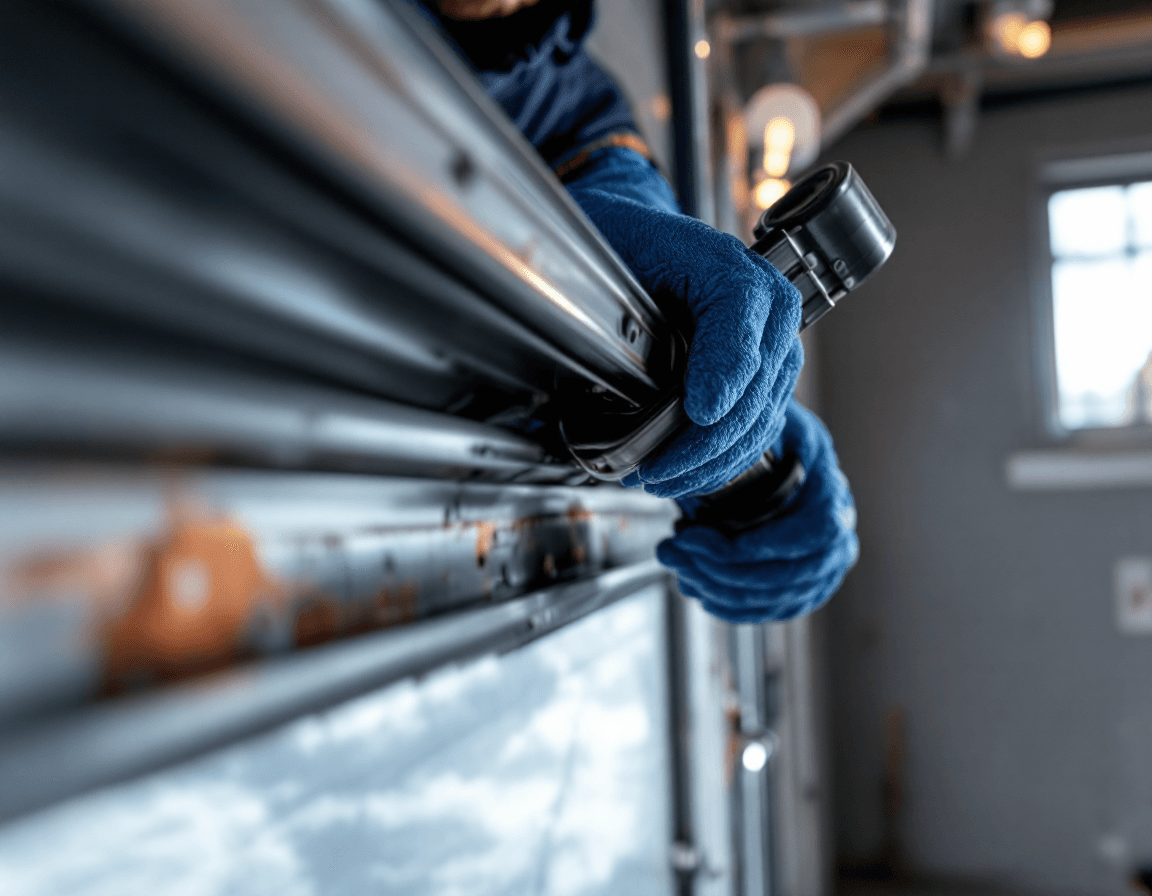
Garage door roller replacement in Mountlake Terrace, WA is one of the most common repairs we handle, and it is also one of the most affordable ways to bring a noisy, jerky door back to smooth operation. The rollers are the small wheels that ride inside the vertical and horizontal tracks and carry the weight of your door as it lifts and lowers. Over time, they wear down, crack, or seize, and the door starts to complain in ways that are hard to ignore. A quick roller swap often solves the problem before the damage reaches the springs, cables, or opener.
Homeowners across Mountlake Terrace and the surrounding Snohomish County neighborhoods tend to notice the problem gradually. A faint squeak in the spring turns into a grinding sound by late autumn, and the door begins to hesitate halfway up. Because the change happens slowly, many people assume the opener is failing or that the door simply needs more lubricant. In most cases, though, worn rollers are the real culprit, and replacing them restores a quiet, steady ride without the cost of a major component.
This guide explains how rollers wear out in our climate, how to recognize the symptoms, what your options are for steel and nylon rollers, and what a typical service visit involves. It also covers the parts of this job that should always be left to a licensed professional. If you are dealing with a door in the 98043 area or anywhere near the MLT Town Center corridor, the information below should help you decide what to do next.
Why Rollers Wear Out Faster Under Puget Sound Skies
The Pacific Northwest climate is gentle in many ways, but it is hard on garage door hardware. Our winters bring long stretches of drizzle, low clouds, and damp air, and moisture finds its way into every moving joint. Rollers sitting in tracks that collect rain tracked in on shoes, leaf debris, and road grit can pick up abrasive particles that grind the roller surface with every cycle. Over several seasons, that constant wetting and drying can weaken the bearing and the outer surface of the roller.
Many homes in and around Mountlake Terrace have garages that are attached to the house or sit on slabs that stay cool and damp through the winter months. Garage doors in these conditions often cycle less frequently in the cold season, which means the lubricant on the rollers and hinges can dry out or wash away without anyone noticing. When the door sits for a while and then opens, the rollers may stick slightly before they start turning again. That repeated stop-and-start strain speeds up wear on the roller stems and the track edges.
Summer brings its own issues. Warm afternoons followed by cool evenings create condensation inside the track, and dust from nearby roads settles on the metal. The combination of moisture and grit forms a fine paste that clings to the roller tire. Plastic or nylon rollers can become brittle after years of sun exposure, while steel rollers may develop surface rust that roughens the rolling path. Understanding these seasonal patterns helps explain why a door that was quiet last year might now sound rough after a wet winter.
Reading the Noises Your Door Is Making
Your garage door communicates through sound long before it fails completely. A loud grinding noise usually means the roller bearing or stem is worn down to bare metal, and the roller is no longer turning smoothly in the track. Squeaking is often the first sign of a dried or failing roller, especially when it happens at the same point in the door's travel every time. Metal-on-metal scraping suggests the roller is cracked, flattened on one side, or has lost its tire and is rubbing directly against the track.
Pay attention to where the sound occurs. If the noise starts only when the door is near the top of its travel, the rollers in the horizontal section may be the issue. If it happens at the bottom, the lower vertical rollers or the bottom bracket could be contributing. Sounds that change depending on whether the door is going up or down often point toward uneven wear on one side of the door. A technician can usually narrow down the source within a few minutes by watching the door cycle and listening closely.
Vibration and jerking are equally useful clues. When a door shakes as it moves, it is often because a roller is no longer rolling evenly, causing the panel to bounce slightly against the track. Binding or sticking at a specific point means the roller is catching on a dented track section or a worn roller is wedging into a gap. If you notice any of these symptoms, avoid forcing the door open or closed by hand, since that can stress the springs and the opener. Instead, note when the problem happens so you can describe it accurately during a service call.
Steel Versus Nylon: Choosing the Right Roller for Your Door
Garage door rollers come in two main materials, and each has advantages depending on how you use your door. Steel rollers are sturdy and handle heavy doors well, which makes them a common choice for older or insulated doors that weigh more than a standard single-layer panel. They can be durable for many years, but they tend to be louder, especially as the bearing ages. Steel rollers also transmit more vibration into the track and the surrounding hardware.
Nylon rollers, often called quiet rollers, are the most popular upgrade for homeowners who want smoother, quieter operation. The nylon tire absorbs more sound and reduces the metal-on-metal contact that causes so much of the grinding noise. Many nylon rollers include sealed bearings that resist moisture better than older designs. For attached garages in Mountlake Terrace where the door is close to bedrooms or living areas, the difference in noise can be dramatic. Nylon rollers are not a cure-all, though, and they still need to be the correct size and load rating for your door.
A good technician will match the roller to the track type, the stem diameter, and the weight of your door. Standard rollers are typically available in several stem lengths and bearing styles, and using the wrong size can cause misalignment or premature wear. Some homeowners prefer a mixed approach, using nylon rollers in the lower tracks where noise is most noticeable and steel rollers elsewhere. Your technician can explain the tradeoffs for your specific door, and that conversation is worth having before you order parts.
What a Full Roller Set Typically Costs in Mountlake Terrace
Replacing a full set of garage door rollers generally falls within a range of $120 to $250, depending on the number of rollers your door uses, the material you choose, and how much time the replacement requires. Most standard residential doors use between eight and twelve rollers, though some models include additional rollers for extra stability. Nylon rollers may cost slightly more than basic steel rollers, while sealed bearing designs can add to the total. These figures are a general guide and will vary with the specifics of your door.
The labor involved is usually modest because the job does not require disassembling the spring system or the cables. A technician will typically lift the door safely, release tension from the track section needed for access, remove the old rollers from the hinges and track brackets, and install new ones with the correct alignment. The process is straightforward when the door is in good condition, but worn or seized hinges, damaged track sections, or misaligned panels can add time. Ask for a clear estimate before work begins so you know exactly what is included.
It is also worth discussing whether other parts need attention at the same visit. Hinges, track brackets, and bottom seals often wear at roughly the same pace as rollers, and addressing them together can prevent repeated service calls. A technician who inspects the whole door during the roller swap can point out early signs of trouble and suggest sensible priorities. Replacing rollers alone may solve the noise, but a complete tune-up can extend the life of the entire system.
Inspecting Your Track Before a Roller Swap
Before any new rollers go in, the track deserves careful inspection. Tracks are typically made of galvanized steel, and small dents or bends can cause rollers to wobble or catch even when they are brand new. Look along the vertical and horizontal sections for flattened areas, rust spots, or spots where the roller path looks shiny or scored. Even a slight bend near the top corner can cause the door to bind at one specific point.
Track alignment matters just as much as the roller itself. The vertical track should be plumb, and the horizontal sections should be level and parallel to the ceiling. A track that has shifted because of a loose bracket or an impact from a vehicle can cause uneven roller wear and a door that sounds different on each side. Tightening the mounting bolts and checking that the bracket hardware is secure often resolves minor issues. More serious bends usually require professional adjustment rather than do-it-yourself forcing.
Cleaning the track is another step that homeowners can handle safely. Remove loose dirt, leaves, and debris with a dry cloth or a soft brush, taking care not to bend the metal or damage the seals. Avoid soaking the track with water, since moisture can speed up rust in the joints. A light, garage-door-specific lubricant can be applied to the roller stems and hinges once the surfaces are clean, but avoid spraying it onto the track itself, where it can attract grit.
Gentle Steps You Can Take Yourself
There are several checks any homeowner can perform safely before calling for service. These steps will not fix a worn roller, but they can help you describe the problem more precisely and rule out simple causes. Always keep the door disconnected from the opener while you work, and never stand under a door that is not fully supported. If anything feels stuck, heavy, or unusual, stop and call a professional.
- Watch the door cycle slowly from closed to open, noting exactly where any squeak, grind, or jerk begins and ends.
- Look at the rollers while the door is closed and check for flat spots, cracks, missing tires, or stems that look bent or loose.
- Confirm that the track bolts and bracket screws are snug without overtightening them, since stripped holes make future repairs harder.
- Wipe the track surfaces with a dry cloth to remove grit, and inspect the bottom seal for tears that might let debris enter the track.
- Make a short video of the door operating with the opener so a technician can see and hear the problem before arriving.
These observations are useful even if you decide to call a professional right away. They help narrow the diagnosis and can shorten the time needed for a visit. Remember that spring tension, cable condition, and drum alignment are outside the scope of these steps, and they should never be adjusted by a homeowner.
Why Spring and Cable Work Belongs to a Licensed Technician
Garage door springs and cables store enormous amounts of mechanical energy, and mishandling them can cause serious injury. Torsion springs in particular are wound under high tension, and a single improper adjustment can cause them to release suddenly. Cables that are frayed, off the drum, or under uneven tension can snap or slip, putting the door out of balance. These components are not part of a routine roller replacement, but they often show signs of wear at the same time, which is why a professional inspection matters.
If a technician finds that a spring is worn, a cable is fraying, or the door is out of balance, that work should be scheduled and performed by licensed, insured professionals who have the proper winding bars and safety equipment. Please do not attempt to adjust springs, remove cables, or disconnect tension yourself. Even experienced homeowners can be injured when a door shifts unexpectedly. Our technicians are licensed, bonded, and insured, and they treat spring and cable work as a specialized task that requires full attention to safety.
The roller swap itself can usually be completed without touching the springs, but the technician will still check the balance of the door and the condition of the cables during the visit. If the door is noticeably heavy or uneven, the technician will explain the findings and recommend the next steps. You will always have the option to decide how to proceed, and you should feel comfortable asking questions about any safety concern that arises.
Keeping Rollers Quiet Through Wet Winters Near Lake Ballinger
Homes in the Lake Ballinger area and across Mountlake Terrace often experience the full range of Pacific Northwest weather, from misty mornings to heavy winter rain. Keeping rollers quiet through these seasons starts with simple routine care. Wipe the track once or twice a year, check that the door still closes evenly, and listen for changes in sound as temperatures drop. Small attention now can prevent larger repairs later.
Lubrication plays a key role, but it must be chosen carefully. Use a lubricant designed for garage door components, applied to the roller stems, hinge pivots, and bearing points rather than the track surface. Excess lubricant attracts dust and can create a sticky film that holds grit against the roller. Re-applying a thin layer once a season is usually enough for most doors, though heavy use or a door near the coast-facing side of a neighborhood may need more frequent care.
Sealing and ventilation also help. A garage with good airflow dries more quickly after rain, and a bottom seal that fits snugly keeps wind-driven moisture and debris out of the track. If your garage has a persistent damp smell or condensation on the door, mention it during your service visit so the technician can recommend solutions. Keeping the door area clean and dry is one of the most effective ways to extend the life of new rollers.
Common Mistakes That Shorten Roller Life
Many roller problems are caused by habits that seem harmless at first. Homeowners sometimes pull the door by hand to free a stuck spot, which can overstress the rollers and the opener. Others spray heavy oil into the track, creating a sludge that holds grit and accelerates wear. These small choices add up over time, especially in a climate where moisture is already a constant factor.
- Forcing a door open or closed by hand when it is binding, instead of stopping and calling for service.
- Using household spray lubricants or heavy grease on the track, which can collect dirt and gum up the roller path.
- Ignoring early squeaks or grinding for months, allowing a small bearing problem to become a damaged track.
- Replacing only one roller on a side when the others are equally worn, which leaves the door unbalanced.
- Skipping seasonal cleaning, so leaves, dust, and road grit build up along the bottom track.
Avoiding these habits will not guarantee that rollers last forever, but it can significantly extend their service life. When in doubt, a quick inspection is almost always cheaper than letting a roller failure damage the track, hinges, or opener.
What Happens During a Roller Visit at Your Home
A typical roller replacement visit begins with a conversation about the symptoms you have noticed. The technician will ask when the noises occur, whether the door shakes or stalls, and how long the problem has been going on. Next comes a visual inspection of the rollers, hinges, tracks, and bottom seal, followed by a few test cycles to listen and watch the door operate. This process usually takes only a short time and helps confirm whether rollers are the source of the problem.
If rollers are the issue, the technician will explain the options, including steel or nylon replacements and any recommended hinge or track repairs. Once you approve the work, the door is secured, the old rollers are removed, and the new rollers are installed with careful alignment. The technician will then cycle the door several times to confirm smooth movement, check the balance, and verify that the track is free of obstructions. Before leaving, you should receive a clear summary of what was replaced and what, if anything, needs future attention.
Our team works with homeowners throughout Mountlake Terrace, including neighborhoods near the MLT Town Center and the 98043 ZIP code, and we aim to make every visit clear, safe, and respectful of your time. You will always know what is being done, why it matters, and what it costs before the work begins. If your door is grinding, squeaking, shaking, or sticking, a roller inspection is a practical first step toward a quieter, smoother garage.
If your garage door is loud, jerky, or binding in Mountlake Terrace, the team at Seattle Garage Door Fix can inspect the rollers, track, and hinges and recommend the right replacement. Call (888) 799-3819 to schedule a visit, and we will explain your options clearly so you can get back to using your garage quietly and confidently.