
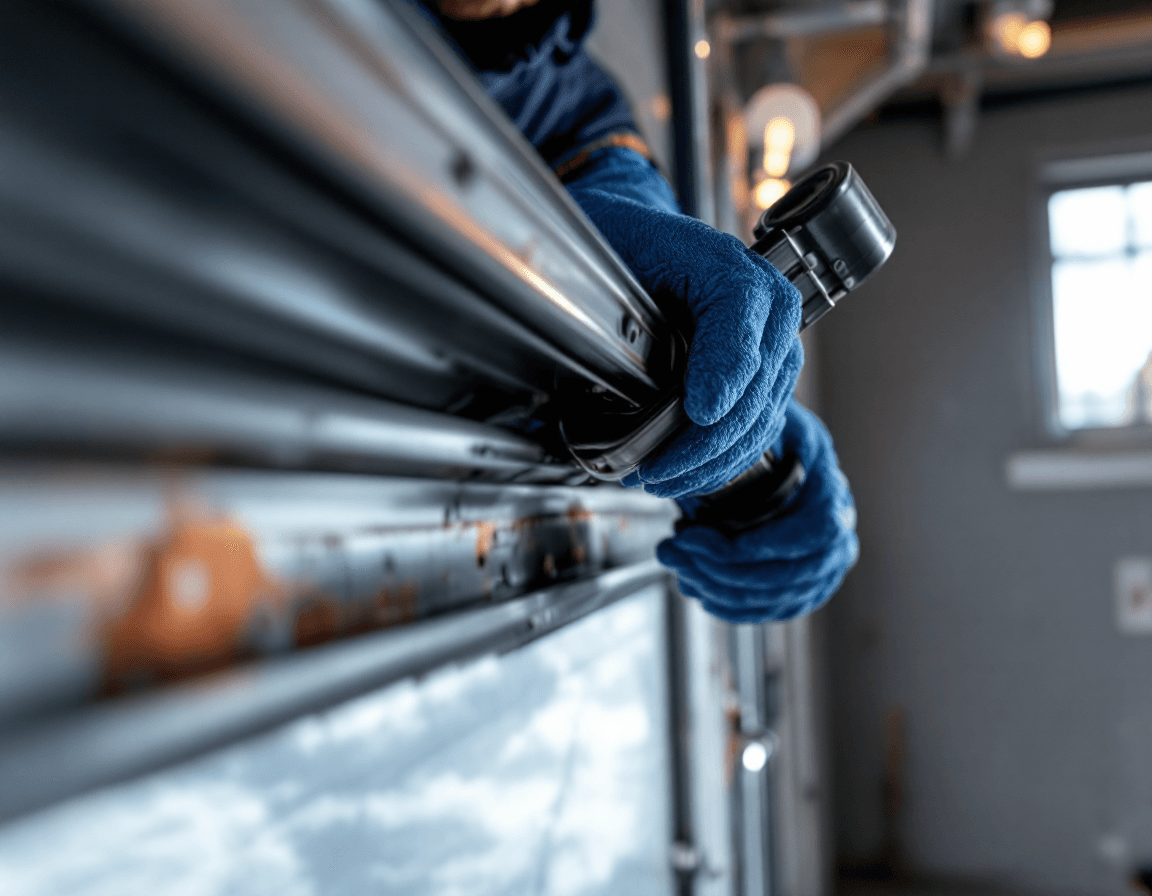
Garage Door Roller Replacement in Shoreline, WA is one of the most common and affordable fixes homeowners can book, yet many people live with a noisy or jerky door for months before calling anyone. The rollers are the small wheels that ride inside the vertical and horizontal tracks and carry the door's weight as it opens and closes. When they wear out, the door still moves, but it complains loudly and works harder than it should.
Shoreline sits in a part of King County where the weather rarely gives a garage door a break. Long wet stretches, damp air rolling in off Puget Sound, and temperature swings from cool mornings to mild afternoons all put steady stress on steel tracks and roller bearings. A door that worked quietly through summer can start grinding by the first heavy rains of fall. This page explains what worn rollers look like, what the sounds and movements mean, and how a full roller set is replaced and priced.
If your door has been making noise, shaking along its path, or sticking partway up or down, you do not need to guess at the cause. Rollers are often the first part to show trouble, and replacing them is usually a straightforward job compared with a spring or cable repair. Read through the sections below to match what you are hearing and seeing with the likely fix, then call (888) 799-3819 if you would like a licensed technician to take a look.
Why Shoreline Garage Doors Wear Their Rollers Faster Than You Expect
Garage doors in the Shoreline area face a combination of conditions that speeds up roller wear. Moisture is the biggest factor, since water and humidity work their way into bearings and can cause rust on steel stems and tracks over time. Many of the older garages in neighborhoods like Echo Lake and North City were built with less attention to drainage and ventilation than current construction, so the door hardware can sit in damp air for long stretches. Dirt, fine grit, and the occasional tree debris that gets tracked in from the driveway add to the problem.
Coastal exposure matters too, particularly for homes closer to the water near Richmond Beach. Salt-laden air can accelerate corrosion on exposed metal, and a roller stem that looks fine from the outside may already be pitted inside the bearing housing. Homeowners sometimes assume a roller is only as old as the door, but in practice rollers wear on their own schedule depending on how often the door cycles and how well the track has been kept clean.
Daily use also plays a role. A household that opens the garage several times a day, or a detached shop used for frequent comings and goings, will wear through rollers far sooner than a garage opened once or twice a week. Keeping that usage pattern in mind helps you judge whether your rollers are simply due for replacement or whether something else is putting extra strain on them.
Reading the Noise: What Grinding and Squeaking Actually Mean
Sound is the most useful early warning your garage door gives you. A high-pitched squeak usually comes from a dry or worn bearing, often on a steel roller whose internal lubricant has broken down. A low grinding noise tends to point to a bearing that is starting to fail or a roller whose wheel surface has flattened on one side. Both sounds typically get louder as the door moves through the section of track where the weight of the panels is greatest.
Pay attention to when the noise happens. If it occurs only at the start of the opening motion, the rollers near the bottom of the door may be the culprit. Noise that appears at the top of the travel, as the door transitions from vertical to horizontal, can point to rollers in the curve or to the horizontal track itself. A consistent noise across the entire path usually means several rollers are wearing at once, which is common on doors that have never had a full roller replacement.
Metal-on-metal scraping deserves quicker attention than a squeak. When a seized roller stops turning, the wheel drags against the track and shaves off metal, creating a harsh sound that can telegraph damage to the track edge. Continuing to run the door in this condition can bend the track or chew up the roller stem. If you hear scraping, limit how often you operate the door until the rollers have been inspected.
When the Door Shakes, Jerks, or Sticks Along the Track
A door that jolts or lurches as it travels is often telling you that its rollers are no longer rolling smoothly. Instead of gliding through the track, a worn roller may hop or catch, sending a small shudder through the panels. Homeowners often describe this as the door "hesitating" or "bumping," especially at the start or finish of its movement. Left alone, this kind of motion can loosen hinges and brackets over time.
Binding or sticking at specific points is another clear sign. If the door stops partway up, then continues after a nudge, check the track at that location for dents, debris, or a roller that has slipped out of position. A roller that has popped out of the track can jam the door entirely, so do not force it. Keep your hands clear of the pinch points along the sides and bottom of the door, and never try to pull a jammed door open or closed by hand while the springs are under tension.
Some shaking is caused by track alignment rather than the rollers themselves. A bent track or loose mounting bracket can make a healthy roller look like the problem. A technician will usually check track alignment, bracket tightness, and roller condition together, because replacing rollers on a track that is out of true will not fully solve the noise or jerking.
Spotting Cracked, Flat, or Seized Rollers Before They Fail
Visual inspection is the fastest way to confirm what your ears are telling you. Start by closing the door fully and examining the rollers from the inside of the garage, using a flashlight if the light is low. Look for nylon wheels that have cracked, chipped, or developed flat spots, which often appear as a dull area on the edge where the wheel has been dragging. Steel rollers may show rust streaks or a dark, pitted ring around the bearing.
Next, check whether each roller spins freely. With the door closed and the opener disconnected, you can gently turn each wheel by hand. A healthy roller turns smoothly with little resistance, while a seized one will feel gritty, stiff, or refuse to turn at all. Compare the rollers on both sides of the door, since differences between sides often indicate an uneven wear pattern that deserves attention.
Do not attempt to remove or adjust springs, cables, or drums as part of this check. Those components store enormous energy and are the reason professional service matters. Inspecting the visible surface of a roller and testing its spin is safe to do yourself, but anything beyond that should be left to a licensed technician.
Steel Versus Nylon: Choosing a Roller That Runs Quietly
The choice between steel and nylon rollers is one of the most common questions homeowners ask during a replacement. Steel rollers are sturdy and have long been the standard, but they tend to be noisier, particularly as their bearings age and the metal wheel contacts the track. Many steel rollers also require periodic lubrication to stay quiet, and that maintenance is easy to forget.
Nylon rollers, especially sealed-bearing models, are the usual choice for homeowners who want quieter operation. The nylon wheel absorbs vibration and runs more softly against the track, which is why many people notice a real difference in the everyday sound of their door after the upgrade. Nylon also resists some of the corrosion issues that come with damp conditions, making it a sensible option for Shoreline garages.
Stem type and wheel size matter as well. Rollers come in different diameters and stem configurations, and the right choice depends on your track and door model. A technician will match the replacement to the existing hardware rather than forcing a one-size-fits-all part into your system. Nylon is not automatically the right answer for every door, particularly heavy doors or doors with unusual track setups, so ask for a recommendation based on your specific installation.
What a Roller Replacement Involves, Step by Step
A typical roller replacement follows a clear sequence. The technician first verifies that the door is in a safe condition, checks the springs and cables for visible damage, and confirms that the opener is disconnected before any work begins. Safety is the priority at every step, and anything found outside the scope of a roller job will be explained before it is touched.
Once the door is secured, the technician removes each old roller from its track position. On many doors this means lifting the door slightly to relieve tension on the roller being replaced, a step that is performed carefully and only by trained personnel. The track is then inspected for burrs, debris, or bends, and cleaned as needed so the new rollers seat properly.
The new rollers are installed, set to the correct height and alignment, and tested through several full cycles of opening and closing. The technician listens for remaining noise, checks that the door stays level, and confirms that the opener is running normally. The job is complete when the door moves smoothly from bottom to top with no binding or shaking. Ask your technician to walk you through the results so you know what to expect the next time you use the door.
Pricing a Full Roller Set in the Seattle Area
For most homeowners, a full set of rollers falls in the range of $120 to $250. The final figure depends on how many rollers your door uses, the type you choose, and whether any track repair is needed. A standard single-car door typically uses fewer rollers than a wide two-car door, and nylon sealed-bearing rollers usually cost more than basic steel ones.
Several factors can push a job toward the higher end of that range. Heavily worn tracks that need straightening, rollers in hard-to-reach positions, or doors with specialty hardware all take additional time. Conversely, a straightforward replacement on a clean, well-aligned track often lands near the lower end. Your technician should give you a clear quote before starting so there are no surprises when the work is done.
Be cautious of any estimate that is dramatically lower than this range for a full set, especially if it does not specify roller type or includes vague language about "adjustments." Ask what is included, whether the track is being inspected, and whether a warranty applies to the parts and labor. A reputable provider will answer those questions plainly.
Where Rollers End and Springs or Cables Begin
Homeowners sometimes confuse noise from rollers with trouble from springs or cables, and the difference matters. Rollers handle the sliding and rolling of the door along the track. Springs, whether torsion or extension, carry the heavy lifting force that counterbalances the door's weight. Cables run along the drums and keep the door level as it rises. A problem in any of these systems can produce sounds or motion that resemble roller trouble.
Here is a simple way to tell them apart. A roller issue usually produces noise or jerking that follows the track path, while a spring issue often shows up as a loud bang, a door that will not stay open, or a door that feels unusually heavy. Cable problems can make the door sag on one side or appear uneven as it moves. If you notice any of these signs in addition to roller symptoms, stop using the door and schedule a licensed inspection.
Spring and cable work carries real risk. Torsion springs can store enough energy to cause serious injury if handled incorrectly, and that is why this work should only be performed by licensed, trained professionals. Roller replacement is a different job, but it often happens during the same service visit, so the technician can address everything at once while keeping safety front and center.
Keeping Rollers Quiet Between Replacements
Good habits extend the life of your rollers and keep the door quieter for longer. Wipe the tracks with a dry cloth every few months to remove dust, grit, and debris, and check that nothing has collected in the bottom of the track where rollers pass through. In damp Shoreline winters, this simple step can prevent grit from working into the bearings.
Lubrication also helps, but it must be done correctly. Use a silicone-based or lightweight garage door lubricant, and apply it to the roller stems and hinges rather than to the track itself, since lubricant on the track can attract dirt. Avoid heavy grease, which can collect grime and make the problem worse. Many sealed-bearing nylon rollers do not need lubrication at all, so check the product guidance before applying anything.
A short list of routine checks can catch problems early:
- Listen for new squeaks or grinding during a normal open and close cycle.
- Look for cracks, flat spots, or rust on rollers at least twice a year.
- Make sure the track is tight, level, and free of dents or loose bolts.
- Keep the area under the door clear of tools, bins, and cords that could interfere with movement.
- Schedule a professional inspection if the door begins to shake, stick, or bind.
Serving Shoreline, Richmond Beach, Echo Lake, and North City
Seattle Garage Door Fix provides roller replacement and quiet nylon upgrades throughout Shoreline and the surrounding area, including the Richmond Beach, Echo Lake, and North City neighborhoods. Our technicians work with the range of garage door styles common to these areas, from older wood and steel sections to newer insulated doors with more complex track configurations. We understand the wet-season challenges that come with living in this part of King County, and we tailor our recommendations to the conditions your door faces every day.
Service is available across ZIP codes 98133, 98155, and 98177, along with the other communities in our coverage area. We are a licensed, bonded, and insured company, and every roller job begins with a clear explanation of what is wrong, what it will take to fix it, and what it will cost. If your door needs spring or cable work alongside the rollers, we will tell you plainly and handle that work with the safety precautions it requires.
Whether your door is grinding in the morning, jerking on the way up, or simply louder than it used to be, a roller replacement can bring it back to smooth, quiet operation. Call (888) 799-3819 to schedule an inspection or ask for a quote on a full roller set. Our team is ready to help Shoreline homeowners get their garage doors running as quietly and reliably as they should.