
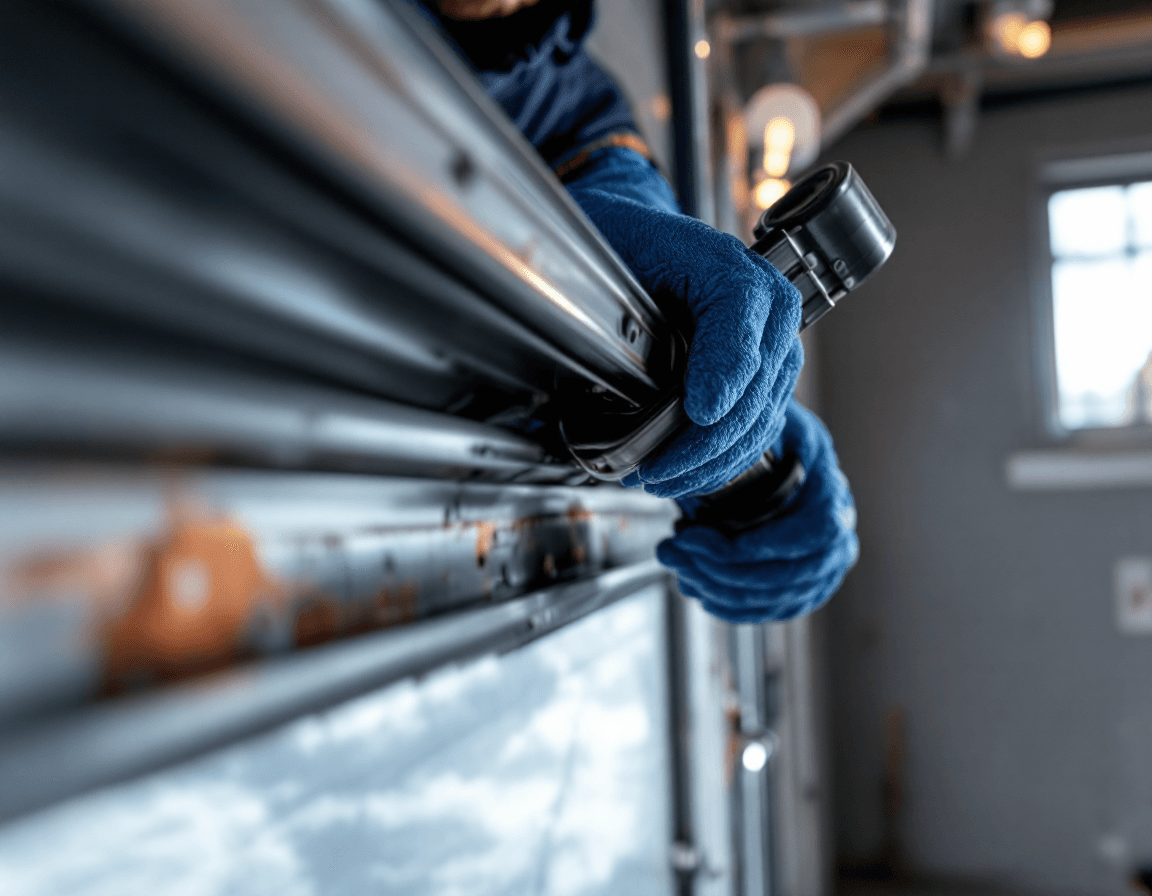
Garage Door Roller Replacement in Edmonds, WA is one of the most common repairs we handle for homeowners across Snohomish County, and it is also one of the most affordable ways to restore smooth, quiet operation. The rollers are the small wheels that ride inside the vertical and horizontal tracks and carry the weight of your door as it opens and closes. When they wear out, the door still moves, but it does so with noise, vibration, and extra strain on every other component in the system.
Many Edmonds homeowners first notice the problem as a squeak on a damp morning or a grinding sound when the door starts to lift. Others realize something is off when the door jerks at the top of its travel or seems to hesitate halfway through the cycle. Either way, a worn roller is rarely a problem that fixes itself, and waiting usually means a louder door and a more expensive repair later. A full set of replacement rollers typically falls in the range of $120 to $250, depending on the door size, the roller type, and the condition of the track.
This page explains what roller wear looks like, why our local climate accelerates it, how nylon and steel rollers compare, and what to expect during a service visit. It also covers when a roller problem is really a sign of a larger issue that needs a licensed technician's attention. If you live in the 98020 or 98026 ZIP codes, or anywhere near Downtown Edmonds, the Edmonds Waterfront, or Perrinville, the details below apply directly to your home.
Why Edmonds Garages Wear Rollers Faster Than You Might Expect
Edmonds sits on the Puget Sound shoreline, and that location shapes how garage hardware ages. Salt-laden marine air drifts inland on westerly breezes, settling on exposed steel and hardware, and the moisture that comes with long stretches of Pacific Northwest drizzle keeps those surfaces damp far longer than in drier parts of the country. Over several seasons, that combination can roughen the metal surfaces inside a roller's bearing and speed up the breakdown of the rubber or plastic tire.
Temperature swings add another layer of stress. A cool, damp garage in winter can make lubricants thicken and grip, then a warm afternoon in late spring can thin them out and leave metal parts with less protection. Each shift asks the roller to start and stop under slightly different conditions, which gradually loosens tolerances and wears flat spots into the wheel surface. Homes with attached garages that share a wall with heated living space often see the door perform differently from season to season, which is a useful clue during diagnosis.
Daily use matters too. Many households in Edmonds open and close their garage several times a day, especially families with teenagers, home offices that rely on side-door access, or residents who run errands in and out of the garage. Rollers that complete thousands of cycles a year will show wear sooner than rollers on a door that only opens for weekly trips. Understanding your own usage pattern helps you predict when a roller check is due, even before the first noise appears.
Reading the Sounds: What a Failing Roller Tells You
Sound is usually the first and most useful symptom. A high, intermittent squeak often points to a dry or contaminated bearing, while a deeper grinding noise typically means the bearing surface has pitted or the roller has begun to flatten. Metal-on-metal scraping is a warning sign that the roller's outer tire has worn away entirely, so the steel core is now rubbing directly against the track. Each sound tells a slightly different story, and a technician who listens carefully can narrow down the cause before removing a single panel.
Vibration and jerking deserve equal attention. If the door lurches as it passes a certain point, or seems to bounce slightly when it reaches the top, one or more rollers may have a flat spot or a seized bearing that refuses to turn smoothly. Sometimes a roller will rotate fine when the door is still but catch as soon as the door's weight comes onto it, which is why a visual check alone can miss the problem. Testing the door through its full cycle while watching each roller is the most reliable way to find the culprit.
Visible damage is the final clue. Cracks in the nylon tire, chunks missing from the edge, rust bloom on the steel shaft, or a roller that wobbles side to side when you press it are all clear indicators that replacement is overdue. Some rollers also show a shiny, polished ring where the track has been rubbing, which tells you the roller has been running off-center for a while. Noticing these details early lets you schedule a repair before a worn roller damages the track or strains the opener.
- Squeaking that comes and goes often means dry bearings or early wear.
- Grinding that gets louder over time usually signals a failing bearing or a flattened tire.
- Scraping metal sounds mean the roller tire is gone and the steel core is contacting the track.
- Jerking or hesitation at specific points suggests a seized or flat roller at that location.
- Visible cracks, chunks, or wobble mean replacement should happen soon rather than later.
Steel Versus Nylon: Choosing Rollers for a Quieter Door
Garage door rollers come in several materials, and the choice affects both noise and longevity. Steel rollers with steel ball bearings are sturdy and inexpensive, but they tend to be louder, especially on older tracks, and they transmit more vibration into the door panels. Many Edmonds homeowners who had steel rollers installed years ago are surprised at how much quieter a door becomes after a swap to a better design. The difference is most noticeable in attached garages where the door sits close to living spaces.
Nylon rollers, often called quiet or sealed rollers, use a tire made from a durable plastic composite around a steel or nylon core. They run more smoothly, absorb small vibrations, and generally produce a softer sound. Sealed bearings help keep moisture and grit out, which is particularly valuable in a coastal climate where dampness hangs around for much of the year. Quality nylon rollers are not a shortcut; when properly sized and installed, they can perform well for many years under normal residential use.
Choosing between them depends on your goals and your door. If noise is your main concern, a full set of nylon rollers is usually the right upgrade, and the price range of $120 to $250 generally covers that set for a standard residential door. If your door is heavy, very old, or has a track that is out of alignment, a technician may recommend addressing the track first so the new rollers are not forced to run against a damaged surface. The right answer is almost always the one that matches your door's weight, track condition, and how you use the garage.
How a Roller Swap Actually Unfolds on Your Track
A professional roller replacement follows a predictable sequence, though each door has its own quirks. The technician begins by disconnecting the opener and securing the door so it cannot move unexpectedly, then checks the springs and cables to confirm they are in good condition before touching the rollers. This step matters because the springs carry the door's weight, and any work that involves tension is strictly a job for a licensed professional. Rollers are generally replaced at the bottom of the door, where the track curves and the weight is spread across the panel edges.
Next, the technician removes the old rollers, usually by lifting the door slightly and sliding the wheel out of its track bracket or opening the hinge joint so the roller can be extracted. Each replacement roller is checked for the correct stem length, diameter, and bearing type to match the track. The technician also inspects the track itself for dents, gaps, or rough spots, since a damaged track will wear new rollers quickly. Cleaning the track and applying the right lubricant at this stage helps the new rollers settle in smoothly.
Finally, the door is tested through its full range of motion. The technician watches each roller as the door opens and closes, listens for any remaining noise, and adjusts track alignment if needed. Many homeowners are pleasantly surprised at how quickly the door responds after a roller swap, often moving with less effort and far less noise than before. A short walkthrough at the end helps you understand how to tell whether the door is running as it should between future service visits.
Pricing a Full Set of Rollers Across Snohomish County
Roller replacement pricing depends on several variables, and it is helpful to understand them before you call. The standard range for a full set of rollers is $120 to $250, which covers the rollers themselves and the labor needed to install them. Doors with more rollers, such as large double-car doors or doors with additional lift-assist hardware, will usually fall toward the higher end. Single-car doors with a standard track configuration often land closer to the lower end of the range.
Roller type is the other major factor. Basic steel rollers cost less than sealed nylon rollers, but the performance difference is often worth the modest premium, especially if noise has been bothering you. Some homeowners also ask about upgraded ball-bearing designs with larger tires for heavier doors, and those options are reasonable to discuss during the estimate. A technician who explains each option clearly, without pressuring you toward the most expensive choice, is usually a good sign of a trustworthy shop.
Be wary of any quote that skips inspection. A proper estimate includes a look at the springs, cables, track, and opener alignment, because a roller problem sometimes hides a larger issue. If a technician finds something that needs attention beyond the rollers, they should explain it plainly and give you a separate price so you can decide what to do. A transparent estimate protects you from surprises and helps you plan the work around your budget and schedule.
Waterfront Air, Salt Spray, and Corrosion Near the Sound
Homes close to the Edmonds Waterfront and the marina area face the most direct exposure to salt air. Even a few hundred feet from the water, the marine layer can carry fine salt particles that settle on metal hardware and begin a slow process of corrosion. Garage door tracks, roller stems, and bracket bolts are all vulnerable, and a rusty stem can bind inside its bearing long before the tire looks worn. Wiping down exposed metal with a dry cloth every few months and keeping the garage well ventilated can slow the buildup noticeably.
Corrosion changes how a roller behaves. When a stem rusts, it can expand slightly inside the track bracket, causing the roller to stick or wobble. Rust flakes can also work their way into the bearing, creating grit that accelerates wear on the balls and races. In some cases, the roller stops turning altogether, dragging the door along its track and creating the scraping sound many homeowners mistake for a broken track. Early replacement with sealed nylon rollers and corrosion-resistant hardware can prevent this cascade.
If you live near the waterfront, consider asking your technician about hardware options designed for coastal exposure during your next service visit. Stainless or zinc-coated hardware holds up better than plain steel in salty air, and a light coat of appropriate lubricant on the bearings helps repel moisture. A technician familiar with Edmonds conditions can recommend a maintenance rhythm that fits your location, which is more useful than a generic schedule written for a dry inland climate.
Older Homes Near Perrinville and Downtown: Track Alignment Matters
Many homes in the Perrinville area and around Downtown Edmonds were built decades ago, and their garage doors and tracks may have shifted over time. Foundations settle, framing moves slightly, and older tracks can develop subtle bends that were never noticeable until new rollers were installed. When a technician replaces rollers on a misaligned track, the new wheels may still bind or wear unevenly, which is why alignment is part of a thorough service visit. Checking the track for level and plumb is as important as choosing the right roller.
Older doors also tend to carry more weight than modern lightweight models, especially if they were built with solid wood panels or extra insulation. That extra load concentrates pressure on the rollers, and a worn bearing can fail much sooner under the strain. A technician may recommend a heavier-duty roller or a closer look at the springs when the door is heavy, rather than simply swapping in the same type that was there before. Matching the roller to the door's actual load is one of the best ways to extend the life of the repair.
Homeowners in older neighborhoods sometimes notice that the door binds only in certain seasons, which often reflects seasonal expansion and contraction of the wood or the home's framing. A door that sticks in damp winter weather and runs freely in summer may simply need its track adjusted and its rollers properly seated. Taking note of when the problem appears can help the technician pinpoint whether the cause is mechanical wear, track misalignment, or a structural shift in the garage itself.
When Binding Means Something Bigger Than Rollers
Rollers are a common cause of binding, but they are not the only one. A door that sticks or stops partway through its travel may have a damaged track section, a bent panel, a failing hinge, or a spring that is losing tension. Sometimes the opener is working harder than it should because the door is out of balance, and the motor's strain is mistaken for a roller issue. Diagnosing the true cause requires a systematic look at the entire door system rather than a quick guess based on sound alone.
Certain warning signs suggest the problem extends beyond the rollers. If the door drops suddenly, sags on one side, or shows gaps between the panels, the springs or cables may be compromised. A door that won't stay open or that feels unusually heavy when lifted by hand has a balance problem that needs professional attention. These situations involve high tension and stored energy, so they should never be approached as a do-it-yourself project. Any work on springs or cables must be performed by a licensed, insured technician.
When binding persists after roller replacement, the right next step is a full inspection. A technician will check the track for damage, verify the hinges and brackets, test the balance of the door, and evaluate the opener's force settings. This comprehensive approach ensures that the roller repair actually solves the problem instead of masking a deeper issue that would reappear soon after. Honest diagnosis protects both your budget and your safety.
Keeping Rollers Quiet Between Service Visits
Routine care can extend the life of new rollers and keep your door running quietly through the long Pacific Northwest seasons. Start by inspecting the rollers and track every few months, looking for debris, rust spots, or flat areas on the roller tires. Wiping the track with a clean, dry cloth removes the grit and salt residue that accumulate in coastal and damp conditions. Keeping the track clear also prevents small stones or leaves from being crushed under the rollers, which can cause early damage.
Lubrication is important, but it must be done correctly. Use a silicone-based or lithium-based garage door lubricant on the bearings and hinges, and avoid heavy grease or household oils that attract dirt and gum up over time. Do not spray lubricant directly onto the track surface, since it can collect dust and create a sticky film that makes the rollers slow down. A light, targeted application on the moving parts is usually all that is needed, and a technician can show you the right spots during a visit.
Finally, pay attention to changes in the door's sound and movement. A new squeak or a slight hesitation is a signal worth investigating early, before it turns into a larger repair. Keeping a simple log of when you notice a problem can help your technician understand patterns, especially if the issue seems tied to weather or time of day. Early attention is almost always less costly than waiting until a roller fails completely.
Why Spring and Cable Work Belongs With a Licensed Technician
Roller replacement is a manageable service for experienced technicians, but it sits close to components that can cause serious injury if handled incorrectly. Garage door springs store enormous amounts of tension, and cables carry that force along the track. Even when a job appears simple, adjusting or removing a spring without the proper tools and training can release that energy suddenly. This is why we always recommend that spring, cable, and drum work be performed by a licensed and insured professional rather than attempted at home.
Homeowners sometimes ask whether they can replace rollers themselves to save money. Some minor maintenance, such as cleaning the track and lubricating accessible hinges, is reasonable to do yourself. Replacing rollers, however, often requires lifting the door and working near tensioned components, and the risk of an unexpected drop or spring release is real. A professional brings the right equipment, safety procedures, and experience to complete the job without endangering you, your family, or your vehicle.
Choosing a licensed, bonded, and insured company also protects you practically. If something goes wrong during service, proper insurance and licensing help ensure the situation is handled responsibly. A reputable technician will explain what they are doing, confirm the door is safe to operate before leaving, and make sure you understand what to watch for afterward. That peace of mind is part of what you are paying for when you choose a professional repair.
If your Edmonds garage door is grinding, squeaking, jerking, or sticking, a roller replacement is often the simplest way to restore quiet, smooth operation. Our team serves homes across Edmonds, including the 98020 and 98026 ZIP codes, Downtown Edmonds, the Edmonds Waterfront, and Perrinville. Call Seattle Garage Door Fix at (888) 799-3819 to schedule an inspection, ask about nylon roller options, or get a clear estimate for a full set of rollers.