
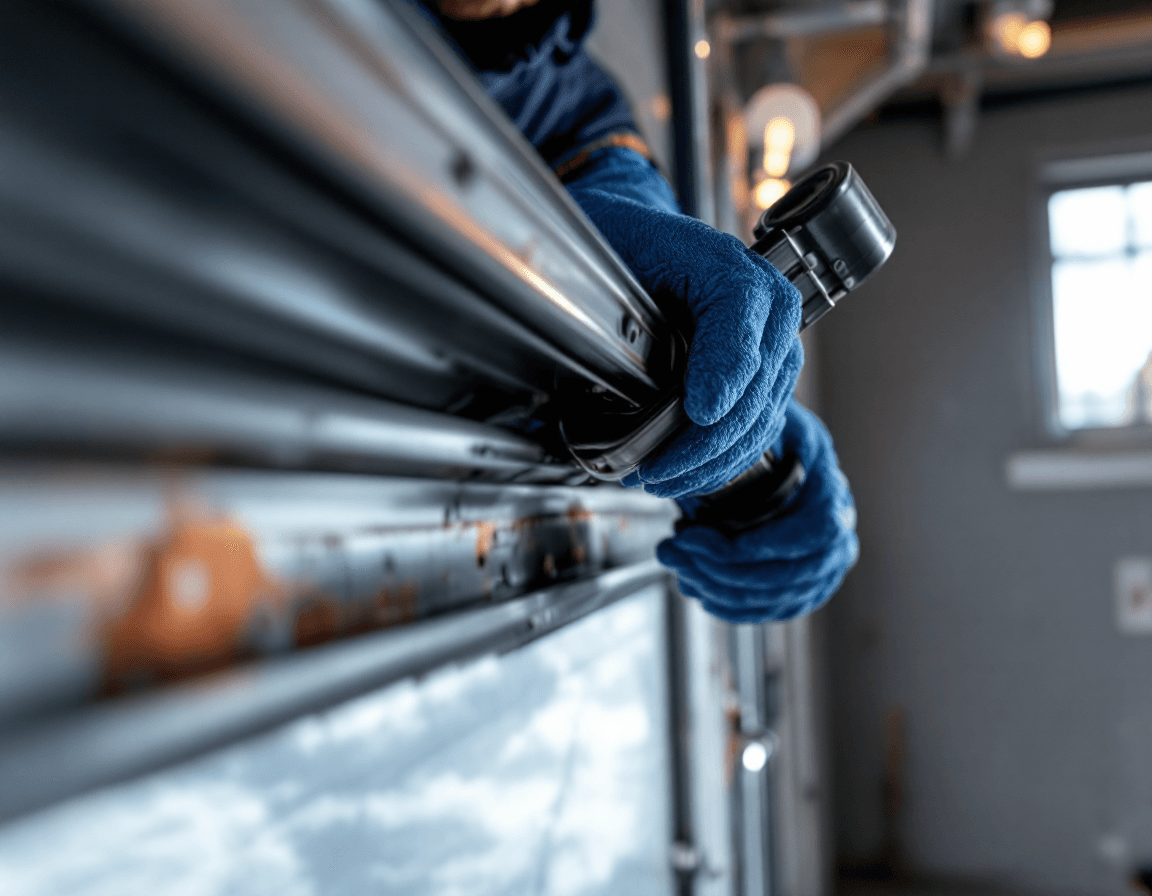
Garage door roller replacement in Woodway, WA is one of the most common repairs we handle for homeowners in this part of Snohomish County, and it is also one of the most overlooked. Rollers are the small wheels that ride inside the vertical and horizontal tracks and carry the door's weight through every open and close cycle. When they wear out, the door still moves, but it complains about it with grinding, squeaking, shaking, or the occasional jolt that makes you wonder whether something is about to break.
Woodway's housing stock is a mix of older homes with original steel-roller doors and newer builds with heavier insulated panels, and both can develop roller trouble. The town's wooded hillsides, damp winters, and salty marine air off the Sound all put extra stress on hardware that sits in a garage and gets opened several times a day. A worn roller set is usually inexpensive to fix, and in most cases a full set of replacement rollers runs roughly $120 to $250 depending on the door and the roller style you choose. This page explains what rollers do, how local conditions speed up their wear, what the warning signs sound like, and what a responsible roller swap involves. It also explains where the job stops being a homeowner project and becomes work for a licensed technician.
What Rollers Really Do Inside Your Garage Door Track
Every garage door rides on a track system, and the rollers are the moving link between the door panels and the metal rails. Each door section has hinges, and at the outer edges of those hinges sit roller stems that slide into the track on either side. As the door rises, the rollers travel up the vertical track, roll around the curve, and continue along the horizontal track overhead, while the springs counterbalance most of the weight. Smooth rollers let that movement feel effortless, while worn ones force the door to fight its own path.
Rollers come in two broad families, and understanding the difference helps when you talk with a technician. Steel rollers have a steel wheel with a ball bearing or a plain bore, and they are durable but loud because metal rubs metal inside the track. Nylon rollers use a molded nylon wheel, often with sealed ball bearings inside, and they run noticeably quieter and more smoothly. Stem length, wheel diameter, and whether the stem is a straight or a bent design also vary, so matching the existing hardware is important before any new set goes in.
Roller diameter is a common source of confusion. Many residential doors use two-inch wheels, while some heavier or older models use three-inch wheels, and a mismatched wheel can cause binding at the curve or prevent the door from seating properly when closed. The stem also has to fit the hinge hole precisely, which is why a technician usually checks the existing roller before recommending a replacement. Taking a clear photo of the roller and the track when you first notice a problem can make parts selection faster and more accurate.
How Woodway's Damp Winters and Salt Air Wear Rollers Down
The Pacific Northwest climate is famously mild, but it is also famously wet, and that combination is hard on garage door hardware. Woodway sits on the edge of the Puget Sound lowlands, and the long gray stretches from late fall through early spring bring frequent rain, high humidity, and cold mornings that keep moisture clinging to metal surfaces. Water that gets into roller bearings and the track can wash lubricant away and leave bare metal exposed, and steel rollers are particularly vulnerable to this kind of corrosion.
Homes on the bluff and those closer to the water can experience additional exposure from salt-laden air carried in from the Sound. Salt residue settles on exposed hardware and speeds up rust on track edges, roller stems, and the bearings inside steel wheels. Over time that corrosion roughens the surfaces that the rollers depend on, and the door starts to sound rough even when the rollers themselves still look intact. Garages that have open driveways, sit on sloped lots, or get little direct sun often hold moisture longer than homes with sheltered, drier garages.
The wooded surroundings that give Woodway its character also add dirt and debris to the mix. Fine needles, catkins, pollen, and leaf litter can collect in the bottom of the track and inside the lower section of the door, especially when a garage door opens onto a shaded driveway. That grit acts like sandpaper every time the rollers pass over it, and it accelerates wear on both the wheels and the track surfaces. A simple seasonal wipe-down of the track is one of the cheapest ways to extend roller life in a place like this.
Recognizing the Sounds: Grinding, Squeaking, and Scraping Explained
Garage doors speak through noise, and each sound points toward a slightly different cause. A low, steady grinding usually means the bearings inside a roller are failing or that a steel wheel has worn flat on one side. A high-pitched squeak often comes from a dry stem or a nylon roller that has begun to glaze, and it tends to be most noticeable on the first open of a cold morning. Sharp metal-on-metal scraping suggests that a roller has seized, that a wheel has cracked and is rubbing the track, or that the track itself has bent slightly out of alignment.
Timing matters as much as pitch. If the noise appears only at a certain point in the travel, such as where the door curves from vertical to horizontal, the trouble is often in a roller that is hitting a worn section of track or a roller that has lost its smooth rotation. If the noise is constant from bottom to top, the issue is more likely widespread wear across the set or a general lack of lubrication. Listening carefully for where the sound starts and stops can narrow the problem significantly before anyone touches a tool.
Homeowners sometimes assume the opener motor is at fault, but the motor is rarely the source of rolling noise. A quiet opener paired with a loud door usually points back to the rollers, hinges, or track. Hinge wear can also produce scraping that feels like a roller problem, so a technician will usually check both before recommending a full roller set. Being able to describe the sound in plain language, such as "a grinding that starts about halfway up," makes the diagnosis faster and reduces guesswork.
When the Door Shakes, Jerks, or Hangs Partway Up
A door that shakes or jerks as it travels is trying to tell you that the rollers are no longer rolling evenly. A seized roller stops rotating and drags along the track, and the door lurches as the stuck wheel catches and then releases. A cracked nylon wheel can wobble on its stem, creating a bump or a rhythmic shudder that gets worse the faster the opener runs. Either situation can strain the opener and the door panels, so it deserves attention before the problem spreads.
Binding and sticking are slightly different. A door that stops partway up, hesitates at a specific height, or needs a push to get moving may have a roller that has flattened on one side or a track section that has been bent by an impact. Sometimes a child's ball or a bumped car mirror is the culprit, and sometimes the track has simply loosened over years of vibration. Because a bind can also come from spring problems, this symptom should be inspected before anyone assumes the rollers are the sole cause.
Safety deserves special mention with any binding door. If the door is stuck, do not force it, and do not stand under it or try to lift it by hand while the opener is engaged. Disconnect the opener using the emergency release cord if the door is misbehaving, and keep children and pets clear of the travel path. A technician can determine whether the fix is a simple roller swap or a larger repair involving the springs or cables, which is work that should always be left to a licensed professional.
Nylon Versus Steel: Choosing Quieter Rollers for Your Garage
Many homeowners in Woodway ask for quieter operation, and nylon rollers are the most common upgrade for that goal. Nylon wheels absorb small vibrations and run more smoothly on the track, which cuts down the rattling and metallic ring that steel wheels can produce. Sealed bearings keep grit and moisture out better than open designs, and that makes them a good match for the damp, leaf-filled conditions common in this area. For most standard residential doors, a nylon upgrade is a practical choice that improves daily comfort.
Steel rollers still have a place. They handle heavier doors and high-cycle use without much deformation, and some older doors are designed around the exact dimensions of steel wheels. A technician will usually recommend steel for certain commercial-style doors or for homes with very heavy insulated panels that place extra stress on the wheels. The right choice depends on the door's weight, its track type, and how often the door is cycled each day.
Lubrication is another part of the quiet-operation equation. Quality nylon rollers still benefit from a light coat of a silicone-based or lithium-based garage door lubricant applied to the stem and bearing, and the track itself should be cleaned before any new rollers go in. Heavy oils and grease can attract dirt and create a sticky film that holds grit against the wheels, so a light application is better than a heavy one. A good technician will explain the lubrication schedule that fits your door and your local conditions.
Here are a few practical points to discuss when choosing between roller types:
- Door weight and panel style, especially for insulated or heavier wood-look doors
- Track type and whether the existing track is in good condition
- How many daily cycles the door sees, such as a household with teenagers or home-based work
- Whether the home sits near the water or in a shaded, moist location
- Your priority for quiet operation versus long-term durability under heavy use
What a Roller Replacement Involves From Start to Finish
A typical roller replacement starts with a visual inspection of the entire door and track system. The technician looks for worn or cracked wheels, bent or seized stems, rust on the track, and any signs that hinges or brackets are loose. The door is usually checked for balance and movement with the opener disconnected, and the track is tested for alignment and secure mounting. This assessment helps determine whether a full set is needed or whether only a few rollers have failed.
The actual swap is straightforward for a trained technician. The door is held safely in place while the old rollers are removed, usually by lifting the door section slightly or by working on one section at a time, and the old stems are pulled from the hinge holes. The new rollers are inserted, checked for smooth rotation, and lightly lubricated before the door is returned to the track. Each section is moved through its full travel to confirm that the new rollers track evenly along the curves.
Finishing steps matter as much as the swap itself. The track is wiped clean, any loose track brackets are tightened, and the door is cycled several times to confirm that the noise, shaking, or binding has resolved. The technician will also check the opener's force settings and safety reversal, since a door that moves unevenly can affect those settings. Once the job is complete, you should receive a clear explanation of what was replaced and what maintenance will keep the new rollers performing well.
Why Track Alignment and Spring Work Belong With Licensed Professionals
Rollers are one of the few garage door parts that many confident homeowners attempt on their own, but the job has limits that matter. Garage door springs are under very high tension, even on a door that looks light, and improper handling can cause serious injury. Torsion springs and extension springs should never be adjusted, removed, or wound by anyone without the proper training and tools, and that rule applies whether the work is DIY or hired out to an unlicensed helper. Cables carry the door's load as well, and a frayed or slipping cable can drop a door with little warning.
Track alignment is another area that deserves professional attention. A track that is slightly off plumb or out of level can make even new rollers bind, and forcing the door to fit a misaligned track can crack panels and strain the opener. A licensed technician uses levels, measurements, and the correct fasteners to confirm that the track is sound and that the rollers will seat properly. Trying to bend or tap a track into place with a hammer often creates more problems than it solves.
We recommend that any homeowner in Woodway hire a licensed, bonded, and insured technician for spring, cable, and track-alignment work. Ask whether the company carries liability and workers' compensation coverage, and whether the technician will explain each step before beginning. A reputable professional will be happy to show you the worn parts and to explain why a particular repair is necessary, rather than pressuring you into unnecessary upgrades.
Estimating the Cost of a Full Roller Set in Woodway
Most homeowners want to know what a roller replacement will cost before the technician arrives, and that is a fair question. For a full set of rollers in this area, pricing generally falls between $120 and $250, depending on the door's size, the roller style you choose, and whether the existing stems need replacing as well. Standard steel rollers usually sit at the lower end of that range, while quiet nylon rollers with sealed bearings often cost more. Specialty doors or unusually sized hardware can push the price higher.
Several factors affect the final number. The number of roller stems on a door depends on its height and the number of sections, so a tall two-car door will need more hardware than a standard single. Whether the job includes track cleaning, minor alignment, or a lubrication service can also change the total. A technician who inspects the door before quoting can give a clearer picture of what the repair actually requires.
It is also worth thinking about the cost of waiting. A roller that is grinding or seized can damage the track, stress the opener, and wear adjacent parts, and a small roller problem can grow into a larger repair if it continues. Addressing rollers when the first symptoms appear is usually the most economical approach. A clear, written estimate before work begins helps you compare options without feeling rushed.
Simple Checks Woodway Homeowners Can Do Before Calling
Some basic observations can help you describe the problem accurately and speed up the appointment. Open and close the door slowly while watching the rollers on both sides of the track, and note whether one side behaves differently from the other. Listen for where the noise starts and stops, and check whether the door shudders at the top, middle, or bottom of its travel. Taking a short video with your phone can capture sounds that are hard to describe in words.
Look at the track itself with the door fully closed and the opener disconnected. Use a flashlight to check for debris, rust spots, dents, or gaps where the track meets its brackets. Gently wipe the inside of the track with a dry cloth to remove leaves and grit, but do not spray solvents or heavy oils into the track, since they can attract dirt and make the rollers worse. Keep the area around the garage door clear of stored items that might catch on the track.
Finally, keep in mind what not to do. Do not disconnect springs, adjust tension, or attempt to remove a cable yourself, and do not stand in the door's path while testing it. If the door is stuck or unbalanced, use the emergency release cord carefully and call a professional rather than forcing the mechanism. These checks are meant to give your technician useful information, not to replace a proper inspection.
Keeping Rollers Quiet Through Woodway's Changing Seasons
Preventive care is the best way to keep a roller set quiet for years. A seasonal routine that includes cleaning the track, checking for loose brackets, and applying a light coat of lubricant to the roller stems and hinge points can make a noticeable difference. Doing this twice a year, ideally before the wettest months and again in late spring, helps keep moisture and grit from building up in the places that matter most. Consistent care is especially helpful for homes in shaded or salt-exposed locations.
Think about how your door is used throughout the year. During the rainy season, avoid letting the door sit partially open for long periods, since moisture can settle on the rollers and track in that position. In summer, a little extra attention to dust and pollen can prevent gritty buildup that wears down wheels. If you notice new squeaks after a stretch of wet weather, a quick inspection often catches the problem before it becomes a grind.
Regular professional inspections are worth considering as well. A technician can spot early roller wear, hairline cracks in nylon wheels, or small track misalignments that are easy to miss in daily use. Scheduling a checkup every year or two gives you a clear picture of your door's condition and a chance to plan replacements before they turn into emergencies. A well-maintained door runs quietly, feels smooth underfoot, and gives years of reliable service in the Woodway climate.
Garage door roller replacement in Woodway is a practical, affordable repair that can transform how your door sounds and feels every day. If your door is grinding, squeaking, shaking, sticking, or scraping, a professional inspection can pinpoint the cause and recommend the right roller set for your home. Call Seattle Garage Door Fix at (888) 799-3819 to schedule service with a licensed, bonded, and insured technician who will explain the options clearly and handle spring and track work safely.