
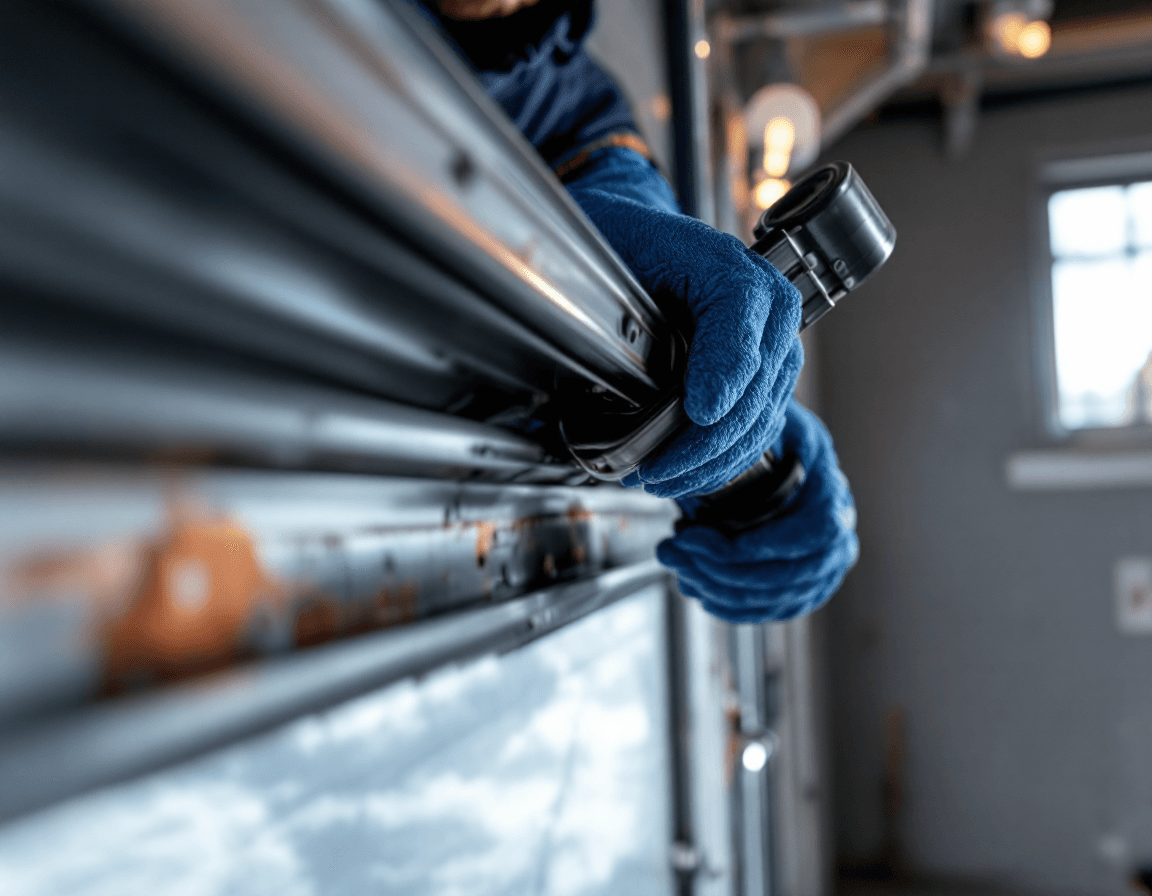
Garage door roller replacement in Lake Forest Park, WA is one of the most common and most affordable repairs we handle, and it often fixes a door that seems to be failing. Rollers are the small wheels that ride inside the vertical and horizontal tracks and carry the weight of the door as it rises and falls. When they wear out, crack, or seize, the whole door pays for it with noise, vibration, and strain on the opener. Homeowners in the 98155 area often notice the problem first as a grinding sound on a cold morning, long before the door stops working altogether.
This page explains how rollers wear in our part of King County, what different sounds and movements mean, and how you can decide between standard steel rollers and quieter nylon upgrades. We also cover what a full set typically costs, which problems look like roller trouble but are not, and what you can safely check yourself. Our technicians work on doors throughout Lake Forest Park, from older homes near the lake to newer builds closer to the Towne Centre, and the patterns we see are consistent enough to be useful to you.
If your door has started sounding or behaving differently, you do not need to wait for a complete failure to call for help. Roller issues tend to get worse gradually, and catching them early usually means a simpler, lower-cost visit. The sections below walk through what to look for, and we are happy to answer questions by phone at (888) 799-3819 if you would rather talk through your door's symptoms before scheduling anything.
Why Lake Forest Park's Damp Winters Take a Toll on Rollers
The Pacific Northwest climate is mild by national standards, but it is persistently damp, and that dampness is hard on garage door hardware. From roughly October through April, the air around Lake Forest Park carries moisture for weeks at a time, and garages are often the coldest, least-ventilated part of a house. Steel roller shafts and the metal tracks they ride in can develop surface rust in these conditions, and rust roughens the path the roller needs to travel smoothly. Over time, that roughness translates directly into noise and drag.
The wooded character of the neighborhood adds another layer. Many homes here sit under tall conifers, and the constant drip of needles, pollen, and moss-laden debris can work its way into track channels. Grit trapped in a track acts like sandpaper against a roller's bearing surface. Homes closer to the lakeshore, including the streets around Sheridan Beach, can see extra humidity during the wetter months, which speeds up corrosion on exposed metal. A door that lives in that environment will generally need roller attention sooner than the same door in a dry climate.
Temperature swings matter too. On cold winter mornings, lubricants stiffen and metal contracts, so a roller that moves freely in July may protest in January. Those seasonal changes can make an existing wear problem sound dramatically worse than it is, which is why many homeowners call in late fall or early winter. Understanding the local cycle helps you schedule maintenance before the worst weather arrives instead of after.
Decoding the Sounds: What Grinding, Squeaking, and Scraping Really Mean
Sound is the most useful early warning your door gives you, and each type of noise points toward a different part of the roller system. A rhythmic squeak that appears as the door starts to move usually means a roller's bearing or stem is dry or worn, and the friction is escaping through the surface. A low, continuous grinding sound often suggests a steel roller whose outer surface has flattened or developed flat spots. Grinding that gets louder as the door climbs can indicate that the rollers are rubbing against debris or a bent track section.
Metal-on-metal scraping deserves prompt attention. When you hear a harsh scrape, the roller may have cracked, lost its tire, or seized so that it no longer turns and instead drags against the track. Dragging rollers stress the door panels, the cables, and the opener motor, and that extra load can shorten the life of components that have nothing to do with the rollers themselves. If the scraping is accompanied by a burning smell from the opener or the door stopping mid-travel, switch the opener off and call a technician before using the door again.
It helps to pay attention to when the noise happens. Sounds that occur only in the first few inches of travel often point to a roller near the bottom bracket, while noise near the top of the track may involve the upper rollers or the horizontal track curve. Taking a moment to notice the pattern can save a technician time and give you a clearer description to share when you call.
Choosing Between Steel and Quiet Nylon Rollers
Most garage doors come with steel rollers, which are durable and inexpensive but generate more noise and can rust in damp conditions. Nylon rollers, often with sealed ball bearings, run more quietly because the material absorbs vibration rather than transmitting it through the track. Nylon also resists moisture, which makes it a practical match for Lake Forest Park's wet season. Many homeowners who live near neighbors with shared walls or bedrooms above the garage choose nylon specifically for the reduction in early-morning racket.
Nylon is not automatically the right choice for every door, though. Heavier doors, particularly larger insulated models or those with glass panels, may need rollers rated for additional load, and the technician should confirm the weight rating before ordering. Some older tracks also have worn sections that will wear a new nylon roller faster than expected, so the track condition matters as much as the roller material. A good installer will inspect the tracks, check the bearings, and recommend the material that fits your specific door rather than pushing one option across the board.
Upgrading to quieter rollers is often the most noticeable improvement a homeowner can make for a modest investment. Replacing a full set typically runs in the range of $120 to $250, depending on door size, roller type, and whether additional hardware such as hinges or brackets needs attention during the same visit. Doing the job in one visit avoids mismatched rollers, which can cause uneven travel and new noise.
Why Shaking and Jerking Often Point to Track Alignment
A door that shakes, jerks, or lurches as it travels frequently gets blamed on the rollers, and rollers are sometimes the cause. But the track is equally likely to be responsible. Tracks can loosen from their mounting brackets, drift out of plumb, or shift slightly when the door is slammed or when the garage structure settles. Once the track no longer sits square, even brand-new rollers will bump and hesitate as they pass the misaligned section. Replacing rollers without checking the track is a common reason that a repair seems to fail.
The vertical and horizontal sections of the track must be parallel and level to within tight tolerances for the door to travel smoothly. A technician will check the gap at the top and bottom of the door, verify that the track is fastened firmly to the wall and ceiling framing, and look for dents or bends that would catch a roller. In some Lake Forest Park garages, particularly those built into sloped lots, the framing itself can flex enough over time to change the track geometry. Correcting that without compromising the building structure is precisely the kind of judgment that benefits from professional experience.
If the door jerks only at the very start or finish of its travel, look at the lift cables and springs as well. Uneven spring tension can make one side of the door rise faster than the other, which looks like a roller problem. Springs and cables carry serious stored energy, and adjusting them is not a homeowner task. Always have a licensed professional evaluate spring or cable concerns.
Diagnosing Binding and Sticking at Specific Points
A door that binds or sticks at a particular spot along its travel is telling you something specific about where the problem lives. A binding point near the middle of the vertical track often indicates a roller that has seized or a track section that has been dented. Sticking that appears near the top, where the track curves into the horizontal run, may point to a worn roller stem, a roller that has slipped out of its track, or a bracket that has moved. Binding at the bottom usually involves rollers near the floor, where grit and moisture collect most heavily.
Because binding can also come from weak openers or unbalanced doors, it is worth noting whether the door binds consistently or only under certain conditions. A door that sticks only after rain may have swollen panels or a frozen roller. A door that binds when cold but runs fine after the garage warms up may have lubrication problems. These patterns are not diagnoses in themselves, but they help a technician narrow the search quickly.
Do not force a binding door open or closed. Forcing it can bend the track, crack a roller, or strain the opener beyond its design limits. If the door stops partway through its travel, use the emergency release only as instructed in your owner's manual, keep children and pets clear, and call for service rather than trying to push or pull the door by hand.
A Safe Visual Check You Can Do Before Calling
You can learn a great deal about your rollers with a careful visual inspection, as long as you stay out of the spring and cable zone and keep the door closed and the opener disconnected while you look. Good-quality flashlight light is more useful than any tool, and a clean rag is often all you need. Never stand under a door that is not fully supported, and never attempt to remove a roller while the door is under tension.
- Look at each roller while the door is fully closed and the opener is disconnected: note any visible cracks, flat spots, missing tires, or rust on the stem.
- Check that each roller spins freely by gently turning it with a finger when the door is closed: a stiff or gritty roller is a strong sign of bearing wear.
- Inspect the inside of the track for dust, pebbles, leaves, or old lubricant buildup, and wipe it clean with a dry cloth.
- Look for gaps, dents, or bends in the track sections, and confirm that the track brackets are tight to the wall and ceiling.
- Note the sound pattern and when it happens, such as cold mornings, first movement, or near the top of the track, so you can describe it accurately on the phone.
Once you have finished the check, stop. Do not loosen track bolts, pull springs, or attempt to adjust cable tension. Those jobs belong to a licensed professional who has the training and tools to do them safely. Lubricating the track is generally reasonable with a silicone-based product rather than heavy grease, which can collect grit, but avoid spraying lubricant directly onto the opener or the door's wood or vinyl surfaces.
Maintenance Habits That Keep New Rollers Quiet Longer
Once your rollers are replaced, a few simple habits will help them last. Keeping the track free of debris is the single most effective step, and in the Lake Forest Park area that means periodically wiping down the track as leaves, needles, and pollen accumulate. A quick wipe every month or two during the wetter seasons prevents grit from gouging new roller surfaces. Lubricate the roller bearings and hinges lightly, using a product designed for garage doors, and wipe away any excess so it does not attract dust.
Pay attention to the way the door sounds at the start of each season. A gentle change in noise is easier to address than a loud failure, and many homeowners find that a yearly inspection by a professional prevents small problems from becoming urgent. The best time for that visit is typically early fall, before the heaviest rain arrives, when technicians can check tracks, rollers, hinges, and the opener in one efficient appointment.
Finally, avoid running the door when it is obviously struggling. Each time a seized roller drags against the track, it wears the track surface and the new roller alike. Early attention keeps the whole system working as designed.
What Affects the Cost and Timing of a Roller Visit
Our pricing for a full set of rollers generally falls between $120 and $250. Where a job lands within that range depends on several factors: the number of rollers your door uses, whether you choose standard steel or quieter nylon, the condition of the track, and whether the technician finds additional wear in hinges or brackets that should be addressed in the same visit. A door with a damaged track section will need more time than one with a simple roller swap, and that difference is reflected in the estimate.
Timing matters as well. Rollers often wear faster during the damp months, so calls tend to increase as autumn turns into winter. Scheduling a visit before the first heavy rains of the season can keep the door running smoothly through the worst weather. Because appointments fill during peak periods, calling early gives you more flexibility in choosing a time that works around your household.
Before any work begins, a technician should explain what they found, what they recommend, and what it will cost. You should feel comfortable asking questions about roller material, expected lifespan, and whether any related parts need attention. A transparent conversation is part of what separates a reliable repair from a rushed one.
Rollers, Hinges, and Bearings: Seeing the Whole Assembly
Rollers do not work in isolation. They connect to hinges that join door panels together, and those hinges carry the rollers' load along the curve from vertical to horizontal track. A worn hinge can pull a roller out of alignment, while a roller with a damaged stem can stress the hinge bracket. Treating the roller in isolation can leave a loose or fatigued hinge in place, and the noise will return within weeks. A thorough visit looks at how the rollers, hinges, and track brackets interact.
Bearings deserve particular attention. Sealed nylon rollers use ball bearings that are protected from moisture, while standard steel rollers may use open bearings that collect grit. When a bearing begins to fail, the roller often sounds rough before it visibly changes. Catching that early means the replacement will be cleaner and the track will not be damaged by a seized wheel dragging across it.
For doors that have been running with worn rollers for a long time, the track surface itself may have grooves or pitting. New rollers in a damaged track can wear quickly, so the technician may recommend track cleaning, realignment, or limited track replacement. Honest assessment of these conditions protects the investment you make in rollers.
Scheduling a Visit Around Your Lake Forest Park Routine
Many homeowners in Lake Forest Park juggle commuting, school schedules, and weekend errands that bring them to the Towne Centre or along the lakeside roads near Sheridan Beach. A roller replacement typically takes a focused window of time, and our scheduling aims to fit that window into your day without leaving the door out of service longer than necessary. If your garage is your only practical entrance for a period of time, let the scheduler know so the appointment can be prioritized.
When you call, have a few details ready: the approximate age of your door, the brand or model if you know it, a description of the sound or movement you are noticing, and whether the door is still operating or has stopped. Photos or a short video of the noise can also help, especially if the sound is intermittent. Those details allow us to prepare the right rollers and tools before arriving.
If you are not sure whether you have a roller problem, call anyway. A quick conversation can help determine whether the issue points to rollers, track alignment, the opener, or the springs, and it can help you decide whether an in-person visit is the right next step. You can reach us at (888) 799-3819 at any time during business hours to discuss what your door is doing and what options make sense for your home.
Garage door roller replacement in Lake Forest Park, WA is a practical, cost-effective way to restore smooth and quiet operation, especially when the damp Pacific Northwest climate has been wearing on your hardware. Call (888) 799-3819 to describe your symptoms, ask about nylon upgrades, and schedule a licensed technician to inspect your rollers, track, and hinges before a minor issue becomes a major repair.