
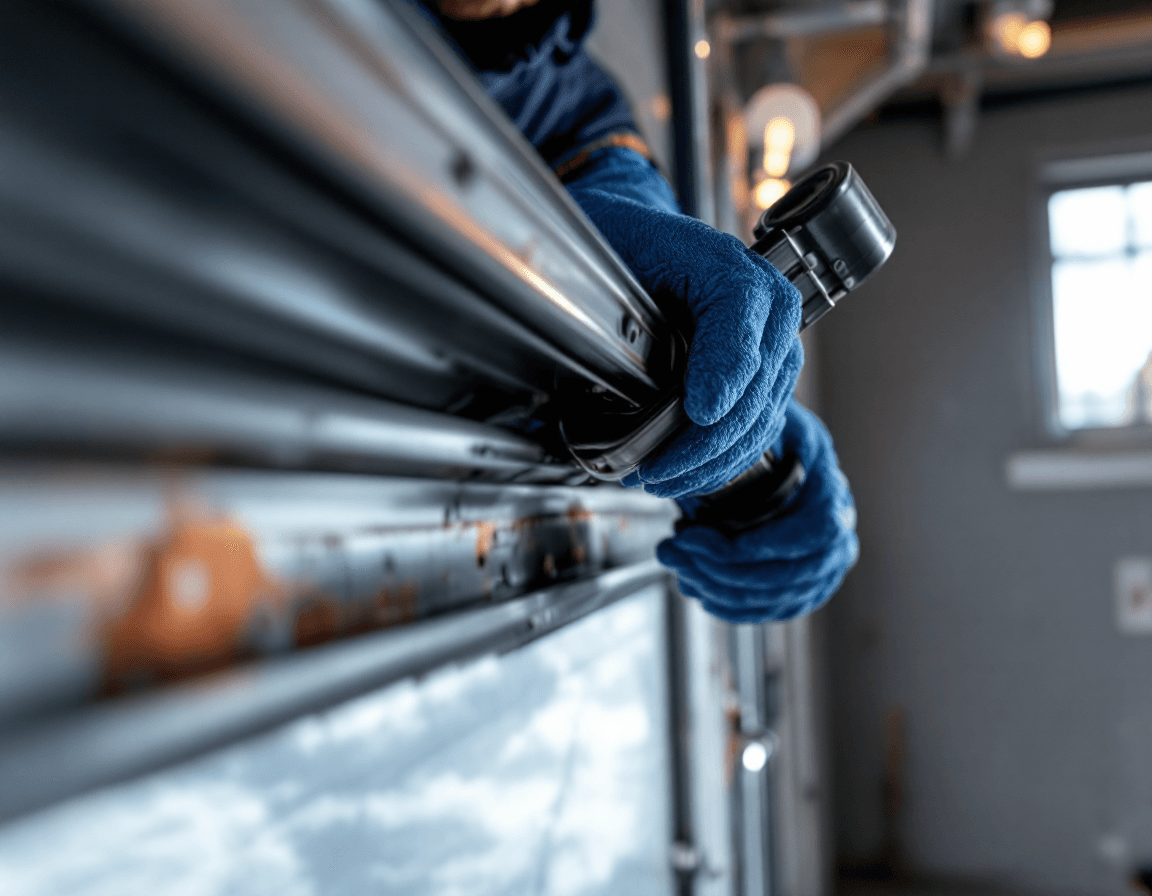
Garage door roller replacement in Seattle, WA is one of the most common repairs we handle, and it is also one of the most affordable ways to get a noisy, jerky door running smoothly again. The rollers are the small wheels that ride inside the vertical and horizontal tracks and carry the weight of your door as it opens and closes. When they wear out, the whole door has to work harder, and you feel it as grinding, shaking, or a sticky stop partway through the travel.
Many Seattle homeowners do not realize how much their rollers are working until something goes wrong. A door that once glided up in a few seconds may start to hesitate, pop, or squeal, and it is easy to assume the opener is failing. In most cases the opener is fine, and the real culprit is a set of rollers that have flattened, cracked, or seized after years of use. Replacing them usually restores quiet, even movement at a fraction of the cost of a new door.
This page explains what worn rollers look and sound like, why our regional climate tends to shorten their lifespan, and what goes into a full replacement. We also cover the choice between steel and nylon rollers, the cost range of $120 to $250 for a full set, and the safety boundaries every homeowner should respect. If your door is making a noise you cannot place, the sections below should help you narrow it down before you call.
Why Seattle Garages Wear Rollers Faster Than You Might Expect
Western Washington is famous for its drizzle, but the real effect on a garage door comes from the combination of moisture, cool temperatures, and long stretches of damp air. Water that gets into roller bearings and track seams does not always evaporate quickly, especially in shaded driveways and detached garages where the sun barely reaches. Over time that moisture can work into the metal, encouraging surface rust on steel roller shafts and track edges. Once rust builds up, the roller no longer turns freely, and it begins to drag or scrape along the track.
Seattle's proximity to Puget Sound adds salt and mineral exposure to that picture, particularly in neighborhoods closer to the water such as Magnolia, West Seattle, and parts of Ballard. Salt-laden air settles on hardware and speeds up corrosion, so a roller that might last a decade in a dry climate can show wear much sooner here. Garages built decades ago, which are common across Queen Anne, Capitol Hill, and Rainier Valley, often sit on older slabs with less insulation and more condensation. That humidity can keep tracks and rollers damp through much of the winter.
Seattle's hilly terrain also matters more than people expect. Many driveways slope toward the garage, and older homes sometimes have doors that are not perfectly square to the opening. When a door sits slightly out of level, one side of the door carries more load, and the rollers on that side wear faster than the others. Uneven wear is one of the first signs we check, because it often explains why a door seems fine on one side and sticks on the other.
Reading the Sounds Your Door Is Making
Sound is the most useful early warning your garage door gives you, and each noise points toward a slightly different problem. A steady grinding noise that rises and falls as the door travels usually means a roller bearing has gone dry or started to break down. Squeaking, especially a high-pitched chirp that repeats with each roller, often comes from a roller that has lost its lubrication or has a worn bushing. Scraping or metal-on-metal sounds typically indicate that a roller's wheel has flattened or that the roller is rubbing against the track edge instead of rolling along the center.
Movement problems tell you a similar story. If the door shakes or jerks as it travels along the track, the rollers may be wobbling on worn stems, or one roller may have seized and is being dragged along by the others. A door that binds or sticks at a particular point, perhaps about halfway up, often has a roller sitting in a dip or bent section of track where it cannot turn freely. Because these symptoms overlap with spring, cable, and opener issues, it helps to be specific when you describe them to a technician.
Here are the warning signs we most often see in Seattle homes that point toward roller replacement:
- A grinding or squeaking noise that repeats with each roller as the door moves
- Rollers that look flattened, cracked, chipped, or have visible rust on the wheel or stem
- A door that jerks, hops, or shakes as it passes certain points on the track
- Scrape marks or shiny spots along the inside edge of the track
- A door that sticks, binds, or stops partway through its travel and then continues after a second push from the opener
- Rollers that have stopped turning altogether, leaving a flat spot where the wheel drags on the track
If you notice more than one of these symptoms at the same time, the rollers are very likely the cause. If the noise disappears when you lift the door manually while the opener is disconnected, the problem is almost certainly in the rollers, the track, or the door's alignment rather than in the opener itself.
Steel Versus Nylon: Choosing Rollers That Fit Your Door
Garage door rollers come in two main materials, and the right choice depends on how you use your door and what you want the door to sound like. Steel rollers are sturdy and handle heavy doors well, which is why they are standard on many older and larger garage doors. Their weakness is noise, since steel-on-steel contact produces a louder rumble, and their bearings can rust if moisture gets inside. Steel rollers also tend to transmit more vibration into the door panels, which can make the whole door rattle.
Nylon rollers, sometimes called quiet rollers, use a durable plastic wheel around a steel or nylon stem with sealed or lubricated bearings. They run noticeably quieter, often reducing the grinding and rattle you hear in the living space above or beside the garage. Nylon also resists moisture better than bare steel, which is a real advantage in a region where garages stay damp for months. The tradeoff is that some lower-quality nylon wheels can wear down faster under heavy use, so the quality of the wheel and bearing matters more than the material name alone.
For most Seattle homes, especially attached garages near bedrooms or home offices, we usually recommend nylon rollers with sealed bearings. For heavy wood or insulated doors on a detached garage where noise is less of a concern, steel rollers can still be a reliable and economical option. A technician should match the roller size, stem type, and bearing design to your specific door brand and track system. Mixing parts without checking compatibility can cause new problems, so it is worth asking exactly what you are getting before the work begins.
What a Full Roller Set Typically Involves and Where the $120 to $250 Range Comes From
A full set of garage door rollers typically covers all the rollers on a single door, which may include both vertical track rollers and horizontal rollers in the top section depending on the door design. Our pricing for a full set of rollers generally falls in the range of $120 to $250. The final figure depends on how many rollers the door uses, whether they are standard or specialty sizes, and whether you choose steel or upgraded nylon wheels. A door with a larger roller count or a heavier-duty stem will naturally cost more than a basic single-car door.
The job itself involves more than swapping wheels. A technician must safely secure the door so it cannot move, remove the old rollers from the track one section at a time, install the new rollers, and then check that each one turns freely and sits correctly in the track. This is also the time to inspect the track for dents, rust, or loose bolts, because a damaged track will wear new rollers quickly. Lubricating the hinges and bearings and confirming that the door balances properly are normal parts of a thorough visit.
It is worth noting what the price usually does not include. If the springs, cables, or opener need attention, those repairs are separate and are priced individually after inspection. Track replacement or major realignment can also add to the cost, though many roller problems do not require either. We always explain what we found and what it would take to fix before starting any work, so there are no surprises on the invoice.
Neighborhood Notes: From Ballard Bungalows to Magnolia Hillside Driveways
Seattle is a city of very different housing styles, and roller problems can look slightly different depending on where the garage is located. In Ballard, many homes have detached garages reached by alleys, and those garages often see more moisture and less direct sun than attached units. Rollers there tend to show rust and corrosion earlier, especially on doors that have not been lubricated in several years. Homeowners in Ballard often notice the noise first when they open the door in the early morning or late evening.
Capitol Hill and Queen Anne bring a mix of older craftsman homes and steep lots. Sloped driveways and tight garage footprints can put extra stress on the door as it lifts, and uneven loading is common. In Queen Anne and Magnolia, we also see doors on hillside properties where the track may have shifted slightly over time, causing rollers to bind on one side. Fremont and Green Lake have a large number of mid-century and renovated garages, where track alignment and mounting hardware may have been modified during previous upgrades.
In West Seattle and Rainier Valley, homeowners often describe doors that have been working fine for years and then suddenly start to squeal after a wet winter. The change is usually gradual, with a bearing that has been slowly drying out finally giving way. Across all these neighborhoods, the same principle applies: a door that makes noise is asking for attention, and catching roller wear early keeps the repair simple. Whether your home is in 98107, 98117, 98122, or 98199, the fix is similar, though the details of access and track condition vary.
Stem Rollers, Bearings, and Track Alignment: The Hidden Parts
Homeowners often focus on the roller wheel because that is the part they can see, but the stem and bearing are equally important. A stem roller has a steel shaft that passes through the wheel, and the bearing inside the wheel allows it to spin on that shaft. If the bearing is worn or dry, the wheel will wobble or resist turning, and that friction creates heat, noise, and eventually flat spots. Replacing the wheel without checking the stem can leave you with a new roller that fails within months.
Track alignment is the other hidden factor. The track guides the door through its path, and it must be straight, level, and firmly anchored to the framing. If the track has loosened, bent, or drifted out of position, even perfectly good rollers will bind as they pass through the bend. Many noisy doors are not really roller problems at all but alignment problems that are wearing rollers unevenly. A careful inspection will check the spacing between the track and the door, the tightness of the mounting brackets, and the condition of the track seams.
Tracks can also collect grit, dried lubricant, and debris over time, particularly in homes near busy streets or unpaved alleys. Cleaning the track and applying a suitable lubricant helps rollers move more freely, but it should be done carefully and without soaking the bearings. Heavy oil can attract dirt and create a sticky film, so a light, appropriate lubricant is usually the better choice. A technician can tell you exactly which products suit your particular roller and track materials.
When Binding and Jerking Point to Something Bigger
Not every rolling problem is solved by new rollers alone, and it is important to recognize when symptoms point to a more serious issue. If the door jerks violently, drops suddenly, or leans to one side, the cause may be a broken spring, a frayed cable, or a damaged drum rather than worn rollers. These parts carry the full weight of the door, and a failure can be dangerous. A door that will not stay open or that slams shut should not be used until it has been inspected.
Binding can also be a sign of an opener that is working too hard because the door is out of balance. An opener is designed to lift a door that is already balanced by its springs, so if the springs are weak or the door has become heavier, the opener strains and may stop or reverse. In those cases, replacing rollers may reduce the strain, but the balance needs to be checked as well. We always test the door's balance during a roller visit so you know whether anything else needs attention.
Finally, persistent grinding that returns soon after roller replacement may indicate a problem with the hinges, the top roller bracket, or the track mounting. These components are easy to overlook, but they influence how smoothly the door rolls. A thorough technician will check them as part of the same visit, which can save you a second service call and prevent more damage to the door panels.
Safety Lines a Homeowner Should Never Cross
Garage door work carries real risks, and the most important rule is that homeowners should not attempt to adjust, remove, or replace springs or cables. Torsion and extension springs store enormous amounts of energy, and when they release unexpectedly they can cause severe injury. Even experienced DIYers are advised to leave spring work to licensed professionals who have the proper tools and training. Roller replacement is a different matter, but it still requires that the door be secured properly before anyone works near the track.
Our technicians are licensed, bonded, and insured, and we recommend that any work involving springs, cables, or heavy door components be handled by a professional. For roller work, a safe approach includes disconnecting the opener, ensuring the door is fully closed or properly supported, and keeping hands and tools clear of moving parts. Homeowners who want to help the process can still do a few safe things while waiting for service.
Here are a few safe habits to follow while you wait for a technician or while you check the door yourself:
- Disconnect the opener before touching the door or track, and keep the release cord out of reach of children and pets
- Never stand under a door that is partly open or that is being moved by hand with the opener disconnected
- Do not loosen track brackets, spring hardware, or cable drums, even if a bolt appears to be loose
- Avoid spraying lubricant onto the springs or cables, since it can attract grit and may not suit those parts
- If the door is off track, bent, or hanging unevenly, keep it closed and call for service
Keeping Rollers Quiet Through Seattle's Long Wet Seasons
Preventive care makes a noticeable difference in how long rollers last, especially in a climate where moisture is constant. A simple habit is to inspect the rollers and track a few times a year, ideally before the rainy season sets in during the fall and again after the wettest months of winter. Look for rust, flat spots, debris in the track, and any change in the sound the door makes. Catching a problem early usually means a lower-cost repair and fewer surprises when the weather turns cold.
Lubrication should be part of that routine, but it should be done thoughtfully. Apply a lubricant that is recommended for garage door rollers and hinges, focusing on the bearings and the hinge points rather than soaking the entire track. Wipe away excess so it does not collect dust. In a damp garage, it also helps to improve ventilation where possible, since lower humidity slows corrosion on metal parts and keeps the track drier between uses.
Seasonal weather also affects the door as a whole. Cold snaps can make metal parts contract slightly, and that can change how rollers sit in the track for a few days. Homeowners sometimes notice a temporary change in sound during a cold week and assume the rollers are failing. If the noise persists after the weather warms, though, it is time to schedule an inspection. Regular checks and timely replacement help keep the door quiet across Seattle's damp seasons.
Scheduling a Roller Replacement Visit in King County
When you call for a roller replacement, it helps to describe the noise or movement as precisely as possible. Tell us when the problem happens, whether it occurs on one side or both, and whether the door is attached to a standard opener or a belt drive. If you have noticed rust, cracking, or a particular spot where the door sticks, mention that too. This information lets our technician arrive with the right parts and a clearer idea of the likely cause.
Our team serves homes across King County and the wider greater Seattle area, including the neighborhoods and ZIP codes listed on our service page. Whether your garage is in a Ballard alley, a Capitol Hill rowhouse lot, a West Seattle driveway, or a Magnolia hillside property, we can usually schedule a visit to inspect the door and quote the work. We aim to explain each option in plain language so you can decide what suits your home and budget. Many repairs can be completed in a single visit when the parts are available.
If you are hearing grinding, squeaking, scraping, or jerking from your garage door, or if the door sticks partway through its travel, a roller replacement may be the simple fix you need. Call (888) 799-3819 to talk with a licensed technician about your door, your symptoms, and the best option for your Seattle home. We will walk you through the inspection, explain the cost of a full roller set in the $120 to $250 range, and tell you honestly if anything else needs attention.