
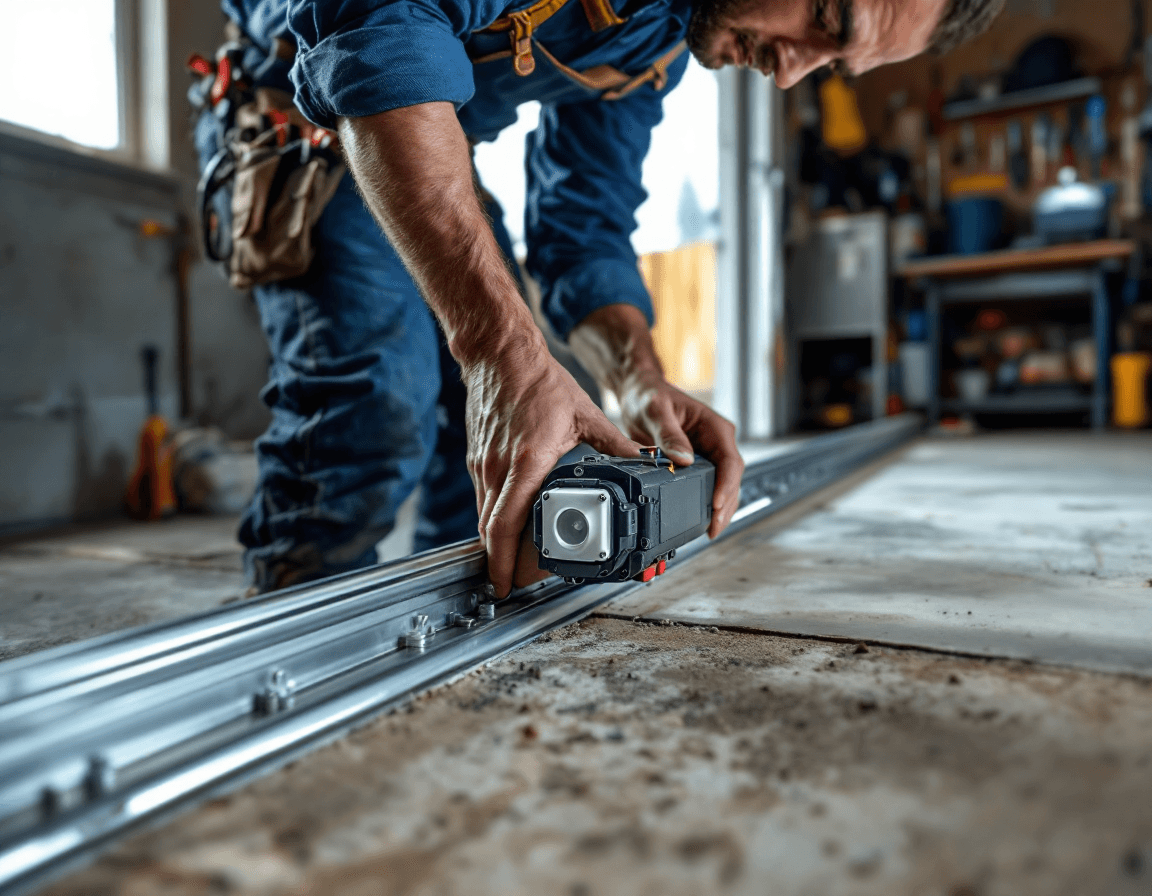
Garage Door Sensor Repair in Mukilteo, WA is one of the most common calls we take from homeowners on the Snohomish County shoreline, and it's often the one that feels most urgent. A door that refuses to close, or that slams back up the moment it touches the floor, makes a simple trip to the car feel like a chore. Those photo-eye sensors are small, but they are the reason your door can tell whether something is standing in its path, and when they stop talking to each other, the opener does the only safe thing it can: it refuses to finish the job.
Mukilteo has its own mix of conditions that wear on these components. Salt air drifts in off Possession Sound, rain settles in for weeks at a time from October through April, and the low summer sun comes straight through the garage opening in the evening. Homes near the Mukilteo Waterfront, in the older blocks of Old Town, and in the newer neighborhoods up the hill around Harbour Pointe each have different garage layouts and different exposures, so the same symptom can have a different cause from one street to the next. Our technicians work through those differences every week, and this page explains what we look for and what you can expect when you call.
If your garage door is acting up, you do not need to diagnose it perfectly before picking up the phone. You only need to notice what the door is doing and when it started. Many sensor problems are fixed in a single visit, and the typical cost for most sensor repairs falls between $85 and $225 depending on the parts involved and how much rewiring is required. You can reach our team at (888) 799-3819 for scheduling and straightforward estimates.
Reading the Signals: What Your Sensor Lights Are Trying to Tell You
Most residential openers have a pair of sensors mounted on the inside of the door tracks, roughly four to six inches above the floor. One unit sends an infrared beam across the opening to the other, and each side has a small indicator light. A steady light on both units usually means the beam is connected and the door should operate normally. When one light is off, blinking, or the two lights are not matching, the opener is telling you that it has lost its connection and is protecting you by refusing to close.
A blinking light is often the most useful clue. On many common models, a fast blink on the receiver means the beam is partially blocked or misaligned, while a slow blink or a light that goes dark can point to a wiring break or a failed unit. Because brands use different patterns, we always check the manual for your specific opener during a visit rather than guessing from the blink count alone. Writing down what the lights do when the door is closing, versus when it is opening, can save a technician time and help pinpoint the fault quickly.
Do not try to override the sensors by bridging the terminals or taping over the lenses. It may seem like a quick workaround, but it removes the protection that keeps a closing door from crushing a child, a pet, or a parked bicycle. Sensors are cheap compared with the damage a door can do, and the repair is almost always more straightforward than people expect.
Why Alignment Drift Happens So Often on Mukilteo Driveways
Sensor alignment is the single most frequent cause of closing trouble we see. The photo-eyes are designed to face each other squarely, and even a small shift can break the beam. Bumps from a lawnmower, a bicycle leaned against the wall, a stray ball, or a vehicle backing in too close can all nudge a bracket out of position. Over time, the mounting screws loosen and the bracket slowly rotates, so the problem may appear gradually instead of all at once.
Mukilteo's housing stock adds its own wrinkles. Many older homes in Old Town sit on lots where the driveway slopes or where the slab has settled unevenly over the decades. When the floor is not level, the tracks can shift a fraction of an inch, and the sensors are mounted to the track, so they move with it. Newer construction around Harbour Pointe tends to have cleaner, more level pads, but the damp Pacific Northwest weather can still cause the wood framing and wall anchors to shift slightly as seasons change. A good technician checks the level of the sensor brackets as well as the aim of the lenses.
Realignment is usually a quick fix when the sensors and wiring are intact. We check that each lens is square to the other, that the brackets are firmly fastened, and that nothing is pinching the cable as the door travels. We also look at the sensor bracket for hairline cracks, since plastic housings that have been out in the weather for years can become brittle. If the brackets are sound and the beam is simply out of line, adjustment alone often restores normal operation.
Sun Glare Off the Water and Low Evening Light
Sunlight can trip sensors in a way that surprises homeowners. The infrared receiver is sensitive to bright light, and when the sun sits low on the horizon, its rays can enter the garage through the gap under the door or reflect off nearby surfaces and confuse the receiver. In Mukilteo, this happens most in late spring and summer, when the evening sun angles in from the west across the Sound. Homes with large south- or west-facing glass, light-colored driveways, or metal siding can throw extra reflection into the sensor path.
The symptom is usually predictable. The door closes fine in the morning, then begins reversing or refusing to close in the late afternoon or early evening, and sometimes it works again after the sun drops below the roofline. Winter sun can produce the same effect on clear, cold days, when the light is low and bright through the winter months. Because the problem comes and goes, many homeowners blame the opener, when the real issue is simply a sensor that is reading too much ambient light.
The fix depends on the cause. Sometimes a small shield or a slight tilt of the sensor housing, angled so the lens is shaded from direct sun while still aiming at its partner, is enough. In other cases, a different sensor model with better ambient-light rejection is the right call. We evaluate the exposure before recommending a change, because a sensor swap that does not address the sun angle will simply bring the problem back.
Chewed Wires, Salt Air, and Moisture at the Connections
Wiring damage is an unpleasant surprise for many Mukilteo homeowners. The sensor cable runs along the door track and up into the opener housing, and it is often routed through spaces where rodents, insects, and moisture can reach it. Mice and rats are common in garages across Snohomish County, especially in neighborhoods bordered by greenbelts and older trees, and they will chew on low-voltage wire without any obvious reason. The insulation may look intact from the outside, but a single nick can intermittently break the signal.
Salt air is another quiet culprit. Even homes a few blocks from the water can see salt deposits and humidity that corrode terminal screws and exposed copper. Corrosion at the connection points causes flickering sensor lights, intermittent closing, and sometimes a door that works fine in dry weather but fails after a wet week. Condensation inside the wall-mounted control or along the track can produce a similar pattern, so the symptom may seem random until you look at the wiring closely.
When we find damaged cable, we generally replace the affected run rather than wrapping it in tape. Splices can work, but in a garage with moisture and vibration they tend to fail again. We clean terminals, check the continuity of each conductor, and confirm that the sensor cable is secured away from moving parts and sharp edges. If the damage extends into the opener's control board or power supply, we will explain what is involved and give you options before any additional work begins.
When the Door Only Closes if You Hold the Button
Some homeowners report a door that will close only if they hold down the wall button, and the door stops the moment they let go. This pattern is a deliberate safety behavior. When the opener cannot confirm that the sensors are clear and connected, it switches to a mode that requires constant pressure, so the homeowner can watch the door and release the button if something enters the opening. It is useful as a temporary measure, but it is not a long-term operating condition, and it should be treated as a sign that the sensor circuit needs attention.
The most common causes are the same ones described earlier: a misaligned pair, a blocked lens, a loose or corroded terminal, or a broken conductor somewhere along the run. Occasionally the opener's sensor input has failed, or a control board has developed a fault that prevents it from reading the sensor signal properly. A technician can test the circuit in a logical order, starting with the simplest checks and moving toward the opener's internals only if the earlier tests do not explain the behavior.
Holding the button is a reasonable way to get the car in or out during a short wait, but if the door needs that workaround every day, schedule a visit soon. Waiting tends to make the problem larger, because a cable that is starting to fray can finish breaking, and a misaligned bracket can finish cracking. Catching it early usually keeps the repair in the lower end of the typical price range.
Repair or Replace: How We Decide Between Sensor Options
Not every sensor problem calls for new hardware, and we would rather tell you that a repair is enough than sell you parts you do not need. Realignment, cleaning, and terminal repair cost far less than replacing a pair of units, and they resolve most complaints when the sensors themselves are sound. We look at the lens condition, the housing, the indicator behavior, and whether the units respond to a test when the beam is clear and when it is interrupted.
Replacement becomes the better path when the lenses are clouded or cracked, when the housing has deteriorated from years of sun and moisture, or when the units no longer communicate even after the wiring has been verified. Some older openers use sensor designs that are no longer common, and in those cases a compatible replacement pair may be the most practical solution. We match the new sensors to your opener so the safety circuit works as the manufacturer intended.
Whichever route makes sense, you should understand the reasoning before any work begins. Our estimates for most sensor repairs fall between $85 and $225, and the figure depends on whether we are adjusting existing hardware, replacing a pair, repairing a section of cable, or addressing a connection issue inside the opener. If the job grows beyond the original complaint, we will stop and explain what we found before going further.
What a Typical Sensor Visit Covers
A sensor visit is usually more thorough than people expect, because the safety circuit touches several parts of the system. We begin by observing the door through a full cycle, noting where it stops, reverses, or hesitates. Then we inspect each sensor bracket, check the lens alignment, and look at the indicator lights in both the open and closed positions. Finally, we trace the wiring from each sensor to the opener and test the connections under load. A typical visit includes:
- A walk-through of the door's open and close cycle to note the exact point of failure
- Inspection of both sensor brackets for looseness, cracks, or rotation
- Checking and, if needed, correcting the alignment of each photo-eye
- Testing the lens condition and ambient-light exposure, including sun angle
- Tracing sensor cable for chew marks, pinching, moisture, and loose terminals
- Cleaning corroded terminals and confirming secure connections at the opener
- Reviewing the results with you and explaining any repair or replacement options
Taking these steps in order helps prevent guesswork. It also means that, in most cases, you can see what was wrong and what was done before the technician leaves the driveway.
Checks You Can Safely Do Before We Arrive
There are a few things you can look at yourself before calling, and they can help us arrive with a clearer picture. Please keep your hands and tools away from the door's spring and cable assembly, since those components store enough energy to cause serious injury. The steps below involve only looking, wiping, and observing.
- Look at both sensors and confirm the lights are steady, blinking, or off, and note whether the pattern changes when you close the door.
- Gently wipe the sensor lenses with a dry cloth to remove dust, spider webs, and salt residue.
- Check whether any object, such as a trash bin, rake, or stored item, sits in the path of the beam.
- Notice whether the door works in the morning but fails in the late afternoon, which can point to sun glare.
- Make sure the sensor cables are not pinched behind the track or hanging loose near moving parts.
- Write down when the problem started and whether it followed a storm, a bump, or a recent storage change in the garage.
If the lights are steady and the door still will not close, leave the opener alone and call a professional. A steady light does not always mean the circuit is healthy, and the cause may be deeper in the wiring or the opener itself.
Keeping Sensors Reliable Through a Western Washington Wet Season
Prevention is modest but worthwhile in this part of the country. A quick wipe of the lenses every couple of months removes the salt and grit that build up near the water, and a visual check after heavy wind or a power outage can catch a bracket that has begun to shift. Keep stored items well back from the sensor path, and avoid leaning tools or bicycles against the tracks. If you notice droppings, shredded insulation, or chewed cable, address the rodent source as well, because the wiring will not stay protected otherwise.
We also recommend scheduling a periodic check of the entire door system, since sensors rarely fail in isolation. A worn roller, a loose bracket, or a cable under strain can all make the sensor circuit appear to be the problem. Catching those issues during a routine visit is often less disruptive than dealing with a door that refuses to close on a rainy Tuesday morning.
Leave Spring and Cable Work to Licensed Professionals
Sensor repair is a task many homeowners can understand, but the same is not true for the spring and cable components that lift and balance the door. Torsion springs and extension springs hold a great deal of tension, and a broken spring or a cable that comes loose can cause severe injury or significant property damage. Please do not attempt to adjust, wind, unwind, or remove springs, and do not try to repair a snapped cable yourself, even if the rest of the door seems manageable.
Our technicians are licensed, bonded, and insured, and they handle spring and cable work with the proper tools and procedures every time. If a sensor visit reveals a problem in those systems, we will tell you clearly what we found and what it will take to correct it safely. For Mukilteo homeowners, that means a dependable local team that understands the weather, the housing, and the specific ways garage doors wear in this part of Snohomish County.
Ready to Get Your Garage Door Closing Properly Again
If your door is refusing to close, reversing without warning, or closing only when you hold the button, you do not have to live with the inconvenience. Garage Door Sensor Repair in Mukilteo, WA is a focused job that our team handles regularly, and most sensor repairs fall in the range of $85 to $225. Call (888) 799-3819 today to schedule a visit, and we will help you get your door safe, quiet, and reliable again.