
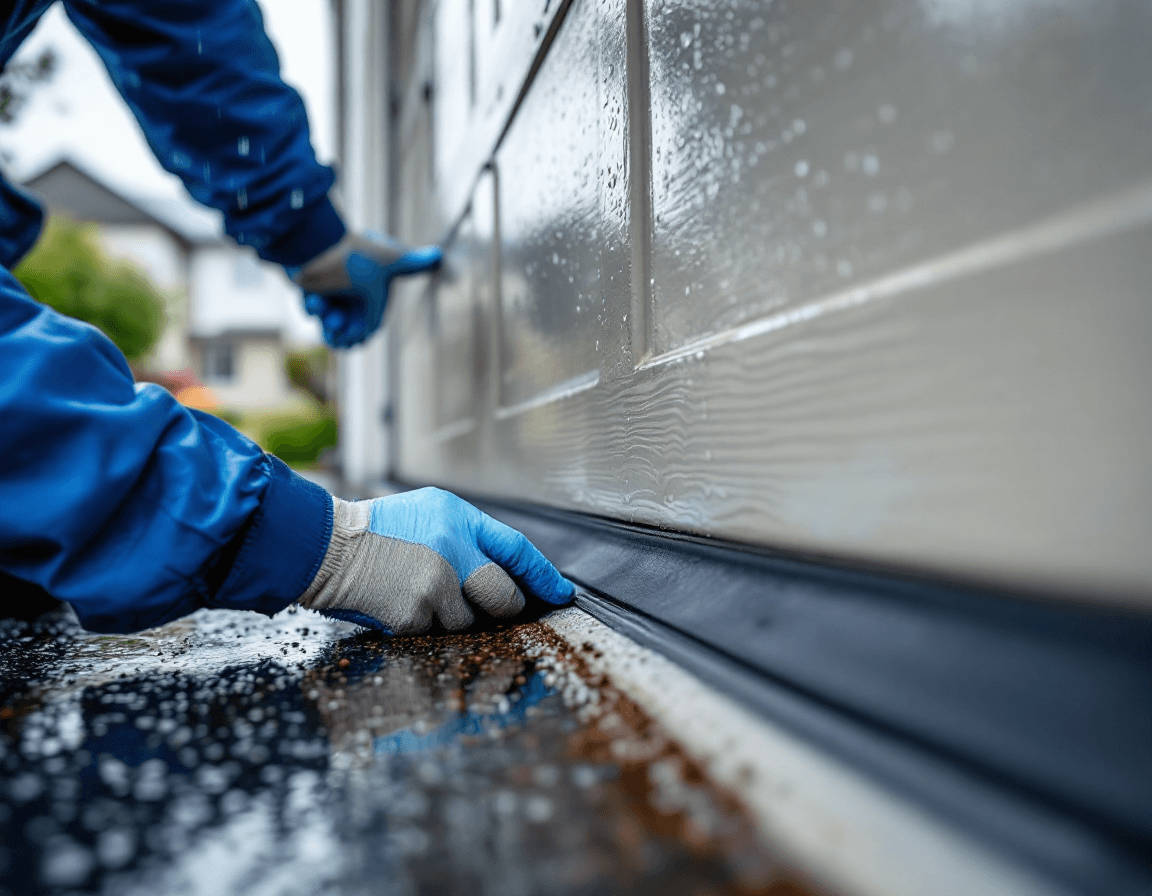
Garage Door Weather Seal Replacement in Sumner, WA is one of the most affordable fixes a homeowner can make, and it often delivers more comfort than people expect. Sumner sits in the Puyallup River valley, where damp air, low clouds, and long stretches of drizzle are normal for much of the year. A garage door that once closed snugly can slowly lose its contact with the floor and frame, and the result is water, cold air, dust, and pests finding their way inside. This page explains how to recognize a failing seal, what the replacement involves, what it typically costs, and when to call a professional.
Many Sumner homeowners first notice the problem in small ways. A damp strip along the inside of the door after a storm, a faint line of daylight visible beneath the panel at night, or a garage that feels noticeably colder than the kitchen on the other side of the wall can all point to a worn seal. Because the symptoms build gradually, it is easy to assume they are just part of living in the Pacific Northwest. In reality, most of these issues come from rubber and vinyl components that have stiffened, split, or pulled away from their mounting channels, and they are usually inexpensive to correct once identified.
Our technicians serve Sumner and the surrounding Pierce County communities, including neighborhoods that fall within the 98390 and 98391 ZIP codes. We handle bottom seals, perimeter weatherstripping, and threshold seals on every common residential door style, from older wood carriage-style doors to newer insulated steel panels. The goal of this guide is to help you make an informed decision before you call, so you know what to look for and what questions to ask.
Why Sumner Garages Take On Water and Drafts
The Puget Sound lowlands have a climate that is mild in temperature but persistent in moisture. Winter storms often arrive from the southwest with wind-driven rain that pushes sideways against the lower part of a garage door, exactly where the seal does its job. Summer brings a different kind of stress, with dry, warm afternoons followed by cool, damp mornings that cause rubber to expand and contract. Over several years, that cycle can harden a bottom seal until it no longer flexes to meet the concrete.
Sumner's older homes and newer developments share the same underlying challenge: garage floors are rarely perfectly level. Many slabs have a gentle slope toward the driveway to shed water, and some have small dips or settled sections that create uneven gaps. A seal that fits well at one end of the door may leave a visible opening at the other end after a few seasons of settling. Technicians often find that the door itself is square and functional, and the real issue is that the seal has lost its ability to bridge the gap.
Garage doors also flex slightly with temperature changes, particularly steel panels that expand in the sun and contract overnight. That movement can pull the perimeter weatherstripping away from the jamb or change how the bottom seal sits against the floor. Understanding that these components work as a system helps explain why a single cracked piece can let water and air in even when the rest of the door looks fine.
Reading the Gap: How to Check Your Bottom Seal in Daylight
The simplest diagnostic is also the most reliable. On a clear day, close the garage door fully and go inside the garage with the lights off. Look along the bottom edge of the door for any light coming through, and pay attention to whether the light is consistent across the full width or only at certain spots. A thin line that appears only near one side often points to an uneven floor or a seal that has been pulled out of position, while light across the whole width usually means the seal has worn evenly.
Next, inspect the seal itself. Bottom seals are commonly made of vinyl, rubber, or a combination of materials bonded to a retainer channel that screws into the bottom panel of the door. Look for cracks, flat spots where the seal has compressed permanently, brittle edges that crumble when touched, or sections that are missing entirely. A seal that bounces back slowly after you press it with a gloved finger has likely lost its resilience and will not keep out water through a long wet season.
You can also check for daylight from the outside by standing at the driveway at dusk with the interior lights on. Any glow beneath the door indicates an opening that will admit air and moisture. Keep in mind that a small gap can be acceptable on some doors designed with a specific clearance, but most homeowners find that a well-fitted seal makes a noticeable difference in how cold and damp the garage feels during winter months.
Perimeter Weatherstripping: The Quiet Sealer Most People Overlook
Bottom seals tend to get all the attention, but the perimeter weatherstripping along the sides and top of the door is just as important. This material, often a vinyl or foam strip mounted to the door frame or jamb, closes the gaps that open when the door meets the header and side tracks. Worn perimeter strips may look intact from a distance but can be flattened, torn at the corners, or pulled loose where the door swings or lifts.
Corners are where perimeter weatherstripping most often fails. The joint where the vertical and horizontal sections meet is subject to repeated stress from opening and closing, and small separations there can let in wind-driven rain during storms. A technician can often spot these issues by running a hand along the jamb while the door is closed, feeling for cool air or drafts. Replacing the strip usually involves cutting new material to length, cleaning the mounting surface, and securing the new piece so it compresses evenly without binding the door.
Perimeter weatherstripping also plays a role in keeping out dust, leaves, and small insects. Sumner's late summer and autumn bring plenty of windblown debris, and a garage with worn side seals can collect a surprising amount of material along the walls and near the door track. Restoring a continuous perimeter seal is one of the most effective ways to reduce that buildup.
Thresholds, Slopes, and Moisture From the Ground Up
The threshold is the strip of material or concrete at the base of the door opening, and in many Sumner garages it is the point where water most often enters. Some homes have a raised threshold that helps keep runoff outside, while others have a flush concrete edge that allows water to creep underneath during heavy rain. When the threshold is damaged or missing its seal, water can pool just outside the door and be pushed in by wind or by the movement of cars and foot traffic.
Downtown Sumner and the older blocks near the historic core often feature homes with slab foundations and driveways that drain toward the street. Those grading patterns are designed to shed water, but they also mean that runoff from the driveway can find the lowest path toward the garage door when the soil is saturated. Newer neighborhoods in the Lakeland Hills area typically have engineered drainage, yet even well-graded lots can send water toward a garage entry during long wet periods. A threshold seal is one of the few components that can address this issue without altering the property itself.
Threshold seals come in several forms, including vinyl or rubber strips that fasten to the concrete with anchors, and tapered profiles that help direct water outward. The right choice depends on the surface, the door's clearance, and how much movement the slab has experienced. A technician will typically evaluate the threshold together with the bottom seal, because a mismatch between the two can leave a gap that undermines the whole assembly.
What Gets Through: Pests, Leaves, and Fine Dust
Homeowners are often surprised by how many different things can enter a garage through a small opening. Spiders, earwigs, rodents, and other pests take advantage of gaps near the floor, especially in damp months when they seek shelter. Leaves and twigs are pushed under the door by wind, and fine dust builds up on shelves, tools, and stored items. Over time, that accumulation can affect everything from stored paint to the performance of a second refrigerator in the garage.
Sealing the bottom edge and perimeter is the first step toward reducing pest entry, but it works best alongside basic housekeeping. Keep door tracks clear, remove debris from the threshold area, and store firewood and yard materials away from the wall where pests may already be present. A well-fitted seal will not stop every insect, but it closes the most common routes and makes the garage far less inviting.
If you notice droppings, nesting material, or signs of gnawing near the door, it is wise to address the source before or alongside the seal replacement. A professional can identify where entry is occurring and recommend whether pest control is needed. The seal is a physical barrier, and its effectiveness depends on the condition of the surfaces it meets.
Selecting the Right Seal Profile for Your Door Size
Not every garage door uses the same seal. Bottom seals come in different profiles, widths, and retainer styles, and selecting the wrong one can cause the door to drag, fail to close fully, or let air pass through a gap at the edges. Single-car doors, double-wide doors, and older doors with unusual tracks may each require a specific profile. Matching the seal to the door's manufacturer specifications and the existing channel is essential.
Material choice matters as well. Vinyl seals are common and handle moisture well, while rubber seals often provide more flexibility in cold weather. Some premium options use a combination of materials to balance durability and sealing performance. A technician will usually recommend a material based on the door's age, exposure to wind and rain, and whether the garage is heated or unheated.
When you compare options, consider how the seal will hold up through repeated opening and closing. A seal that compresses too much may wear quickly, while one that is too stiff may fail to conform to an uneven floor. Asking your technician to explain the trade-offs can help you choose a solution that suits your home rather than a generic option.
How a Typical Replacement Visit Unfolds
A seal replacement visit usually begins with an inspection of the entire door assembly, not just the bottom edge. The technician will check the panels, tracks, rollers, and hinges to confirm that the door is operating smoothly, since a seal cannot compensate for a door that is out of balance or sitting unevenly in its tracks. Once the door has been evaluated, the seal can be measured and the appropriate replacement selected.
The work itself is straightforward for a trained technician but requires care. The old seal is removed from its retainer or cut away, the channel is cleaned, and the new seal is fitted and secured. For perimeter weatherstripping, the old strip is pulled from the jamb, the surface is prepared, and the new material is installed with attention to corners and joints. The door is then tested through several complete open and close cycles to confirm that the seal compresses evenly and does not interfere with movement.
Most seal replacements are completed in a short visit, and the technician will walk you through the results. Many homeowners find that the difference in drafts and daylight is immediately noticeable. If other repairs are recommended, such as roller replacement or track alignment, you should receive a clear explanation and the option to decide on each item separately.
- Inspect the full door, tracks, and rollers before selecting a seal
- Measure the existing channel and door width to match the correct profile
- Remove or cut away the old seal and clean the mounting surface
- Install the new bottom seal, perimeter strips, or threshold seal as needed
- Test the door through several full cycles to confirm even contact and smooth travel
Understanding Pricing From $95 to $250
Seal replacement is generally one of the more affordable garage door services. Our typical pricing for weather seal work in the Sumner area ranges from about $95 to $250, depending on the seal type and the size of the door. A basic bottom seal on a standard single-car door will usually fall toward the lower end of that range, while a wider door, a heavy-duty profile, or a combined bottom seal and perimeter replacement will generally cost more.
Several factors influence the final figure. The condition of the existing channel can affect whether the new seal can be installed directly or whether additional components are needed. Threshold work may require anchors or sealant on concrete, which adds time and materials. Accessibility, the number of seals being replaced, and whether the job is combined with other maintenance can also change the total.
Because every door is different, the best way to get an accurate number is to have a technician evaluate your specific setup. A short visit can clarify what is needed and whether the repair is best handled alone or alongside other service. We believe homeowners should understand exactly what they are paying for, and a clear estimate before work begins is part of that commitment.
Comfort, Energy Use, and the Winter Cold in Your Garage
A garage is often connected to living space, either through a shared wall or an entry door, so drafts in the garage can affect the rest of the house. Cold air that enters beneath a poorly sealed door can make the adjoining rooms feel chilly, and the heating system may run longer to compensate. While the exact impact varies from home to home, reducing unwanted air movement is a sensible step toward a more comfortable and efficient house.
Garage temperatures also matter for the things stored there. Paint, batteries, and some electronics can be affected by repeated cold and damp conditions, and mildew can develop on cardboard, fabric, and wood. A tighter seal helps keep the space drier and more stable, which can extend the life of stored items and reduce the musty smell that many Sumner homeowners notice in late winter.
If you have a detached garage or a workshop with its own heating, the seal becomes even more important. Heat that escapes through gaps in a detached structure is heat you are paying for, and a well-sealed door helps keep warm air where it belongs. Pair seal replacement with a check of the entry door and any other openings to get the most benefit.
Safety Limits: Why Spring and Cable Work Belongs to Licensed Pros
Weather seal replacement is a manageable task for many homeowners, but it is important to recognize the limits of do-it-yourself work. Bottom seals and perimeter strips do not carry the same risks as the components that hold the door's weight. However, nearly any work around a garage door can lead to injury if the door is unexpectedly released or if the technician is not careful about its movement.
Torsion springs and extension springs are under extreme tension, and attempting to adjust, remove, or replace them without proper training and tools can cause serious harm. Cables, drums, and brackets follow the same principle, since they are part of a system that stores and releases considerable energy. If your inspection reveals a broken spring, a frayed cable, or a door that is off track, stop and call a licensed professional rather than attempting to fix it yourself.
When you schedule a seal replacement, you can ask the technician to check these components as part of the visit. Our licensed, bonded, and insured team can identify safety concerns and explain them clearly, so you can decide how to proceed. Staying within the boundaries of your own skill level protects both you and your household.
Scheduling Service Across Sumner and the 98390 and 98391 Areas
Seal replacement can be scheduled at a time that fits your routine, and many homeowners prefer to book work before the heaviest rain of the season arrives. Early autumn is a practical window, since it allows the seal to be in place before the first sustained storms and cold snaps. Spring is another good time to check for damage left behind by winter weather and to catch small problems before they grow.
Our service area includes Sumner and nearby communities within the 98390 and 98391 ZIP codes, along with many other cities across Western Washington. If you are unsure whether your address is covered, call and a team member can confirm availability. Describing the symptoms you have noticed, such as a visible gap, water on the floor, or pests near the door, helps us prepare the right materials for your visit.
Whether your garage is in an established part of town near the historic blocks or in a newer section of Lakeland Hills, the same principles apply. A properly fitted seal stops drafts, slows water intrusion, and makes the space more comfortable year-round. Taking the time to check your door now can prevent a larger repair later.
If your garage feels drafty, shows daylight beneath the door, or lets in water after storms, a seal replacement may be the simplest solution. Call Seattle Garage Door Fix at (888) 799-3819 to schedule an inspection and get a clear estimate for your Sumner home. Our licensed technicians will evaluate the bottom seal, perimeter weatherstripping, and threshold, explain your options, and help you get your garage sealed up before the next wet season arrives.