
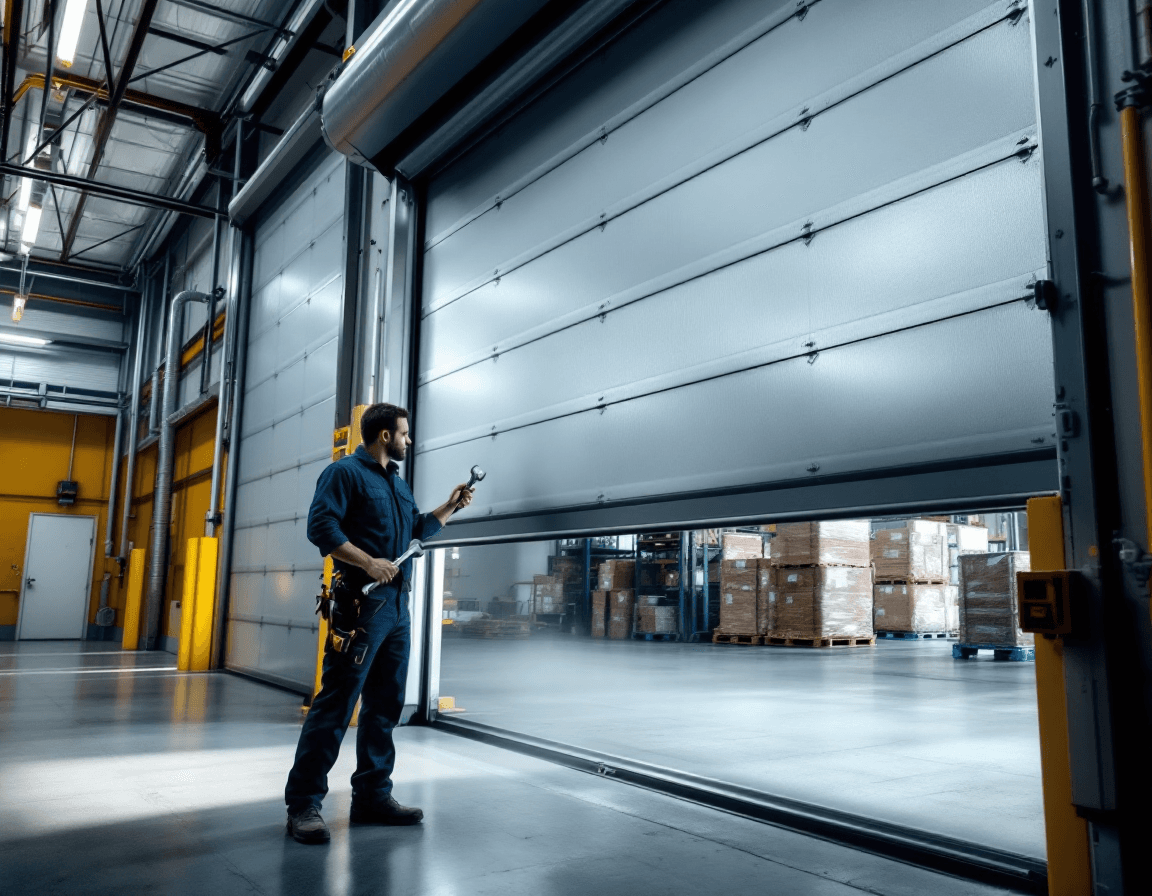
Commercial overhead door repair in Sammamish, WA is rarely a single-door problem. When a loading dock door stalls at 6:30 on a weekday morning, the impact reaches receiving schedules, delivery windows, and sometimes the whole tenant mix in a multi-unit building. Our crews handle sectional overhead doors, rolling steel doors, commercial operators, and the preventive maintenance programs that keep these openings working. We understand how much a stuck door costs a business, so we treat every commercial call as a time-sensitive job that needs a clear plan, not just a quick guess.
Sammamish sits on the east side of Lake Sammamish within King County, and its commercial footprint is a mix of neighborhood retail, medical and professional offices, light warehousing, and service businesses that depend on dependable overhead access. Many buildings here were built for steady, moderate use, but a growing number now see heavier daily cycling as deliveries increase and tenants reconfigure their space. The doors that serve these properties need to be inspected, adjusted, and sometimes upgraded to handle that load. Whether your facility sits near the retail corridors around Sammamish Commons, the older commercial pockets close to Pine Lake, or the businesses serving the Klahanie area, the right repair approach depends on the door type, its age, and how hard it works.
This page explains what we see most often on commercial doors in and around Sammamish, how we evaluate each problem, and how we price custom work so you can make informed decisions. It also covers when a preventive maintenance agreement makes more sense than waiting for the next breakdown. Nothing here replaces an on-site assessment, but it should give facility managers, property owners, and operations leads a practical starting point. If your door is down right now, the most useful first step is a call so we can talk through the symptoms and get a technician scheduled.
When the Loading Dock Door Goes Down Mid-Shift
A dock door that will not open or close is the most urgent call we take, and it usually starts with a symptom that seems small. Operators may hear a grinding noise, see the door hesitate partway up, or notice that the door drops a few inches and then stops. In many cases the cause is a worn cable, a failed torsion spring, a broken track roller, or a tripped safety sensor, and each of these has a different repair path. Our first job is to make the opening safe and determine whether the door can be returned to service the same day or needs parts ordered.
We ask a few specific questions on the phone because they shorten the diagnosis. Is the door fully down, partly open, or off its tracks? Did the problem appear suddenly or develop over several days? Has anyone attempted a repair, and did the door make a loud bang or snap before it stopped? Those details help us decide whether the call needs a single technician with a truck stocked for common sectional parts or a larger response with lifting equipment. They also help us avoid sending a crew that arrives without the right hardware.
Please keep people clear of the opening and do not attempt to lift a door by hand or disconnect springs while the panels are loaded. A door that is hung up or partly off track can shift unexpectedly, and that is exactly the situation where injuries happen. If the door is blocking emergency egress or a fire path, tell the dispatcher immediately so the priority is set correctly.
Sectional Door Wear Patterns on Sammamish Business Corridors
Sectional overhead doors, the segmented panels that roll up on tracks overhead, are the workhorse for most commercial loading docks and service bays. Along the busier stretches of East Lake Sammamish Parkway and Sahalee Way, we see many doors that have been in service for a decade or more and carry a lot of accumulated wear. Tracks drift out of alignment, hinges loosen, rollers develop flat spots, and weatherseals harden and tear. None of these alone stops a door, but together they increase strain on the operator and the springs until something finally gives.
Panel damage is another frequent issue on sectional systems. A single dented section can cause binding across the track because the panel no longer sits flat through the curve. Replacing one panel is often less expensive than replacing a whole door, but matching color, insulation value, and window placement matters more on commercial faces than on residential garages. We bring reference information about panel profiles when we inspect, so we can recommend the most practical replacement rather than a mismatched patch.
Track geometry deserves close attention on commercial sectional doors. Even a small misalignment at the header or a loose bracket on a vertical run can make a door run noisy, shift to one side, or stop at the same spot every cycle. We check level, plumb, and square measurements and tighten or reset hardware as needed. When the track itself is bent or the mounting structure has shifted, we will explain the options clearly and quote the work before we start.
Rolling Steel Doors That Jam or Jump the Track
Rolling steel doors are common on storefronts, service bays, mechanical rooms, and some warehouse entries throughout Sammamish. Unlike sectional doors, they wind into a coil above the opening, and their slats travel within guides on each side. When a rolling steel door jams, the usual suspects are debris in the guide channels, a bent slat, a damaged bottom bar, or a guide that has been pulled out of position after an impact. Because the door is heavy and tightly constrained, forcing it can make the damage worse very quickly.
Many of the rolling door calls we answer involve doors that were struck by a vehicle or a pallet jack and then kept running with a slight misalignment. The door may appear to function for weeks while the guide gradually loads up and the curtain starts to bow. Eventually it jumps out of the guide on one side or binds at a particular height. We inspect the full length of each guide, look for wear on the locking bars, and check the barrel and bottom bar for stress before recommending a repair.
Rolling steel doors also depend on properly set tension and counterbalance. When the spring system loses tension, the door can feel heavy on the operator or fail to stay put when partly raised. Spring tension on these assemblies is high-energy work, and it must be done with the correct tools and procedures. For that reason, any spring replacement or tension adjustment is performed by a licensed professional, not by a building tenant or unqualified maintenance staff.
Commercial Operators and the Problem of Throughput
A door can be mechanically sound and still fail to meet your operation's needs if the operator is too slow, too weak, or poorly matched to the cycle count. Facilities that run continuous receiving, outbound pickup windows, or high-volume service dispatch sometimes find that the door takes too long to open and close, creating a bottleneck at the dock. Operators that were adequate when the building was first occupied may struggle once the tenant mix changes or the daily schedule intensifies.
We evaluate operators by looking at their rated duty cycle, motor condition, drive chain or belt tension, limit settings, and the condition of the door balance. Often a slow door is caused by something simple, such as a heavy door that has become out of balance or a limit setting that has drifted, and the fix is a targeted adjustment rather than a new unit. When the operator truly cannot keep pace, we discuss upgrade options that fit the door's size, weight, and control wiring. Faster or heavier-duty operators can improve throughput, but they also change the forces on the door and its hardware, so we evaluate the whole system together.
Commercial operator failures also show up as intermittent behavior. A door may open fine in the morning, stop halfway by afternoon, and then work again after it cools. That pattern usually points to a failing limit switch, a worn contactor, a loose connection in the control panel, or a photo-eye that is confused by dust or condensation. Those issues can be frustrating to chase, so we document what we observe, test each component in sequence, and explain the findings before replacing parts.
Forklift Impacts and Damaged Panel Triage
Forklift strikes are one of the most expensive and disruptive causes of commercial door damage. A tine can puncture a panel, crack a window frame, or bend a track in seconds, and the door may still appear to function afterward. Because the damage is not always visible from the inside, we look at the full path of the door, including the header, the tracks, the hinges, and the bottom seal, before deciding on a repair scope. A door that has been struck once may have hidden stress that causes a second failure a few weeks later.
Our triage approach starts with safety. If a section is cracked, displaced, or hanging from its hinges, we secure the door and recommend limiting use until repairs are complete. Next we determine which components are damaged and which are only cosmetic. A single panel replacement might solve the problem for a sectional door, while a rolling steel door may need a new bottom bar, a repaired guide, or a replacement curtain section. We provide written scope options so your facility manager can compare costs and schedule downtime intelligently.
Preventing repeat impacts is part of the conversation too. Bollards, impact-rated guards, higher mounting for lights and sensors, clear floor markings, and driver training can all reduce the frequency of strikes. We are not a traffic consultant, but we can point out where the door is most exposed and suggest practical protection that fits the building layout. Many facilities find that a few targeted changes pay for themselves after a single avoided incident.
Preventive Maintenance Agreements for Sammamish Facilities
A preventive maintenance agreement is a planned schedule of inspections, lubrication, adjustments, and safety checks on your commercial doors. Instead of reacting to a failure at the worst possible time, the crew visits on a set interval, documents the condition of each door, and corrects small issues before they become emergencies. For multi-door buildings, shared plazas, and facilities where downtime is expensive, this approach usually makes more sense than repairing on demand. It also gives owners and managers a written record that helps with insurance reviews, lease obligations, and capital planning.
The exact scope of an agreement depends on your doors, usage, and building type. Some properties prefer a light schedule that covers safety reversing tests and basic lubrication, while others want a deeper review that includes spring inspection, cable and drum checks, track alignment, and operator testing. We tailor each plan so it matches the equipment in front of us rather than applying a one-size checklist. Pricing is quoted after we review the door count, types, access constraints, and service history.
A typical agreement for a commercial site may include several of the following elements:
- Scheduled inspection of every door, including sections, tracks, rollers, hinges, and weatherseals
- Safety reversing and photo-eye testing on each operator, with results recorded
- Lubrication of hinges, bearings, and moving hardware using products suited to the climate
- Track alignment checks and tightening of fasteners that loosen with vibration and temperature changes
- Review of operator limit settings, drive components, and control panel connections
- Written summary of findings with recommended repairs ranked by urgency
How Pacific Northwest Weather Affects Commercial Door Hardware
Western Washington's weather is not extreme by national standards, but it is persistent. Long stretches of drizzle, high humidity, and damp mornings keep metal surfaces wet more often than many businesses expect. Moisture moves into hinge pins, roller bearings, and track joints, and it can accelerate corrosion on galvanized and painted components. Over time, that corrosion stiffens movement and makes the operator work harder, which is why a door that felt smooth in summer can start to protest by late fall.
Cold snaps, though infrequent, can also affect door performance. Rubber weatherseals stiffen, lubricants thicken, and panels can contract enough to change how they sit in the tracks. A door that closes cleanly at 60 degrees may hesitate or bind on a frosty morning until everything warms up. We factor those seasonal shifts into our maintenance recommendations, particularly in the months when the building is most likely to see temperature swings.
Winter rain also brings debris into the door system. Leaves, grit, and moss-prone surfaces around dock approaches can collect in tracks and guide channels, and that buildup can cause rolling doors to bind or sectional doors to run rough. Keeping the threshold area and tracks reasonably clear helps, and a periodic inspection catches problems before they reach the operator. Good drainage around the opening also matters, because standing water can rust bottom brackets and mount hardware faster than most owners realize.
Our Custom Commercial Quote Process
Commercial jobs are rarely priced from a flat rate sheet, because each door has its own size, weight, age, finish, control system, and access conditions. We begin with a site review, either in person or through a detailed phone assessment combined with photos, to understand the scope. From there we identify the parts likely needed, the labor involved, any lifting or scaffolding requirements, and whether work can be staged to keep the building operating. Every quote is written so the property manager can see what is included and what is not.
Our goal is a fast turnaround that keeps downtime short, and that starts with how we organize the first visit. We try to bring the right components on the first trip when the symptoms point to a common failure, and we explain when a temporary fix is safe for a few days while parts arrive. For larger projects, we can outline phases so critical openings return to service first and cosmetic or non-urgent work follows on a schedule that suits your tenants.
A typical custom quote process looks like this:
- Initial call to gather door type, size, symptoms, and urgency
- Site inspection or photo review to confirm the condition of tracks, springs, operator, and panels
- Written scope with options, such as repair versus replacement, and clear pricing for each option
- Scheduling window agreed with the facility contact, including after-hours or weekend work if your operation requires it
- Completion walk-through with the on-site contact, plus notes on any follow-up items
Safety Boundaries: What We Handle and What Stays with Licensed Technicians
Commercial garage door systems store serious mechanical energy in their springs and counterbalance assemblies, and that is where most of the danger lies. Torsion springs and extension springs can release violently when they fail or when they are adjusted incorrectly, and cables under tension can whip with enough force to cause serious injury. For that reason, spring replacement, cable work, and tension adjustments are reserved for licensed, bonded, and insured professionals who use proper winding bars, safety cables, and lockout procedures. Facility staff should never attempt those tasks, even when they have seen it done before.
There are also electrical boundaries to respect. Operators draw significant power, and control panels can carry live voltage even when the door appears idle. Before anyone touches wiring, the power should be disconnected at the proper breaker and locked out. Where a building has a manual release, it should be used carefully, and the door should be treated as unpredictable until a technician confirms it is safe to operate.
Our recommendation is simple: if a repair requires stored energy to be released or a spring to be handled, call a licensed professional. Until then, keep the area clear, mark the door out of service, and avoid forcing it. A short delay in repair is always preferable to a preventable injury, and a well-documented problem is easier to fix on the first visit.
Scheduling Around Business Hours Near Sammamish Commons, Pine Lake, and Klahanie
Commercial properties in Sammamish operate on very different rhythms. A retail center near Sammamish Commons may need work completed before opening or after closing, while a service business near Pine Lake may prefer midday windows when trucks are less frequent. Businesses in the Klahanie area often juggle family-oriented customer traffic with weekday deliveries, so access and parking considerations matter as much as the repair itself. We plan around these patterns so repairs disrupt the fewest people possible.
When you contact us, let us know your peak hours, delivery windows, and any lease or landlord requirements that affect work access. Some buildings require notice before technicians enter a service area, and some need coordination with other trades on site. We can work with property managers and tenant representatives to set expectations, share timelines, and confirm who will be on site for sign-off. Clear communication often shortens the total downtime more than any single technical decision.
For facilities that cannot afford a long outage, we can discuss temporary measures such as locking a door in a safe position, rerouting traffic to an alternate dock, or staging repairs in a sequence that keeps at least one opening functional. Those options depend on the building layout and the severity of the damage, so the best approach is a short conversation followed by a site visit. The sooner we know the constraints, the sooner we can give you a realistic plan.
If your commercial overhead door is down, slow, jammed, damaged, or simply due for a planned checkup, call Seattle Garage Door Fix at (888) 799-3819 to request a custom commercial quote for your Sammamish property. Tell us the door type, what it is doing, and when you need it back in service, and our team will outline next steps and a practical timeline.